
Pregnancies Shadowed by Fear as Miscarriages Surge in Gaza
Gaza's Health Ministry reports 3,958 miscarriages in the first half of 2026, a 3.3-fold increase from late 2025, as pregnant women face displacement, heat, malnutrition, and a collapsed healthcare system. Women like Hadeel al-Madani and Doaa al-Najjar describe tragic conditions in tents, while Israeli strikes on hospitals and aid restrictions worsen the crisis. Only 44% of pre-war health service points remain functional.
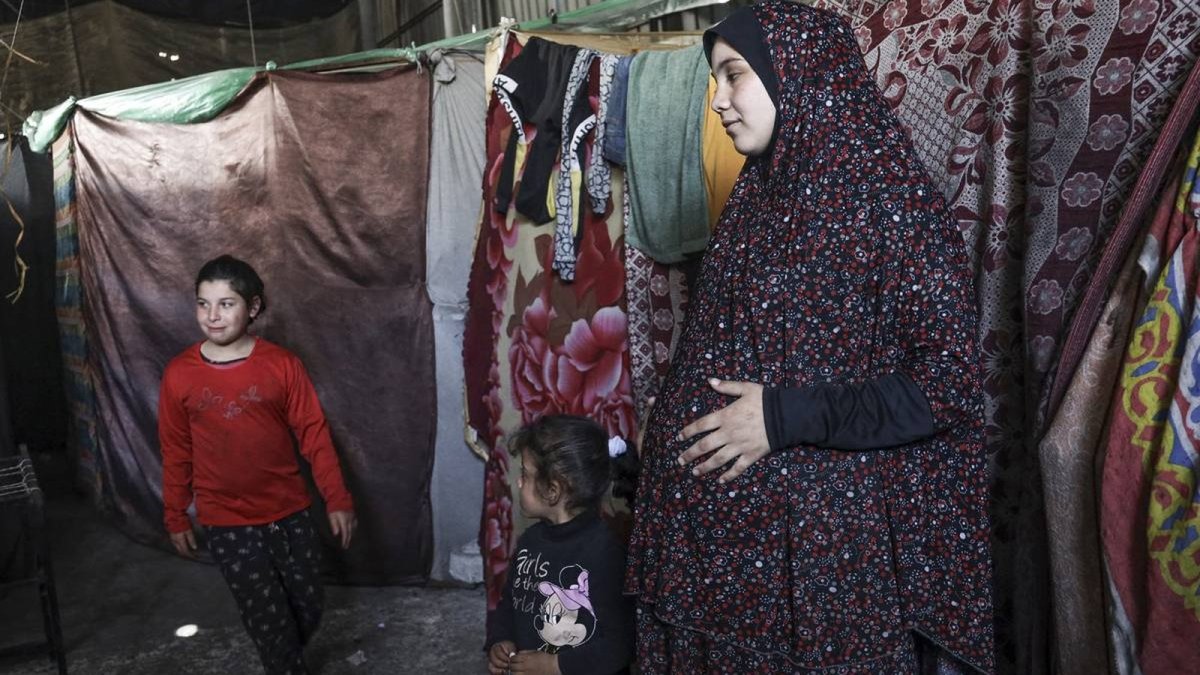
In the sweltering heat of a tent in Gaza, Hadeel al-Madani moves with the weight of a seven-month pregnancy, hauling water gallons and performing tasks that were once simple but are now grueling ordeals. Her story, and that of countless other Palestinian women, reveals a shadow crisis unfolding alongside the war: a dramatic surge in miscarriages driven by displacement, malnutrition, and the collapse of healthcare. New data from Gaza's Health Ministry shows the miscarriage rate has more than tripled since the ceasefire, painting a stark picture of maternal suffering in the enclave.
Pregnancies Shadowed by Fear as Miscarriages Surge in Gaza
Gaza City, Gaza Strip — Article continues...
The Daily Burden of Survival for Hadeel al-Madani
For Hadeel al-Madani, the simple act of washing clothes or preparing a meal has become a marathon of exhaustion. Living in a tent made of poor-quality plastic fabric, she spends hours each day fetching water, washing by hand, and lighting fires to cook—all under the oppressive summer heat and without electricity, which has been unavailable since Israel began its war in October 2023. "Our life is difficult. We cannot adapt. Life is tragic and very hard for pregnant women in tents," al-Madani told Anadolu Agency.
The physical strain is compounded by a constant, gnawing anxiety for her unborn child. She keeps her medicines in a corner of the tent, worried they will spoil in the heat or be destroyed by rodents. "I fear my child may have deformities or problems because of the harsh conditions and the heat," she said, noting that the temperature inside the tent often exceeds that of the outdoors. Her words reflect a reality where pregnancy is no longer a time of anticipation but of dread, as every task carries the risk of harm to the fetus.
Doaa al-Najjar: Waiting to Give Birth Amid Health Complications
In a neighboring tent, Doaa al-Najjar is in the final days of her ninth month of pregnancy, but her wait is overshadowed by health complications born of her environment. "The heat of the tent affects me severely and raises my body temperature," al-Najjar told Anadolu Agency, explaining that she has been forced to seek medical treatment after feeling her temperature spike, fearing it could harm her fetus. "I feel afraid for the pregnancy, and I'm affected by these conditions. I'm waiting for the baby to come safely."
Al-Najjar contrasts her current pregnancy with those before the war, when she had food, peace of mind, and basic necessities. Now, she lacks everything for her expected newborn—no bed, no clothes, no diapers, no milk. "I fear for him from mice, rats, insects and the heat of the tent," she said. "He needs a bed that protects him from them." Her testimony underscores how the war has stripped away not just medical care but the very conditions needed for a safe birth and infancy.
Health Ministry Data: A 3.3-Fold Increase in Miscarriages
The personal fears of women like al-Madani and al-Najjar are backed by stark statistics. According to figures from Gaza's Health Ministry, 3,958 miscarriages were recorded in the first half of 2026, a rate of 208.5 cases per 1,000 live births. This represents a 3.3-fold increase compared to the second half of 2025, when the rate stood at 64 cases per 1,000 live births. The data, published in a ministry infographic on July 20, shows the crisis has not abated despite the ceasefire agreement in effect since October 2025.
The monthly breakdown reveals the severity of the situation. April 2026 recorded the highest monthly miscarriage rate at 377.25 cases per 1,000 live births, while June saw the highest absolute number, with 790 miscarriages. The data also shows that 73.6% of miscarriages occurred before the 13th week of pregnancy, while 26.4% occurred between weeks 13 and 24. Additionally, the ministry reported that 57.1% of pregnant women registered in 2025 suffered from anemia, a condition exacerbated by malnutrition and the lack of adequate food and supplements.
The Collapse of Maternal Healthcare in Gaza
The surge in miscarriages is directly linked to the systematic collapse of Gaza's healthcare system. Dr. Iyad Abu Hosaira, head of the obstetrics and gynecology department at Al-Helou International Hospital in the Al-Nasr neighborhood west of Gaza City, described the multiple hardships pregnant women have faced. "Pregnant women faced multiple hardships during the war, including repeated displacement, the destruction of homes and the collapse of primary healthcare due to the destruction of hospitals and medical facilities," he said.
Dr. Abu Hosaira noted that women have been forced to live in places unfit for human habitation, such as tents lacking running water and electricity. "They were also forced to carry out exhausting tasks, such as lifting water gallons from one place to another, which exposed the lives of fetuses to danger," he added. These conditions, he explained, have led to widespread health problems, including anemia, which can have severe consequences for both mother and child. At Al-Helou International Hospital, dozens of pregnant women wait daily for examinations, but the facility is stretched thin, struggling to meet the overwhelming demand.
Aid Blockade and Ceasefire Violations Worsen the Crisis
The humanitarian situation is further aggravated by a severe economic collapse and the restriction of aid. Most Palestinians in Gaza have lost their jobs during the war, pushing them into poverty and making them entirely dependent on international food, relief, and medical assistance. However, these supplies remain sharply limited due to strict Israeli restrictions on crossings. Israel has reneged on its obligations under the ceasefire agreement to allow agreed quantities of aid into the enclave, according to the source text.
The Palestinian government and rights bodies have repeatedly warned of the impact of these violations on civilians, particularly patients and pregnant women who face shortages of medicines and medical supplies. The blockade has created a situation where even basic necessities like diapers, milk, and clean water are unavailable, forcing families to make impossible choices. For pregnant women, the lack of prenatal vitamins, iron supplements, and emergency obstetric care is a life-threatening gap in the system.
Targeting of Medical Infrastructure: The Al-Aqsa Martyrs Hospital Strikes
Israel's deliberate targeting of hospitals, health facilities, and medical staff has been a defining feature of the war, according to repeated statements by the Health Ministry. The most recent attacks occurred in early August, when the Israeli army destroyed two warehouses containing vital medicines and medical consumables and severely damaged two others in strikes on storage facilities belonging to Al-Aqsa Martyrs Hospital in Deir al-Balah, central Gaza. These strikes have further crippled an already fragile health system, depriving pregnant women and newborns of essential supplies.
The scale of the destruction is staggering. According to the United Nations Office for the Coordination of Humanitarian Affairs (OCHA), only 44% of health service points that existed before October 2023 were functioning by mid-July 2026. The World Health Organization has previously stated that none of Gaza's hospitals are operating at full capacity and that more than half of essential medicines have run out of stock. This means that even when women can reach a hospital, they may find it without the drugs, equipment, or staff needed to manage complications.
What This Means for Palestinian Women and Families
The convergence of displacement, malnutrition, extreme heat, and a shattered healthcare system has created a perfect storm for maternal health in Gaza. For women like Hadeel al-Madani and Doaa al-Najjar, the fear of losing a child is not abstract—it is a daily reality shaped by the physical demands of survival and the absence of any safety net. The psychological toll is immeasurable, as women are forced to navigate pregnancy in conditions that are fundamentally hostile to life.
The data from the Health Ministry is a grim reminder that the ceasefire has not brought relief to Gaza's most vulnerable. The 3.3-fold increase in miscarriages is not just a statistic; it represents thousands of families who have lost children to a war that continues to claim victims even in its quieter phases. As the international community debates the future of Gaza, the voices of these women—struggling to protect their unborn children in tents without water, electricity, or medical care—must not be ignored. Their survival, and that of their children, depends on an immediate and sustained commitment to humanitarian access and the rebuilding of Gaza's healthcare infrastructure.
This article was produced with AI-assisted research and editorial support. Sources: Middle East Monitor, Anadolu Agency, Gaza Health Ministry, OCHA, WHO.
By Fatima Al-Rashid, Staff Writer
What's Your Reaction?
 Like
0
Like
0
 Dislike
0
Dislike
0
 Love
0
Love
0
 Funny
0
Funny
0
 Wow
0
Wow
0
 Sad
0
Sad
0
 Angry
0
Angry
0

Gulf/MENA Correspondent at Global1.News. Based in Doha, covering Gulf politics, energy markets, diplomacy, and development across the Middle East and North Africa. Tracks the economic transformation of the Gulf states.













Comments (0)