
Operation Economic Outcast: Washington's Ultimatum to Tehran and the World
Treasury Secretary Bessent launched "Operation Economic Outcast" on Aug 24, expanding secondary sanctions on Iran and threatening dollar-system exclusion. Oil fell 3% on the softer-than-feared rollout. Iran threatens Hormuz closure as China's 80% oil dependency looms.
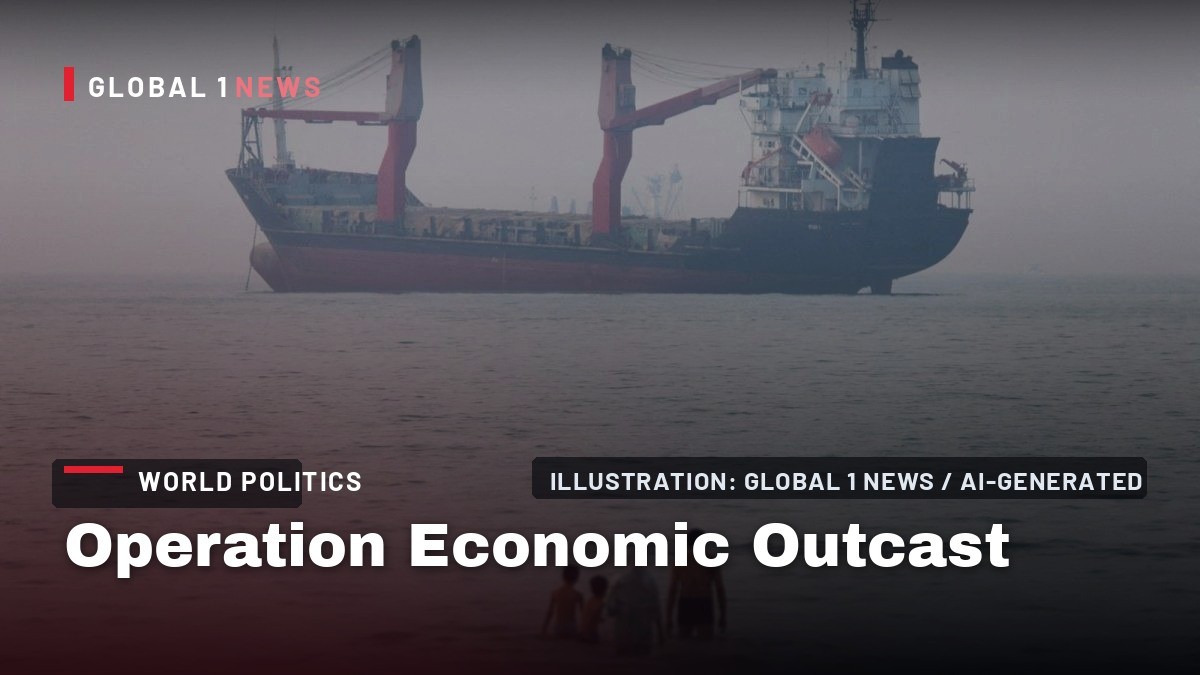
The Trump administration has launched what it calls "the greatest financial offensive ever marshalled" against Iran, a sweeping expansion of secondary sanctions announced Monday, August 24, 2026, at 1 p.m. EDT. Treasury Secretary Scott Bessent delivered the news from the Cash Room of the Treasury Department in Washington, fulfilling President Trump's week-earlier pledge of an "economic D-Day" against Tehran. The goal, as Bessent framed it, is simple and absolute: block all potential sources of revenue for the Islamic Republic.
But here is the twist: the rollout was softer than the rhetoric. Washington stopped short of immediately imposing the biggest new penalties. Instead, it handed identified violators deadlines to cut ties with Iran — an ultimatum, not an instant designation. That distinction is already moving oil prices in real time.
This is not a declaration of economic war in the traditional sense. It is a warning shot — a demand that countries and companies choose sides before the hammer fully drops. The choice is stark: do business with Iran, or remain inside the dollar-based financial system. You cannot have both.
Bessent's Dollar Ultimatum: The Core of the New Sanctions Regime
The mechanics of Operation Economic Outcast are straightforward in design but potentially seismic in execution. Any country or entity that conducts business with Iran now faces US sanctions. But the sharper edge is Bessent's explicit warning: any nation that helps Iran will be removed from the dollar-based financial system entirely. That is not a fine or a blacklist — that is exile from global commerce as we know it.
Officials from the Treasury, State, and the Pentagon are pressing foreign counterparts for "immediate action" to cut economic ties to Tehran. The message is being delivered bilaterally, from Beijing to Brussels: the time for hedging is over. The administration is giving identified violators a window to comply — but that window is not open-ended.
The choice of venue — the Cash Room, where the US once minted its financial dominance — was deliberate. Bessent was signaling that the dollar remains the ultimate weapon. The question now is whether allies and adversaries believe him.
Iran's Response: Threats of Oil Armageddon and Defiant Rhetoric
Tehran did not wait long to answer. Within hours, Iran's top security chief, Mohsen Rezaei, issued a chilling vow: "not a single drop" of oil would leave the region if Gulf neighbors joined the US effort. He went further, declaring that any nation supporting the sanctions would be considered an enemy state. This is not diplomatic language — it is a threat of regional conflagration.
The IRGC's spokesperson, Hossein Mohebbi, amplified the message, threatening "heavy blows" against vital US interests and energy chokepoints — the Strait of Hormuz, through which roughly a fifth of global oil consumption once flowed, being the obvious target. Iran's Economy Minister, Ali Madanizadeh, struck a tone of defiant confidence on state TV: "We are fully prepared for the U.S. sanctions."
Tehran is betting that its major trading partners, particularly China, will resist Washington's pressure campaign — a bet that is not baseless. China buys more than 80% of Iran's shipped oil, according to 2025 Kpler data. Beijing's state refiners have largely shunned Iranian crude since 2019, but smaller independent refiners stepped in to fill the gap. Whether those independents can withstand a full-court press from Washington is the billion-dollar question.
Markets React: Oil Drops 3% as the "Softer Than Feared" Rollout Deflates Risk
The immediate market reaction tells you how traders read this announcement. Oil prices fell about 3% on Monday. Brent crude dropped 2.1%, from $90.54 to $88.64 per barrel. The reason is counterintuitive but clear: no immediate big designations meant no immediate supply shock, and the geopolitical risk premium baked into prices began to deflate.
By choosing ultimatums over immediate sanctions, Washington has bought itself time — and given markets a reason to calm down. But that calm may be temporary. The deadlines are coming, and if countries do not comply, the next phase will be far more disruptive.
For American consumers, the stakes are already visible at the pump. The US national average gasoline price is $4.06 per gallon, the highest August average on record according to AAA. Diesel is near $5.44. Politico has posed the question: can Bessent's "economic D-Day" end the war, or is it just a recipe for $4 gas?
The Strait of Hormuz: A Chokepoint in Crisis
To understand the gravity of this moment, you have to look at the Strait of Hormuz. The US-Iran war is nearing the six-month mark, and the strait's tanker traffic has collapsed more than 94% versus pre-war levels, according to UANI tracking data from June 9 through August 11, 2026. Shipping slowed after a series of tanker attacks, and the global energy market has been holding its breath ever since.
There is a glimmer of diplomatic movement. Iran and Oman are reportedly near a deal on a Hormuz shipping path, and fully reopening the strait is a key US demand. A 60-day US-Iran negotiating period is expiring, adding urgency to every open channel. The sanctions announcement may be designed, in part, to strengthen Washington's hand in those talks.
But the threat of a full closure remains on the table. Iran has warned it will halt ALL oil exports from the Gulf if the US continues economic pressure, framing any support for sanctions as an act of war. That is not a negotiating position; that is a declaration of intent. The question is whether Tehran has the will to follow through.
China's Pivotal Role: The 80% Dependency That Could Break the Sanctions
No analysis of this sanctions regime is complete without a deep dive into China's role. The 2025 Kpler data is unambiguous: China buys more than 80% of Iran's shipped oil. That single statistic makes Beijing the linchpin of the entire operation. If China complies with US demands, Iran's economy faces a catastrophic revenue collapse. If China resists, the sanctions are a paper tiger.
China's state refiners have been cautious since 2019, avoiding Iranian crude to protect their dollar-system access. But the independent refiners, often called "teapots," have been less skittish, buying heavily at steep discounts. The US pressure campaign will now target those independents directly, threatening to cut them off from dollar clearing if they continue.
This is where the sanctions could get messy. China has its own leverage — it is one of the largest foreign holders of US debt and a critical trading partner. A full confrontation over Iranian oil could spiral into broader economic conflict. Bessent's ultimatum is a high-stakes gamble that Beijing will blink. History suggests China does not blink easily.
The IEA's Grim Forecast: Demand Destruction and the Cost of Closure
The International Energy Agency's August 2026 Oil Market Report paints a sobering picture. The IEA forecasts that world oil demand will decline by 1.6 million barrels per day in 2026, citing the Hormuz closure and elevated fuel prices. That is demand destruction on a massive scale — not because the world wants less oil, but because it cannot afford the oil that is available.
This forecast is a double-edged sword for the Trump administration. Lower demand could help contain inflation, but it also signals a global slowdown that will hurt American consumers and businesses alike. The $4.06 average is already a political liability, and the IEA's numbers suggest it could get worse.
The administration's bet is that sanctions force a rapid resolution — either Iran capitulates or the regime collapses under economic pressure. But Iran claims it has a plan to survive two years of isolation. That is not idle boasting; Tehran has long evaded sanctions through front companies and vessel registrations, as Al-Monitor has documented. The cat-and-mouse game is far from over.
What Comes Next: Deadlines, Negotiations, and the 60-Day Clock
Treasury, State, and Pentagon officials will spend the coming days pressing foreign counterparts for concrete commitments to cut ties with Iran. The identified violators have deadlines, and they will come due quickly. The administration is betting that the threat of dollar exclusion forces compliance without the need for actual designations.
Meanwhile, the 60-day US-Iran negotiating period is expiring. The Oman-brokered talks on a Hormuz shipping path are a potential off-ramp, but they are fragile. Iran's threats of oil Armageddon are not just rhetoric; they are a negotiating tactic designed to raise the cost of continued pressure. The question is whether Washington will blink first.
For now, markets are cautiously optimistic. Oil prices fell, suggesting traders believe the worst is avoidable. But the fundamentals remain dire: a 94% collapse in Hormuz traffic, record gasoline prices, and a sanctions regime that could escalate at any moment. This is not a resolution; it is a pause. The next few weeks will determine whether Operation Economic Outcast becomes a decisive victory or a costly quagmire.
One thing is certain: the world is watching, and the dollar is the weapon. Bessent has drawn a line in the sand. Now we find out who crosses it.
By Jessica Ali, Staff WriterThis article was produced with AI-assisted research and editorial support. Sources: Reuters, The Associated Press, The Guardian, CNN, The New York Times, Politico, Time, Al Jazeera, IEA.
What's Your Reaction?
 Like
0
Like
0
 Dislike
0
Dislike
0
 Love
0
Love
0
 Funny
0
Funny
0
 Wow
0
Wow
0
 Sad
0
Sad
0
 Angry
0
Angry
0

Editor-in-Chief at Global1.News. Atlanta-based journalist who cuts through the BS and tells it like it is. Lead anchor, host, and the voice you hear when the spin stops and the truth starts.











Comments (0)