
Meta reconsiders 2030 net-zero goal amid record emissions from AI data centers
Meta’s latest sustainability report, released on November 19, 2026, marks a watershed moment for the company and the broader tech industry. tech firm.
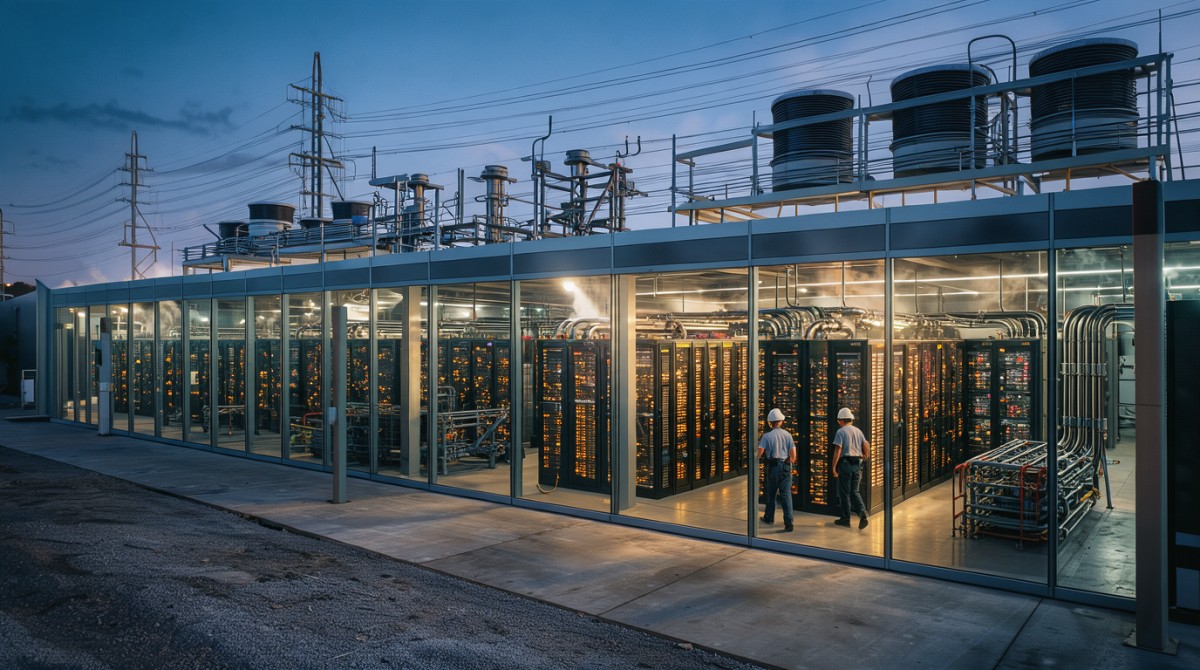
Meta’s latest sustainability report, released on November 19, 2026, marks a watershed moment for the company and the broader tech industry. For the first time since pledging a 2030 net‑zero target, Meta’s senior leaders openly admit that the goal may no longer be realistic under today’s operating conditions. The admission comes on the heels of a record‑high surge in greenhouse‑gas emissions that outpaces every other Big‑Tech rival racing to build AI‑focused data centers. As a journalist who’s covered corporate climate pledges for years, I can say unequivocally that this is the most candid acknowledgment of a climate‑strategy shortfall we’ve seen from a major U.S. tech firm.
Why Meta Is Rethinking 2030
In the report’s opening remarks, Rachel Peterson, Meta’s vice president of data centers, and Blair Swedeen, the firm’s global head of net‑zero and sustainability, explain that “our long‑term ambitions haven’t changed, but our operating environment has.” They point to an unprecedented surge in demand for AI infrastructure as the primary catalyst for the shift. The report notes that demand “has grown faster than almost anyone projected,” forcing Meta to re‑evaluate not just its timelines but also the sequencing of its interim milestones.
Both executives stress that the reevaluation is meant to keep progress “transparent year over year.” In practice, that means Meta will now scrutinize the 2030 deadline alongside its near‑term intensity targets, adjusting them as necessary to reflect the reality of a data‑center boom fueled by generative AI workloads.
The Numbers Behind the Shock
Meta’s 2026 sustainability filing lays out a stark picture: total emissions jumped from 15.6 million metric tonnes of CO₂‑equivalent in 2024 to more than 21.7 million metric tonnes in 2025. That jump translates to a nearly 40 percent year‑over‑year increase, the highest percentage rise reported by any of the four major U.S. tech giants. By contrast, Microsoft logged a 25 percent increase, Google an 18 percent rise, and Amazon a 16 percent climb over the same period.
Even after accounting for renewable‑energy purchases and carbon‑removal projects, Meta’s net emissions climbed from over 8.1 million metric tonnes to more than 11.8 million metric tonnes in 2025—a 45 percent surge. The report attributes much of that growth to “capital goods,” essentially the servers and other hardware that power its expanding AI data centers.
How Meta’s Footprint Stacks Up Against States
The report offers a geographic analogy that underscores the scale of the problem: Meta’s 2025 carbon footprint is roughly comparable to the total emissions of the state of Idaho, while surpassing the emissions of smaller states such as Hawaii, Maine, South Dakota, and New Hampshire. That comparison helps translate abstract metric‑tonne figures into something more tangible for the public.
Even though Meta’s absolute emissions remain lower than those of its Big‑Tech peers, the rate of increase is alarming. A 40 percent jump in a single year suggests that the company’s current mitigation strategies are being outpaced by the energy appetite of its AI workloads.
Water Use: A Hidden Cost of AI Power
Meta’s sustainability report also shines a light on water consumption, an often‑overlooked dimension of data‑center impact. Total facility water use fell modestly from 825 million gallons in 2024 to 790 million gallons in 2025, indicating progress in cooling‑system efficiency. However, water use in “areas with water stress” rose sharply—from 198 million gallons to 246 million gallons—signaling that the company’s expansion is pushing into regions where water scarcity is already a concern.
The most dramatic shift, though, is in indirect water use tied to electricity generation. Meta reports that water consumption linked to purchased electricity surged from 19 billion gallons in 2024 to more than 26 billion gallons in 2025. That jump underscores a critical point made by Data Center Dynamics: the bulk of a data‑center’s water footprint comes not from on‑site cooling but from the power plants that generate the electricity it consumes.
Industry Context: Everyone’s Feeling the Heat
Meta’s public admission stands out because its major rivals—Amazon, Google, and Microsoft—have so far stuck to their original net‑zero timelines despite similar pressures. All four companies are racing to build hyperscale AI data centers, many of which still rely on natural‑gas‑fired power plants. While each has invested in renewable‑energy projects and carbon‑removal technologies, the rapid expansion of AI workloads is stretching those mitigation efforts thin.
Data Center Dynamics notes that Meta is the only hyperscaler to report indirect water use, a metric that is gaining attention as the industry shifts toward closed‑loop cooling systems. Those systems reduce direct water draw but increase electricity demand, which in turn raises indirect water consumption at power plants. Meta’s transparency on this front could set a new reporting benchmark, prompting other tech giants to disclose similar data.
What This Means for Policy and the Public
The timing of Meta’s reassessment is significant. The AI backlash that erupted during the 2024‑2025 election cycle has already spurred public pressure on Big Tech to address the environmental toll of their data‑center expansions. As voters and regulators become more attuned to the climate implications of AI, companies that fail to align their sustainability pledges with operational realities risk both reputational damage and potential regulatory scrutiny.
For policymakers, Meta’s data provides a concrete case study of how AI‑driven demand can outstrip existing climate‑mitigation frameworks. It underscores the need for clearer standards around indirect water use, renewable‑energy procurement, and carbon‑removal accounting. As the midterm election results have shown, climate and AI are now intertwined issues that can sway public opinion and shape legislative agendas.
In short, Meta’s candid acknowledgment that its 2030 net‑zero goal may need to be reset is a wake‑up call for the entire tech sector. The company’s emissions surge, coupled with rising water stress in the regions powering its AI workloads, illustrates the growing gap between ambitious climate pledges and the operational realities of a data‑center‑driven AI boom. Whether Meta can recalibrate its strategy in time to meet its long‑term climate ambitions—or whether it will become a cautionary tale of over‑promising and under‑delivering—remains to be seen. What is clear, however, is that the conversation about AI’s carbon and water footprints has moved from the back‑room to the front page, and the public will be watching closely as the industry grapples with this new reality.
This article was produced with AI-assisted research and editorial support. Reporting is based on the source material cited below. Sources: Ars Technica; arstechnica.com; Global1.News (22 November 2026).
By Jessica Ali, Staff Writer
What's Your Reaction?
 Like
0
 Dislike
0
 Love
0
 Funny
0
 Wow
0
 Sad
0
 Angry
0

Editor-in-Chief at Global1.News. Atlanta-based journalist who cuts through the BS and tells it like it is. Lead anchor, host, and the voice you hear when the spin stops and the truth starts.













Comments (0)