
Worms mate in man's eyes, get plucked out right before larvae burst out
When a 71‑year‑old crop farmer from South Korea walked into an eye clinic two months after his vision turned red, blurry and constantly irritated, he could not have imagined the literal worms in his eyes.
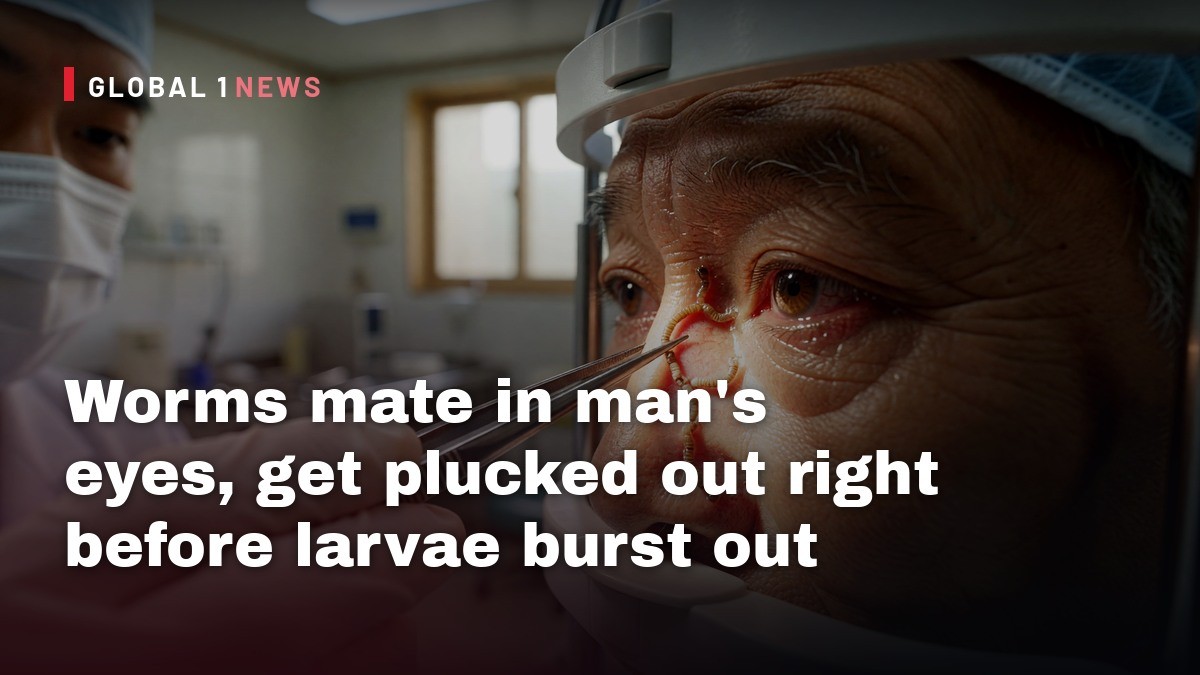
When a 71‑year‑old crop farmer from South Korea walked into an eye clinic two months after his vision turned red, blurry and constantly irritated, he could not have imagined the literal worms in his eyes. The ophthalmologists who examined him found not a simple infection but a full‑blown infestation of Thelazia callipaeda, a parasitic nematode that normally lives on the eyes of dogs and cats. The doctors extracted eleven live, wriggling worms—some of them pregnant—using fine forceps after numbing the patient’s eyes. The case, detailed in a recent New England Journal of Medicine report, underscores how a seemingly mundane agricultural lifestyle can intersect with a complex zoonotic cycle that bridges insects, animals and, ultimately, humans.
The clinical picture: red, blurry eyes turned into a worm‑laden nightmare
The farmer’s symptoms were textbook for ocular irritation: a persistent sensation of something lodged in both eyes, redness and blurred vision that lingered for two months. When the ophthalmologists peered into his conjunctiva—the thin membrane covering the white of the eye—they noted pronounced blood‑vessel enlargement, a classic sign of inflammation. More alarming was the erosion of corneal cells, the clear outer layer that focuses light. Such damage, the doctors surmised, likely resulted from the mechanical and biochemical assault of the worms as they moved across the ocular surface.
Under the slit‑lamp, the clinicians saw multiple mobile, whitish roundworms gliding across the ocular surface. The sight is rare enough to raise eyebrows, but the presence of eleven adult nematodes in a single patient is extraordinary. The worms measured between 11 mm and 22 mm, a size that makes them visible to the naked eye and capable of causing significant mechanical trauma to delicate eye tissues.
Thelazia callipaeda: a fly‑borne parasite that usually targets pets
The nematode identified in the farmer’s eyes, Thelazia callipaeda, is endemic across Asia and has been reported in parts of Europe. Its natural hosts are cats and dogs, where it lives in the conjunctival sac and feeds on tears and secretions. The parasite’s life cycle hinges on flies—often species that feed on ocular secretions. When a fly lands on an infected animal, it ingests first‑stage larvae along with tears. Inside the fly, these larvae molt twice, becoming third‑stage larvae that migrate to the insect’s mouthparts, ready to be deposited onto the next host’s eye.
When the fly lands on a human eye, the larvae disembark and embed themselves in the conjunctiva, where they mature into adult worms after a final molt. Adult Thelazia worms then mate directly on the eye surface, a unique feature among helminths that eliminates the need for a separate reproductive organ or external egg‑laying. The parasite’s reliance on flies as both incubator and transport makes it a classic example of a zoonotic disease that can spill over to humans under the right circumstances.
Why the farmer got infected: occupational exposure and fly vectors
Farm work in rural South Korea brings workers into close contact with livestock and the surrounding environment where flies thrive. While the case report does not detail the farmer’s exact exposure, his occupation as a crop farmer suggests frequent outdoor activity, often near animals or in fields where flies congregate. Flies that feed on animal eyes can also be attracted to human eyes, especially when sweat and tears provide a moist environment. The farmer’s two‑month symptom window aligns with the parasite’s developmental timeline: larvae introduced by a fly would require weeks to mature into adult worms capable of mating and producing embryos.
This incident highlights a broader public‑health concern: as agricultural practices intensify and human‑animal interfaces expand, the risk of zoonotic parasites like Thelazia crossing into humans may increase. The case serves as a reminder that occupational exposure in seemingly low‑risk settings can lead to unexpected medical emergencies.
Extraction without medication: a hands‑on approach to parasite removal
Faced with a rare ocular infestation, the Korean ophthalmology team opted for a straightforward mechanical removal. After applying a topical anesthetic to numb the eyes, they used fine forceps to pluck each worm individually. This method proved effective: all eleven adult worms were extracted, and no antiparasitic drugs were administered. The decision to forgo medication likely stemmed from the fact that adult worms were the primary source of pathology, and removing them eliminated the immediate threat.
Interestingly, the report notes that some female worms were “plump with embryonated eggs,” and that coiled larvae began bursting out of them after extraction. While this could have introduced additional larvae into the ocular environment, the clinicians judged that the removal of the adult worms was sufficient to halt the infection. Follow‑up examinations two months later confirmed that the patient’s symptoms had resolved and no further worms were detected, suggesting that the mechanical approach was both safe and curative in this case.
Implications for eye‑care practitioners: recognizing and managing rare parasitic infections
Ophthalmologists worldwide must remain vigilant for atypical presentations, especially in patients with rural or agricultural backgrounds. The hallmark signs in this case—persistent foreign‑body sensation, conjunctival redness, corneal erosion, and visible motile organisms—should prompt immediate consideration of parasitic etiologies. Prompt identification allows for rapid mechanical removal, which can avert the need for systemic antiparasitic therapy that carries its own risks.
Training on the identification of Thelazia and similar ocular parasites should be incorporated into ophthalmology curricula, particularly in regions where the parasites are endemic. Moreover, clinicians should educate patients about fly avoidance measures, such as using protective eyewear and maintaining personal hygiene, to reduce the risk of future infestations.
Public‑health perspective: controlling fly vectors to prevent zoonotic spillover
The life cycle of Thelazia callipaeda hinges on flies that feed on ocular secretions. Controlling these vectors is therefore a cornerstone of preventing human cases. Simple interventions—regular use of insect repellents, proper disposal of animal waste, and maintaining clean environments around livestock—can diminish fly populations. In agricultural settings, integrating fly‑control strategies into routine farm management could reduce the likelihood that flies pick up larvae from infected animals and subsequently transmit them to humans.
Beyond individual measures, public‑health agencies should monitor Thelazia prevalence in animal populations, especially in regions where human cases have been reported. Surveillance data can inform targeted vector‑control campaigns and guide veterinary interventions, such as treating dogs and cats for ocular parasites, thereby breaking the transmission cycle at its source.
Looking ahead: research needs and the broader significance of ocular parasitoses
This case underscores gaps in our understanding of how ocular parasites affect human health. While the immediate threat was resolved through extraction, the long‑term impact of corneal erosion and potential scarring remains uncertain. Further research is needed to assess visual outcomes in patients after such infestations, as well as to develop standardized treatment protocols that balance mechanical removal with pharmacologic options.
Moreover, the emergence of Thelazia infections in humans serves as a sentinel event, signaling ecological shifts that bring animal parasites into closer contact with people. As climate change and land‑use changes alter fly habitats and animal migration patterns, clinicians and public‑health officials must stay ahead of the curve. Monitoring zoonotic parasites, investing in vector‑control research, and educating at‑risk populations are essential steps to ensure that a farmer’s eye‑opening encounter with worms remains an isolated incident rather than a growing public‑health threat.
This article was produced with AI-assisted research and editorial support. Reporting is based on the source material cited below. Sources: Ars Technica; arstechnica.com; Global1.News (27 October 2026).
By Jessica Ali, Staff Writer
What's Your Reaction?
 Like
0
 Dislike
0
 Love
0
 Funny
0
 Wow
0
 Sad
0
 Angry
0

Editor-in-Chief at Global1.News. Atlanta-based journalist who cuts through the BS and tells it like it is. Lead anchor, host, and the voice you hear when the spin stops and the truth starts.















Comments (0)