
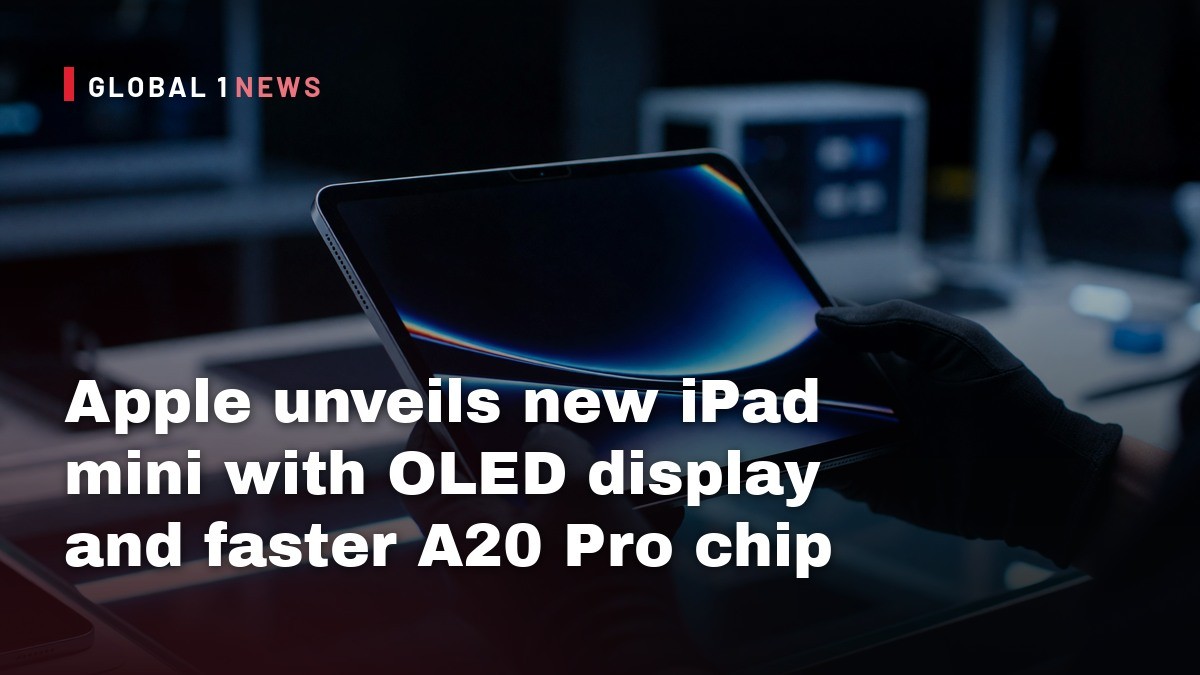
Apple unveils new iPad mini with OLED display and faster A20 Pro chip
Apple just dropped the newest iPad mini, and the tech press is already singing its praises. The hardware upgrade: OLED, thinner chassis, and a bigger chip The new iPad mini steps up to an 8.5‑inch OLED display, a jump from the LCD panel that powered the previous generation.
Apple just dropped the newest iPad mini, and the tech press is already singing its praises. As a founder who runs real hosting infrastructure, I’m not interested in the glossy marketing fluff—I’m looking at what this actually means for the ecosystem of independent providers and the downstream costs that will hit our customers. The mini’s OLED screen, A20 Pro chip, and a slew of “new” features sound impressive, but the real story is how Apple’s pricing, supply chain timing, and the hype around AI capabilities will ripple through the market, especially for those of us who aren’t backed by deep pockets or hyperscaler discounts.
The hardware upgrade: OLED, thinner chassis, and a bigger chip
The new iPad mini steps up to an 8.5‑inch OLED display, a jump from the LCD panel that powered the previous generation. Apple touts a peak brightness of up to 1,200 nits and a contrast ratio that dwarfs the older model. In practical terms, that means better visibility in bright environments and deeper blacks for media consumption. The device also shrinks to 5.4 mm in thickness, making it the slimmest mini yet. For a tablet that’s supposed to be a portable workhorse, the thinner chassis is a nice touch, but it also raises concerns about durability under real‑world handling—something we’ve seen break on cheaper, thinner devices in the field.
Under the hood sits the A20 Pro, a 6‑core CPU paired with a 7‑core GPU and Neural Accelerators baked into each core. Apple claims up to 60 % faster multithreaded performance and a 4.5‑times boost in AI tasks. Those numbers sound good on paper, but the real impact will be felt when developers start leveraging the Neural Accelerators for on‑device inference. For independent hosting firms that rely on edge compute, the iPad mini’s upgraded AI engine could become a benchmark for what “good enough” looks like on the client side, potentially shifting some workloads away from the cloud.
Pricing and availability: A premium price tag for a “mini”
The entry‑level Wi‑Fi model starts at $699, with the cellular version at $849. Apple’s pricing strategy remains consistent: a premium price for a premium brand, even for a device that’s physically smaller than the standard iPad. For our customers who are already paying for connectivity, the extra cost of cellular can be a hard sell, especially when the device’s battery life and performance gains are incremental rather than revolutionary.
Pre‑orders open on October 28, with shipments beginning November 6. Apple’s tight launch window squeezes the supply chain, leaving little room for bulk discounts or price negotiations that larger enterprises can extract from hyperscalers. Independent resellers and small‑scale hosting providers will have to absorb the full retail price if they want to offer the device as part of a managed solution, which could erode margins unless they can bundle value‑added services.
The “Acoustic Display” and nano‑texture options: Gimmicks or genuine value?
Apple introduces an “Acoustic Display” that integrates woofers into the screen for deeper bass and louder volume. While the idea of richer sound from a tablet is appealing, it’s essentially a marketing spin on what’s already a decent speaker system in the iPad Pro line. For most business users, the audio upgrade won’t change workflow; it’s more of a consumer‑focused perk that could be leveraged for media‑heavy apps but adds little to productivity.
The nano‑texture display, aimed at reducing glare, is another feature borrowed from the iPad Pro. It’s useful for bright outdoor environments, but the added cost (often bundled as a premium option) can push the device’s price beyond what many small businesses are willing to spend on a secondary tablet. In practice, most of our field technicians are fine with the standard OLED panel, and the nano‑texture becomes a nice‑to‑have rather than a must‑have.
AI on the device: Apple Intelligence and Siri upgrades
Apple’s next‑gen “Apple Intelligence” and Siri AI promise to draw on personal context for smarter assistance. The A20 Pro’s Neural Accelerators are marketed as delivering up to 4.5‑times faster AI performance. For developers, this means on‑device inference can be faster and more power‑efficient, reducing reliance on cloud‑based AI calls. That’s a double‑edged sword for independent hosting providers: on one hand, it could offload some processing from our servers; on the other, it raises the bar for app developers who now need to optimize for Apple’s on‑device AI stack.
From a risk perspective, shifting AI workloads to the client device can improve privacy and reduce data‑transfer costs, but it also fragments the ecosystem. If a critical business app leans heavily on Apple’s AI, you’re locked into the Apple hardware roadmap. That’s a strategic dependency that many of us in the hosting world try to avoid.
Connectivity upgrades: Faster wireless and cellular
The new iPad mini ships with faster wireless and cellular radios, though the source material doesn’t specify the exact standards. In practice, this translates to better throughput for video calls, streaming, and cloud‑backed workloads. For field teams that rely on cellular connectivity, the upgraded modem could shave latency and improve reliability, which is a tangible benefit.
However, the cellular version’s higher price point means you’re paying for the hardware and the data plan. In regions where cellular data is expensive, the cost of running a fleet of iPad minis can quickly outstrip the benefits, especially when cheaper Android tablets can offer comparable connectivity at a fraction of the price.
Implications for independent hosting and edge services
Apple’s hardware upgrades reinforce a trend: the line between client‑side processing and cloud services is blurring. With a more powerful CPU, GPU, and on‑device AI, the iPad mini can handle tasks that previously required a laptop or a cloud‑offload. For hosting providers, that means we need to rethink which workloads truly belong in the data center versus what can be pushed to the edge.
From a business‑risk lens, the iPad mini’s capabilities could reduce bandwidth consumption for video‑heavy applications, but they also raise the bar for app performance expectations. If a competitor releases an app that leverages the A20 Pro’s AI, users may start demanding similar experiences on other platforms, pressuring us to upgrade our own infrastructure to keep up.
Actionable takeaways for founders and hosting operators
First, treat the iPad mini as a benchmark, not a must‑have. Its OLED display and AI engine set a new baseline for what “premium” mobile computing looks like. If your customers are already using Apple devices, consider building native apps that can tap into the Neural Accelerators, but don’t build your entire service architecture around them.
Second, watch the pricing and supply timeline. With pre‑orders opening on October 28 and shipping on November 6, there’s little room to negotiate bulk discounts. If you need to provision devices for a field team, factor the full retail cost into your budget and explore volume‑purchase programs early.
Third, evaluate the real ROI of the acoustic and nano‑texture features. For most enterprise use‑cases they’re optional add‑ons that won’t impact productivity, so you can skip them and keep costs down.
Finally, double‑down on your edge strategy. The iPad mini’s on‑device AI is a signal that the industry is moving toward more distributed compute. Invest in lightweight, stateless services that can run on the edge, and design your APIs to be tolerant of intermittent connectivity. That way, whether your users are on an iPad mini, an Android tablet, or a low‑cost Windows device, you’ll deliver a consistent experience without being hostage to any single vendor’s hardware roadmap.
— Allan Ali, Founder
This article was produced with AI-assisted research and editorial support. Reporting is based on the source material cited below. Sources: TechCrunch; techcrunch.com; Global1.News (26 October 2026).
By Allan Ali, Global1.News
What's Your Reaction?
 Like
0
 Dislike
0
 Love
0
 Funny
0
 Wow
0
 Sad
0
 Angry
0

Publisher of Global1.News. Automation architect, systems builder, and the guy making sure the truth gets published.















Comments (0)