
CTIA, Big 3 US carriers warn that support for D2D in 5G bands could hurt network performance
The FCC is about to cast a vote on a proposal that could reshape how much spectrum is opened up for space‑based supplemental coverage, but the CTIA and the Big 3 carriers are waving red flags.
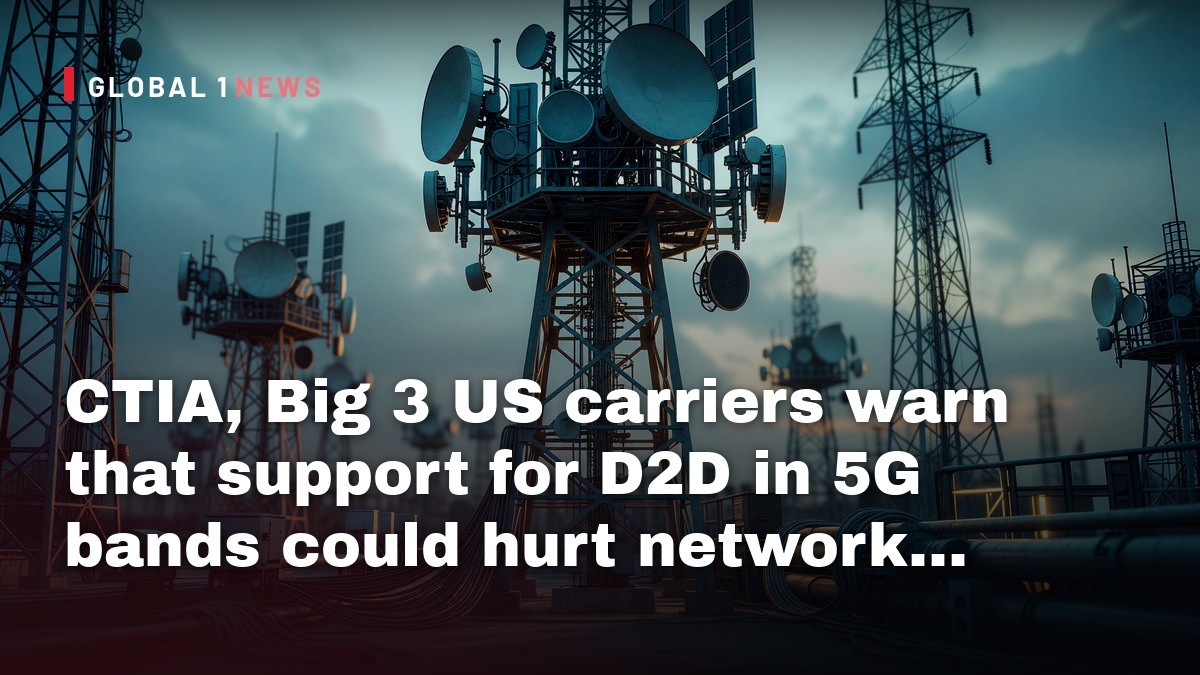
The FCC is about to cast a vote on a proposal that could reshape how much spectrum is opened up for space‑based supplemental coverage, but the CTIA and the Big 3 carriers are waving red flags. Their gripe? The draft rules would let direct‑to‑device (D2D) satellites bleed into the 2.5 GHz and 3.45 GHz bands that underpin today’s 5G networks. From my own decade‑long slog running real‑world hosting infrastructure, I can tell you that this isn’t just a regulatory quibble – it’s a potential choke point for any business that relies on reliable, low‑latency connectivity.
Why the carriers are shouting “stop”
The CTIA filing is blunt: “more than 300 million users rely on these bands for wireless services, and they should not have their service compromised by technically unworkable changes.” The carriers’ argument hinges on a technical mismatch. The 2.5 GHz and 3.45 GHz bands are TDD (time‑division duplex) – uplink and downlink share the same frequency slice, marching to a synchronized rhythm set by each tower. Satellite D2D, by contrast, uses paired FDD (frequency‑division duplex), splitting uplink and downlink into separate channels. The carriers claim that trying to jam FDD satellite signals into a TDD band would break that rhythm, leading to interference.
From a production standpoint, that’s a red flag. In my own data‑center ops, we’ve seen how even a few megahertz of out‑of‑band noise can degrade packet loss rates and push latency over the 100 ms threshold that many SaaS apps consider acceptable. If a satellite’s uplink lands on top of a tower’s TDD slot, you end up with the kind of “dropped and incomplete calls” T‑Mobile warned about – and that extends well beyond voice, into any TCP‑based traffic that underpins cloud services.
The FCC’s spectrum‑harmonization gamble
The FCC’s agenda is to make an extra 482 MHz of spectrum available for Supplemental Coverage from Space (SCS) while also aligning SCS with Mobile Satellite Service (MSS) rules. On paper, that sounds like a win‑win: more bandwidth for satellite broadband, more coverage for remote users. But the draft’s inclusion of the 2.5 GHz and 3.45 GHz bands is the flashpoint. The carriers argue that “Supplemental Coverage from Space is not technically feasible in TDD bands.” If the FCC pushes ahead, we could see a scenario where satellite operators are forced to coexist with terrestrial TDD networks under a patchwork of guard bands and custom filters.
For independent hosting providers, the risk is two‑fold. First, any degradation in the primary 5G bands could cascade into the edge‑computing nodes we increasingly rely on for low‑latency workloads. Second, the regulatory uncertainty could make it harder to plan capacity upgrades. When you’re budgeting for a new colocation rack, you need confidence that the underlying transport layer won’t be throttled by a policy shift.
What the numbers say – T‑Mobile’s worst‑case scenario
T‑Mobile’s filing paints a grim picture: up to 96 percent of a cell site’s uplink coverage could be lost where satellite coverage overlaps, and uplink speeds could slump by 88 percent to 99 percent. They also note that “coexistence in unsynchronized operations requires restrictive emission limits, custom filters… and a spectral guard band of approximately 20‑25 MHz.” In practice, that means a sizable slice of the 100‑MHz block would sit idle – “approximately 20‑25 percent of the spectrum lying fallow.” From a business‑risk lens, that’s a massive efficiency loss.
Imagine you’re running a fleet of edge servers that depend on the 2.5 GHz uplink for backhaul. If the uplink capacity evaporates, you’re forced to reroute traffic over slower, more congested bands or over‑provision redundant links – both of which spike OPEX. In my own experience, the moment a carrier imposes a new guard band, we see a ripple effect: higher latency, more retransmissions, and a spike in support tickets that eats into engineering time.
The satellite side of the story – Starlink’s push
While the carriers are fretting, the satellite world is moving forward. Starlink, via its FCC‑approved 15,000‑satellite D2D constellation, is gearing up to deliver high‑capacity direct‑to‑device service. The Big 3 have even formed a joint venture to pool spectrum for D2D, signalling a serious commercial intent. Their goal is clear: fill coverage gaps where terrestrial towers falter, especially in rural and indoor environments.
From a founder’s perspective, that’s an attractive proposition – if you can trust the satellite link to be reliable. But the technical clash over TDD vs. FDD means the satellite operators may have to sidestep the 2.5 GHz and 3.45 GHz bands entirely, or accept costly mitigation measures. That could push them into higher‑frequency bands where propagation losses are worse, raising the cost per bit delivered. The bottom line: the hype around “global coverage” must be tempered by the physics of spectrum sharing.
What “best practices” look like when theory meets the field
Industry whitepapers love to tout “guard bands” and “custom filters” as simple fixes. In the real world, those solutions are anything but simple. Deploying a 20‑25 MHz guard band eats into the usable spectrum, and custom filters add latency and complexity to the RF chain. In my data‑center, we’ve seen filter‑induced group delay cause jitter spikes that broke VoIP calls. When you multiply that across a national carrier’s footprint, the operational headache is massive.
The carriers’ claim that “the existing license structure makes SCS unworkable” is not just regulatory posturing – it’s a reflection of how hard it is to retrofit satellite signals into a tightly synchronized TDD ecosystem. For any independent provider that relies on predictable spectrum usage, the takeaway is to question any “best practice” that assumes seamless coexistence without quantifiable mitigation costs.
Business‑risk takeaways for hosting founders
First, diversify your backhaul. Relying heavily on any single band – especially one under regulatory siege – is a recipe for service disruption. Second, factor mitigation costs into any satellite‑backhaul contract. The carriers’ estimate that guard bands could render 20‑25 percent of a 100‑MHz block fallow translates directly into higher per‑megabit prices for you. Third, keep a close eye on FCC rulings. The vote this week could reshape the spectrum landscape, and a delayed decision can stall capacity planning for months.
Finally, build in resilience at the application layer. Use multi‑path TCP, implement aggressive retransmission timers, and design your services to degrade gracefully if uplink speeds tumble. In my own shop, we’ve baked in fallback to LTE or even wired ISP links for critical workloads – a habit that saved us during a recent carrier‑wide outage in the Midwest.
Actionable steps before the FCC’s final word
1. Conduct a spectrum audit of your current and planned edge sites. Identify any reliance on the 2.5 GHz or 3.45 GHz uplink and map out alternative paths.
2. Open a dialogue with your carrier partners now. Ask for concrete mitigation plans – guard band sizes, filter specs, and any associated fees. Get those details in writing before you sign any new satellite‑backhaul contracts.
3. Pilot a dual‑connect architecture. Pair any satellite link with a terrestrial backup (e.g., 5G NR‑mmWave or fiber) and measure the performance delta under simulated interference. Use those metrics to negotiate service level agreements.
4. Keep your engineering team on alert for the FCC’s vote outcome. If the commission removes the 2.5 GHz and 3.45 GHz bands from the SCS framework, you’ll need to pivot quickly to alternative spectrum or renegotiate satellite contracts.
In the end, the carriers’ alarm bells are not just about protecting their own market share – they’re sounding a warning to anyone who depends on a clean, synchronized spectrum environment. As a founder, you either adapt or watch your service quality erode under a wave of interference. The choice is yours.
— Allan Ali, Founder
This article was produced with AI-assisted research and editorial support. Reporting is based on the source material cited below. Sources: Data Center Dynamics; datacenterdynamics.com; Global1.News (27 October 2026).
By Allan Ali, Global1.News
What's Your Reaction?
 Like
0
 Dislike
0
 Love
0
 Funny
0
 Wow
0
 Sad
0
 Angry
0

Publisher of Global1.News. Automation architect, systems builder, and the guy making sure the truth gets published.









Comments (0)