
All you need to know about the Dakar 2026 Youth Olympics
On Saturday, 31 October, the Olympic rings will be raised over Senegal for the first time in African history as the nation hosts the 2026 Youth Olympic Games.

On Saturday, 31 October, the Olympic rings will be raised over Senegal for the first time in African history as the nation hosts the 2026 Youth Olympic Games. The event, organized by the International Olympic Committee, will unfold across Dakar, Diamniadio and the coastal town of Saly for fifteen days, concluding on 13 November. Around 2,700 young athletes, aged roughly 15 to 17, will compete in 25 sports and 153 medal events, while ten additional “engagement” sports will be staged without medals to encourage broader community participation.
Why Dakar Matters: A Continental Milestone
The Dakar Youth Games are being hailed as “monumental” for Africa. IOC official Christophe Dubi explained that while the continent has hosted many international competitions, this is the first occasion an event bearing the Olympic rings will be held on African soil. The sentiment is shared by Thierno Cissé, deputy chief operating officer of the Local Organising Committee, who said the whole country feels the weight of the moment and sees itself as an ambassador for the continent. The Games therefore carry symbolic weight beyond sport, offering a platform to showcase Africa’s capacity to deliver world‑class events.
Beyond symbolism, the Games are linked to a broader narrative of youth empowerment. Youth unemployment remains a pressing challenge across the continent, and Senegal hopes the event will generate immediate jobs in hospitality, security and logistics, as well as longer‑term benefits through tourism, volunteer programmes and skills development. More than 400 young Africans have already received training in event operations, logistics, technology, accreditation and venue management, laying a foundation for future African sporting ventures.
The Sporting Programme: Tradition Meets Innovation
Twenty‑five sports will be contested for medals, with nineteen of them mirroring events from the Paris 2024 Olympics – athletics, swimming and newer youth‑focused disciplines such as breaking and skateboarding. The programme also introduces fresh elements: beach handball, beach wrestling, futsal and coastal rowing, alongside Baseball5 and Wushu Taolu, both making their Youth Olympic debut. Baseball5, an urban version of baseball that requires no equipment, will kick off on Friday, 30 October, while Wushu Taolu showcases a modern Chinese martial art performed through choreographed sequences.
Ten engagement sports – including golf, karate and surfing – will be staged to invite local participation. These events are not medal‑bearing but aim to spark community enthusiasm and provide a taste of Olympic‑level competition for Senegalese youth. The inclusion of mixed‑gender events and cultural activities reflects the Youth Olympics’ ethos of blending sport with education and cultural exchange.
Venue Strategy: Building for the Future
Organisers deliberately avoided constructing a costly new complex, opting instead to renovate and repurpose existing facilities that can continue serving Senegalese communities after the Games. In Dakar, the historic Iba Mar Diop complex will host athletics, rugby sevens and futsal, while the waterfront Tour de l’Oeuf complex will accommodate swimming, 3x3 basketball, breaking, skateboarding and Baseball5. Road cycling will wind along the scenic Corniche Ouest.
The new city of Diamniadio, being developed southeast of Dakar, will act as the operational heart of the event. Its Abdoulaye Wade Stadium will host the opening ceremony and archery, while the Dakar Arena will stage badminton. The Dakar Expo Centre will welcome gymnastics, fencing, table tennis, judo and Wushu Taolu. Finally, Saly’s Atlantic coastline will provide a picturesque backdrop for sailing, triathlon, beach handball and coastal rowing at Saly Plage Ouest. This distributed venue model not only reduces costs but also spreads economic activity across the region.
Cultural Celebration: From Mascot to Music
The Games are designed as a showcase of Senegalese and African culture. The mascot, Ayo – a young lion – was created by a student, while its name draws from the Yoruba word for joy. Medals will feature a lion on one side and a baobab tree on the other, symbols that honour both Senegal’s heritage and Africa’s resilience. The official song, “Teranga,” meaning hospitality in Wolof, is performed by Senegalese artist Mamy Mbaye, underscoring the nation’s welcoming spirit.
Athletes will also be immersed in local traditions through lessons in sabar and djembe drumming and dance. The Olympic flame, lit in Athens on 10 September, travelled roughly 3,600 km across all 14 Senegalese regions with about 450 torchbearers over 30 stages, finally arriving in Dakar on 30 October. This journey highlighted the nation’s diverse landscapes and cultures, reinforcing the Games’ role as a unifying celebration.
Legacy Ambassadors: From Past Champions to Future Leaders
Several high‑profile figures are linked to Dakar 2026, lending credibility and inspiration. Zimbabwe’s Kirsty Coventry, the first woman and first African elected president of the IOC, chaired the coordination commission for the Games. Former Olympians such as South African swimmer Chad le Clos and British taekwondo star Jade Jones, who both competed at the inaugural Youth Olympics in Singapore and later won senior Olympic gold, illustrate the pathway from youth competition to elite success.
American sprinter Noah Lyles, a 200 m champion in Nanjing, also progressed to senior Olympic glory in Paris 2024, reinforcing the Youth Games’ role as a talent incubator. Local ambassadors include Senegal’s football captain Kalidou Koulibaly, Kenyan marathon legend Eliud Kipchoge – who mentors the refugee team making its debut – and social‑media personality Khaby Lame. Their involvement aims to inspire the 2,700 competitors and the broader African youth audience.
Economic and Social Impact: Jobs, Skills and Tourism
Organisers anticipate that the Games will generate a wave of employment opportunities, both temporary and permanent. Training programmes have already equipped hundreds of young Africans with skills in event logistics, technology and venue management, creating a pool of qualified personnel for future sporting events and related industries. The influx of athletes, officials and spectators is expected to boost tourism, especially in coastal Saly, where visitors can experience Senegal’s famed hospitality and vibrant cultural scene.
Beyond direct economic benefits, the Games aim to foster a sense of pride and unity across the continent. By presenting a smoothly run, world‑class event, Senegal hopes to challenge lingering stereotypes about African infrastructure and organisational capacity. The legacy of renovated venues, a trained workforce and heightened global visibility could position Senegal and its neighbours as attractive hosts for future international competitions.
Looking Ahead: The Youth Olympics as a Springboard
As the torch arrives at Place de la Nation on 30 October and the opening ceremony lights the cauldron the following day, the excitement in Dakar is palpable. The Youth Olympics will not only crown medalists but also plant seeds for the next generation of African athletes, officials and fans. With a blend of high‑performance sport, cultural showcase and community development, Dakar 2026 stands as a defining moment for the continent’s sporting narrative.
In the months that follow, the true measure of success will be seen in the stories of athletes who transition from Youth Olympians to senior champions, the continued use of refurbished venues by local clubs and schools, and the lasting impression left on the continent’s youth. If the Games deliver on these aspirations, they will have turned a historic first into a lasting foundation for African sport and solidarity.
This article was produced with AI-assisted research and editorial support. Reporting is based on the source material cited below. Sources: BBC News Africa; bbc.co.uk; Global1.News (27 October 2026).
By Amara Diop, Staff Writer
What's Your Reaction?
 Like
0
 Dislike
0
 Love
0
 Funny
0
 Wow
0
 Sad
0
 Angry
0
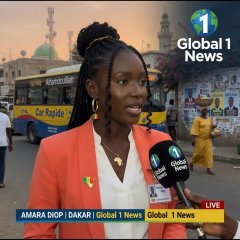
West Africa/Sahel Correspondent at Global1.News. Dakar-based journalist covering politics, security, climate, and development across Francophone and Anglophone West Africa. Tells the stories of a region undergoing profound transformation.











Comments (0)