
Ice sheet expansion may have started 2,000 years ago, but we canceled that
When you’ve spent a decade wrestling with racks, power‑draw, and the endless “best practice” buzz from cloud giants, you learn to spot hype from a mile away.
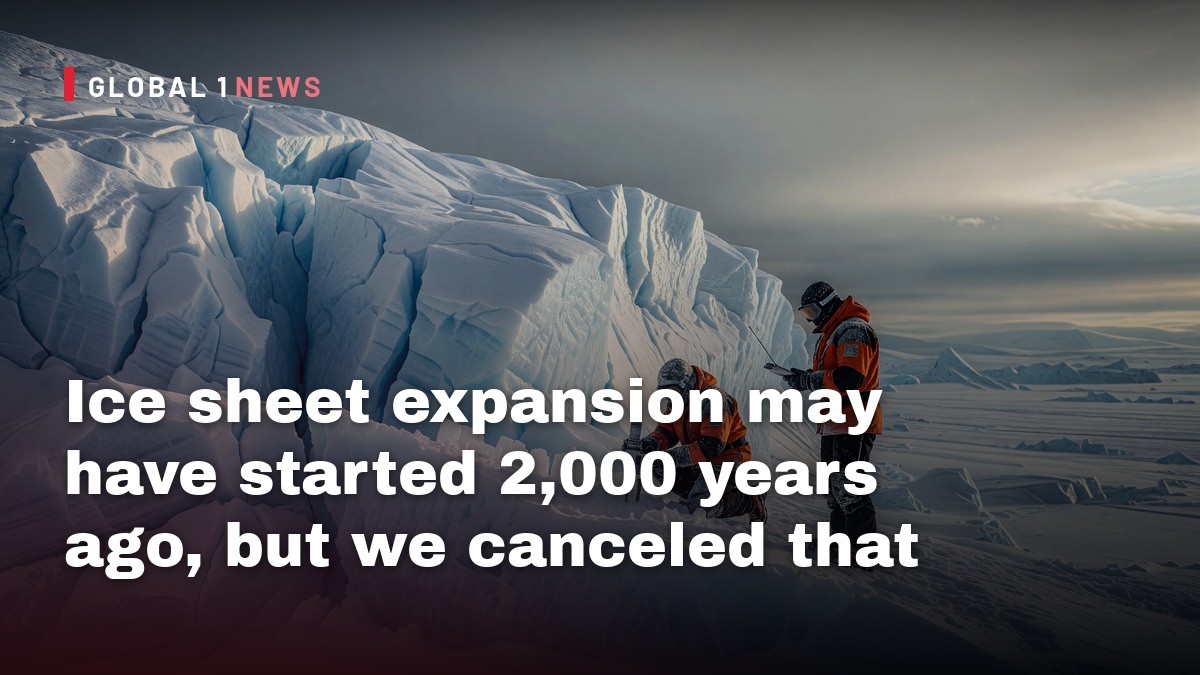
When you’ve spent a decade wrestling with racks, power‑draw, and the endless “best practice” buzz from cloud giants, you learn to spot hype from a mile away. The latest scoop from the Arctic—research showing that the Laurentide Ice Sheet began a slow comeback about 2,000 years ago, only to be knocked back by modern warming—might sound like a climate‑science curiosity, but for us in the hosting trenches it’s a stark reminder of how fragile the balance between natural cycles and human‑driven forces can be. If you thought your data‑center’s cooling plan was the biggest risk, think again. The story of Barnes Ice Cap is a textbook case of long‑term trends being upended by a sudden, anthropogenic shock, and it forces us to ask: how are we pricing, planning, and protecting our own infrastructure against the next big “climate‑shock” to the industry?
Cold‑Based Ice, Warm‑Based Lessons
The Barnes Ice Cap is a rare cold‑based glacier, frozen solid to the bedrock rather than sliding on meltwater. That distinction matters because, unlike warm‑based ice that grinds away everything beneath it, cold‑based ice preserves the landscape it covers. In practical terms, it’s like a data‑center that never wipes its logs—everything underneath stays intact, waiting to be read later.
For us, the takeaway is simple: the assumptions we make about “normal” operating conditions can be shattered when the environment changes. The industry loves to tout “standard operating procedures” based on historic temperature ranges, yet the Barnes study shows those ranges can swing dramatically over centuries. If a cold‑based glacier can sit on a plateau for millennia, then a “standard” cooling design that ignores the possibility of a sudden temperature spike is just a fantasy.
The Timeline That Matters
The Science paper cited in the Ars Technica piece outlines a clear sequence: the Laurentide Ice Sheet hit its smallest extent around 3,600 years ago, began expanding roughly 2,000 years ago, and then retreated again after about 1960 when human‑driven warming took over. Those dates are anchored by two independent methods—beryllium‑10 exposure dating and radiocarbon “kill dates” from mosses smothered by the ice.
What’s crucial for us is the abrupt reversal around 1960. The ice cap had been inching forward for two millennia, a slow, predictable drift that could be modeled. Then, within a few decades, rising greenhouse gases reversed the trend. In the hosting world, we see a parallel in the rapid adoption of hyperscale pricing models that upended traditional colocation economics almost overnight. The lesson? Long‑term capacity planning must include a “what‑if” scenario for sudden market or environmental shifts.
Solar Decline vs. Carbon Rise: The Dual‑Force Dynamic
The researchers explain that the ice’s advance was driven by a decline in solar insolation at high latitudes, a natural cooling trend that outweighed a modest rise in atmospheric CO₂ of about 20 ppm over the same period. The net effect was a temperature drop sufficient to let the ice re‑expand. Fast forward to today, and that same modest CO₂ rise is dwarfed by the 400‑plus ppm we now sit at.
From a business‑risk perspective, the dual‑force model is a warning. We can’t rely on a single factor—be it market demand, energy costs, or regulatory environment—to stay stable. If one variable shifts, the other may not compensate; it could amplify the impact. That’s why many founders still hedge with diversified power sources, on‑site cooling, and multi‑region redundancy. The Barnes story is a natural‑science analogue of the same principle.
Why “Best Practices” Fail in Production
Industry “best practices” often assume a warm‑based, sliding glacier model—fast, fluid, and forgiving. In reality, cold‑based ice shows us that a system can become a static, unyielding block that preserves everything beneath it. Translating that to hosting, the “best practice” of relying on automated scaling without manual oversight is risky. If the underlying hardware or power grid freezes—say, a regional grid failure caused by an extreme weather event—your auto‑scale won’t rescue you; the whole stack is stuck.
We’ve seen this on the ground: a client’s primary site in the Midwest lost power for 48 hours during a historic ice storm, and their “cloud‑first” architecture, built on a single provider’s region, went dark. The lesson mirrors Barnes: a cold‑based system preserves the past (data, contracts) but cannot adapt quickly to new conditions. Redundancy, geographic diversity, and manual fail‑over plans are not optional—they’re survival gear.
The Real Cost of Ignoring the Long View
One of the striking points in the study is the sheer scale of the ancient Laurentide—two miles thick, locking away around 80 meters of sea level. That magnitude dwarfs any data‑center footprint, yet the principle is the same: underestimating the scale of a risk leads to under‑investment in mitigation. When the ice cap retreated to within today’s margin about 3,600 years ago, the change was gradual and observable. The reversal after 1960 was abrupt and caught most observers off‑guard.
In the hosting industry, the “scale” is often expressed in megawatts, rack units, or bandwidth. The Barnes narrative underscores why we must build with headroom for low‑probability, high‑impact events.
Actionable Steps for Founders and Operators
First, embed climate‑risk modeling into your capacity planning. Use historical temperature and power‑outage data for your region, and run scenarios where a sudden 10‑degree swing or a multi‑day grid failure occurs. Second, diversify power sources—pair utility power with on‑site generation (solar, diesel, or fuel cells) and battery storage. The cold‑based nature of Barnes shows that a static, single‑source approach is vulnerable.
Third, adopt a “kill‑date” mindset for your infrastructure. Just as the researchers used moss death to timestamp ice advance, you should define clear decommission points for hardware that can no longer meet performance or efficiency thresholds. Fourth, maintain manual oversight capabilities. Automated scaling is great until the underlying network goes down; a trained ops team with documented runbooks can keep services alive when the bots can’t.
Finally, keep an eye on the macro‑trends—solar insolation, CO₂ levels, and other planetary forces may seem distant, but they shape the regulatory and energy landscapes that directly affect hosting costs. The fact that a 20 ppm CO₂ rise was enough to tip the balance in the past tells us that even modest policy shifts (like carbon taxes) can have outsized effects on operational expenses.
Looking Ahead: The Next Ice Age or the Next Market Shock?
Young’s team expects that, as Barnes continues to retreat, older samples will eventually be exposed, offering a clearer picture of the ice sheet’s early advance. In the same way, as we push the limits of our infrastructure, we’ll eventually hit the “older” layers of risk—those long‑term climate trends, resource scarcity, and geopolitical shifts that are currently hidden beneath the day‑to‑day grind.
For hosting founders, the message is plain: don’t wait for the next “ice age” of the industry—be it a massive carbon‑pricing regime, a sudden shift to edge‑centric workloads, or a regulatory wave that forces data residency. The Barnes Ice Cap shows nature can hold a steady course for millennia, then flip on a dime. Your business model must be ready for that flip, too. Build with redundancy, plan for the unexpected, and keep a hard‑nosed eye on the long‑term forces that shape the ground you stand on.
— Allan Ali, Founder
This article was produced with AI-assisted research and editorial support. Reporting is based on the source material cited below. Sources: Ars Technica; arstechnica.com; Global1.News (27 October 2026).
By Allan Ali, Global1.News
What's Your Reaction?
 Like
0
 Dislike
0
 Love
0
 Funny
0
 Wow
0
 Sad
0
 Angry
0

Publisher of Global1.News. Automation architect, systems builder, and the guy making sure the truth gets published.













Comments (0)