
Mushroom hunter finds live M67 grenade, nearly triggers explosion with knife
In the quiet scrublands of Tak province, a routine walk for mushrooms turned into a moment of stark reminder about the lingering shadows of conflict in Thailand’s countryside.
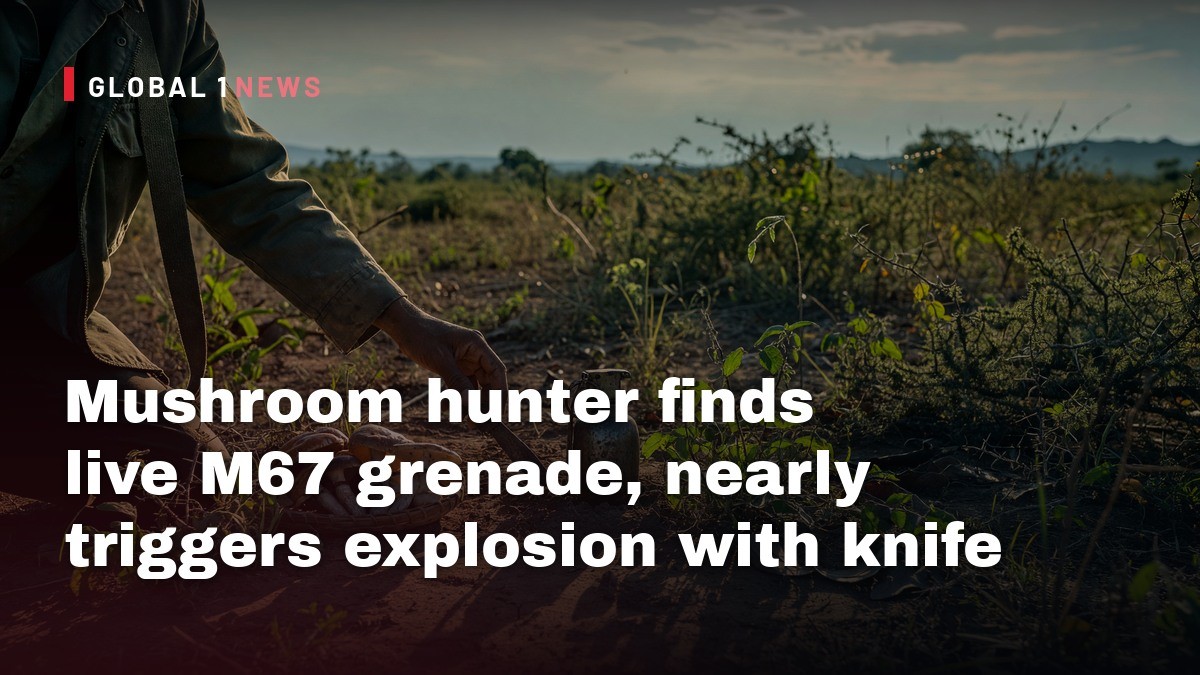
In the quiet scrublands of Tak province, a routine walk for mushrooms turned into a moment of stark reminder about the lingering shadows of conflict in Thailand’s countryside. A local mushroom hunter, moving through dry leaves near a tree, uncovered a green, round object that at first glance seemed harmless. It was only after prying it free with a knife that the hunter realized the object was an M67 fragmentation grenade—a relic of past military activity that could have caused a tragic explosion. The swift actions of the hunter, village headman, and provincial police prevented disaster, highlighting the importance of community vigilance and the ongoing work of explosive ordnance disposal (EOD) teams in rural Thailand.
Discovery in the Woods
The incident unfolded in the scrubland about 20 metres from a dirt road that branches off the old Phahonyothin route between Tak and Wang Chao, roughly five kilometres from Tak city. While searching for mushrooms, the hunter spotted a round, green object partially exposed beneath the leaves. Curious, the person cleared the debris and used a knife to pry the object out, only to discover it was a live M67 anti‑personnel fragmentation grenade.
Such grenades, originally designed for military use, are known for their lethal shrapnel effect. In this case, the pin had been pulled, but the safety mechanism remained partially engaged, preventing the grenade from detonating. The hunter’s quick recognition of the danger and immediate alert to local authorities averted what could have been a fatal explosion.
Local Response and Coordination
Upon receiving the report, Wang Hin subdistrict headman Charan Sonkaew inspected the site alongside other local officials. Recognising the seriousness of the find, Charan promptly contacted the Tak provincial police, who in turn summoned an EOD team. Police chief Pol. Maj. Gen. Songphon Sangkhasem ordered the response, emphasizing the urgency of the situation.
The coordination between village leadership and provincial police reflects a long‑standing tradition in Thai rural communities, where village headmen act as the first line of communication in emergencies. This structure, rooted in the principles of “sufficiency economy” and communal responsibility, ensures that potential threats are addressed swiftly and efficiently.
EOD Team Intervention
Pol. Lt. Col. Somkiat Mankaew led the explosive ordnance disposal team that arrived on the scene. After securing the area, the team examined the grenade and confirmed its type and condition. The safety mechanism’s partial engagement meant the device was “live” but not ready to explode, a precarious state that demanded careful handling.
The EOD team safely recovered the grenade and planned its destruction in a designated safe area. Lt. Col. Somkiat reminded the public that any suspicious object resembling a grenade should never be touched. He urged people to move away and immediately notify a village headman, assistant headman, or police officer so trained personnel can respond.
Why Grenades Still Appear
While the source material does not specify how the grenade came to be in Tak’s scrubland, the presence of unexploded ordnance (UXO) in Thailand’s border provinces is a known legacy of past conflicts. Decades of insurgency and cross‑border tensions have left remnants scattered across remote areas, often discovered by farmers, hunters, or construction workers.
These remnants pose ongoing risks to civilians, especially in agricultural regions where daily activities bring people into close contact with the land. The Tak incident underscores the need for continued EOD vigilance and community education, a task that provincial police have taken on as part of their public safety mandate.
Community Safety Practices
Lt. Col. Somkiat’s advice aligns with broader public safety campaigns across Thailand. Residents are encouraged to recognize the visual cues of a grenade—its round shape, green or olive coloration, and the presence of a safety pin. If an object is suspected, the recommended steps are to stay calm, move away from the area, and inform local authorities without attempting to move or tamper with the device.
This guidance resonates with Buddhist principles of mindfulness and non‑violence. By staying aware of one’s surroundings and acting with compassion for the safety of others, community members embody the spirit of “metta” (loving‑kindness) while protecting themselves from hidden dangers.
Broader Implications for Rural Thailand
The Tak grenade episode reflects a larger narrative about the intersection of rural livelihoods and security concerns in Southeast Asia. As Thailand continues to develop its infrastructure and promote eco‑tourism, many remote areas remain vulnerable to the lingering hazards of past conflicts. The presence of UXO can hinder agricultural productivity, limit safe access to natural resources, and pose a psychological burden on villagers who must constantly be on guard.
Efforts by provincial police and EOD units to locate and neutralise such threats are essential for fostering a sense of security that allows communities to thrive. Moreover, the incident highlights the importance of integrating traditional community structures—village headmen, local elders, and informal networks—into modern safety protocols, ensuring that warnings travel quickly and responses are coordinated.
Looking Ahead
As the EOD team prepares to destroy the recovered grenade, the episode serves as a reminder that vigilance remains a daily practice for those living close to the land. The mushroom hunter’s experience will likely be shared in local gatherings, reinforcing the message that ordinary citizens play a crucial role in national safety.
In the gentle rhythm of rural Thai life, where the search for mushrooms and the cultivation of rice coexist with the watchful eyes of village leaders, stories like this one weave together the threads of tradition, modern security, and communal responsibility. By staying alert, respecting the guidance of authorities, and acting with the calm compassion taught by Buddhist practice, Thai communities continue to safeguard their homes and forests against the hidden remnants of a turbulent past.
This article was produced with AI-assisted research and editorial support. Reporting is based on the source material cited below. Sources: Khaosod English; khaosodenglish.com; Global1.News (28 October 2026).
By Ann Srisawat, Staff Writer
What's Your Reaction?
 Like
0
 Dislike
0
 Love
0
 Funny
0
 Wow
0
 Sad
0
 Angry
0

Southeast Asia Correspondent at Global1.News. Based in Bangkok, covering Thai and Southeast Asian politics, economy, technology, and culture. Deep regional perspective on one of the world's most dynamic regions.














Comments (0)