
Israel's Election Ends in Deadlock: Record Turnout Leaves the Arab Parties Holding the Balance
Israel's election exit polls left Benjamin Netanyahu's bloc and Gadi Eisenkot's opposition deadlocked at 50 to 52, with the Arab parties projected at a record 17 to 18 seats. Turnout reached 77.7 percent, the highest in decades, and no official result exists.
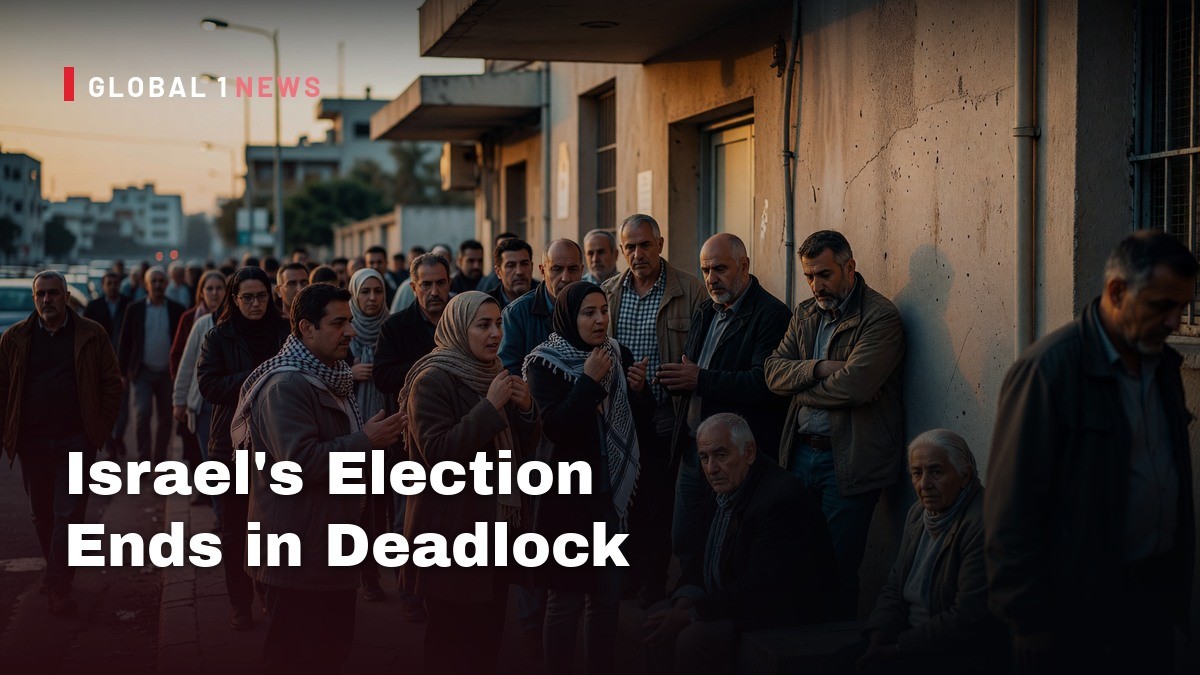
Israel's election night ended without an answer. Five broadcasters published five different parliaments from the same exit polls, two of them revised their own numbers within hours, and the count of actual ballots had barely begun. The Arab parties, projected at a record 17 to 18 seats, now sit between two blocs that cannot reach 61 without them.
Israel's Election Ends in Deadlock: Record Turnout Leaves the Arab Parties Holding the Balance
Tel Aviv, Israel — Polling stations closed at 10:00 p.m. local time on Tuesday, 27 October 2026, and the exit polls landed minutes later. By 02:30 Israel time on Wednesday, the Central Elections Committee had counted a fraction of one percent of the vote, and no official result existed.
The Numbers That Would Not Settle
The exit polls are estimates built on voter surveys, not counted ballots, and they have missed final results by a few seats in past elections. On this night the gap between the broadcasts was wider than that. Kan 11 put the Netanyahu bloc at 50 and the opposition at 53. Channel 12 had it 50 to 52. Channel 13 had it 50 to 52. Channel 15 put the Netanyahu bloc at 55 and the opposition at 49. Channel 14, alone, gave the right-wing bloc 60 seats, the left 43 and the Arab parties 17.
Then the numbers moved. Kan 11 revised its own poll to a 51-51 deadlock, lifting Likud to 27 seats from 25, dropping The Democrats to 9 from 10 and Otzma Yehudit to 6 from 7. Channel 13's update cut Bennett's B'Yachad from 14 seats to 13 and raised the Joint List from 10 to 11, leaving the anti-Netanyahu bloc on 52 and the Netanyahu bloc on 50. No poll was withdrawn. The broadcasters simply published different parliaments, and then different revisions of them.
A Record Night at the Ballot Box
The Central Elections Committee reported 77.7 percent turnout as of 10 p.m., or 5,695,682 voters, up from 70.6 percent at the same hour in 2022. The outlets do not agree on what record that is. The Times of Israel called it the highest turnout since 1999. ynet called it the highest in 25 years and the highest recorded at poll-closing time since 2001. The Jerusalem Post put it at the highest level since at least 1973.
The geography split sharply. Two small communities in the Arava, Paran and Shaharut, reported 100 percent turnout. Modi'in-Maccabim-Re'ut reached 79.2 percent, Bnei Brak 77 percent, Jerusalem 65.9 percent, Tel Aviv-Jaffa 65.4 percent, Haifa 61.6 percent and Bat Yam 55.3 percent. Arab community turnout ran high: Sakhnin at 86.8 percent, Kafr Qasim at 84.9 percent, Rahat at 82 percent, Umm al-Fahm at 75.7 percent and Nazareth at 72.2 percent. Anyone still queuing at 10 p.m. was allowed to vote, so the tally kept rising after closing.
Eisenkot Claims a Mandate That Does Not Exist Yet
Gadi Eisenkot, the former IDF chief of staff who leads the newly formed Yashar party, addressed supporters in Tel Aviv before any ballot had been certified. "The initial exit poll results indicate a complete lack of confidence in Netanyahu and his October 7 government among the Zionist majority and the majority of Israeli citizens," he said. "If these are the final results, they represent a victory for Israel's national-minded, Zionist majority."
He went further. "I will act immediately to implement the people's decision, replace the Netanyahu government, and establish a Zionist government committed to military conscription as soon as possible." The Times of Israel reported that Eisenkot called on Netanyahu to accept defeat and step down, describing him as an "interim" prime minister. No mandate has been issued, and no official result exists for President Isaac Herzog to consult on. Yair Lapid, meanwhile, declared: "Don't let anyone confuse you: The Netanyahu bloc has suffered a crushing defeat. This is a total collapse, and the public has told them to go home."
The Arab Parties Become the Arithmetic
The Joint List and Ra'am were projected at a combined 17 to 18 seats, which the Jerusalem Post described as record-breaking, up from pre-election projections of 14 and 16. The three main exit polls put a combined 70 seats behind parties opposed to Netanyahu, but several Zionist opposition parties have ruled out governing alongside Arab parties. Channel 12's own figures put Ra'am on 7 and the Zionist opposition parties on 52 — two short of the 61 needed for a majority.
Ra'am chairman Mansour Abbas told Channel 12: "Everyone is speaking with us, not just from the 'change bloc.'" He signalled willingness to join a government led by Eisenkot but said it must first become clear that such a coalition is viable, and acknowledged: "currently there aren't numbers for a government." Opposition leaders have largely ruled out forming a government with the Arab parties, with the exception of the Democrats' Yair Golan. Joint List chairman Yousef Jabareen gathered with supporters at the party's election headquarters in the northern city of Nazareth.
What Likud Is Doing Behind Closed Doors
Netanyahu had not spoken publicly hours after the exit polls were released. Likud ministers posed with supporters at the party's Jerusalem headquarters, activists danced and threw Likud ballots in the air, and "Only Bibi!" supporters shouted. The Times of Israel liveblog headline read: "Netanyahu and Likud ministers in no hurry to arrive at party's election HQ in Jerusalem."
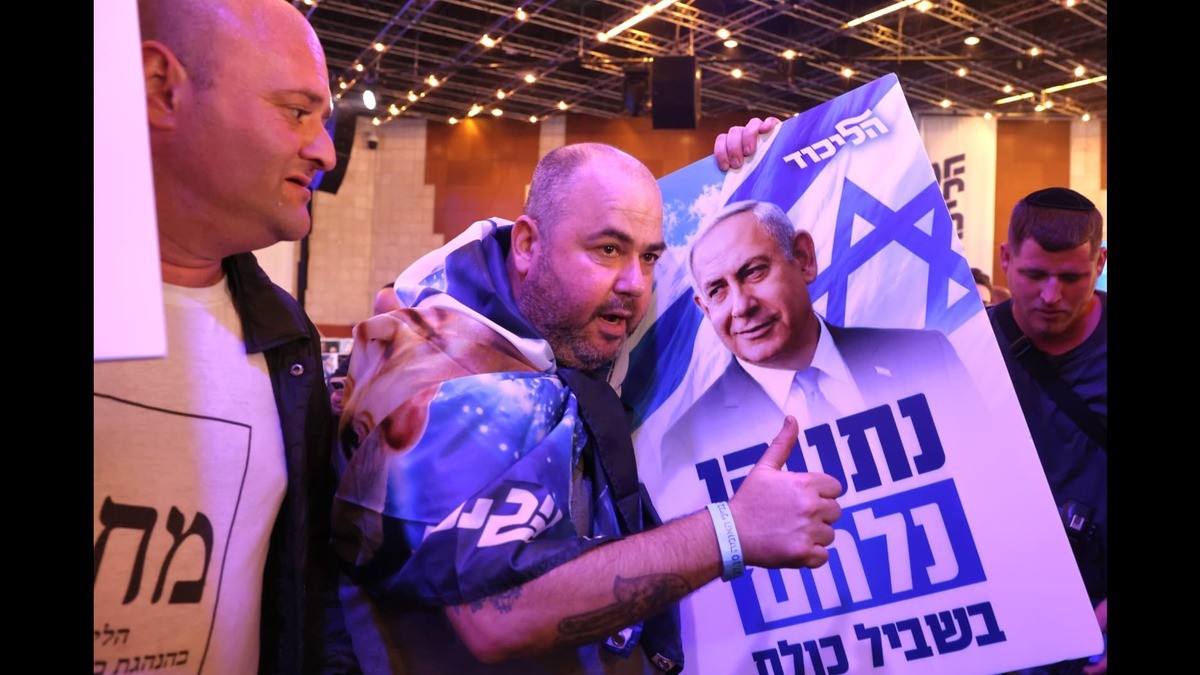
Right-wing Israeli media close to the prime minister reported that Netanyahu was racing to stop Likud defections and had signalled openness to a national unity government. Those reports were relayed by Al Jazeera and could not be independently verified, and neither carried a direct quotation from him. During the day he had posted repeatedly on social media about the high number of Arab citizens voting, urged his right-wing supporters to turn out, and accused Arab citizens of trying to "steal" the vote. At the Likud event, giant screens played militaristic videos and repeatedly showed President Trump shaking hands with Netanyahu.
The 650,000 Ballots Nobody Has Counted
More than 650,000 special double-envelope ballots must undergo separate verification and counting. These include votes from soldiers, diplomats, hospital patients, prisoners and people voting away from their registered polling stations. Central Elections Committee officials warned that counting could continue until Friday morning. The Times of Israel reported that soldiers' and other double-envelope votes are counted after the regular ballots and are not expected to be fully counted until Thursday.
The electoral threshold is 3.25 percent of the vote. Parties that fall short get no seats, and their votes are removed from the allocation, which can tip the balance between blocs. Parties projected below the threshold include Ofer Winter's People of Israel, Yoaz Hendel's The Reservists-Economic party, economist Yaron Zelekha's list and the Haredi Public party. Avigdor Liberman suggested soldiers' votes could boost Yisrael Beytenu to 14 or 15 seats and urged Likud members to defect. That is his claim, not a projection.
Herzog's Twenty-Eight Days
Once results are final, President Isaac Herzog consults every party in the new Knesset on whom they recommend as prime minister, then asks the candidate he judges most likely to succeed to form a coalition. That candidate has 28 days, extendable by up to 14 more. If they fail, the president can turn to another member. If no one can form a government, Israel heads for another election. Netanyahu stays on as caretaker prime minister in the meantime.
France 24 noted the stalemate "could yet work in Netanyahu's favour, allowing him to remain in power in a caretaker capacity while parties try to forge a governing coalition." The arithmetic is unforgiving: 120 seats, 61 for a majority, and no single party has ever won 61 outright. Israel held five elections between 2019 and 2022. The outgoing Knesset had Netanyahu's bloc on 68 seats.
A Verdict on October 7
This was the first national election since the Hamas-led attack of 7 October 2023 and the wars in Gaza, Lebanon and Iran that followed. Yohanan Plesner, president of the Israel Democracy Institute, called the exit polls a major defeat for Netanyahu's coalition, which they showed falling from 68 seats to about 50, but said Eisenkot had not emerged as a clear winner. He cautioned that much could change as votes were counted.
Shira Efron, an Israeli policy analyst at the Rand Corp. think tank, told NPR the result was "a very good outcome for Eisenkot" and his recently formed party, adding: "The most likely scenario is that he will receive the mandate from the president to form the government." Voter Naama Aaronsohn told NPR: "Important is an underestimation, because it's much more than important. It's crucial." Opposition supporter Ophelie Namiech, at the Tel Aviv party, said: "I'm anxious. Listen, the results are good, but they're complex. It takes time before we have a full picture."
The War Waiting on the Other Side of the Count
Eisenkot urged security chiefs to "serve the state and interests of Israeli citizens alone," a remark the Times of Israel read as an apparent reference to a potential Iran conflict. NPR reported that the Likud event's screens repeatedly showed Trump, who has publicly endorsed Netanyahu, and that the two leaders plan to launch major attacks against Iran after the Israeli and U.S. midterm elections.
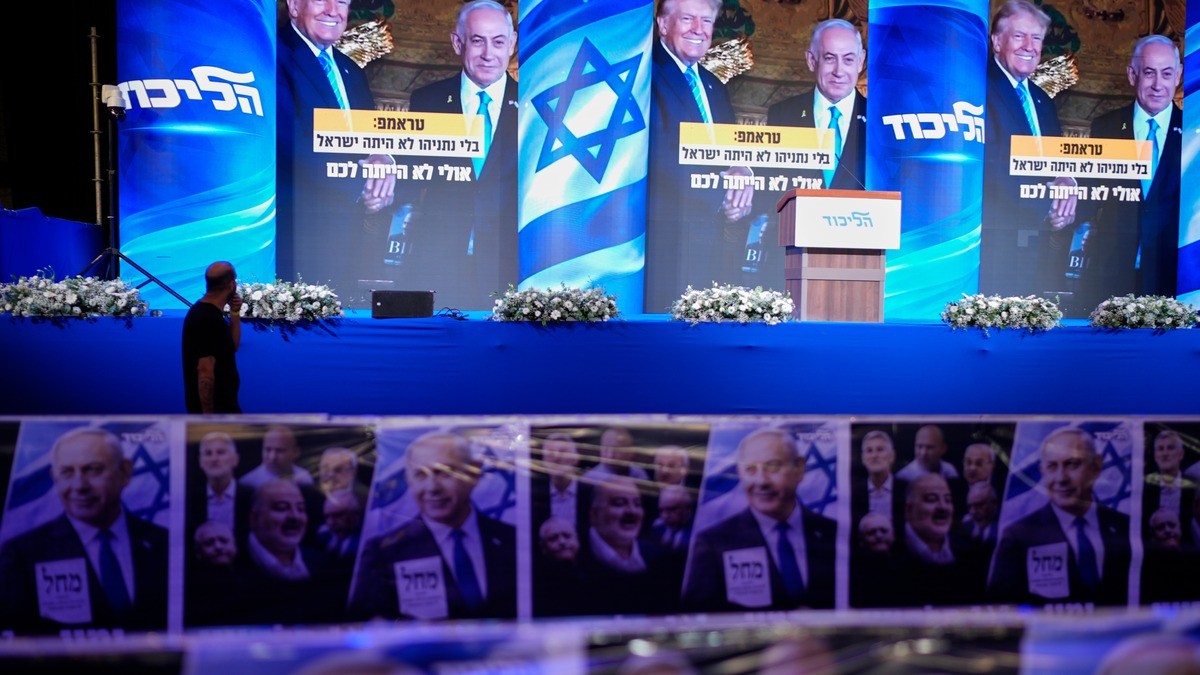
At Likud headquarters, supporter Elie Pieprz told NPR: "I've been here many times at different campaigns where at the first hour, that's what the exit polls show, and then you wait a little bit. And Prime Minister Netanyahu has had a knack of getting over the top when he needed it." He added: "Right now we're in a war ... as unattractive as that may sound internationally, that's the reality." Netanyahu is Israel's longest-serving prime minister, with more than 19 years in office in total. He has not conceded, resigned or been defeated in any final sense. No final result exists.
What Happens at Sunrise
The double-envelope ballots will be opened and verified. The threshold will decide which parties survive and which votes are redistributed. Herzog will wait for the official count before he calls anyone. The israelielection.org live dashboard showed 0.7 percent of expected votes counted when this was compiled, and the Central Elections Committee has warned the process could run until Friday morning.
Eisenkot has called for the leader of the largest party in the opposition bloc to become its candidate for prime minister, but no agreement on that arrangement has been announced within the bloc. He has rejected serving under Netanyahu, including in a rotation government. The exit polls remain estimates. The blocs remain deadlocked. The Arab parties remain the arithmetic, and the ballots remain uncounted.
By Jessica Ali, Staff Writer
This article was produced with AI-assisted research and editorial support. Sources: The Times of Israel, The Jerusalem Post, Israel National News, ynet, World Israel News, France 24, NPR and The Thursday Times. Photographs: AP Photo/Ohad Zwigenberg via The Times of Israel (cover), The Jerusalem Post (Likud headquarters) and AP via NPR (Likud election-night stage).
What's Your Reaction?
 Like
0
 Dislike
0
 Love
0
 Funny
0
 Wow
0
 Sad
0
 Angry
0

Editor-in-Chief at Global1.News. Atlanta-based journalist who cuts through the BS and tells it like it is. Lead anchor, host, and the voice you hear when the spin stops and the truth starts.















Comments (0)