
Uh-oh, it sounds like the iPhone Duo keeps cracking and users aren’t happy about it
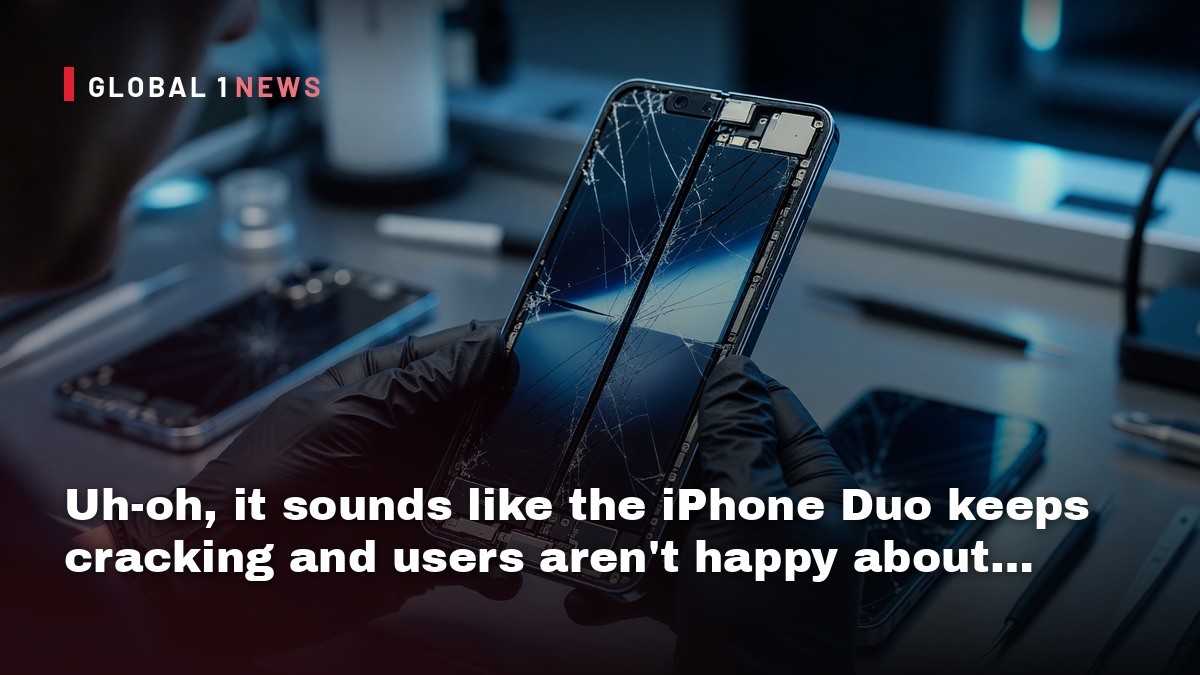
Apple’s much‑buzzed‑about iPhone Duo hit the market with the usual fanfare, but the first wave of users is already shouting about cracked screens and creases that make the whole “foldable” promise look shaky.
Apple’s much‑buzzed‑about iPhone Duo hit the market with the usual fanfare, but the first wave of users is already shouting about cracked screens and creases that make the whole “foldable” promise look shaky. As a founder who’s been wiring up data centers and handling hardware failures for a decade, I see a pattern: hype outpaces engineering, and the fallout lands squarely on the shoulders of the supply chain and, eventually, the end‑customer. The Duo’s early‑stage woes aren’t just a consumer annoyance—they’re a warning bell for any independent hosting provider or hardware‑focused startup that leans on premium devices for internal tooling or client demos.
Early‑Adopter Pain Points Are Real and Immediate
The reports from Bloomberg and 404 Media paint a clear picture: users are hearing a “loud crunching noise” and then seeing a crack appear on the inner display after merely hours or days of use. That’s not a gradual wear‑and‑tear scenario; it’s an outright failure mode that shows up almost as soon as the phone leaves the box. The description of “big fat creases down the middle of the [$2,000] folding screen” adds a visual cue that the hinge mechanism or the flexible glass is not holding up under normal handling.
Apple’s own response—acknowledging awareness of “an issue impacting the inner display on a small number of iPhone Duo units”—is the only concession on record. There’s no admission of a design flaw, no timeline for a fix, and no hint that the problem is being isolated to a particular batch. For a product priced at the premium end of the market, that level of ambiguity is a risk multiplier for anyone who depends on the device for business‑critical tasks.
Why Foldables Have Been a Minefield for Years
Foldable phones have been an ambition across Silicon Valley for a while, and the track record is littered with similar “maladies.” The source material notes that “many of the models released so far have suffered from similar maladies,” a nod to the broader industry struggle with flexible displays. The engineering challenge is not just about bending glass; it’s about ensuring that the hinge, the display driver, and the protective layers all survive repeated cycles without compromising structural integrity.
Apple’s claim that it “finally got the notoriously tricky form factor right” is now under direct fire. The fact that early adopters are already reporting structural failures suggests that the code Apple thought it had cracked is still buggy. From a founder’s perspective, this is a classic case of “feature creep” meeting “real‑world stress,” and the result is a product that looks slick on the launch stage but falters when the rubber meets the road.
Implications for Independent Hosting Providers
Many small‑to‑mid‑size hosting firms use high‑end smartphones for on‑the‑go monitoring, field diagnostics, and client presentations. When a device that costs around $2,000 starts cracking after a day, the cost of replacement, the downtime while waiting for a repair, and the reputational hit to your brand can add up fast. A single cracked Duo could mean a missed SLA, a delayed ticket, or a client seeing a broken screen during a demo—each of those translates into tangible business risk.
Beyond the immediate hardware cost, there’s a downstream effect on support tickets. If you’re running a managed service and your techs are equipped with devices that are prone to failure, you’ll see a spike in “device broken” tickets, pulling engineering bandwidth away from core infrastructure work. That’s the kind of hidden cost that VC‑backed hype rarely accounts for.
Pricing Pressure From Hyperscalers and the “Premium Device” Trap
The Duo’s $2,000 price tag sits at the high end of the consumer market, but for enterprises it’s a line‑item that can be justified only if the device delivers on durability. Hyperscalers like Amazon and Google have long offered cheaper, ruggedized alternatives for field work, often bundling them with management platforms. When a premium device like the Duo shows early failures, it reinforces the argument that you don’t need to chase Apple’s shiny new tech when solid, proven hardware exists at a fraction of the cost.
From a founder’s lens, the lesson is clear: don’t let the allure of a flagship brand dictate your procurement strategy. Evaluate the total cost of ownership, not just the sticker price. If a $2,000 phone has a higher failure rate, its effective cost per usable day skyrockets, eroding any perceived prestige advantage.
Risk Management: What to Do If You Already Own Duo Units
If you’ve already rolled out iPhone Duo devices across your team, start by inventorying the units and flagging any that show the “crunch” symptom. Set up a quick internal ticket category for “Foldable screen failure” so you can track incidence rates. Even if Apple’s official response is limited, having a data set will help you negotiate warranty replacements or bulk repair agreements.
Consider diversifying your device fleet. Pair the Duo with a more rugged, non‑foldable secondary device for field tasks. That way, a cracked screen won’t cripple your monitoring pipeline. Also, keep an eye on Apple’s future communications; a firmware update or a hardware recall could shift the risk profile, but until then, treat the Duo as a high‑risk asset.
What This Means for Future Foldable Rollouts
The early cracks in the Duo underscore a broader industry truth: the foldable market is still in its infancy, and even the biggest players can’t guarantee flawless execution. For startups eyeing the foldable space, the takeaway is to build in generous testing cycles, simulate real‑world stress, and be prepared to iterate quickly. The hype cycle will keep pushing new form factors, but without rigorous durability validation, you’ll end up with the same “crack after days” story that Apple is now facing.
From a business‑risk standpoint, any venture that plans to embed foldable tech into its core offering should factor in a contingency fund for early‑stage warranty claims and potential product recalls. That’s a line item that many pitch decks forget, but it can be the difference between a smooth launch and a cash‑flow nightmare.
Actionable Takeaways for Founders and Operators
First, audit your hardware stack. Identify any premium devices that haven’t proven their durability in the field and assess whether they’re truly mission‑critical. Second, diversify your device procurement—don’t put all your eggs in the Apple basket. Third, set up a simple tracking mechanism for hardware failures; data beats anecdote when you need to make a business case for replacement or redesign. Finally, keep a skeptical eye on vendor claims. Apple’s “we finally cracked the code” line sounds good in a keynote, but the early user reports tell a different story.
Bottom line: the iPhone Duo’s cracked screens are a symptom of a larger mismatch between hype and engineering reality. As a founder who’s spent years keeping servers up while hardware hiccups happen, I can say with confidence that the best defense against such shocks is a pragmatic, data‑driven hardware strategy that doesn’t chase flash over function.
— Allan Ali, Founder
This article was produced with AI-assisted research and editorial support. Reporting is based on the source material cited below. Sources: TechCrunch; techcrunch.com; Global1.News (27 October 2026).
By Allan Ali, Global1.News
What's Your Reaction?
 Like
0
 Dislike
0
 Love
0
 Funny
0
 Wow
0
 Sad
0
 Angry
0

Publisher of Global1.News. Automation architect, systems builder, and the guy making sure the truth gets published.














Comments (0)