
Ontario's order for new subway trains could be hit by Canadian counter-tariffs
Ontario's multibillion-dollar order for new driverless subway trains could face significant cost increases as a result of Canada's retaliatory tariffs on American-made goods, raising fresh questions about the provincial government's decision to source the rolling stock from a US-based facility.
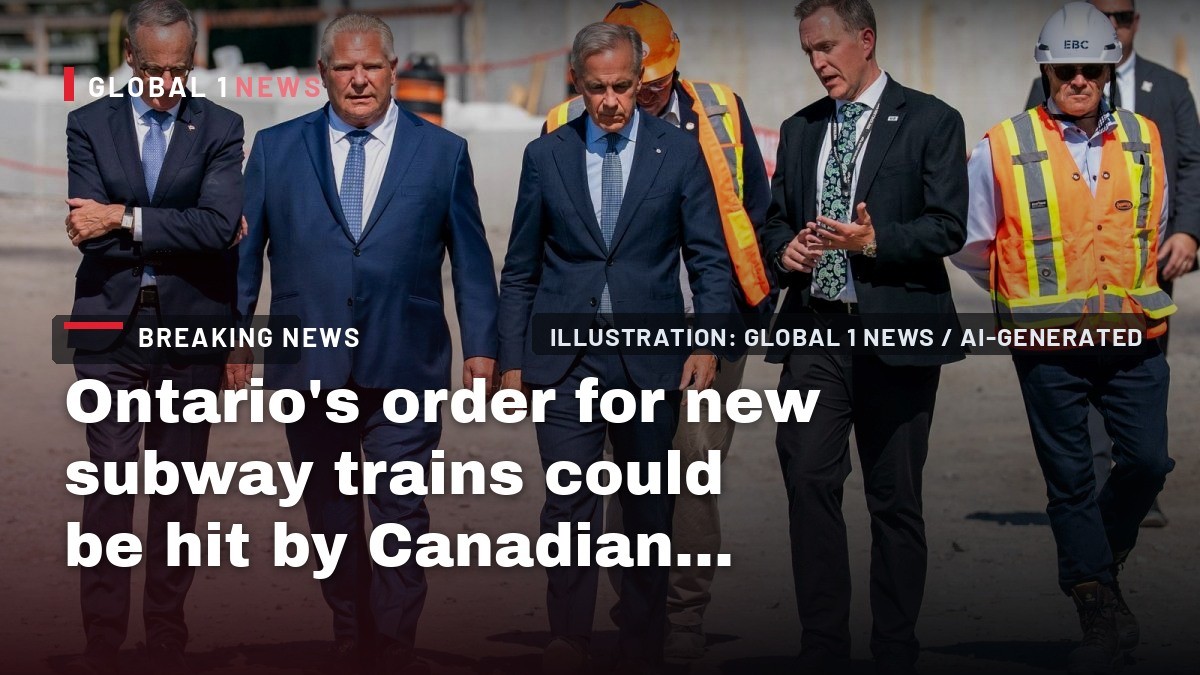
Ontario's multibillion-dollar order for new driverless subway trains could face significant cost increases as a result of Canada's retaliatory tariffs on American-made goods, raising fresh questions about the provincial government's decision to source the rolling stock from a US-based facility.
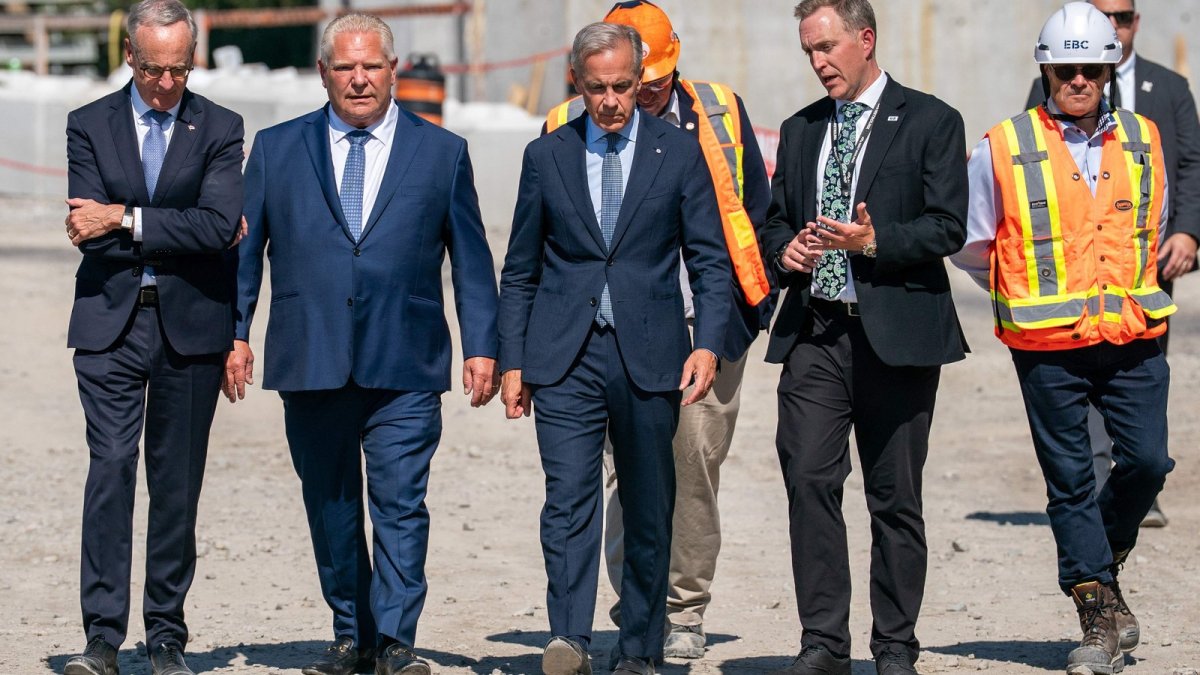
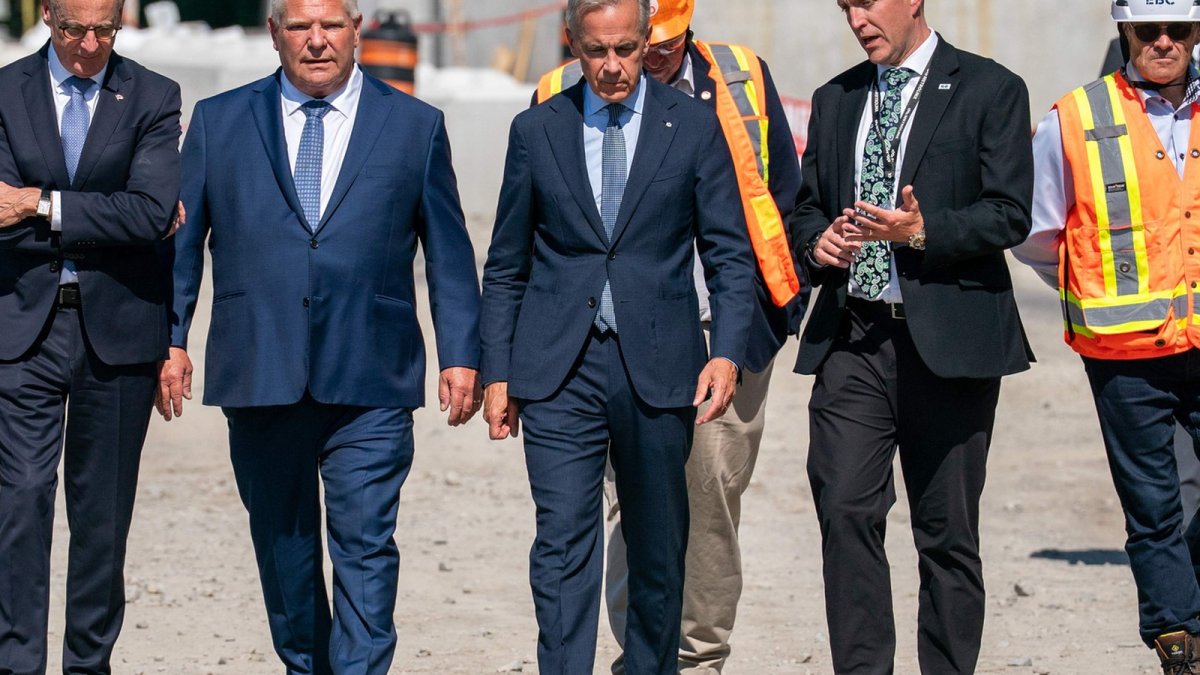
The federal government on Tuesday unveiled a list of roughly 700 items that will be subject to counter-tariffs when entering Canada from the United States, a list that explicitly includes rail locomotives running on electrical power. The measure, part of an escalating trade dispute, could apply directly to the self-driving electric trains ordered by the Ford government for the Ontario Line, a new downtown relief subway route in Toronto.
A $9 Billion Contract with American Manufacturing
In 2022, Infrastructure Ontario signed a $9 billion contract with a consortium of companies, including Hitachi Rail, to provide trains, rolling stock, and maintenance for the Ontario Line. The contract was among the largest transit procurement deals in the province's history, covering not just the vehicles themselves but also long-term operational support. Hitachi's trains are manufactured at a facility in Maryland in the United States. Before the Ontario Line is complete in the early 2030s, those trains will be shipped to Toronto and transported across the Canada-US border. If the current tariff regime remains in place when the order is fulfilled, substantial federal duties could be applied to the trains, adding millions to the project's bottom line. The timing of the purchase and import remains unclear. Metrolinx, the provincial transit agency overseeing the project, has not specified exactly when the US-built trains will cross the border, nor whether the current tariffs will still be in force at that point. What is certain is that the project's cost trajectory is already steep: the Ontario Line is now predicted to cost $34 billion when completed.Metrolinx and the Federal Response
A Metrolinx spokesperson did not directly address questions about the potential tariffs in a statement sent to Global News. Instead, the agency emphasised its broader procurement principles. "As with all provincial agencies, Metrolinx always makes every effort to procure from Ontario and Canadian-based companies," the spokesperson wrote. "We will continue to support our municipal, provincial, and federal partners in responses to the United States tariffs." The federal government's Department of Finance, which leads tariff decisions, described the counter-levies as a "focused and strategic" move, noting that targeted exemptions are available. In a statement, the department said requests for remission of the new counter-tariffs will be considered to provide "targeted surtax relief on an exceptional basis, where necessary to mitigate unintended negative impacts on the Canadian economy." That language offers a potential escape hatch for Metrolinx and Hitachi, but it is far from guaranteed. Whether the province would seek such an exemption, and whether Ottawa would grant one, remains an open question in the midst of a heated trade war.
Political Fallout: Stiles Points to Thunder Bay
Critics argue the situation was entirely avoidable. Ontario NDP Leader Marit Stiles, who has repeatedly questioned why a Canadian company was not awarded the Ontario Line contract in 2022, said the current predicament is the result of deliberate provincial choices. "When the province signed this agreement, we sounded the alarm over and over again. Good jobs that would be transformative for Thunder Bay went down south because of choices this government made," Stiles wrote in a statement. The reference to Thunder Bay is pointed. Alstom, a French multinational with significant manufacturing facilities in Canada, previously confirmed to Global News that it had submitted a bid to build the Ontario Line trains but lost out to the Hitachi-led consortium. Alstom's Thunder Bay plant has long been a hub for Canadian rail manufacturing, and the loss of the Ontario Line contract was seen by many as a missed opportunity for domestic industrial policy. The political dimension is significant. The Ontario Line contract was awarded during a period of intense focus on supply chains and domestic manufacturing, and the decision to source trains from Maryland rather than Ontario or Quebec has become a recurring point of contention at Queen's Park.Premier Ford's Blunt Assessment
Ontario Premier Doug Ford addressed the potential for increased prices in Canada as a result of the trade war on Monday, offering a characteristically direct assessment of the situation. "It is going to hurt, that's the cost of war," Ford said when asked whether Canadian tariffs were also a tax on Canadian people. "We'll wait it out for two years, even if he lasts two years, but we'll wait it out, and hopefully (American voters) will come to their senses when they see the pain he's putting on the American people." Ford's comments reflect the broader provincial strategy of weathering the trade dispute while maintaining pressure on the US administration. But for transit advocates and fiscal watchdogs, the prospect of additional tariffs on the Ontario Line trains represents a self-inflicted wound, one that could have been mitigated by choosing a domestic supplier. The premier's framing of the tariffs as a necessary cost of economic defence may resonate with some voters, but it does little to address the specific irony of a provincial government paying a premium to import trains from a country with which Canada is actively engaged in a trade war.
What Happens Next: Exemptions, Timing, and Costs
The immediate question is whether the tariffs will still be in place when Hitachi begins shipping trains to Toronto. The Ontario Line is not expected to be completed until the early 2030s, and tunnel boring machines are currently working beneath the city. The actual purchase and import of the US-made trains could occur at any point between now and then, making the tariff exposure highly uncertain. If the tariffs remain as they are, and if Metrolinx or Hitachi are not eligible for a federal exemption, the additional costs could be substantial. The $9 billion contract covers not just the trains but also rolling stock and maintenance, meaning the tariff impact could ripple across multiple components of the deal. The Department of Finance's willingness to consider remission requests offers a potential path forward, but it is by no means a certainty. The federal government has framed the counter-tariffs as a strategic tool, and granting exemptions too freely could undermine their effectiveness. For now, the situation remains fluid. The trade war is evolving rapidly, and the specific application of tariffs to the Ontario Line trains has not been definitively determined. What is clear is that the intersection of federal trade policy and provincial transit procurement has created a new layer of complexity for one of Ontario's largest infrastructure projects.Broader Implications for Canadian Procurement
The Ontario Line situation highlights a broader tension in Canadian procurement policy. Provinces and municipalities are often encouraged to buy Canadian, but the rules of interprovincial trade and international agreements do not always align with that goal. The federal government's counter-tariffs add a new variable to the equation, one that could reshape how future transit contracts are awarded. For Thunder Bay, the stakes are particularly high. The city has long relied on rail manufacturing as an economic anchor, and the loss of the Ontario Line contract was a significant blow. The current tariff situation only amplifies the sense of missed opportunity, as the province now faces the prospect of paying more for trains that could have been built domestically. As the trade war continues, the Ontario Line will serve as a case study in the unintended consequences of procurement decisions made in a different era. Whether the province seeks an exemption, whether Ottawa grants one, and whether the tariffs ultimately apply will determine the final cost of a project already straining under a $34 billion price tag. For now, the tunnel boring machines keep digging, the trains remain in Maryland, and the tariff question hangs over one of Ontario's most ambitious transit projects.Tags: Ontario Line, Hitachi Rail, counter-tariffs, Doug Ford, Marit Stiles, Metrolinx, Infrastructure Ontario, trade war, subway trains, Thunder Bay, Alstom, Department of Finance, transit procurement, Canada-US relations
This article was produced with AI-assisted research and editorial support. Sources: Global News Canada.
By Alex Thompson, Staff Writer
What's Your Reaction?
 Like
0
Like
0
 Dislike
0
Dislike
0
 Love
0
Love
0
 Funny
0
Funny
0
 Wow
0
Wow
0
 Sad
0
Sad
0
 Angry
0
Angry
0
Alex Thompson
Canada Correspondent at Global1.News. Based in Toronto, covering Canadian politics, energy, trade, and US-Canada relations. Provides the Canadian perspective on North American and global affairs.














Comments (0)