
PC Andrew Harper's killers 'to be excluded from early release scheme'
The killers of PC Andrew Harper are to be excluded from the Government's early release scheme and will remain behind bars, according to reports, in a significant reversal of policy that follows months of mounting pressure on the Prime Minister.
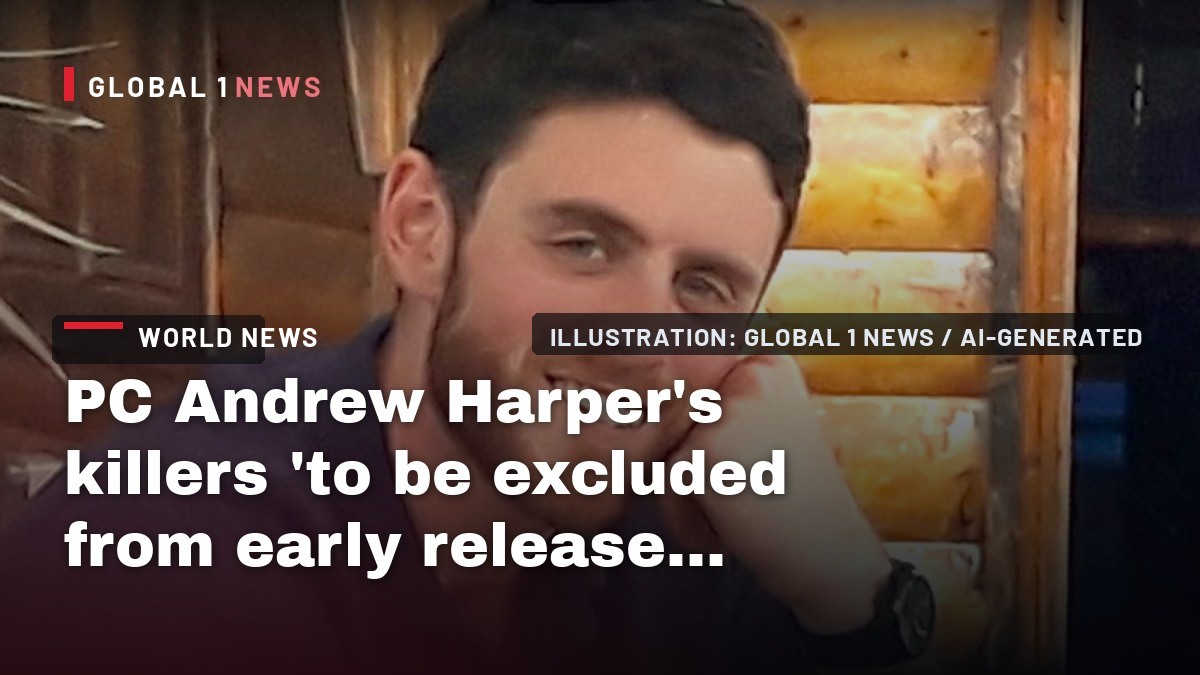
The killers of PC Andrew Harper are to be excluded from the Government's early release scheme and will remain behind bars, according to reports, in a significant reversal of policy that follows months of mounting pressure on the Prime Minister. Albert Bowers and Jessie Cole, two of the three men convicted over the death of the Thames Valley police officer in 2019, had been due for automatic release next year after serving half of their 13-year sentences. The move, which would see offenders convicted of specific categories of manslaughter stripped of eligibility for early discharge, marks a notable concession by Andy Burnham, who had previously promised to do "everything possible" to ensure the pair were not freed.
Killers to remain in custody under sentencing change
According to The Telegraph, police chiefs have been informed that the Justice Secretary, Alex Norris, will introduce secondary legislation to amend the Sentencing Act, effectively barring Bowers and Cole from the early release programme. The change is expected to cover "unlawful act" manslaughter, the offence for which the pair were convicted, and would mean they serve their full custodial term. The Prime Minister had earlier this month declined to confirm the specific change, telling reporters that such reports were "speculation", but he has since ordered a review into the policy, which is being conducted by Mr Norris and is expected to be published when Parliament returns from summer recess in September.
The development comes after Mr Norris was asked by Mr Burnham "to develop a plan to maximise public safety and minimise the early release of prisoners". A government spokesperson said: "The death of Pc Andrew Harper was a horrific crime. Our thoughts are with his family and friends, and we share the anger from the police community that we are in this position. The Prime Minister has asked the Justice Secretary to work through further options to keep a greater number of the most serious offenders in prison, including the killers of Pc Harper."
The 2019 killing in Sulhamstead
PC Harper, 28, was killed on 15 August 2019, just weeks after his wedding, when he became caught in a strap attached to a car being driven by Henry Long, with Bowers and Cole as passengers. The three men had been fleeing the scene of a quad bike theft in Sulhamstead, Berkshire, when the officer, who had got out of his patrol car to investigate, was dragged along a country road. Long was convicted of murder and sentenced to 16 years, while Bowers and Cole were found guilty of manslaughter and handed 13-year terms. The case prompted national outrage and led to the creation of Harper's Law, which mandates a life sentence for anyone convicted of killing an emergency worker while committing a crime.
Under the current rules of the early release scheme, Bowers and Cole would have been freed next year, halfway through their sentences. The prospect of their release had provoked fury among police officers and the public, with the Police Federation and the family of PC Harper campaigning vigorously against it. The Prime Minister's intervention, which follows a series of meetings with the Harper family and police representatives, is understood to have been driven by a recognition that the scheme's application to such cases was politically untenable.
Early release scheme: origins and expansion
The Labour Government's early release scheme began in September 2024 with the stated aim of easing overcrowding in prisons, which had reached crisis point under the previous administration. The scheme allows certain prisoners to be released after serving 40% of their fixed-term sentence, rather than the usual 50%, and was initially presented as a temporary measure to alleviate pressure on the prison estate. However, the 2026 Sentencing Act, which became law earlier this year, allows for an expansion of the scheme by reducing the threshold from 40% of a fixed-term sentence to a third, a move that critics warned would lead to the early release of more serious offenders.
The decision to exclude Bowers and Cole from the scheme represents a significant tightening of the rules, but it also raises questions about the Government's broader approach to prison capacity. With the prison population in England and Wales at record levels, ministers face a difficult balancing act between public safety and the practical realities of an overcrowded system. The Justice Secretary's review, which is expected to be published in September, is likely to set out a more targeted approach to early release, focusing on excluding the most serious offenders while maintaining the scheme for lower-level criminals.
Political pressure and the Burnham promise
Andy Burnham, who became Prime Minister after a landslide victory, has made no secret of his desire to distance himself from the previous government's record on law and order. Since taking office, he has excluded rapists and child sex offenders from being eligible for the early release scheme, and he has now moved to close the loophole that would have allowed Bowers and Cole to walk free. His promise to do "everything possible" to keep the pair in prison was made following widespread condemnation of the scheme, and the decision to amend the Sentencing Act through secondary legislation is a direct fulfilment of that pledge.
However, the Prime Minister's earlier refusal to confirm the specific change, when pressed by reporters, suggests a degree of caution about the political and legal implications of the move. Secondary legislation can be challenged in the courts, and there are questions about whether the Government can lawfully change the rules retrospectively to affect prisoners who have already been sentenced. Legal experts have noted that any change to the Sentencing Act would need to be carefully drafted to avoid successful legal challenges from prisoners or their representatives.
Harper's Law and wider sentencing reforms
The case of PC Harper has already had a lasting impact on sentencing policy in the UK. Harper's Law, which was enacted following a tireless campaign by Andrew's widow, Lissie Harper, ensures that anyone convicted of killing an emergency worker while committing a crime receives a mandatory life sentence. The Government has gone further, introducing a presumption that anyone convicted of murdering a police, prison or probation officer is handed a whole-life order. These changes reflect a broader shift towards tougher sentencing for crimes against emergency workers, a priority for the current administration.
The decision to exclude Bowers and Cole from the early release scheme is consistent with this approach, but it also highlights the limits of the Government's ability to address public concerns about sentencing. While the move will be welcomed by the police and the Harper family, it does little to address the underlying issue of prison overcrowding, which remains one of the most pressing challenges facing the justice system. The Justice Secretary's review, due to be published in September, is expected to set out a more comprehensive strategy for managing the prison population, but it is unlikely to satisfy all critics.
Public confidence and the road ahead
The exclusion of PC Harper's killers from the early release scheme is a significant victory for those who have campaigned for tougher sentencing, but it also raises broader questions about public confidence in the justice system. The early release scheme, introduced as a pragmatic response to overcrowding, has been deeply unpopular with the public, and the case of Bowers and Cole has become a symbol of its perceived failures. By acting to keep the pair in prison, the Government is seeking to restore faith in its approach to law and order, but it remains to be seen whether this will be enough to quell the wider anger.
For the Harper family, the news will come as a relief, but it is unlikely to bring closure. The loss of PC Harper, who was described by his colleagues as a dedicated and courageous officer, continues to be felt deeply by those who knew him. The Government's decision to amend the Sentencing Act is a recognition that some crimes are so serious that the automatic early release of offenders is simply unacceptable. As Parliament prepares to return from summer recess, the Justice Secretary's review will be closely scrutinised, and the Government will be under pressure to demonstrate that it is serious about protecting the public and upholding the rule of law.
By Erica Thornton, Staff Writer
This article was produced with AI-assisted research and editorial support. Sources: The Independent, The Telegraph.
What's Your Reaction?
 Like
0
Like
0
 Dislike
0
Dislike
0
 Love
0
Love
0
 Funny
0
Funny
0
 Wow
0
Wow
0
 Sad
0
Sad
0
 Angry
0
Angry
0

US Politics and Policy Correspondent at Global1.News. Based in Washington DC, covering American politics, policy, elections, and the courts. Knows how the system works and tells you what it actually means.















Comments (0)