
PM: Include Sparrow’s ‘Slave’ in CXC curriculum
Prime Minister Mia Mottley stood before a sea of mourners at the National Academy for the Performing Arts in Port of Spain on Friday, her voice resonant with the rhythm of a nation that had just said goodbye to one of its greatest cultural ambassadors.
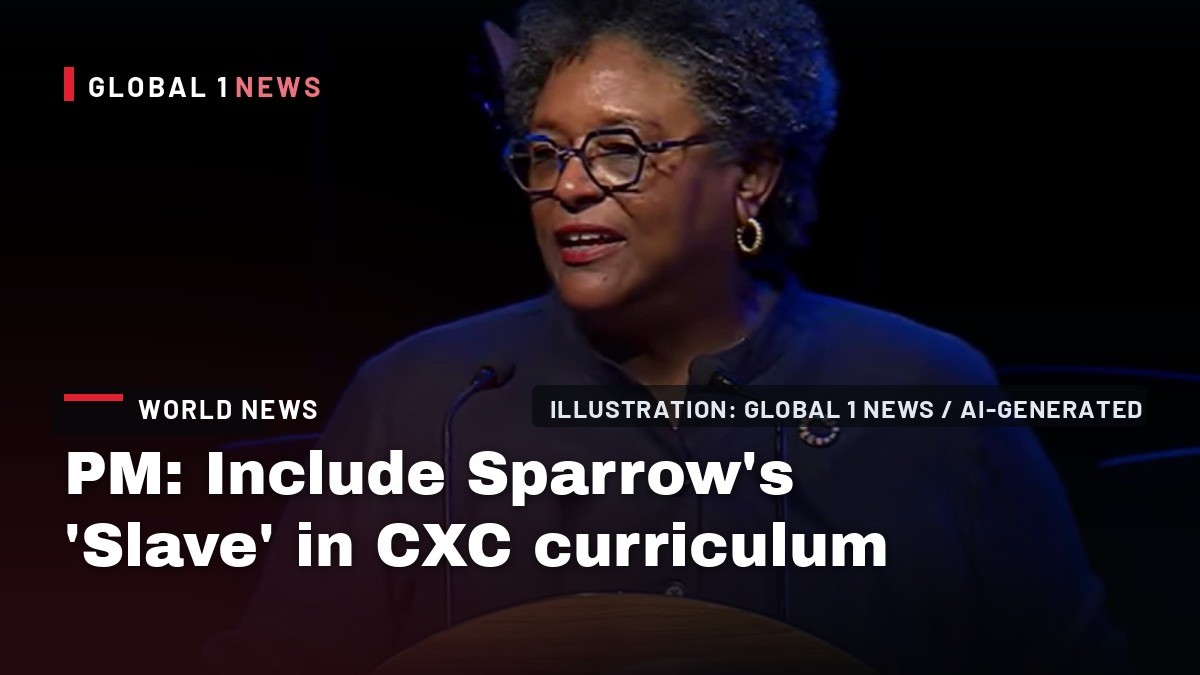
Prime Minister Mia Mottley stood before a sea of mourners at the National Academy for the Performing Arts in Port of Spain on Friday, her voice resonant with the rhythm of a nation that had just said goodbye to one of its greatest cultural ambassadors. As the funeral for the “King of Calypso”, Slinger Francisco – better known as the Mighty Sparrow – unfolded, the Barbadian leader used the solemn occasion to press a plea that reverberates far beyond the walls of the academy: the Sparrow’s iconic calypso “Slave” should become a core component of the Caribbean Examinations Council (CXC) curriculum.
The cultural weight of “Slave”
In her address, Prime Minister Mottley underscored the song’s power to convey the painful legacy of slavery while also charting a path toward Caribbean self‑determination. She argued that every child across the region ought to grasp “both the pain, but the mission that that song presented”. By invoking the lyrics of “Slave”, she reminded the audience that the tune is more than a melody – it is a theatrical performance of history, a lyrical chronicle of the moment when Caribbean peoples began to take control of their own fate.
The Prime Minister’s insistence that “if you don’t know those lyrics, then it means that we really haven’t done our job well” reflects a belief that cultural memory and formal education must walk hand‑in‑hand. In a Caribbean where colonial histories still echo in classrooms, the inclusion of “Slave” would embed a narrative of resistance and identity at the very heart of secondary education.
Calypso as a vehicle for social commentary
Mottley traced the Mighty Sparrow’s career as a testament to calypso’s role as a “pressure cooker” for social commentary. She recalled how Sparrow, alongside contemporaries like “Dan is the Man in the Van”, used the genre to challenge colonial education and to champion the value of learning: “If you want to earn tomorrow, you must learn today.” The Prime Minister highlighted Sparrow’s knack for turning music into a platform for addressing capitalism, international politics and democracy, noting his lyrical response to the introduction of Pay As You Earn (PAYE) taxation under former Prime Minister Dr Eric Williams.
By framing Sparrow’s oeuvre as a chronicle of Caribbean concerns across decades, Mottley positioned the song “Slave” not merely as a historical artefact but as a living commentary that can still speak to today’s youth confronting economic inequality and the lingering shadows of colonialism.
The Mighty Sparrow’s legacy in numbers
Born in Grenada on 9 July 1935 and raised in Trinidad and Tobago, the Mighty Sparrow rose to prominence in 1956 with the hit “Jean and Dinah”, also known as “Yankees Gone”. Over a seven‑decade career he amassed a staggering body of work: more than 500 penned calypsos, upwards of 70 albums, ten Calypso Monarch titles and eight Road March victories. His contributions earned him an honorary Doctor of Letters from the University of the West Indies in 1987 and the Order of the Caribbean Community (OCC) in 2001, a testament to his regional impact.
These achievements, recounted by Mottley, illustrate why the Prime Minister believes Sparrow’s music should be enshrined in formal curricula. The sheer volume of his output and the breadth of topics he covered – from colonial oppression to contemporary economic challenges – provide a rich repository for educators seeking to teach Caribbean history through a distinctly local lens.
Regional cooperation for curriculum reform
While the call originated in Barbados, Mottley made clear that the push for inclusion is a collaborative endeavour. She expressed hope that she and Trinidad and Tobago Prime Minister Kamla Persad‑Bissessar could persuade other Caribbean leaders to back the proposal. The appeal, therefore, is not a unilateral demand but a collective invitation to CARICOM‑wide education ministers to recognise the cultural significance of Sparrow’s work.
The Prime Minister’s outreach underscores a broader trend of regional solidarity in cultural policy, echoing past CARICOM initiatives that have sought to harmonise educational standards while preserving distinct Caribbean identities. By anchoring “Slave” within the CXC framework, leaders could ensure that the song’s message reaches every child sitting for CXC examinations, from Jamaica to the Bahamas.
Why “Slave” matters for today’s learners
Beyond its historical resonance, “Slave” offers a lens through which contemporary students can examine present‑day challenges. Mottley highlighted the song’s relevance to ongoing discussions about economic inequality and the lingering effects of colonial structures on modern Caribbean societies. In a time when many families across the islands grapple with rising living costs, the song’s call to understand past oppression becomes a tool for critical thinking about current socioeconomic pressures.
Embedding “Slave” in the curriculum could also foster a sense of pride and belonging among students. When young people hear their own cultural icons reflected in textbooks, they are more likely to engage with the material and see their lived experiences reflected in academic discourse. This aligns with the Prime Minister’s broader vision of education as a means to empower Caribbean youth.
The funeral as a moment of cultural affirmation
The funeral service itself was a national farewell, a ceremony that brought together political leaders, musicians and ordinary citizens to honour a man whose voice had become the soundtrack of Caribbean resistance. The presence of the Prime Minister, alongside other dignitaries, signalled the state’s recognition of the Mighty Sparrow’s contribution to national identity.
In the words of Mottley, Sparrow’s music gave Caribbean people “a way to express their experiences and challenge the systems they lived under”. The funeral, therefore, was not just a moment of mourning but a reaffirmation of the cultural power that Sparrow wielded throughout his career – a power that the Prime Minister now seeks to preserve within formal education.
Looking ahead: the road to curriculum change
The journey from a passionate appeal to actual curriculum amendment will require concerted effort from education ministries, CXC officials and cultural bodies. Mottley’s call sets the agenda, but the next steps will involve drafting syllabus content, securing approvals from the CXC board and training teachers to deliver the material effectively.
Should the proposal succeed, students across the Caribbean will sit for examinations that include analysis of “Slave”, its lyrical themes and its historical context. This would mark a significant shift in how Caribbean history is taught – moving from a purely textbook‑centric approach to one that embraces the region’s own artistic expressions as primary sources of knowledge.
This article was produced with AI-assisted research and editorial support. Reporting is based on the source material cited below. Sources: Barbados Today; barbadostoday.bb; Global1.News (17 October 2026).
By Sharon Sahatoo, Staff Writer
What's Your Reaction?
 Like
0
Like
0
 Dislike
0
Dislike
0
 Love
0
Love
0
 Funny
0
Funny
0
 Wow
0
Wow
0
 Sad
0
Sad
0
 Angry
0
Angry
0

Caribbean Correspondent at Global1.News. Based in Port of Spain, Trinidad, covering Caribbean politics, economy, energy, climate, and culture. Amplifying the voices and stories of the Caribbean region.














Comments (0)