
Odisha Floods: 5 Lakh Hit as Baitarani Breaches Danger Mark
Odisha's Baitarani River floods displace 500,000 across five districts; 2.37 lakh evacuated, 106 rescue teams deployed, IMD forecasts more rain through August 20.
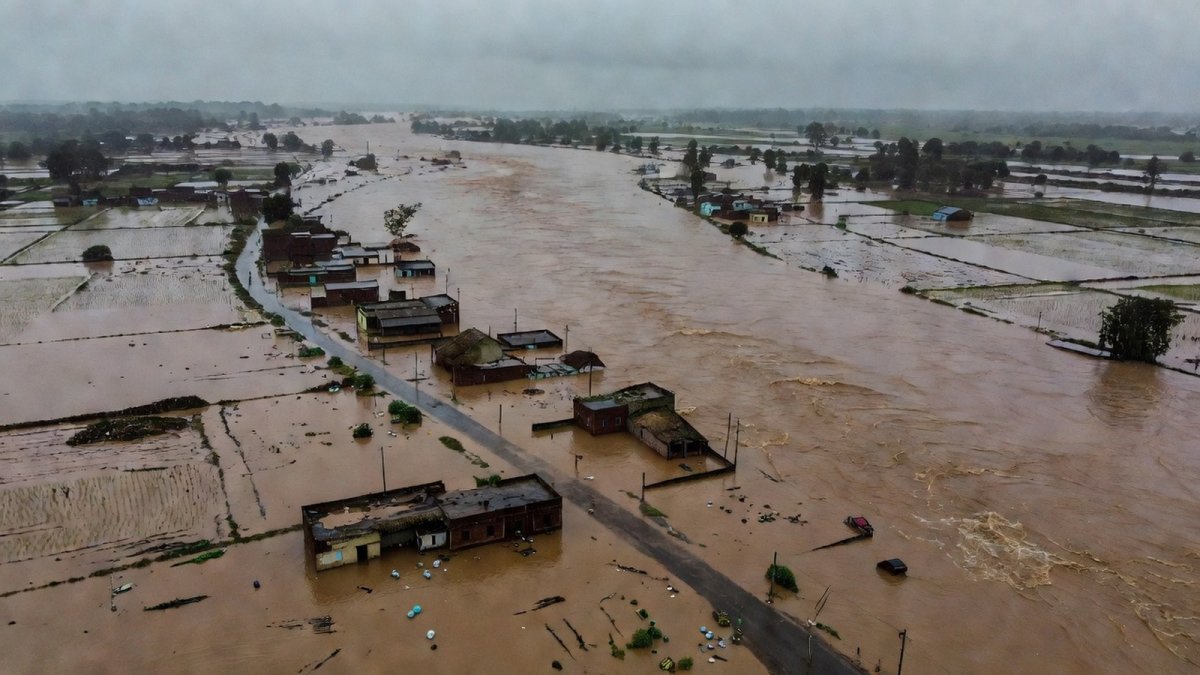
Northern Odisha is underwater. The Baitarani River and its tributaries have overwhelmed embankments, forcing the evacuation of 2.37 lakh people and affecting an estimated five lakh across five districts. With the India Meteorological Department (IMD) forecasting heavy rain through August 20, this crisis is far from over.
The River Doesn't Care About Your Plans
There is a moment in every disaster when the abstractions of weather models collapse into the raw, muddy reality of water moving where it should not be. That moment arrived this week in north Odisha, where the Baitarani has turned from lifeline into weapon. According to The Hindu, the flood situation "remained grim on Monday," with a low-pressure system stalled over the region. This is not a seasonal inconvenience; it is a crisis with a body count and a forecast that offers no mercy.
Let me be blunt: coverage of South Asian floods often drifts into fatalistic poetry—"nature's fury," "monsoon's wrath"—as if this were an act of God. That is a cop-out. The Baitarani is a studied, measured river. The Akhuapada Anicut in Bhadrak was built to manage exactly this kind of flow. Yet, as the New Indian Express reported, the river is flowing above the danger mark there. The river is doing what rivers do when given too much water too quickly. The question is whether the infrastructure and political will are doing what they are supposed to. The evidence is mixed, and the people of Balasore, Bhadrak, Jajpur, Mayurbhanj, and Keonjhar are paying the price.
Water Above the Danger Mark, Fear Above the Water
"Above the danger mark" is not a metaphor. It is a specific threshold that triggers alerts and evacuations. When the Baitarani crosses it at Akhuapada, water moves into villages with a force that cannot be reasoned with. The State Relief Commissioner (SRC) told News18 the situation in Jajpur and Bhadrak is "grim." When an official reaches for that adjective, pay attention. The SRC noted the swollen river has affected around 50,000 people in Jajpur alone, where over 2,000 have been evacuated.
The Baitarani is not acting alone. The Jalaka river at Mathani in Balasore is above the danger level, according to Outlook India. The Budhabalanga has crossed danger levels due to heavy rains and upstream discharge from Jharkhand. This is a coordinated assault on the region's hydrology. The IMD says the system is now a Depression over Jharkhand, moving west-northwestwards at 18 kmph. It is not dissipating; it is bringing more rain. The forecast of heavy to very heavy rainfall through August 20 is not a forecast for improvement. It is a forecast for endurance.
The Numbers Behind the Misery
Let's get precise, because precision matters. The Hindu reported five lakh (500,000) affected as of Monday. Prameya News put the figure at over 2.09 lakh across 52 blocks and 429 villages. India.com reported over 2.70 lakh. These numbers are snapshots taken at different times; they all agree this is a massive event. The state has received 38 mm of rain in the last 24 hours and 147.5 mm since August 1, according to Outlook India. That is a sustained deluge.
The relief deployment is real. According to Outlook India, 106 rescue teams have been sent, including 10 ODRAF and 7 NDRF teams, as reported by the Financial Express. They have evacuated over 6,000 people in Keonjhar, where one person has died. One death is not a statistic; it is a family shattered. But the low toll is a testament to the evacuation efforts. The New Indian Express reported 2.37 lakh evacuated; Siasat reported 95,000 moved by Saturday. The numbers are climbing because the water is climbing. Six districts are on flood alert, and fishermen have been advised to be cautious at sea.
But here is where I push back on the official narrative of "we are managing this well." Managing well would mean the under-construction bridge over the Kani river in Jajpur's Dasharathpur block was not washed away. Managing well would mean a car showroom in Balasore's Remuna area was not inundated, as Telegraph India reported. The truth is Odisha's robust disaster framework is being tested beyond its design limits. The IMD's forecast means the worst may not be over.
The Rivers That Refuse to Recede
There is some good news, and I will give it to you straight. CNBC TV18 reported water levels are receding in many rivers, with no major flood fear in the Mahanadi and Subarnarekha systems. The flow at Mundali near Cuttack has dropped to 6.76 lakh cusecs. But "receding" is not "safe." The Baitarani, Jalaka, and Budhabalanga are still above danger levels. They are responding to the rainfall, and the rainfall is not done.
The IMD's forecast is unambiguous: heavy to very heavy rainfall over the next 24 hours, with more through August 20. The SRC has warned the Budhabalanga crossed danger levels due to upstream discharge from Jharkhand. This is a regional problem requiring a regional response. The Depression over Jharkhand is the engine of this disaster. Until it dissipates, the rivers will keep rising.
The 52 blocks and 429 villages affected are not dots on a map. They are communities with names and histories. The 2.09 lakh affected are farmers who lost fields, shopkeepers who lost inventory, parents who lost their children's school year. The 95,000 evacuated by Saturday are people who left everything behind. The 2,000 evacuated in Jajpur watched the Baitarani rise and knew they had to run.
The Response: What Works, What Doesn't
The response has been a mixed bag, and I will not sugarcoat it. The deployment of 10 ODRAF and 7 NDRF teams is a serious commitment. These professionals have moved people out of harm's way with remarkable efficiency. The fact that only one death has been reported is a testament to their work. On the other hand, the washed-away bridge over the Kani river is a failure of planning. You do not build over a flood-prone river without accounting for flash floods. That bridge was a lifeline in progress; now it is a hazard in the water.
Closing schools in Bhadrak, Mayurbhanj, Keonjhar, and Balasore, and postponing Utkal University exams, is the right call. But it is reactive, not proactive. The real question is whether the government is preventing the next flood, not just responding to this one. The IMD's forecast means the next few days are critical. The water will recede when the rain stops and the rivers have somewhere to put the water.
Odisha has a structural flood problem, not just a meteorological one. Rivers are being asked to carry more than their channels can handle due to deforestation, encroachment, and inadequate infrastructure. The Baitarani, Jalaka, and Budhabalanga are managed systems failing under extreme conditions that climate change is making frequent. The state received 147.5 mm since August 1. That is a lot, but not unprecedented. Without better flood control and land-use planning, the next flood will be worse. The next bridge will wash away. The next 500,000 people will be displaced.
The Forecast: More Rain, More Risk
The IMD has been clear: heavy to very heavy rainfall is forecast over the next 24 hours, with more through August 20. That is a certainty. The Depression over Jharkhand is not going to disappear overnight. It will keep pumping moisture, and the rivers will keep rising. Six districts are on flood alert, but an alert is not a shield. It is a warning that the worst may be yet to come.
The good news is that the Mahanadi and Subarnarekha systems are not a major risk, according to CNBC TV18. The flow at Mundali is down to 6.76 lakh cusecs. But that is cold comfort for the people of Balasore, Bhadrak, Jajpur, Mayurbhanj, and Keonjhar. For them, the flood is a personal catastrophe. The Jalaka at Mathani is above danger. The Baitarani at Akhuapada is above danger. The Budhabalanga has crossed danger. These are the difference between a home and a ruin.
What happens next depends on the weather and the response. The weather is out of our control. The response is in our control. The state has deployed 106 rescue teams, but it may not be enough. The SRC says the situation is grim. The Hindu reports five lakh affected. These numbers will grow before they shrink. The question is whether the relief effort can keep pace—and whether we are paying attention to a crisis that is devastating lives nonetheless.
What This Flood Tells Us About the Future
This flood is not an anomaly. It is a preview. Climate change is making the monsoon more violent and unpredictable. The IMD's forecast is not just a weather report; it is a warning about the new normal. The Baitarani crisis is not just an Odisha problem; it is a global problem. Every country with a monsoon or a river will face this with increasing frequency. The question is whether we learn from it or repeat it.
The evacuation of 2.37 lakh people is a logistical achievement. The deployment of 106 rescue teams is a commitment of resources. But the washed-away bridge, the inundated car showroom, the closed schools—these are signs the system is overwhelmed. The state needs flood-resilient infrastructure, better drainage, stronger embankments, and smarter land-use planning. It needs to act before the water rises, not after. It needs to protect the most vulnerable—farmers, laborers, families in low-lying areas—before the flood, not just during it.
We, as observers, need to do more than watch. We need to hold leaders accountable for decisions that make floods worse or better. We need to remember that the 500,000 affected are not statistics. They are someone's mother, father, or child. They woke up to find their world underwater. They deserve better than a shrug and a "nature's fury" headline. They deserve action and resilience. The Baitarani is still rising. The rain is still falling. But the people of Odisha are not giving up. Neither should we. This is the middle of the story, and the ending depends on what we do next.
By Jessica Ali, Staff Writer
This article was produced with AI-assisted research and editorial support. Sources: The Hindu, The New Indian Express, Telegraph India, Siasat, News18, Outlook India, India.com, CNBC TV18, The Financial Express, India Meteorological Department, Odisha Department of Water Resources.
What's Your Reaction?
 Like
0
Like
0
 Dislike
0
Dislike
0
 Love
0
Love
0
 Funny
0
Funny
0
 Wow
0
Wow
0
 Sad
0
Sad
0
 Angry
0
Angry
0

Editor-in-Chief at Global1.News. Atlanta-based journalist who cuts through the BS and tells it like it is. Lead anchor, host, and the voice you hear when the spin stops and the truth starts.















Comments (0)