
At least 92 dead, including 18 children, in Zimbabwe ferry disaster as questions mount over overloaded vessel
At least 92 people, including 18 children, died when the overloaded Mbuya Nehanda ferry capsized on Lake Kariba. An ageing vessel with one engine and a submerged bilge pump sailed into rough weather despite passenger pleas to turn back, exposing systemic failures in Zimbabwe's maritime safety.
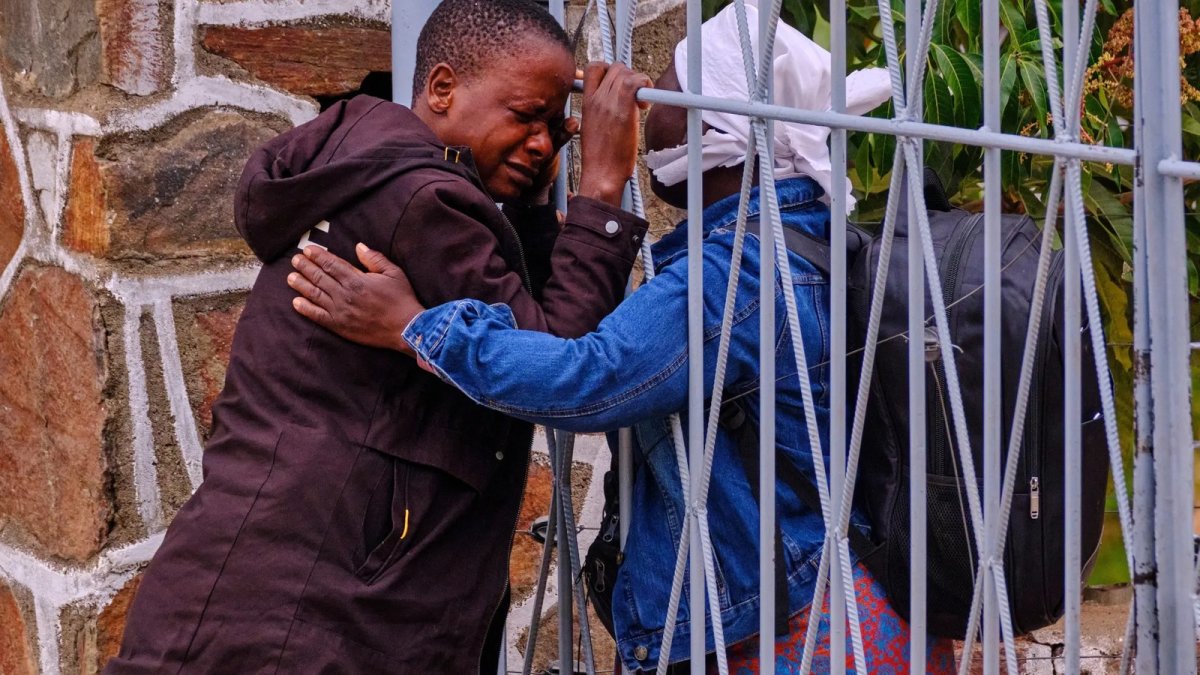
The death toll from the capsizing of the passenger ferry Mbuya Nehanda on Lake Kariba has climbed to at least 92, including 18 children, making it the deadliest boat disaster in Zimbabwe's history. The grim milestone was confirmed on Monday, August 17, 2026, after eight more bodies were recovered from the water, according to police figures reported by AFP and AP.
The toll has risen steadily since the vessel went down on Tuesday, August 11. CNN reported 72 dead on Saturday, August 15; police confirmed 84 on Sunday, August 16; and the figure reached 92 on Monday. The vessel, operated by Zimbabwe's Rural Infrastructure Development Agency (RIDA), was the primary transport link between Kariba town and the rural community of Chalala, a journey of about 50 km (30 miles) by lake but more than 400 km (250 miles) by road.
This is not a story about a sudden storm or an unforeseeable accident. It is a story about an ageing, under-maintained ferry, overloaded beyond its certified capacity, sailing into known rough weather with a single functioning engine while passengers begged the captain to turn back. Ninety-two people, including a one-year-old and a 14-month-old, paid with their lives.
The timeline of a tragedy on Lake Kariba
The Mbuya Nehanda departed from Kariba harbour on the morning of Tuesday, August 11, 2026. Passengers had already raised concerns about the weather before departure after a strong gust of wind knocked luggage from the vessel while it was still docked. Winds shifted from west to south-west and strengthened, with gusts reaching about 29 km/h (16 knots) by 2 p.m., producing the large waves locals call the "Binga Wave."
About 30 minutes into the journey, waves began washing over the vessel. Survivors told reporters that passengers asked the captain to turn back or seek shelter at a nearby island, but he refused. Water entered the engine compartment and submerged the mechanical bilge pump. A passenger contacted the Zimbabwe Parks and Wildlife Management Authority for help; survivors say the captain objected to the distress call.
The remaining engine stopped — the reason is disputed, with one passenger saying the captain switched it off — and the ferry turned broadside to the waves and capsized near Long Island. Captain Sign Patsikadova, 59, is among the confirmed dead. Of the five crew members aboard, only two survived.
An ageing vessel with a single engine and a known capacity limit
The Mbuya Nehanda was an ageing vessel reportedly donated to the Zimbabwean government in 1985. It was running with only one functioning engine at departure, a fact that raises immediate questions about why it was cleared to carry passengers at all. The authorised passenger capacity was 90. It was carrying at least 114 adults and 5 crew plus an unspecified number of children; some reports put the total at up to 153 aboard. Police later said the vessel was carrying at least 169 people.
The gap between the certified capacity of 90 and the estimated 153 to 169 people aboard is not a minor discrepancy. It is a doubling of the vessel's legal limit. RIDA, the agency that operated the ferry, has not yet publicly explained why the vessel was allowed to sail in that condition, or why capacity limits were ignored.
The single engine and the submerged bilge pump are particularly damning. A functioning bilge pump is designed to remove water from the engine compartment. With it submerged and inoperative, the vessel had no way to manage the water that was washing over the sides. The combination of overloading, reduced engine power, and no effective pumping capacity turned a rough-weather crossing into a death sentence.
Survivors describe pleas to turn back and a captain who refused
Survivors have provided a consistent account of the final minutes before the capsizing. Passengers, feeling the vessel become unstable as waves washed over the deck, repeatedly asked the captain to turn back or seek shelter at a nearby island. He refused. One passenger described contacting the Zimbabwe Parks and Wildlife Management Authority for help, only for the captain to object to the distress call being made.
The dispute over the engine's failure adds another layer of confusion. One passenger has said the captain switched the engine off; others suggest it failed on its own. Either way, the vessel lost all propulsion and turned broadside to the waves, a position that made it extremely vulnerable to capsizing. The ferry went down near Long Island, roughly 30 minutes into what should have been a routine journey.
Some passengers struggled with life jackets or could not find them during the capsizing. Survivors stayed afloat by holding onto floating objects or climbing onto the overturned hull. A rescue boat from Tashinga, along with Zimbabwe Parks and Wildlife Management Authority personnel and local boat operators, reached the scene at about 2 p.m. and recovered people from the water and the overturned hull.
The human cost: named victims and families who lost everything
The youngest victims identified by local media include one-year-old Wendy Ndandarika, and 14-month-old McDonald Nyasha Gumpo and Hailly Tauro. These are not statistics; they are children who should have had their whole lives ahead of them. The loss has devastated entire communities along the lake.
One official told The Herald: "It has been difficult to know who to console first, as almost every homestead has lost a relative, and the worst cases more than five relatives at once." Video posted online Saturday showed hundreds of people waiting outside a local hospital to identify loved ones. One mother, Philis Hamandise, lost her 9-year-old daughter and 6-year-old nephew.
Disaster management officials said 77 people were rescued. Many were taken to a nearby island before being transferred to health facilities in Kariba town. But for every survivor, there are families who will never see their loved ones again. The identification process has been slow and painful, with bodies expected to surface over time as they decompose and rise.
State of disaster declared as President Mnangagwa acknowledges systemic failures
President Emmerson Mnangagwa declared a state of disaster and ordered government agencies to mobilise resources. He acknowledged that the disaster exposed serious deficiencies in Zimbabwe's maritime capabilities that needed to be addressed immediately. He described the incident as "tragic."
The declaration is a formal recognition that this was not an isolated accident but a systemic failure. The ferry was the main transport link for remote fishing communities along the lake, connecting them to food supplies, markets and essential services. Its loss has crippled the local economy and left residents stranded.
A mass memorial service was held August 13 at Nyamhunga Stadium in Kariba, with coffins of recovered victims laid out and cabinet ministers in attendance. South African President Cyril Ramaphosa offered condolences; Egypt's government also expressed "deepest condolences." The international response underscores the scale of the tragedy.
Search and recovery: 40 divers, four boats, and bodies expected to surface
The search operation is ongoing. Police have deployed four boats and more than 40 divers to the area. They expect all bodies to eventually surface, a grim but realistic assessment given the conditions of the lake and the nature of the capsizing. The recovery effort has been complicated by the size of Lake Kariba and the remote location of the wreck.
The identification process has been a secondary tragedy. Hundreds of people have gathered outside local hospitals, waiting for news of their loved ones. The emotional toll on the community is immense, and the slow pace of recovery has only added to the anguish.
For the families still waiting, every passing day brings new uncertainty. The authorities have not provided a timeline for when the search might be concluded, and the physical recovery of all bodies may take weeks. The psychological recovery will take far longer.
Economic impact: spoiled catches, empty shops, and a broken lifeline
The ferry was not just a mode of transport; it was a lifeline. Fishing communities along the lake have reported spoilage of catches because ice and transport to markets are no longer available. Shops that depended on the vessel for supplies are facing shortages. Some residents could not travel to attend relatives' funerals because there is no other way to reach them.
The government has pledged to provide a replacement vessel and ordered rehabilitation of an impassable road linking Kariba, Siakobvu and Chalala. But these are long-term solutions. In the short term, the communities along the lake are cut off from the essentials of daily life.
The economic damage will be felt for months, if not years. The fishing industry, which depends on reliable transport to get catches to market, has been particularly hard hit. The loss of the ferry has also disrupted access to healthcare and education for remote communities.
Lake Kariba: a man-made giant with a history of displacement
Lake Kariba is the world's largest man-made lake by volume, stretching roughly 300 km (186 miles) along Zimbabwe's border with Zambia, more than 300 km northeast of the capital Harare. It was created in the 1950s when the Zambezi River was dammed, displacing about 57,000 people. Travel by boat is common in the region because of limited public transport and poorly maintained roads.
Accidents on the lake are relatively rare, making this one of the country's worst maritime disasters in decades. The rarity of such events has meant that safety standards and vessel maintenance have not been a priority. The Mbuya Nehanda was a symbol of that neglect.
The disaster has exposed the fragility of the infrastructure that remote communities depend on. When a single vessel is the only link between a town and its hinterland, its failure is not just a transportation problem; it is a humanitarian crisis. The government's promise of a replacement vessel and road rehabilitation is a recognition that the status quo is no longer acceptable.
The questions that remain are uncomfortable ones. Why was an ageing vessel with one engine and a submerged bilge pump allowed to carry more than twice its certified capacity? Why did the captain refuse to turn back when passengers begged him to? And what will it take to ensure that this never happens again? The answers will determine whether the 92 people who died on Lake Kariba are remembered as victims of a tragedy or as casualties of negligence.
By Jessica Ali, Staff Writer
This article was produced with AI-assisted research and editorial support. Sources: CNN, AP, AFP, Al Jazeera, The Guardian, Zimbabwe Republic Police statements, The Herald.
What's Your Reaction?
 Like
0
Like
0
 Dislike
0
Dislike
0
 Love
0
Love
0
 Funny
0
Funny
0
 Wow
0
Wow
0
 Sad
0
Sad
0
 Angry
0
Angry
0

Editor-in-Chief at Global1.News. Atlanta-based journalist who cuts through the BS and tells it like it is. Lead anchor, host, and the voice you hear when the spin stops and the truth starts.











Comments (0)