
'Chop Di Line': PNP's Buchanan Urged Fraud After Coopers Pen?
Kingston, Jamaica - The Jamaica Labour Party (JLP) is demanding the resignation of Opposition Spokesman on Human Rights Isat Buchanan over a TikTok Live broadcast in which he allegedly urged Jamaicans unaffected by the pre-dawn demolition of about 20 homes in Coopers Pen, Trelawny to use...
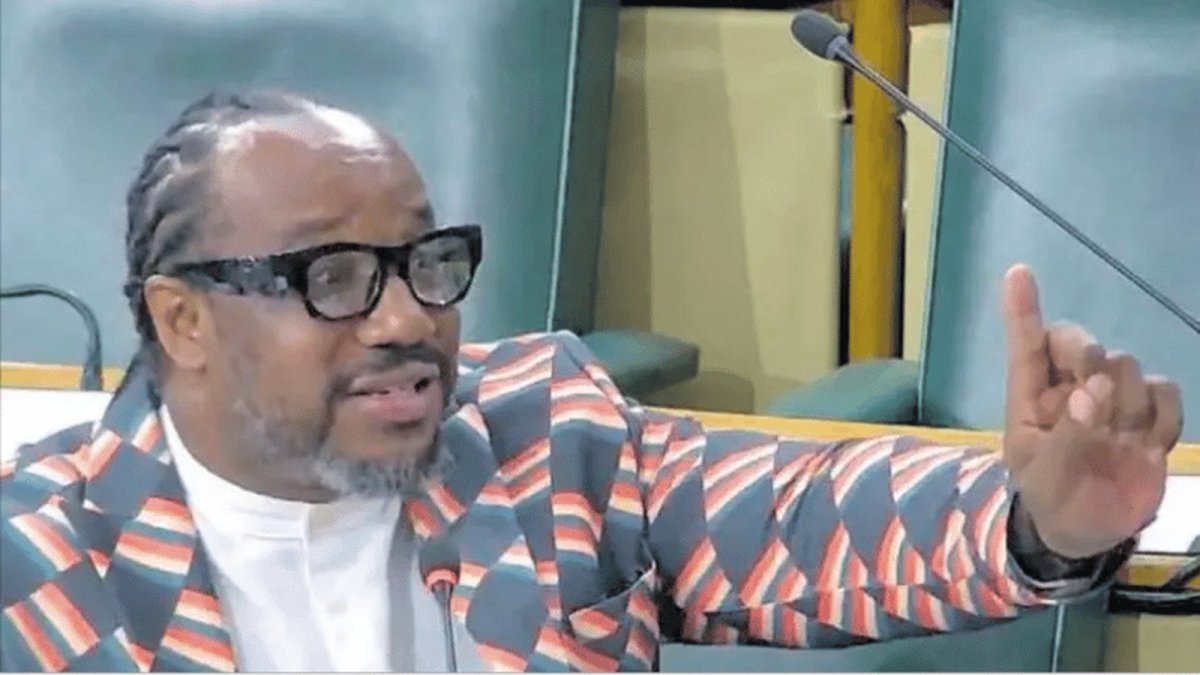
Kingston, Jamaica - The Jamaica Labour Party (JLP) is demanding the resignation of Opposition Spokesman on Human Rights Isat Buchanan over a TikTok Live broadcast in which he allegedly urged Jamaicans unaffected by the pre-dawn demolition of about 20 homes in Coopers Pen, Trelawny to use the slang phrase 'chop di line' — a term critics say refers to scamming — in order to obtain taxpayer-funded government assistance. The controversy has erupted at a critical juncture in the electoral cycle, threatening to overshadow the legitimate humanitarian concerns raised by the August 11 demolition and placing PNP President Mark Golding in an increasingly uncomfortable position.
Coopers Pen demolition sparks political firestorm over MP's remarks
The political fallout stems from two distinct tracks taken by Buchanan in the same week: a formal human-rights condemnation of the demolition, and a subsequent social-media broadcast that critics say crossed a legal line. The controversy threatens to undermine the Peoples National Party's (PNP's) own humanitarian case on Coopers Pen — a legitimate and urgent one — by shifting public debate from what happened to displaced families toward whether an MP encouraged fraud.
The Demolition and Its Aftermath
The pre-dawn demolition of approximately 20 homes in Coopers Pen, Trelawny on August 11, 2026 has left about 40 families assessed as affected, according to a preliminary assessment by the Ministry of Labour and Social Security. The operation, conducted in darkness without adequate notice, left residents including a three-day-old child sheltering under a bus stop. The scenes have drawn widespread condemnation from human rights organisations and raised serious questions about due process and the State's obligation to its most vulnerable citizens.
Jamaicans for Justice (JFJ) has been monitoring the situation closely, with particular attention to the detention, fingerprinting and photographing of residents during the demolition. The organisation has made a formal request to the Jamaica Constabulary Force seeking clarification on the legal basis for these procedures. JFJ draws a clear line between the demolition controversy and what it calls a separate, serious matter: the State's burden to demonstrate that detentions, fingerprinting and seizure of residents' phones were lawful, necessary and proportionate.
Buchanan's Dual Track
Buchanan, who shot to national prominence as lead counsel in the Privy Council case that freed Vybz Kartel, initially brought serious parliamentary scrutiny to the demolition. His formal public position demanded due process, dignity and emergency support for genuine victims. However, his subsequent social-media commentary, in which he allegedly suggested that unaffected Jamaicans could use the phrase 'chop di line' to access government assistance, has handed opponents a narrative they needed.
Buchanan himself has characterised his social-media commentary as a 'dialectic,' maintaining that his formal public position remains the substance of his stance. In response to the criticism, he has said: "I have heard them and seen the things that they have said but I am respectfully leaving it to God and time. They are the same people who said I won't win and I am not a good lawyer."
JLP's Resignation Call
The JLP argues Buchanan's position is untenable and is pressing Golding to state whether the PNP endorses the remarks, warning that Golding's failure to act confirms he is unfit for national leadership. The party has separately pointed to Buchanan's two prior drug-related convictions — one in Jamaica in 1997, one in the United States resulting in a roughly 10-year sentence — to argue the PNP has forfeited moral authority on crime, corruption and ethics.
The JLP's call for resignation is predictable politics, but it places the PNP in a difficult position. For Buchanan specifically, the dual pressure of the JLP's resignation call and the government's formal condemnation puts his shadow cabinet position under scrutiny at a critical point in the electoral cycle. The party must now decide whether his popularity is worth the damage this controversy does to the PNP brand.
PNP's Defence and the Rehabilitation Question
The PNP contends that individuals who have rehabilitated deserve the opportunity to serve their communities, and that Buchanan's past does not define him. This argument carries weight in a region where second chances are often hard to come by, and where the justice system's failures disproportionately affect marginalised communities. Buchanan's victory in East Portland signalled that voters there weighed his record differently, seeing beyond his convictions to his legal acumen and his willingness to take on powerful interests.
It may be true that a prison term never hurt, and may even have helped, previous Jamaican politicians — from Henry Morgan, the pirate who became lieutenant governor, to Alexander Bustamante, the country's first prime minister. It could be argued that Buchanan's drug-related prison sentences do not put him in the same company. But the PNP ignored all of that when it put him up as a candidate in the last election, and he won his seat. He is also identified as the successful lawyer for Vybz Kartel, freed by the Privy Council — something that gave him considerable favourability.
Broader Consequences for Displaced Families
Broader consequences extend to the displaced families themselves: with political noise drowning out their plight, the timeline for permanent resettlement remains undefined. Golding has called for the government to provide land and permanent housing rather than tents, but no concrete commitment has been announced. This is particularly concerning given that Jamaica remains in hurricane season following Hurricane Melissa, leaving vulnerable families exposed to the elements.
The situation echoes challenges seen across the Caribbean, where natural disasters and development pressures often collide with inadequate housing policies. In Trinidad and Tobago, similar concerns have been raised about informal settlements and the rights of residents facing eviction. The Coopers Pen case highlights the need for regional dialogue on housing rights, due process and the treatment of vulnerable communities.
What to Watch
Several key developments bear watching in the coming weeks. First, whether PNP President Mark Golding publicly addresses or distances the party from Buchanan's TikTok remarks — his silence has already been cited by the JLP as evidence of unfitness for national leadership. Second, the Jamaica Constabulary Force's response to JFJ's formal request for clarification on the legal basis for detaining, fingerprinting and photographing residents during the demolition. Third, government action — or absence of it — on permanent resettlement of displaced Coopers Pen families.
JFJ's open monitoring of the detentions means a separate legal accountability process could unfold independently of the political dispute. The detention procedures raise constitutional questions regardless of the political dispute, and these concerns must be addressed whether or not Buchanan's remarks were appropriate.
A Regional Perspective
For Caribbean democracies, the Coopers Pen story offers a cautionary tale about the intersection of social media, politics and humanitarian crises. Two things can be true at once, and the Coopers Pen story demands that both be held together rather than weaponised separately. The demolition raised entirely legitimate questions about due process, human dignity and the State's obligation to its most vulnerable citizens. Those questions deserved the serious parliamentary scrutiny Buchanan initially brought to them.
But the 'chop di line' remarks, if accurately reported in full context, are a self-inflicted wound that hands opponents a distraction and potentially undermines genuine victims by associating their plight with encouraged fraud. A sitting MP and attorney-at-law carries a higher standard of responsibility precisely because words carry legal weight. Caribbean democracies are poorly served when legitimate humanitarian crises become collateral damage in partisan point-scoring — from either direction.
The harder, more honest question for the PNP is whether it will address the contradiction between championing human rights and appearing to encourage claims against the public purse. Buchanan remains popular, in part because of his audacious comments, and it is unlikely his career will be hurt by this — unless the PNP decides his popularity is not worth the damage it does to the PNP brand. The verdict is clear: Buchanan's human-rights case was valid; his social-media commentary undermined it — and the PNP's silence on the contradiction is the real accountability gap.
This article was produced with AI-assisted research and editorial support. Sources: Caribbean360.
By Sharon Sahatoo, Staff Writer
What's Your Reaction?
 Like
0
Like
0
 Dislike
0
Dislike
0
 Love
0
Love
0
 Funny
0
Funny
0
 Wow
0
Wow
0
 Sad
0
Sad
0
 Angry
0
Angry
0

Caribbean Correspondent at Global1.News. Based in Port of Spain, Trinidad, covering Caribbean politics, economy, energy, climate, and culture. Amplifying the voices and stories of the Caribbean region.











Comments (0)