
After Two Years Living Rough in Thailand, Norwegian Man Finally Going Home
A 44-year-old Norwegian man who spent more than two years living rough around Pak Kret in Nonthaburi is finally set to return home after Thai immigration authorities stepped in to help him contact his embassy.
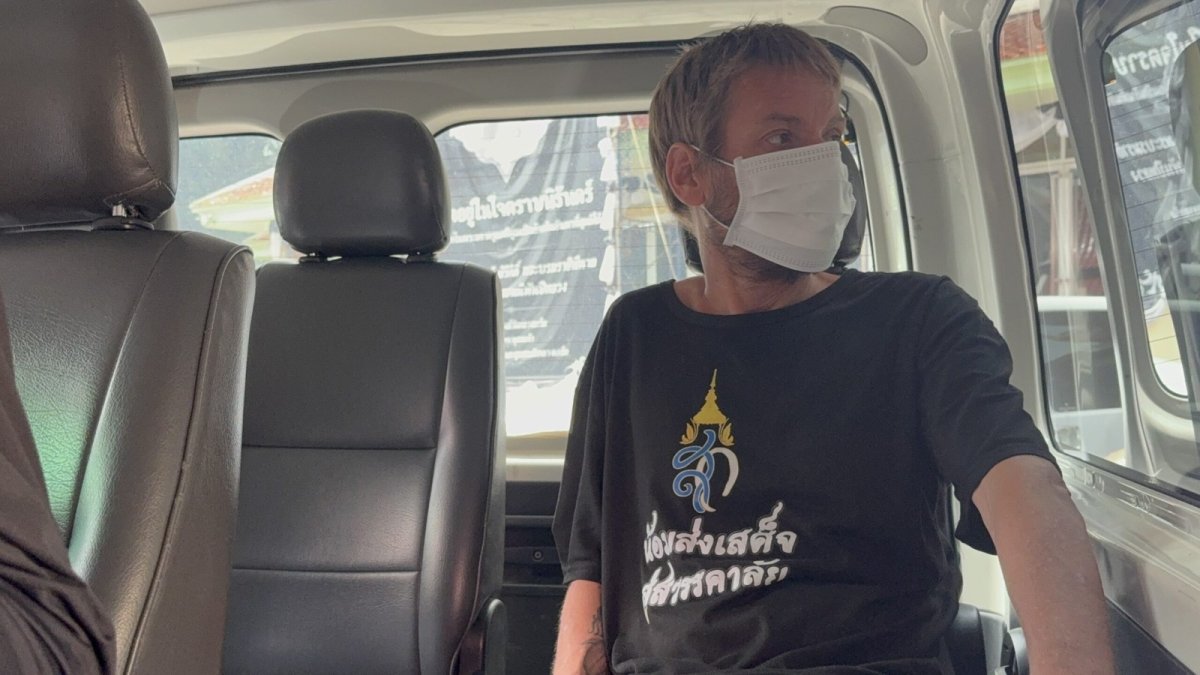
A 44-year-old Norwegian man who spent more than two years living rough around Pak Kret in Nonthaburi is finally set to return home after Thai immigration authorities stepped in to help him contact his embassy. Odd Stian Hesseberg was found living around temples and public areas in Pak Kret after a social media post raised concerns about a foreign man sleeping near the Pak Kret waterfront.
Discovery in Pak Kret
Immigration officers located Hesseberg at Wat Klang Kret on Saturday and checked his immigration record. According to his entry record, he arrived in Thailand on 3 March 2023 on a 30-day tourist visa and later received an extension until 16 May 2023. His immigration status currently shows an overstay of 1,179 days, immigration officers said. Authorities are now questioning Hesseberg and coordinating with the Norwegian Embassy to arrange his return to Norway in accordance with Thai law.
Hesseberg's Arrival and Hardships
Hesseberg told reporters he came to Thailand alone about two and a half years ago to meet a female friend in Nakhon Sawan but lost contact with her. He later travelled to Nonthaburi, where he said his bag containing his passport and other documents was stolen. Without his documents, he ended up living rough and sleeping at temples and along the waterfront. He said he wanted to return to Norway but did not know who to contact for help.
The Role of Buddhist Temples as Sanctuaries
Temple staff said they had previously tried to help him return home, including arranging transport to the Norwegian Embassy about three months ago. They said they were concerned about his wellbeing as he had been living alone and often sleeping in public places. In Thai culture, Buddhist temples known as wats have long served as places of refuge for those in need, offering shelter and quiet support rooted in the principles of compassion and non-judgment. Wat Klang Kret, where Hesseberg stayed, reflects this tradition of opening doors to visitors and locals alike during times of difficulty.
In Thai Buddhist tradition, wats have long functioned as places of refuge where monks and temple residents extend shelter to those without means or documents. This practice draws from the principle of metta, or loving-kindness, which encourages quiet acts of care toward anyone who arrives at the temple gates. Monks often share simple meals and allow overnight stays on temple grounds, viewing such support as part of their daily observance rather than formal charity.
Merit-making, known locally as tam bun, further shapes these interactions. Local devotees bring food offerings or donate basic supplies, believing that helping a stranger in distress accumulates positive karma for their own families. Temple volunteers, frequently older women from nearby neighborhoods, quietly coordinate these efforts by washing clothes, offering clean mats, and connecting individuals with embassy contacts when language barriers arise. Such assistance remains understated, rooted in the understanding that vulnerability can touch anyone far from home.
Community Kindness and Nam Jai in Pak Kret
After being taken by immigration officers, Hesseberg thanked temple staff and local residents who had helped him during his time in Thailand. He said he was happy that he would finally be able to return to Norway, his home country, after more than two years. The quiet assistance from people in Pak Kret embodies nam jai, the Thai spirit of heartfelt generosity that often appears in everyday acts of care toward strangers. Residents noticed his situation through a social media post and responded with concern rather than indifference, showing how small communities across Thailand extend support to those who find themselves far from home.
Nam jai, the Thai expression of heartfelt generosity, appears in the small, consistent gestures that riverside communities like Pak Kret extend to outsiders. Residents notice when someone sleeps repeatedly near the waterfront or temple walls and respond by leaving food or alerting neighbors rather than ignoring the situation. This attentiveness stems from the close-knit nature of provincial towns where daily life unfolds along shared canals and markets, making isolation visible to many eyes.
Social media posts in local groups often serve as the first signal, prompting residents to check on the person and share updates with temple staff. In Pak Kret, such networks reflect longstanding neighborhood bonds where families have lived for generations and view caring for visitors as part of maintaining community harmony. These actions rarely seek recognition, instead embodying the quiet expectation that help should flow naturally toward those who have lost their way.
Thailand's Immigration Approach and Humanitarian Balance
Thai immigration authorities handled the case by first verifying Hesseberg's records and then linking him with embassy officials. Thailand's system enforces overstay rules that can lead to fines or bans, yet it also allows for humanitarian coordination when vulnerable individuals are involved. This balance appears in the way officers worked with the Norwegian Embassy to prepare his departure while respecting legal requirements. For Southeast Asian readers familiar with regional tourism patterns, such cases highlight how Thailand manages the presence of foreigners who overstay while still offering pathways for those in distress.
Thailand’s immigration framework imposes daily fines for overstay and can place individuals on a blacklist that restricts future entry, yet officers frequently allow voluntary surrender when a foreigner lacks documents and seeks repatriation. In practice, authorities first verify entry records through the immigration database, then contact the relevant embassy to arrange travel documents and departure flights. This process balances enforcement with practical humanitarian steps, avoiding prolonged detention for those who pose no security concern.
Given Thailand’s reliance on tourism revenue and its reputation for hospitality, officials handle such cases with measured coordination rather than immediate penalties. Embassy liaison officers work alongside immigration to confirm identity and secure funding for return tickets when the individual has no remaining resources. This approach preserves legal standards while recognizing that many overstays result from misfortune rather than deliberate violation, allowing Thailand to maintain both order and its image as a welcoming destination.
Broader Context of Foreigners Living Rough
Foreigners living rough in Thailand sometimes surface in tourist areas or near temples when documents are lost or plans fall through. Hesseberg's experience after losing contact in Nakhon Sawan and later having his bag stolen in Nonthaburi illustrates the sudden vulnerability that can affect travelers. Temple staff and local residents in Pak Kret stepped forward before immigration involvement, demonstrating how ordinary Thais often notice and respond to such situations with quiet attention rather than turning away.
Foreign travelers who lose passports or miss visa extensions sometimes find themselves without legal status after initial 30-day tourist entries or the common 30-day extensions granted at immigration offices. When plans unravel in provincial areas far from consular services, individuals may drift between temples and public spaces while attempting to resolve their situation. Thai authorities typically respond by recording the case, notifying the embassy, and facilitating departure once identity is confirmed, rather than pursuing criminal charges for simple overstay.
Communities and temple networks often serve as the first point of contact before formal involvement, offering temporary stability while documents are sorted. This pattern appears across tourist regions where long-stay visitors encounter sudden setbacks such as theft or severed contacts. The combined response of local residents, monks, and immigration officers reflects a consistent preference for orderly return over punitive measures, allowing most cases to conclude with the individual safely leaving the country.
Looking Toward Return to Norway
Authorities continue to coordinate Hesseberg's return in line with Thai law, ensuring proper documentation and embassy support. Hesseberg expressed relief at the prospect of going home after more than two years away. The involvement of immigration officers alongside earlier efforts by temple staff shows a combined response that respects both legal processes and human needs. For the community in Pak Kret, his departure marks the end of a period of quiet concern and the beginning of a safer journey back to his own country.
By Ann Srisawat, Staff Writer
This article was produced with AI-assisted research and editorial support. Sources: Khaosod English, Thai immigration records, temple staff interviews.
What's Your Reaction?
 Like
0
Like
0
 Dislike
0
Dislike
0
 Love
0
Love
0
 Funny
0
Funny
0
 Wow
0
Wow
0
 Sad
0
Sad
0
 Angry
0
Angry
0

Southeast Asia Correspondent at Global1.News. Based in Bangkok, covering Thai and Southeast Asian politics, economy, technology, and culture. Deep regional perspective on one of the world's most dynamic regions.














Comments (0)