
Elon's Answer to the Chip Shortage Is the Biggest Building on Earth
Tesla and SpaceX confirmed Terafab, a 100 million square foot chip factory in Grimes County, Texas, with a $16.8 billion first phase. The project promises over a terawatt of AI compute a year, but SpaceX's own IPO filing called it a general framework with no binding commitments.
Elon's Answer to the Chip Shortage Is the Biggest Building on Earth
Let me tell you something — I've been running infrastructure and watching supply chains for over a decade, and I thought I'd seen every way the AI buildout could surprise me. Then Elon Musk announced he's building the biggest building on Earth to make his own chips. A hundred million square feet. Fifteen Pentagons. Ten times the floor space of TSMC's biggest fab. Sitting in a county in Texas that most people couldn't find on a map, paid for by a company whose own IPO paperwork says the whole thing is still a "general framework." I read that press release three times before I believed it.
The Announcement — What Terafab Actually Is
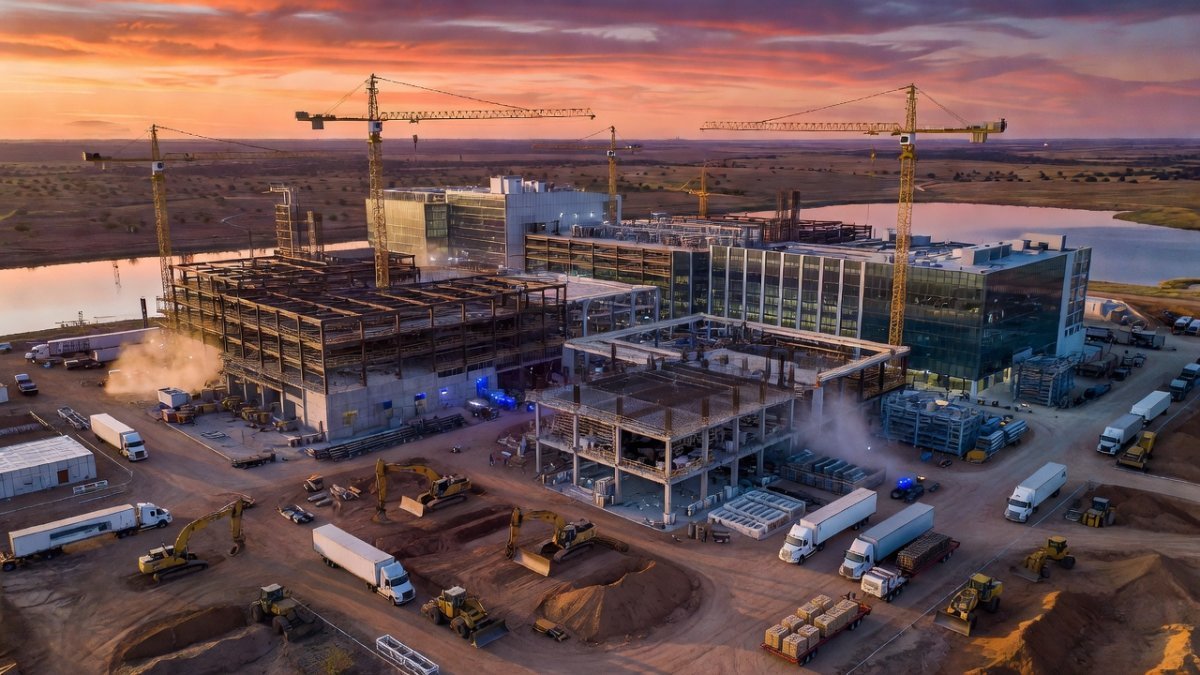
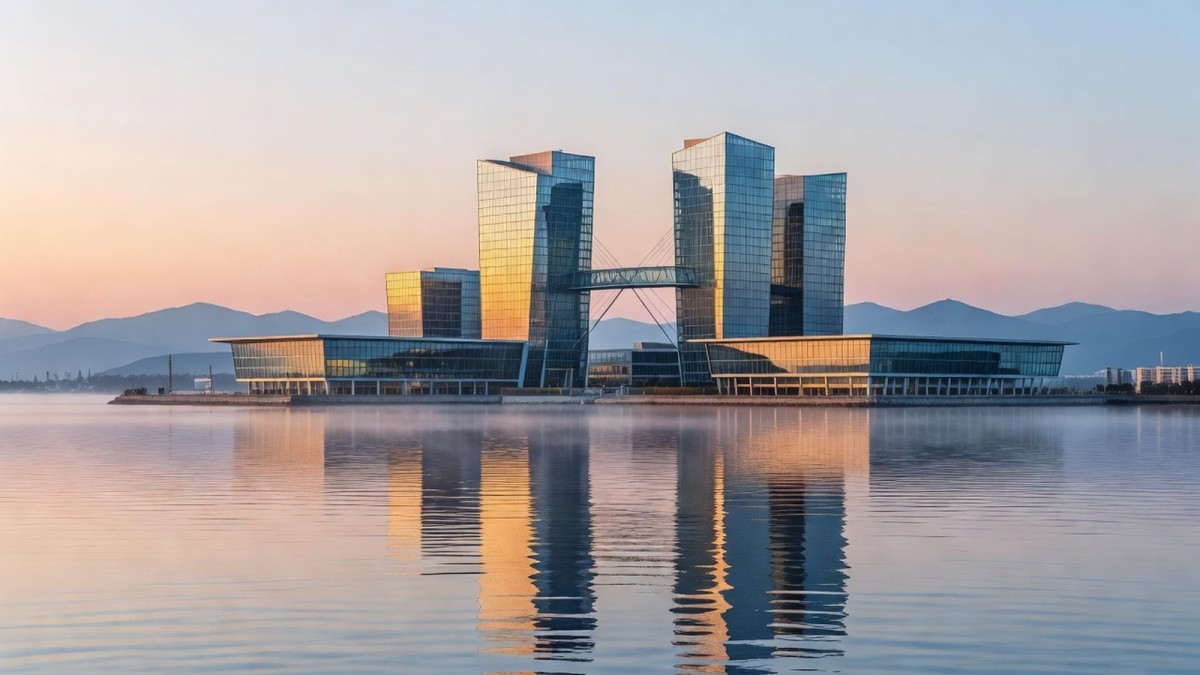
On Thursday, Tesla and SpaceX confirmed what Musk first teased back in March: Terafab, a vertically integrated semiconductor factory going up in Grimes County, Texas, about an hour northwest of Houston. The first phase is $16.8 billion of the companies' own money. When it's done, SpaceX says the site will top 100 million square feet of manufacturing space — "the largest and most valuable building on Earth by far," in Musk's own words — and employ at least 3,000 people, most of them hired locally from Grimes and nearby Brazos County.
The pitch is vertical integration at a scale nobody has ever attempted. Logic, memory, packaging, and testing all under one roof — what the industry calls an integrated device manufacturer, except nobody has ever tried to make one this big from a standing start. The chips are destined for Tesla's Optimus robots and self-driving Cybercabs, plus high-power parts for the space-based data centers SpaceX keeps promising to launch. The stated goal, in Tesla's own words: producing over a terawatt of compute per year, because "both Tesla & SpaceX will need far more chips than current & future global production can supply."
Reading One — When the Market Can't Supply You, You Build the Market
Let's take the ambitious reading first, because it's not crazy. It's extreme, but it's not crazy. Musk absorbed xAI back in February and started pitching orbital data centers. SpaceX is already the biggest AI compute landlord on the planet, and the company's own filings suggest it could pour as much as $119 billion into Terafab across multiple phases. When your internal forecast says the entire industry's future output won't cover your own needs, ordering more from TSMC isn't an option — there isn't more to order. The whole supply chain is sold out for years.
And look at what everyone else is doing. Nvidia is financing its own customers so they can buy more GPUs. Microsoft is buying gas plants to power data centers. Meta is putting up tent structures in Ohio because they can't wait for real buildings. Google is writing billion-dollar checks to power companies. Every hyperscaler has reached the same conclusion from a different direction: the market can't keep up, so we have to take matters into our own hands. Terafab is just the most drastic version of that playbook yet.
Put the numbers side by side and it gets even wilder. TSMC is spending roughly $165 billion to build six fabs in Arizona — and all six are a fraction of Terafab's stated footprint. A semiconductor fab at this scale needs somewhere between 500 megawatts and a gigawatt of continuous power, which is the output of a midsize nuclear plant — for a single building. The fact that Musk is even willing to talk about that number publicly tells you how far the compute-demand forecast has blown past anything the chip industry ever planned for.
Reading Two — The Fine Print Nobody Wants to Read
Now the other reading, because I'm a founder and I've learned to read the fine print before I read the press release. That $16.8 billion is not the number Musk led with. In March, the headline number was $25 billion. Now it's a $16.8 billion "initial phase," with the rest left deliberately vague. And in May, SpaceX's own S-1 filing described Terafab as only a "general framework" with no binding commitments, no finalized IP split, and no obligation for either side to keep participating. That's a company telling IPO investors one thing and the public another, three months apart.
Then there's Intel. Intel says it will "contribute" to Terafab, but it's been cagey about exactly what that means. Earlier reporting said Tesla isn't really going to build the fab itself — Intel is lined up to handle the actual manufacturing. Meanwhile, Tesla's near-term chip supply is already contracted out: Samsung's Taylor, Texas fab is producing Tesla's AI5 chip right now, and last year Tesla signed a $16.5 billion deal with Samsung for the next-generation AI6. TSMC covers the rest. Terafab, in other words, is not about Tesla's near-term needs at all. It's a bet on a future where robots and orbital data centers need more compute than the entire global industry can produce.
So we've got a confident announcement naming a county, sitting on top of a paper trail that says most of the decisions are still undecided. Both can't be fully true — and yet both are real. That's the thing about the AI buildout right now. Ambition and fine print are running at full speed, in parallel, in the same building.
The Secondary Bottleneck — Power, Water, and a County Asking Questions
Here's the part of the story that should worry any operator who's ever tried to build anything: the site sits on Gibbons Creek Reservoir, a lake that used to cool a coal-fired power plant that shut down in 2018. SpaceX says it will pull water from the reservoir instead of local groundwater — a nod to a community that's already uneasy about water use and the data centers spreading across Texas. But a fab this size drinks water like nothing else in industrial America, millions of gallons a day for ultrapure processing, and it wants up to a gigawatt of power in a state where ERCOT is already warning about grid reliability.
The community part matters more than the engineering. Grimes County commissioners voted 4-1 back in June to create a reinvestment zone covering more than 22,000 acres and approve a tax abatement package for the site. This week, hundreds of residents packed a county meeting to ask why, and to demand transparency about how much future tax revenue is being given away. Two local school districts are about to vote on their own tax agreements. The superintendent of one district called it "a defining moment" — which is polite school-district-speak for "we're about to hand over a lot of our future budget."
I've written before that community consent is a structural constraint on this buildout. We're looking at hundreds of local bans, 142 protests across 42 states in a single weekend, more than $130 billion in projects blocked. Terafab is running straight at that wall with a tax-break package as a battering ram. It might work. But the pattern is the same everywhere: the bigger the project, the louder the questions.
What This Actually Means for Independent Hosting Providers
First — the compute flood is coming, just slower than the headlines suggest. Even in the optimistic reading, Terafab is years from producing a watt of commercial compute. But every announcement like this pushes the chip industry's capacity planning further out, which means the near-term squeeze on GPU and memory supply gets worse before it gets better. Lock your hardware orders early, and treat every quoted lead time as a floor, not a ceiling.
Second — watch the balance-sheet tells. When a $16.8 billion announcement is quietly smaller than the $25 billion number from three months earlier, the fine print is talking. The lesson for your own business is boring and invaluable: never sign a deal based on the press release. The S-1 is the truth. The contract is the truth. The keynote is a story.
Third — the vertical integration lesson scales down to you. These giants are building their own fabs because their suppliers can't keep up. You don't need a terawatt, but if your cloud provider keeps raising prices while your own racks sit half-empty, the same logic says bring more in-house. The tooling is cheaper than it's ever been. The bottleneck is your own nerve.
Fourth — community relations are now a competitive advantage. If you're scoping new capacity, the counties with clean permitting, honest tax conversations, and settled water rights will beat the ones fighting a rearguard action. Pick the boring jurisdiction. It costs less in the end, and it won't end up in a moratorium.
The Structural Reality — Both Readings Are True
Here's what keeps me up at night, in a good way. The ambitious reading is true: the compute demand is real, the supply gap is real, and somebody had to try something this drastic. The fine-print reading is also true: the financing is fuzzy, the commitments are loose, and this project could get cut in half twice before a single chip comes out the door. That's not a contradiction. That's what every infrastructure boom looks like from the inside.
The first skyscrapers were called death traps. The transcontinental railroad went bankrupt three times before it connected the coasts. The buildout still happened — and the people who positioned themselves early, not the ones who chased the press releases, are the ones who profited.
The Bottom Line
Terafab is either the biggest bet in industrial history or the most elaborate slide deck ever funded — and I genuinely believe both are true at the same time. What's certain is the direction of travel: when the richest companies on Earth stop trusting the market to supply their most important input, that's the signal that the market can't. For the rest of us, it means one thing — build your own capacity, read the fine print, and don't wait for permission. Buh trust me on that one.
— Allan Ali, Founder
This article was produced with AI-assisted research and editorial support. Sources: TechCrunch, Electrek, SpaceX, KBTX.
What's Your Reaction?
 Like
0
Like
0
 Dislike
0
Dislike
0
 Love
0
Love
0
 Funny
0
Funny
0
 Wow
0
Wow
0
 Sad
0
Sad
0
 Angry
0
Angry
0

Publisher of Global1.News. Automation architect, systems builder, and the guy making sure the truth gets published.










Comments (0)