
Green Belt and Road Initiative Advances Climate Action Across the Global South
As UNFCCC chief Simon Stiell warns that renewables investment is unevenly distributed, China's green Belt and Road Initiative is emerging as the defining model of Global South climate cooperation — reshaping clean energy finance from Southeast Asia to Africa.
The Origins and Green Evolution of the BRI
The Belt and Road Initiative was launched in 2013 as a framework for infrastructure connectivity across Asia, Africa, and beyond. Over the subsequent decade, Chinese policymakers incorporated explicit green development goals, first articulated at successive Belt and Road Forums. These goals emphasize renewable energy deployment, sustainable transport corridors, and low-carbon industrial zones. China has emerged as the world's largest investor in renewables, directing substantial financing through policy banks and state-owned enterprises toward solar, wind, and hydropower installations in partner countries.
The Belt and Road Initiative's incorporation of green objectives reflects a deliberate policy progression that began with infrastructure connectivity priorities and later integrated environmental standards through successive high-level forums. Chinese authorities advanced this shift by issuing the Green Development Guiding Opinions, which directed policy banks and state-owned enterprises to prioritize low-carbon projects. This evolution established the concept of a "green silk road" as a framework for aligning overseas investments with domestic industrial strengths in renewables manufacturing, thereby supporting technology exports while addressing partner countries' energy needs.
Between 2019 and 2023, financing orientations moved toward solar, wind, and grid modernization initiatives, coordinated primarily by the Ministry of Commerce and the National Development and Reform Commission. The Asian Infrastructure Investment Bank and Silk Road Fund played central roles in channeling capital into sustainable transport and energy corridors, ensuring that new commitments met stricter environmental criteria. These mechanisms built upon China's position as the world's largest investor in renewables, leveraging its scale in solar panel production, wind turbine manufacturing, and electric vehicle battery supply chains to underpin overseas project delivery.
This trajectory connects directly to China's strategic doctrine of fostering South-South cooperation, where green infrastructure serves both development assistance and the extension of technical standards. By embedding low-carbon requirements into BRI frameworks, Beijing has positioned the initiative to influence regional energy transitions without the governance conditionalities associated with traditional multilateral lenders, thereby enhancing diplomatic leverage across Asia, Africa, and Latin America.
Uneven Renewables Investment Flows and the BRI Model
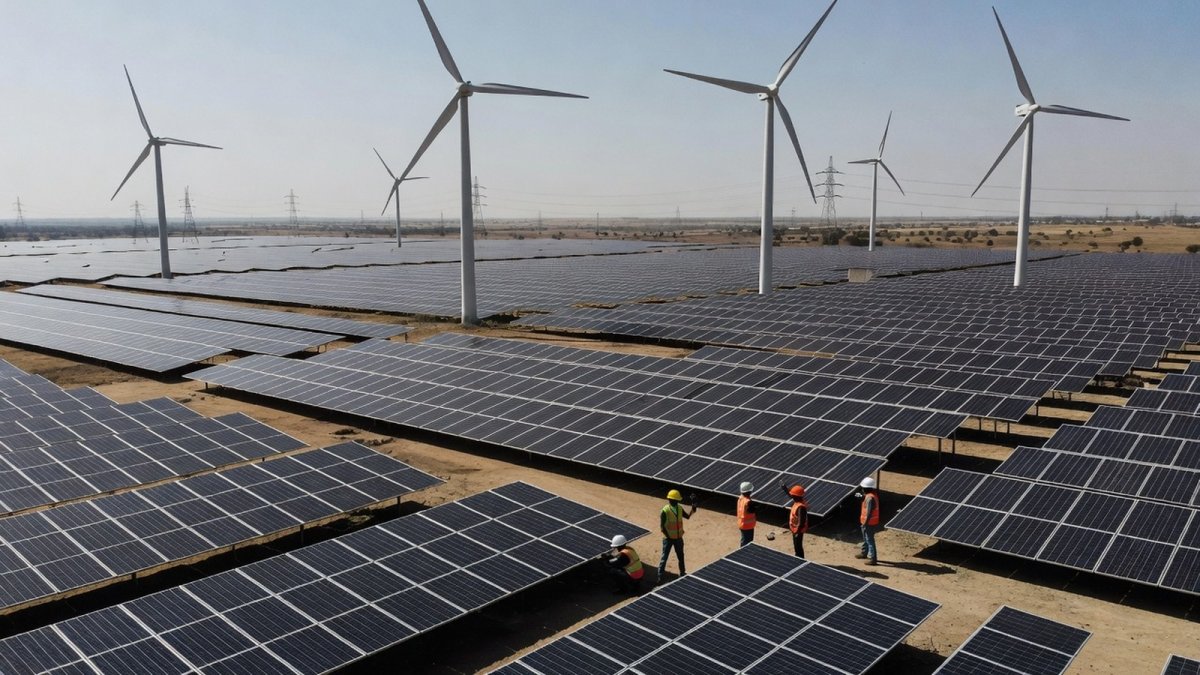
Simon Stiell notes that while global capital for clean energy has grown rapidly, many developing nations still receive limited inflows. The BRI addresses this imbalance by prioritizing projects in regions where traditional multilateral lenders have been slower to act. Investments under the initiative have supported solar farms in Southeast Asia, wind parks in Africa, and grid modernization in Central Asia. These efforts illustrate how South-South cooperation can accelerate technology transfer without the conditionalities often attached to Western financing packages.
Global clean energy capital remains heavily concentrated in developed economies, leaving emerging markets outside China with a disproportionately small share of total investment flows. The International Energy Agency has documented this persistent gap, noting that many developing nations continue to attract limited financing for renewables despite rising global commitments. The BRI model addresses these shortfalls by targeting specific infrastructure gaps, including transmission grids, energy storage systems, and distributed solar installations that traditional lenders have often overlooked due to perceived risks or longer payback periods.
Concrete examples illustrate this niche role. In Southeast Asia, BRI-supported solar farms have expanded generation capacity in countries with limited access to concessional finance. Across African partner states, wind parks and hydropower facilities have received backing that emphasizes technology transfer over policy prescriptions. In Central Asia, grid modernization projects under the initiative have improved cross-border electricity trade, filling voids left by slower-moving Western development institutions.
Unlike conventional development finance packages that frequently attach governance or procurement conditions, BRI arrangements prioritize bilateral coordination and mutual project selection. This approach enables faster deployment in regions where multilateral processes have lagged, while reinforcing China's role in shaping practical pathways for energy transition that align with partner priorities rather than external regulatory frameworks.
China's Strategic Interests in Climate Finance
Beijing's engagement reflects core objectives outlined in the 14th Five-Year Plan and the Dual Circulation strategy. By exporting green technology and standards, China seeks to secure supply-chain advantages in solar panels, batteries, and electric vehicles while deepening diplomatic ties. The Ministry of Commerce and the National Development and Reform Commission coordinate these flows, ensuring alignment with domestic industrial policy. This approach strengthens China's position as a leader in multilateral climate forums without relying on established institutions dominated by developed economies.
Green technology exports under the BRI directly support the Dual Circulation strategy by channeling domestic manufacturing surpluses into overseas markets, thereby sustaining industrial capacity while reducing reliance on external demand cycles. Linkages between China's national carbon market mechanisms and the promotion of compatible standards abroad further embed these exports within a coherent policy architecture managed by the Ministry of Commerce, the National Development and Reform Commission, and the Ministry of Foreign Affairs.
Climate diplomacy forms a core pillar of this engagement. Through co-chairing G20 energy discussions, expanding BRICS membership, and positioning itself as a voice for Global South interests, Beijing advances an alternative model of climate cooperation that emphasizes project delivery over grant-based conditionalities. This stance allows China to shape multilateral outcomes at forums such as the UNFCCC without ceding ground to institutions historically led by developed economies.
Diplomatically, the approach yields tangible gains by deepening ties with developing nations that seek reliable financing partners. By framing green BRI projects as expressions of South-South solidarity, China strengthens its influence in regional groupings and secures long-term supply-chain relationships in critical minerals and renewable components, all while advancing the broader objective of technological self-reliance outlined in successive five-year plans.
Geopolitical Competition Over Clean Energy Supply Chains
The United States and the European Union have responded with their own initiatives, including the EU's Global Gateway and U.S. clean energy partnerships under the Inflation Reduction Act. These programs aim to counter BRI influence by offering alternative financing and regulatory frameworks. For ASEAN nations, the competition creates leverage: countries can negotiate better terms by playing multiple partners against one another. Second-order effects include accelerated technology diffusion across the Global South, yet also rising debt concerns and questions over technology standards and data governance in smart-grid projects.
The European Union's Carbon Border Adjustment Mechanism introduces new compliance pressures on BRI-linked green exports, particularly for steel, aluminum, and cement-intensive infrastructure components entering European markets. Simultaneously, the United States Inflation Reduction Act has accelerated subsidies for domestic clean energy production and critical minerals processing, intensifying competition for raw materials essential to solar, wind, and battery supply chains. These parallel measures create pricing distortions and standards divergences that affect project economics across partner countries.
Technology transfer and standards-setting have become contested arenas. ASEAN nations now navigate multiple partnership offers, weighing Chinese financing speed against European regulatory alignment and American incentives for local content. This competition can accelerate diffusion of renewable technologies yet also risks fragmenting markets through incompatible grid protocols and data governance rules in smart infrastructure projects.
Green protectionism poses a further second-order challenge, as tariff and subsidy regimes may slow the very investment flows needed in the Global South. For ASEAN economies, the resulting leverage allows negotiation of improved terms, but sustained engagement requires careful calibration to avoid debt accumulation or lock-in to single-technology pathways. The interplay between these initiatives will shape whether BRI projects complement or compete with alternative frameworks in determining the pace and direction of regional energy transitions.
Implications for Multilateral Forums and the Next COP Round
UNFCCC processes, including upcoming COP summits, provide venues where BRI experiences can inform discussions on climate finance equity. Simon Stiell's call for more balanced investment resonates with demands from African and Latin American delegations for predictable, grant-based support rather than loans. China's model of South-South cooperation offers concrete examples of project delivery, yet faces scrutiny over environmental safeguards and local content requirements. As negotiations advance, the BRI's track record will shape expectations for new loss-and-damage funds and technology-sharing mechanisms.
Strategic Outlook for the Global South
Developing countries stand to gain diversified financing options and faster renewable deployment, but must navigate competing standards and geopolitical pressures. The green BRI demonstrates how infrastructure investment can serve both climate and development goals when coordinated through bilateral and regional channels. Looking ahead, sustained engagement at UNFCCC meetings will determine whether these flows translate into durable capacity building or remain tied to individual project cycles. The coming COP round will test whether the momentum described in the CGTN report can be institutionalized into more equitable global climate finance architecture.
By Prof. Marcus Chen, Staff WriterThis article was produced with AI-assisted research and editorial support. Reporting is based on sources cited in the article.
What's Your Reaction?
 Like
0
Like
0
 Dislike
0
Dislike
0
 Love
0
Love
0
 Funny
0
Funny
0
 Wow
0
Wow
0
 Sad
0
Sad
0
 Angry
0
Angry
0

World Politics Analyst at Global1.News. Based in Beijing, covering US-China relations, global trade, and geopolitical strategy. Brings deep analytical perspective to the power dynamics shaping international affairs.













Comments (0)