
Norway Seizes Russian Arctic Vessel Over Naftogaz Arbitration Award
Norway has seized the Russian research vessel Professor Molchanov in the Arctic to enforce a $4.22 billion arbitration award won by Ukraine's Naftogaz over assets expropriated in Crimea. Moscow, which called the seizure an act of piracy, is demanding the ship's release through legal channels.
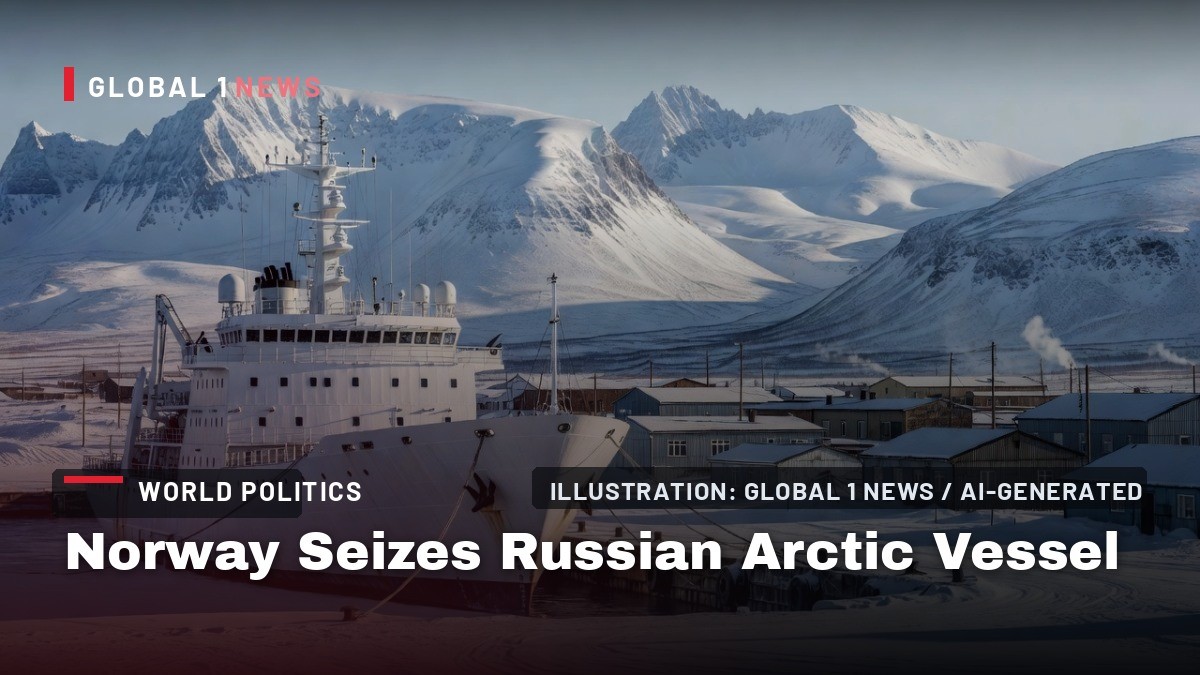
Norway has seized a Russian research vessel in the Arctic this week to enforce a $4.22 billion arbitration award won by Ukraine's state energy giant Naftogaz over assets expropriated in Crimea following the 2014 annexation. The vessel, the Professor Molchanov, was taken into custody off Svalbard after a 24-hour standoff with the Norwegian Coast Guard. The seizure, approved by a Norwegian district court on Monday, has triggered a sharp diplomatic protest from Moscow, which has accused Oslo of "piracy."
Norway Seizes Russian Arctic Vessel Over Naftogaz Arbitration Award
Oslo, Norway — Norwegian authorities have seized the Russian research vessel Professor Molchanov off the Arctic archipelago of Svalbard to enforce a $4.22 billion compensation claim won by Ukraine's Naftogaz over the expropriation of its assets in Crimea, officials confirmed late on Wednesday. The detention followed a 24-hour standoff with the Norwegian Coast Guard, according to Covington, the U.S. law firm representing the Ukrainian energy company.
The Seizure and the Vessel
The Professor Molchanov, a Russian-owned vessel used for commercial cruises and scientific expeditions, was intercepted after arriving Tuesday in Barentsburg, a Russian-operated coal mining settlement on Spitsbergen, the largest island in the Svalbard archipelago. The ship had been carrying a party of Russian scientists, according to a journalist accompanying the expedition. The Svalbard governor's office confirmed the seizure in a statement, saying the vessel would be held in the archipelago and that "the governor will take care of the crew and passengers on board the vessel."
Covington said it had been tracking the Professor Molchanov for months, anticipating its arrival in Svalbard en route to Barentsburg. Naftogaz's lawyers applied to a Norwegian court for the vessel to be arrested and subject to a compulsory sale. The application was approved Monday by the Nord-Troms and Senja District Court, which required the governor of Svalbard to enforce the order, supervise the vessel, and ensure it is not moved. The ship is now forbidden from leaving the port of Barentsburg under the court's directive.
A Decade-Long Legal Dispute and the 2023 Hague Award
The seizure is the culmination of a legal battle that began in 2016, when Naftogaz initiated arbitration proceedings against Russia seeking compensation for the expropriation of its property in Crimea following Moscow's annexation of the peninsula in 2014. In April 2023, a tribunal in The Hague ordered Russia to pay Naftogaz $4.2 billion plus interest and legal costs. Moscow has not paid the award, and the Ukrainian company has since pursued enforcement across multiple jurisdictions.
"Russia cannot evade responsibility simply by refusing to comply with an international arbitral award," Naftogaz Acting CEO Sergii Fedorenko said in a statement following the seizure. The company has said it is coordinating enforcement measures across the United States, France, the United Kingdom, and Finland, where Russian assets have been frozen. "We will continue to pursue Russian assets around the world until the compensation awarded to Naftogaz and other Naftogaz Group companies is paid," the company said.
Moscow's Reaction: Ambassador, Foreign Ministry, and the "Piracy" Charge
Russia's ambassador to Norway, Nikolai Korchunov, issued a statement insisting on the vessel's immediate release. "We insist on the immediate release of the vessel and on ensuring the safety of its passengers and crew," he said. The Russian Foreign Ministry has claimed the ship belongs to Rosgidromet, the state weather and environmental monitoring agency, and that it carried workers, scientists, and cargo to Russian settlements on Svalbard. A Foreign Ministry spokesperson described the seizure as an act of "piracy," according to Reuters.
Russia is appealing the enforcement process, saying no notice was given. The Kremlin has long argued that international arbitration awards against it are illegitimate, particularly those stemming from the 2014 annexation of Crimea, which Moscow considers Russian territory. The seizure of a state-linked vessel, however, represents a new front in the enforcement battle, one that directly challenges Russia's ability to operate assets in international waters.
The Svalbard Context: A 1920 Treaty and Russian Presence in the Arctic
Svalbard, a Norwegian territory since 1925, lies midway between the North Pole and the European mainland. It is governed under a 1920 treaty that grants citizens of signatory states, including Russia, the right to settle there without a visa. Russia has maintained a presence in the archipelago for decades, primarily through the coal mining settlement of Barentsburg, which is operated by the state-owned trust Arktikugol. The settlement has long served as a symbol of Russian Arctic ambitions, and Moscow has invested in maintaining its foothold there even as coal operations have become economically marginal.
The seizure of the Professor Molchanov in Barentsburg waters is particularly sensitive given the strategic importance of Svalbard. The archipelago sits astride key sea routes and is a focal point of NATO-Russia tensions in the High North. Norwegian authorities have historically been careful to balance the rights of Russian settlers under the 1920 treaty with the enforcement of Norwegian sovereignty. This week's detention, however, suggests that commercial arbitration claims can now override those diplomatic sensitivities.
The Enforcement Strategy: Chasing Russian Assets Across Jurisdictions
Naftogaz's pursuit of the Professor Molchanov is part of a broader strategy to enforce the 2023 Hague award against Russian assets worldwide. The company has said it is coordinating measures in the United States, France, the United Kingdom, and Finland, where Russian assets have been frozen since 2022. The vessel seizure is notable because it targets a mobile asset, one that could be sold at auction to satisfy the judgment. Covington, the law firm representing Naftogaz, has said it tracked the Professor Molchanov for months and applied to the Norwegian court for the arrest and compulsory sale as soon as the vessel's route became known.
The legal mechanism used in Norway — applying to a district court for arrest and compulsory sale of a vessel — is a standard procedure in maritime law, and lawyers tracking the case say its application to a Russian state-linked ship in the Arctic is rare and closely watched. The Nord-Troms and Senja District Court's ruling on Monday required the governor of Svalbard to enforce the order, effectively making the Norwegian state the executor of a Ukrainian arbitration award. This could set a precedent for other creditors seeking to enforce judgments against Russian assets in jurisdictions where Moscow has diplomatic presence but limited legal immunity.
The Crew and Scientists Aboard: A Komsomolskaya Pravda Account
Andrei Gorbunov, editor-in-chief of Komsomolskaya Pravda radio, was accompanying the expedition and provided a firsthand account of the seizure's aftermath. He said the vessel had docked in Barentsburg without incident on Tuesday and the expedition members had headed ashore. News of the seizure did not emerge until Wednesday evening. "This seizure has had no impact on the expedition participants or the ship's crew. No one has been arrested. We are all going about our business as usual," Gorbunov wrote in a piece for Komsomolskaya Pravda.
"For the time being, the Professor Molchanov is simply forbidden from leaving the port of Barentsburg. It is completely unclear how long this ban will last," the journalist added. It was not immediately clear how many passengers and crew were on board, though the vessel was carrying a party of Russian scientists to the settlement. The Russian Foreign Ministry has said the ship carried workers, scientists, and cargo to Russian settlements on Svalbard, a claim that could not be independently verified.
Analysis: A Precedent for Russian Assets Abroad and Arctic Diplomacy
The seizure of the Professor Molchanov marks a significant escalation in the enforcement of arbitration awards against Russia. Since 2022, Western jurisdictions have frozen billions of dollars in Russian central bank reserves and sanctioned oligarch assets, but the physical detention of a Russian state-linked vessel takes enforcement into a new arena. Analysts suggest the case could encourage other claimants with arbitration awards against Russia to pursue Russian assets more aggressively.
For the Kremlin, the seizure is a reminder that its refusal to pay international arbitration awards carries tangible consequences. Moscow has argued that the 2023 Hague ruling is illegitimate, but Norwegian courts have evidently concluded otherwise. The fact that a Norwegian district court was willing to enforce the award against a vessel in Svalbard waters suggests that legal arguments about state immunity may not protect Russian assets in all circumstances.
The diplomatic fallout is likely to be significant. Russia's ambassador to Norway has demanded the vessel's release, and the Foreign Ministry's "piracy" charge reflects Moscow's view that the seizure is politically motivated. But Norway has legal obligations under the 1920 treaty to allow Russian settlement in Svalbard, and the detention of the vessel could complicate bilateral relations in the Arctic. Norwegian authorities will need to balance the court order with the practical realities of maintaining a Russian presence in Barentsburg, where the ship's crew and passengers remain.
For Naftogaz, the seizure is a symbolic victory in a decade-long legal battle. The company has said it will continue pursuing Russian assets worldwide until the award and related Naftogaz Group claims are paid. The Professor Molchanov, now held in Barentsburg under a compulsory sale order, could be auctioned to satisfy part of the judgment. But the vessel's value is likely a fraction of the $4.22 billion award, meaning Naftogaz will need to identify and seize additional assets to recover the full amount.
The broader implications for Arctic diplomacy are uncertain. Russia has long viewed Svalbard as a testing ground for its Arctic sovereignty claims, and the presence of Russian scientists and workers in Barentsburg is a symbol of Moscow's commitment to the region. The seizure of the Professor Molchanov could prompt Russia to reconsider its posture in the archipelago, though any attempt to retaliate against Norwegian interests would carry significant risks. For now, the vessel remains in port, its crew and passengers going about their business as usual, while lawyers on three continents prepare for the next round of a legal battle that shows no signs of ending.
By Irina Volkov, Staff Writer
This article was produced with AI-assisted research and editorial support. Sources: The Moscow Times, Reuters.
What's Your Reaction?
 Like
0
Like
0
 Dislike
0
Dislike
0
 Love
0
Love
0
 Funny
0
Funny
0
 Wow
0
Wow
0
 Sad
0
Sad
0
 Angry
0
Angry
0

Russia/Eastern Europe Correspondent at Global1.News. Covering Russian politics, energy, security, and the shifting dynamics of the post-Soviet space. Provides clear-eyed analysis on one of the world's most opaque regions.













Comments (0)