
ISRO's GSLV-F17 Places EOS-05: India's First Geostationary Imaging Satellite in Orbit
In a pre-dawn operation that marks a definitive shift in India's Earth-observation capabilities, the Indian Space Research Organisation (ISRO) successfully launched the GSLV-F17 rocket carrying the EOS-05 satellite—the nation's first imaging satellite designed to operate from geosynchronous orbit. The mission, which lifted off at 02:55 IST from the Second Launch Pad at the Satish Dhawan Space…
In a pre-dawn operation that marks a definitive shift in India's Earth-observation capabilities, the Indian Space Research Organisation (ISRO) successfully launched the GSLV-F17 rocket carrying the EOS-05 satellite—the nation's first imaging satellite designed to operate from geosynchronous orbit. The mission, which lifted off at 02:55 IST from the Second Launch Pad at the Satish Dhawan Space Centre (SDSC-SHAR) in Sriharikota, places a permanent, high-resolution Indian "eye in the sky" that can continuously monitor the subcontinent's weather systems, agricultural zones, and strategic frontiers.
India's 'Eye in the Sky': GSLV-F17 Places EOS-05, Its First Geostationary Imaging Satellite, in Orbit
Sriharikota, Andhra Pradesh / New Delhi — September 4, 2026 — The launch is a significant technical and psychological milestone for the Indian space programme. It comes nearly five years after the failure of the GISAT-1 (EOS-03) mission in August 2021, which was lost when the cryogenic upper stage of the GSLV-F10 failed to ignite. The successful flight of the GSLV-F17, which used an indigenous cryogenic upper stage (CUS15), signals that ISRO has fully mastered the complex technology that once proved to be its Achilles' heel.
A Heavyweight Mission: The Technical Specifications
The GSLV-F17 mission was notable not just for its payload's capabilities, but also for the sheer mass it had to propel into orbit. The EOS-05 satellite weighs approximately 2,367 kilograms, making it the heaviest satellite the GSLV has ever carried. For context, the first GSLV launch carried a satellite weighing just 1,536 kilograms. The 51.7-metre-tall, 420.5-tonne three-stage GSLV Mk II rocket—marking its 19th flight and the 107th launch from Sriharikota—performed flawlessly. Approximately 18 minutes after liftoff, the satellite was injected into a Sub-Geosynchronous Transfer Orbit (Sub-GTO) with a perigee of about 171 kilometres, an apogee of about 31,026 kilometres, and an inclination of 19.28 degrees. ISRO confirmed that the solar panels had deployed and that the satellite was in "perfect health." The EOS-05 will now use its onboard propulsion to raise itself to a final geostationary orbit approximately 36,000 kilometres above Earth, where it will remain fixed over the Indian landmass, imaging the same region continuously. Mission Director Thomas Kurian captured the sentiment of the control room, stating, "It is a moment of great pride and happiness for all of us. The success of GSLV has completed its 19th mission, and the mission carried the EOS-05, a uniquely configured Earth observation satellite capable of near-real-time imaging."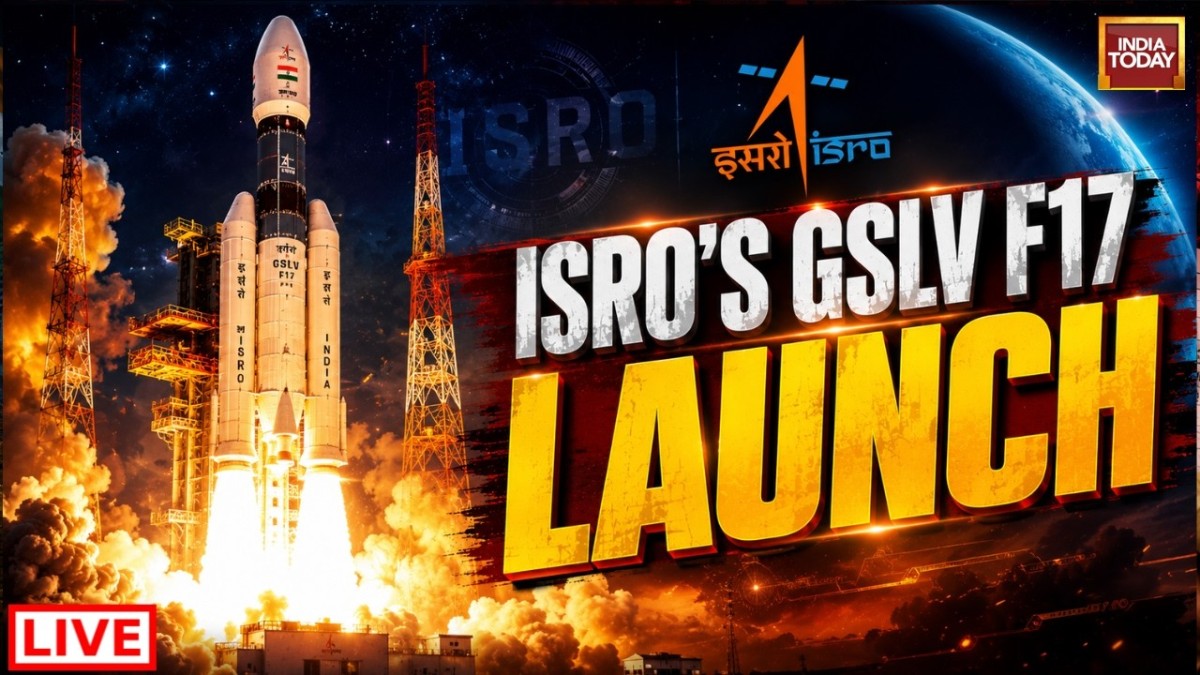
Replacing a Lost Asset: The Road from 2021 to 2026
The success of this mission carries deep significance for ISRO, serving as a redemption arc for a programme that faced a high-profile setback. The EOS-05 effectively replaces the GISAT-1 (EOS-03) mission, which was lost on August 12, 2021, when the GSLV-F10's cryogenic upper stage failed to ignite during flight. That failure was a rare blemish on ISRO's record and delayed India's ambitions for geostationary imaging by half a decade. The fact that the CUS15 stage—the same type that failed in 2021—worked correctly on this mission is a testament to the rigorous engineering reviews and corrective measures implemented by ISRO over the intervening years. This launch was ISRO's second orbital mission of 2026; the first, PSLV-C62 carrying EOS-N1 on January 12, 2026, had failed after an anomaly near the end of the third-stage flight. The successful deployment of EOS-05 is therefore ISRO's first successful orbital mission of the current financial year, providing a much-needed boost to the agency's launch calendar. ISRO Chairman Dr V Narayanan confirmed the significance of the moment, saying, "I am very happy to announce that the GSLV-F17 vehicle has successfully and precisely injected the Advanced Earth Observation Satellite 05, the geo-imaging satellite, in the intended and required orbit." He added that this is "a great achievement for our country's space programme because this is the first EOS that will be placed on the geo platform for the national activities."A New Class of Observation: The Payload Capabilities
What sets EOS-05 apart from India's existing fleet of Earth-observation satellites is its orbital position and its advanced imaging suite. While India has had geostationary Earth-observation spacecraft before—such as INSAT-3D, INSAT-3DR, and INSAT-3DS—those were primarily meteorological satellites. EOS-05 is India's first dedicated imaging satellite in geosynchronous orbit, designed to provide persistent surveillance of the Indian landmass. According to Union Science Minister Dr Jitendra Singh, the satellite carries advanced imaging capabilities across visible, infrared, multispectral, and hyperspectral bands. One of its multispectral imagers boasts a spatial resolution of 42 metres per pixel, which ISRO reports as the highest-resolution camera ever placed in geostationary orbit. This resolution, combined with its fixed position, allows the satellite to image a selected sector every 5 minutes and scan the entire Indian landmass every 30 minutes, as per ISRO's design objectives. This combination of high resolution and rapid revisit time is what makes EOS-05 a game-changer. Low-Earth orbit satellites, which make up the majority of India's 21 operational Earth-observation satellites as of February 2026, pass over a given point only a few times a day. A geostationary satellite, by contrast, maintains a constant vigil, enabling true near-real-time monitoring of fast-moving events.Disaster Management and Early Warning: A National Priority
The most immediate and tangible benefits of EOS-05 will be felt in the realm of disaster management. India's eastern coast is notoriously prone to cyclones, and the country's mountainous regions face annual threats from cloudbursts and flash floods. With its ability to image a sector every five minutes, EOS-05 will provide meteorologists and disaster managers with a continuous stream of data on the formation and movement of severe weather systems. The satellite's applications include near-real-time monitoring of cyclones, severe storms, cloudbursts, floods, and forest fires. This capability is expected to significantly improve early warning times and enable more precise evacuation planning. For a nation that has invested heavily in its disaster response infrastructure, having a dedicated geostationary eye provides a strategic advantage that was previously unavailable. Union Science Minister Dr Jitendra Singh called the launch "another giant leap for India in Space," a sentiment echoed by Prime Minister Narendra Modi, who wrote on X: "Yet another outstanding achievement by ISRO and a proud moment for our nation. The successful launch of GSLV-F17 carrying EOS-05, India's first-ever imaging satellite from Geosynchronous orbit is a reflection of the excellence, innovation and growing capabilities that define India's space sector."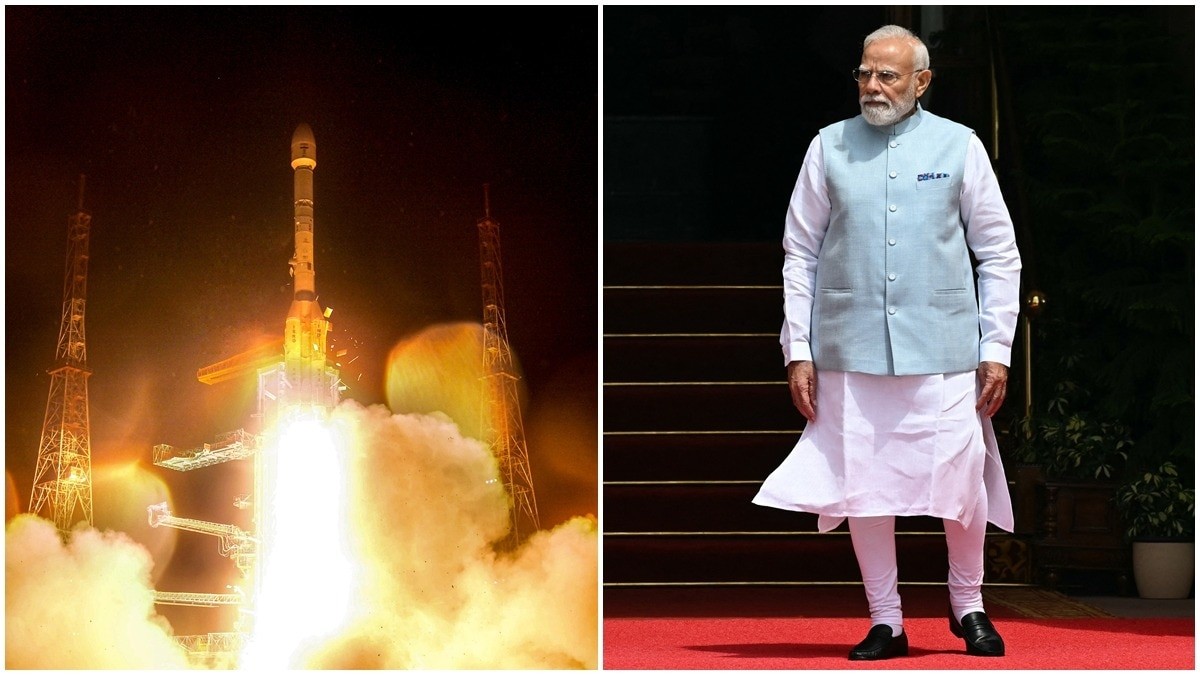
Agriculture, Water, and Urban Planning: The Development Dividend
Beyond disaster response, EOS-05 is poised to become a critical tool for India's agrarian economy and resource management. The satellite's multispectral and hyperspectral capabilities will enable precise assessment of crop health, soil moisture, and vegetation cover across the country. With agriculture employing nearly half of India's workforce and contributing significantly to its GDP, the ability to monitor crop conditions in near-real-time can inform everything from crop insurance assessments to food security planning. The satellite will also support forestry management, water resource monitoring, and urban planning. As Indian cities continue to expand rapidly, the ability to track land-use changes, urban sprawl, and environmental degradation from a fixed vantage point will be invaluable for policymakers. Ocean resource monitoring is another key application, supporting the fishing industry and maritime domain awareness. The data from EOS-05 will complement the existing constellation of Indian Earth-observation satellites, which are mostly in low-Earth or sun-synchronous polar orbits. While those satellites provide higher resolution for specific targets, they lack the temporal frequency that EOS-05 offers. Together, they will provide a more complete picture of the Indian landmass and surrounding oceans.Strategic Observation and National Security
In measured terms, the satellite's capabilities also extend to observation of border and strategic areas. The ability to continuously image fixed geographic sectors from geostationary orbit provides a persistent surveillance capability that is particularly relevant for monitoring India's extensive and contested borders. This is not about militarisation of space, but rather about enhancing situational awareness for national security agencies. The fixed position of the satellite over the Indian landmass means it can be tasked to keep a constant watch on specific sensitive regions. This persistent monitoring capability is a significant upgrade over the periodic passes of polar-orbiting satellites. The fact that this data will be available to Indian agencies without reliance on foreign satellites represents a step forward in strategic autonomy, aligning with the broader policy goals of the Atmanirbhar Bharat initiative. ISRO Chairman Dr V Narayanan confirmed the satellite's health was "perfectly alright" and noted that ISRO has six more launches planned this financial year, including the NVS-03 navigation satellite and the first uncrewed Gaganyaan mission. This robust launch manifest indicates that the success of GSLV-F17 is not an isolated event but part of a sustained cadence of Indian space activity.Industry Partnership and the Space Sector Reforms
The success of this mission also underscores the growing role of Indian industry in the space sector. Prime Minister Modi highlighted this aspect, noting that the growing partnership between ISRO and Indian industry "is adding new strength and scale to our space programme and expanding India's capabilities across the entire space ecosystem." This aligns with the government's ongoing space sector reforms, which have opened up the industry to private players and encouraged greater participation from Indian companies in satellite manufacturing and launch services. The GSLV Mk II, with its indigenous cryogenic upper stage, represents a workhorse vehicle that is now fully proven. The 19 successful missions of the GSLV family provide a reliable platform for launching heavier satellites into geostationary transfer orbits. As India prepares for more ambitious missions, including the Gaganyaan human spaceflight programme, the reliability demonstrated by vehicles like the GSLV-F17 is essential. The timing of this success is also significant. Coming just over a year after the GSLV-F16 placed the NASA-ISRO NISAR satellite in orbit on July 30, 2025, this launch demonstrates the continuity and resilience of ISRO's launch capabilities. The successful recovery from the January 2026 PSLV failure within eight months is a testament to the agency's robust engineering culture and its ability to diagnose and rectify anomalies swiftly.The Bottom Line
The successful deployment of EOS-05 marks a paradigm shift in how India observes its own territory and surrounding oceans. For the first time, the nation has a dedicated, high-resolution imaging satellite that maintains a constant vigil from geostationary orbit. This is not merely a technological achievement; it is a strategic asset that will enhance disaster preparedness, agricultural management, and national security. For Indian taxpayers, the investment in this capability translates into more accurate cyclone warnings, better crop assessments, and more efficient disaster response. For Indian scientists, it provides a new platform for Earth system science. For the Indian space programme, it represents a vindication of the decision to persevere with the GSLV and its cryogenic technology despite the setbacks of 2021. As ISRO Chairman Dr V Narayanan noted, this is "a great achievement for our country's space programme." With six more launches planned this financial year, including the first uncrewed Gaganyaan mission, the success of GSLV-F17 provides powerful momentum. India's space sector is not just recovering from its recent setbacks; it is accelerating into a new era of capability and confidence.— By Dr. Raj Patel, Staff Writer
This article was produced with AI-assisted research and editorial support. Sources: India Today, ISRO, Times of India.
What's Your Reaction?
 Like
0
Like
0
 Dislike
0
Dislike
0
 Love
0
Love
0
 Funny
0
Funny
0
 Wow
0
Wow
0
 Sad
0
Sad
0
 Angry
0
Angry
0

India/South Asia Correspondent at Global1.News. Analytical voice with a background in science and health journalism. Based in New Delhi, covering Indian politics, education, healthcare, technology, and policy. Breaks down complex data into clear, actionable reporting.















Comments (0)