
Vance Sceptical US Behind Deadly Iran Wedding Strike
In a recent BBC News report, Vice-President JD Vance told reporters at the White House that he was "extremely sceptical" of Iranian claims that an American missile struck a wedding celebration in southern Iran, while confirming that Washington had opened an investigation into the deadly incident.
In a recent BBC News report, Vice-President JD Vance told reporters at the White House that he was "extremely sceptical" of Iranian claims that an American missile struck a wedding celebration in southern Iran, while confirming that Washington had opened an investigation into the deadly incident.
Vance Casts Doubt on Iran Wedding Strike as Washington Opens Probe
Washington – 4 September 2026 — The alleged strike on a family wedding in the remote village of Kuhestak has become the latest flashpoint in a conflict that has raged for more than six months, with Tehran accusing Washington of a "war crime" and the White House expressing deep skepticism about the provenance of the attack. The Iranian Red Crescent Society (IRCS) reports that at least four people were killed and dozens wounded when shrapnel struck the ceremony on Tuesday night, while Iranian state media has since reported a fifth fatality. As the United States military confirms it is investigating the incident, Iran has launched fresh retaliatory strikes against American bases in Kuwait and the United Arab Emirates, escalating a confrontation that continues to rattle global energy markets and threaten the stability of the Gulf region.
The Alleged Strike at a Wedding Celebration
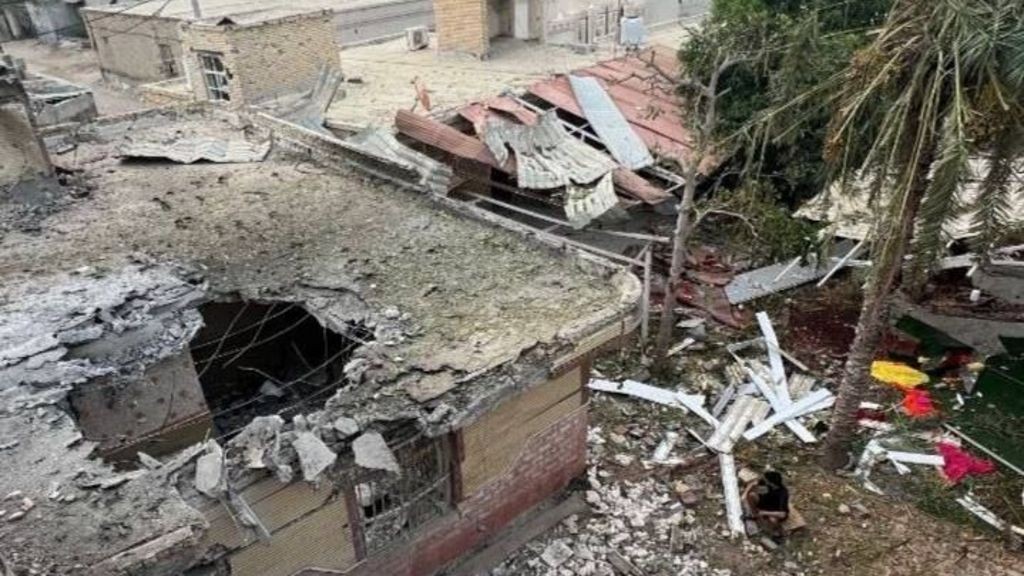
The Iranian Red Crescent Society, a humanitarian organisation operating within the Islamic Republic, has provided the most detailed account of the incident that occurred on Tuesday night in Kuhestak, a village situated in Sirik County within Iran's southern Hormozgan province. According to the IRCS, shrapnel from a missile struck a family wedding ceremony being held at a private home, transforming a moment of celebration into one of tragedy. The organisation reported that at least four people were killed instantly and 67 others were injured, with many of the wounded requiring urgent medical evacuation to hospitals in the region.
The victims have been named locally, painting a harrowing picture of the human cost of the strike. Among the dead are Zarkhatoon Taheri, 50; Kolsum Mallahi Nazhdnia, 43; Mohammad Mallahi, a 16-year-old; and Amirali Karimi, who was just four years old. Iranian state media has since reported that a fifth person, a woman aged 22, died in hospital shortly after the initial attack, bringing the reported death toll to five. The ages of the victims, including a young child and a teenager, have fuelled outrage within Iran and drawn international attention to the incident.
Iran's foreign ministry spokesman, Esmaeil Baqaei, moved quickly to characterise the attack in the strongest possible terms, declaring the strike a "war crime" in a statement that was carried by state media outlets. The Iranian Red Crescent Society has also taken legal steps, writing formally to the Office of the Prosecutor of the International Criminal Court in The Hague, seeking legal action against the perpetrators of what it described as a "grave" attack. The organisation's letter requests that the ICC investigate the incident, signalling Tehran's intent to pursue international legal avenues even as the military conflict continues to escalate across the region.
Washington's Response: "Extremely Sceptical"
The White House has responded to the allegations with a mixture of denial and caution, with Vice-President JD Vance taking the lead in publicly addressing the incident. Speaking at a White House briefing on Thursday, Vance told reporters: "I will say that the Iranian state media has not been a very good scribe about what's happened in the conflict thus far. So I'm extremely sceptical of this. I know that we're investigating." His remarks, which were captured in a recent BBC News report, reflect an administration that is carefully navigating the political and diplomatic fallout of a strike that has the potential to reshape international opinion about the conflict.
Vance's scepticism was rooted in a broader critique of Iranian information operations, suggesting that Tehran's media apparatus has a track record of misrepresenting events on the ground. However, he stopped short of an outright denial, confirming instead that the US military has opened an investigation into the deadly incident. This dual approach — expressing doubt while acknowledging the need for a formal inquiry — appears designed to give Washington time to establish the facts while pushing back against what it views as a premature condemnation from Tehran.
The Pentagon has echoed this stance through CENTCOM spokesperson Tim Hawkins, who addressed the reports of civilian casualties directly. Hawkins said the command was aware of reports that "originated from Iranian state media," adding: "The US military never targets civilians, unlike the IRGC." His statement draws a sharp distinction between American military doctrine and the tactics of Iran's Islamic Revolutionary Guard Corps, which Washington has repeatedly accused of endangering civilians through its operations in the region. The investigation, Hawkins indicated, would determine the facts of what occurred in Kuhestak, though he offered no timeline for its completion.
The Strikes That Preceded the Allegation
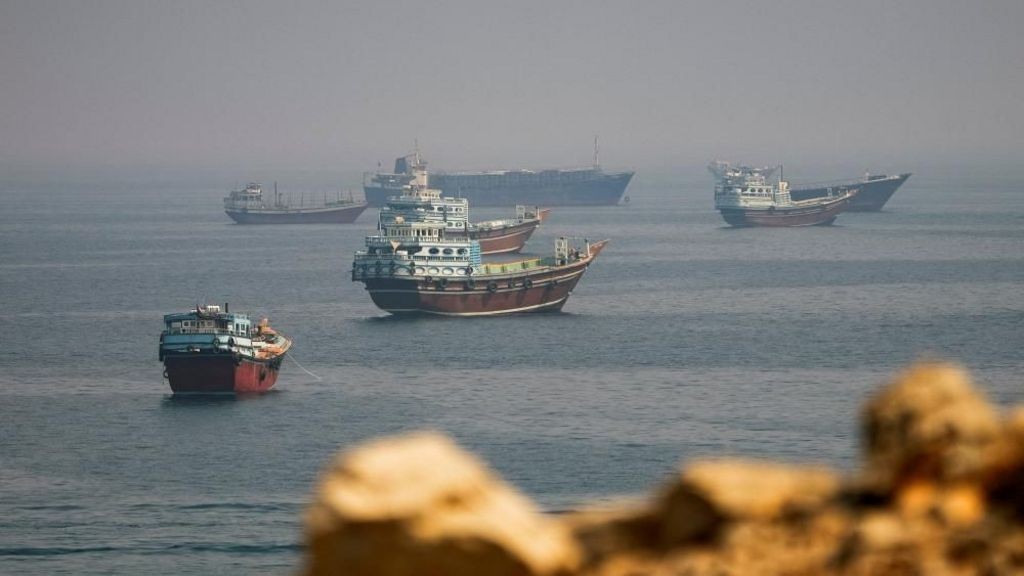
The alleged wedding strike did not occur in a vacuum, but rather as part of a renewed wave of American military action against Iranian targets that began on Tuesday. US Central Command (CENTCOM) announced that it had resumed strikes against Iran, accusing the Islamic Revolutionary Guard Corps of "recent attempted attacks" against commercial shipping in the Strait of Hormuz and American service members deployed to the region. According to CENTCOM, US forces began striking IRGC targets at 12:00 ET (16:00 GMT) on Tuesday, marking a significant escalation in the ongoing conflict.
The scale of the American operation was immediately apparent, with Iranian state media reporting explosions across the southern provinces of Hormozgan, Sistan-Baluchestan, Kerman and Khuzestan. Residents of Qeshm Island and the port city of Bandar Abbas reported hearing loud blasts, as the strikes targeted what Washington described as IRGC military infrastructure. The choice of targets reflected the Pentagon's stated focus on degrading Iran's ability to threaten commercial shipping and American forces in the region, though the full scope of the operation has not been disclosed.
The strategic importance of the area cannot be overstated, as the Strait of Hormuz serves as a critical chokepoint through which around 20% of global oil and gas shipments typically pass. The renewed fighting has already had economic consequences, with oil prices spiking again this week as traders priced in the risk of supply disruptions. The strait has remained a flashpoint throughout the conflict, with Iran threatening to close it and the United States vowing to keep it open, creating a volatile dynamic that has kept global energy markets on edge since the war began.
Tehran's Retaliation Across the Gulf
Iran's response to the American strikes was swift and wide-ranging, with Tehran launching fresh attacks on US bases in Kuwait and the United Arab Emirates on Thursday. The Iranian army announced that it had hit US assets at the Ahmad al-Jaber Air Base in Kuwait "with missiles and drones," claiming to have targeted satellite communication systems, equipment depots and fighter aircraft hangars. The base, which hosts American forces, was described by Tehran as a legitimate military target in the context of what Iran frames as a defensive war against US aggression.
Kuwait's army confirmed that it had intercepted a missile and drone attack from Iran, characterising the strikes as a "grave breach of the rules of international law." The Kuwaiti statement reflects the precarious position of Gulf Arab states, which host US military facilities but have sought to avoid being drawn directly into the conflict between Washington and Tehran. The interception suggests that Kuwait's air defence systems successfully neutralised the incoming threats, though the incident has heightened tensions across the region.
Iran's army also claimed to have struck Al Minhad Air Base in the United Arab Emirates, though the UAE reported no such attack, leaving the claim unverified. Tehran has said it targeted US bases and forces in Washington-allied Gulf Arab countries this week, including the UAE, Kuwait, Bahrain, Jordan and Iraq's Kurdistan region, signalling a broader campaign against American interests across the region. Iran's First Vice-President Mohammad Reza Aref warned that Iran's strategy would now be "asymmetrical," adding: "Dark months await the American economy." Iran's top negotiator, Mohammad Bagher Ghalibaf, lashed out at Washington over the wedding attack, calling the United States "Satan" in remarks that underscore the deep animosity between the two nations.
Forensics and the Evidence Debate
Independent verification efforts have begun to shed light on the incident in Kuhestak, even as Washington and Tehran trade accusations. BBC Verify, the BBC's fact-checking unit, confirmed a video and two images taken on Tuesday near Kuhestak's coast that showed a telecommunications tower being destroyed. Additional videos from Tuesday and Wednesday showed severely damaged houses located approximately 130 metres north of the tower, providing visual evidence of the destruction caused by the strike. BBC Persian Forensics, a specialist team within the BBC's Persian service, conducted a more precise geolocation analysis, finding that the tower was approximately 112 metres from the house where the wedding was being held.
The proximity of the destroyed tower to the wedding venue has become a central point of contention, with Iranian officials suggesting that the wedding was collateral damage from a strike aimed at the telecommunications infrastructure. Defence experts who reviewed fragments found in Kuhestak have offered a preliminary assessment, suggesting that the weapon may have been a variant of the AGM-84K SLAM-ER, a precision-guided, air-launched cruise missile with "surgical strike capability" made by Boeing. If confirmed, this would indicate that the weapon was designed for high-precision targeting, raising questions about how it could have struck a civilian gathering.
The Kuhestak incident is not the first time that civilian casualties have become a point of dispute in this conflict. Earlier in the war, a strike on an elementary school in Minab in Hormozgan province killed about 170 people, mostly schoolchildren, while a strike on a sports hall in Lamerd killed 21 people including four children. The US military has refused to release findings from its Minab investigation, and CENTCOM commander Brad Cooper has claimed that the school was located on an active IRGC cruise missile base, an assertion that independent investigators have not been able to verify. These earlier incidents have created a pattern of contested narratives that now surrounds the wedding strike.
A Conflict Past the Six-Month Mark
The wedding strike allegations come at a critical juncture in a conflict that has now continued for over half a year, since the United States and Israel launched a joint attack on Iran in late February. Iranian authorities say more than 3,500 Iranians have been killed since the war began, a figure that cannot be independently verified but which reflects the devastating human cost of the fighting. The conflict has expanded beyond its initial parameters, drawing in Gulf Arab states, disrupting global energy supplies and creating a humanitarian crisis within Iran.
Efforts to halt the fighting have so far proven unsuccessful, with a truce that was brokered earlier in the conflict having collapsed amid mutual accusations of violations. The renewed fighting this week represents a significant escalation, with both sides appearing to believe that they can achieve their objectives through military means. Washington has pressed a counter-blockade of Iranian ports, seeking to strangle Tehran's economy, while Iran maintains pressure on the Strait of Hormuz, threatening the free flow of oil and gas that the global economy depends upon.
The Trump administration has described its new sanctions regime against Tehran as an "economic D-day," signalling an intent to use economic pressure as a primary tool of coercion. However, the renewed fighting and the civilian casualty allegations have complicated this strategy, potentially undermining international support for the American position. The wedding strike, if confirmed to have been caused by US munitions, could provide Iran with a propaganda victory and galvanise opposition to the war both within the region and internationally. Oil markets have responded with anxiety, with prices spiking again this week as traders assess the risk of a prolonged and expanding conflict.
Analysis and Implications
The dispute over the wedding strike reveals the extent to which information warfare has become a central front in this conflict, with both Washington and Tehran seeking to control the narrative surrounding civilian casualties. For the White House, the allegation threatens to undermine its claim that the US military conducts precision strikes that avoid civilian harm, a cornerstone of its public justification for the campaign against Iran. For Tehran, the incident provides a powerful tool for rallying domestic support and international sympathy, even as it faces its own accusations of endangering civilians through its military operations.
The civilian casualty question is politically explosive for both sides, but in different ways. For Washington, the risk is that incidents like the wedding strike erode the moral authority of its campaign, potentially leading to calls for restraint from allies and domestic critics. For Tehran, the challenge is that its own record on civilian protection is far from clean, with the IRGC having been accused of using human shields and operating from civilian areas. The competing narratives are likely to intensify in the coming days, with each side seeking to shape international opinion through selective release of evidence and testimony.
The risk of Gulf Arab states being drawn deeper into the confrontation is a growing concern, as Iran's retaliatory strikes against US bases in Kuwait and the UAE demonstrate. These states have sought to maintain a delicate balance, hosting US forces while attempting to avoid becoming targets themselves. The escalation this week suggests that this balancing act is becoming increasingly difficult, and analysts suggest that further Iranian attacks on Gulf territory could force these states to choose sides more explicitly. What to watch in the coming days includes the findings of the US investigation into the wedding strike, the response of the International Criminal Court to the IRCS letter, and whether Iran's "asymmetrical" strategy will lead to further attacks on American interests in the region.
By Irina Volkov, Staff Writer
This article was produced with AI-assisted research and editorial support. Reporting is based on sources cited in the article.
What's Your Reaction?
 Like
0
Like
0
 Dislike
0
Dislike
0
 Love
0
Love
0
 Funny
0
Funny
0
 Wow
0
Wow
0
 Sad
0
Sad
0
 Angry
0
Angry
0

Russia/Eastern Europe Correspondent at Global1.News. Covering Russian politics, energy, security, and the shifting dynamics of the post-Soviet space. Provides clear-eyed analysis on one of the world's most opaque regions.













Comments (0)