
US Defense Department Awards Northrop Grumman $1.84 Billion Framework Contract for Rafael Litening Targeting Pods
Northrop Grumman receives a $1.84 billion US Defense Department framework contract for Rafael's Litening targeting pods, covering production, upgrades, and maintenance of the Israeli-developed system through 2035.
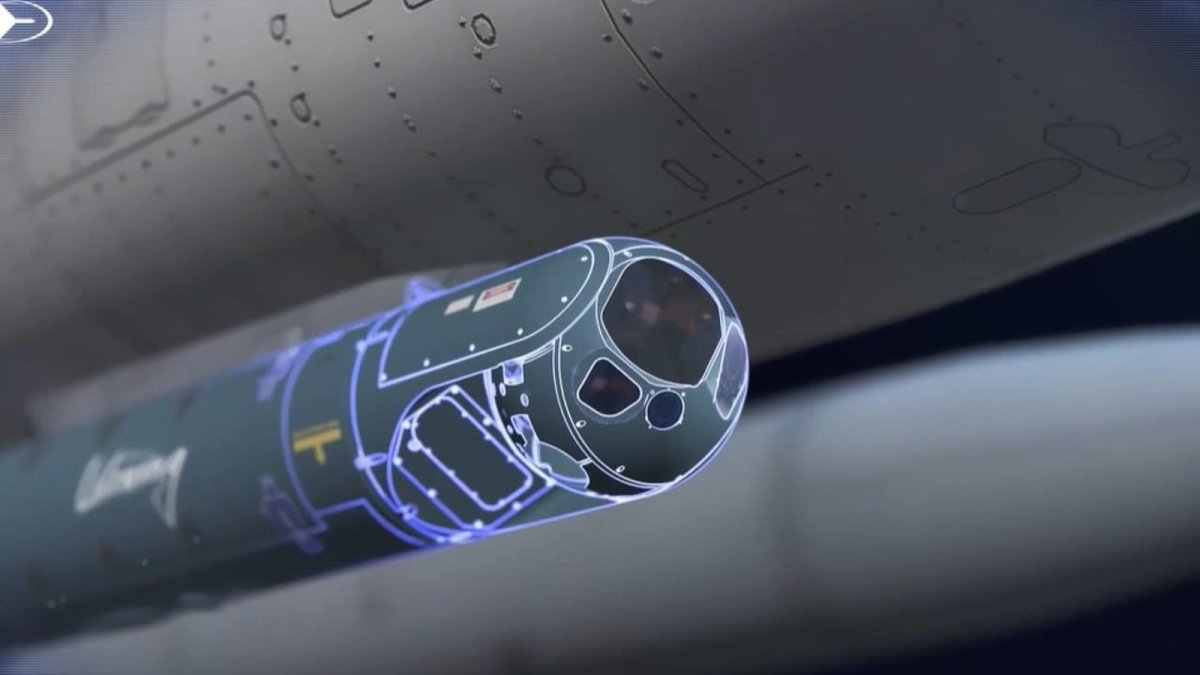
The United States Defense Department has awarded Northrop Grumman a $1.84 billion framework contract to supply Litening targeting pods to the US Air Force and to upgrade and maintain existing systems, in a deal that locks in the Israeli-developed targeting technology at the heart of American air power through 2035. The agreement, announced this week, extends a partnership that has already delivered hundreds of Rafael-built pods to US military branches since the mid-1990s.
The Framework Contract and Its Scope
The United States Defense Department has awarded Northrop Grumman a $1.84 billion framework contract to supply Litening targeting pods to the US Air Force along with upgrades and maintenance for existing systems. This agreement establishes a long-term structure that will remain in effect until 2035, allowing the US Air Force to place individual orders as operational needs arise. Northrop Grumman received an initial $43 million allocation as the first expenditure under the broader pact, signaling immediate commitment to sustaining and expanding the Litening inventory across American forces.
Framework agreements of this scale provide defense contractors with predictable revenue streams that support long-term production planning and component stockpiling, reducing the risk of supply disruptions during periods of heightened operational demand. For the US Air Force, such structures streamline sustainment of mature sensor systems by allowing incremental orders without repeated competitive solicitations, preserving institutional knowledge among engineering teams and subcontractors. The multi-decade horizon extending to 2035 underscores a deliberate decision to maintain compatibility across mixed-generation aircraft fleets rather than accelerating full replacement cycles.
The modest initial tranche signals the start of a phased implementation that lets program managers validate integration milestones before scaling quantities, a common approach when bridging legacy and emerging platforms. This structure also facilitates coordinated upgrades across allied inventories that share the same pod architecture, creating economies of scale that benefit both US and partner air forces. Industry observers note that such contracts reinforce the strategic value of interoperable Western targeting systems amid evolving threat environments.
Northrop Grumman and Rafael Partnership Dynamics
Northrop Grumman manufactures the Litening system in the United States in close partnership with Rafael Advanced Defense Systems, the Israeli developer of the pod. This arrangement enables delivery to branches of the US military as well as foreign customers while leveraging Rafael's core technology. The collaboration underscores how Israeli defense innovations integrate into American production lines, creating a reliable supply chain that supports both domestic requirements and export programs without compromising performance standards.
Technical Capabilities of the Litening Pod
A targeting pod resembles a missile and mounts on a dedicated hardpoint beneath an aircraft. It carries a camera, additional sensors, and a laser designator that guides precision weapons. Pilots and navigators can locate distant ground targets during daylight, at night, and in all weather conditions. In recent years the system has grown essential for identifying unmanned aerial vehicles and drones, which onboard radars sometimes struggle to detect amid cluttered airspace.
Origins in Israel's Quest for Weapons Independence
Rafael Advanced Defense Systems developed Litening roughly 40 years ago with funding from the Israeli Defense Ministry after the United States declined to sell the Israeli Air Force its equivalent LANTIRN system. This episode occurred long before current efforts to achieve greater weapons independence took center stage in Israeli policy. The refusal prompted local engineers in Haifa and other research centers to create an indigenous solution that has since proven both cheaper and more effective than the American alternative for many missions.
The refusal to release LANTIRN technology decades ago prompted Israeli policymakers to prioritize domestic development of electro-optical targeting capabilities, establishing a precedent for investing in sovereign solutions when foreign suppliers impose restrictions. This episode accelerated the growth of an indigenous industrial base capable of designing, testing, and iterating complex avionics without external vetoes, a pattern that later influenced programs across radar, electronic warfare, and missile domains. The resulting emphasis on self-reliance has become a core tenet of Israeli defense planning, allowing rapid customization to address unique regional operational requirements.
Over time, this policy orientation fostered deeper collaboration between government laboratories and private firms, creating feedback loops that translate operational lessons directly into engineering refinements. The strategic logic favors systems that can be sustained and upgraded locally, mitigating vulnerabilities associated with supply-chain dependencies during crises. Contemporary Israeli efforts to expand weapons independence continue to draw on this foundational experience, balancing selective international partnerships with the imperative to retain critical design authority at home.
Evolution Through Five Generations of Upgrades
Rafael has advanced the Litening through five generations, each delivering improved range and resolution. One notable enhancement allows integration of radar manufactured by Israel Aerospace Industries, fostering collaboration between two competing Israeli defense companies. This iterative development reflects the innovation culture prevalent in Tel Aviv and Jerusalem technology corridors, where rapid adaptation to emerging threats drives successive product cycles.
Successive generations of the targeting pod have incorporated incremental advances in sensor fusion, image processing, and data-link architecture, reflecting a deliberate roadmap that extends service life while introducing new mission capabilities. Collaboration on radar integration between Rafael and Israel Aerospace Industries illustrates how competing domestic entities can align on complementary subsystems, pooling expertise to accelerate fielding of multi-spectral solutions. This pattern of iterative enhancement is sustained by a defense research culture that treats each operational deployment as a source of empirical data for the next design cycle.
Fifth-generation improvements in detection range and image resolution enable aircrews to identify and engage time-sensitive targets from greater stand-off distances, a critical factor in contested airspace where exposure windows must be minimized. Such enhancements also support expanded roles in intelligence collection and battle-damage assessment, broadening the pod's utility beyond traditional strike missions. The sustained upgrade trajectory demonstrates how sustained R&D investment can maintain relevance even as aircraft platforms themselves evolve through multiple generations.
Extensive US Military Adoption Since 1996
Since 1996 the Pentagon has purchased 900 Litening pods. The system equips Air Force F-15E, F-16, and A-10 aircraft, Navy F/A-18 fighter jets, Marine Corps Harrier aircraft, and even B-52 bombers and Hercules transport aircraft. Although the F-35 aircraft procured by the Air Force, Navy, and Marine Corps feature an integrated weapons guidance system that removes the need for external pods, the US military continues operating Litening on its legacy platforms, preserving demand for the proven technology.
Widespread integration across diverse US tactical aircraft highlights the pod's modular design, which accommodates varying aircraft interfaces and mission profiles without requiring platform-specific redesigns. This versatility has allowed the system to remain in service alongside newer integrated sensor suites, illustrating a pragmatic procurement philosophy that retains proven subsystems while introducing fifth-generation fighters. The continued relevance of dedicated targeting pods stems from their ability to deliver high-resolution imagery and laser designation independent of the host aircraft's primary avionics architecture.
US operators have found value in maintaining mixed fleets where legacy platforms equipped with mature pods handle certain mission sets, freeing advanced fighters for higher-threat environments. This approach preserves overall force capacity and training pipelines while managing the high costs associated with full fleet modernization. The enduring adoption pattern reflects broader trends in which precision engagement tools remain essential even as onboard aircraft sensors grow more sophisticated.
High Reliability Demonstrated in Operations
Northrop Grumman has reported that the Litening system maintains a 95 percent operational availability rate, reflecting strong reliability across diverse mission profiles. This metric supports sustained use by American forces and reinforces the value of the new framework contract, which includes provisions for ongoing upgrades and maintenance to keep fleets mission-ready through 2035.
Recent International Interest in Advanced Variants
The contract does not specify quantities, models, or whether the Pentagon will acquire fifth-generation Litening pods. That latest version was purchased last year by the German government for Luftwaffe Typhoon aircraft in a deal valued at 350 million euros. Such foreign sales illustrate the pod's global appeal and the continued relevance of Rafael's technology beyond American borders.
Economic Significance for Israel's Defense Ecosystem
The framework agreement highlights the economic weight of Israel's defense-tech sector, where companies like Rafael Advanced Defense Systems contribute substantially to national exports and technological prestige. Production partnerships with Northrop Grumman generate revenue streams that sustain research facilities in Haifa and support skilled employment across the country. These ties also strengthen diplomatic and industrial links between Israel and the United States, embedding Israeli innovation within the broader architecture of allied air power.
Defense exports constitute a significant component of Israel's high-technology sector, generating revenue that supports further innovation and skilled employment across the supply chain. Rafael's participation in major US programs strengthens the company's financial position, enabling continued investment in next-generation sensors and related technologies that also serve domestic requirements. Industrial partnerships of this kind create reciprocal benefits, as American firms gain access to specialized Israeli expertise while Israeli entities secure stable long-term contracts.
These arrangements contribute to a broader diplomatic framework in which defense trade reinforces bilateral security commitments between Jerusalem and Washington. Sustained collaboration helps maintain a robust Israeli defense industrial base that can respond to both national and allied needs, while joint development activities often yield technologies with wider commercial applications. The economic multiplier effect extends beyond prime contractors to include subcontractors and research institutions throughout the country.
Strategic Context Within Middle East Realities
From an Israeli perspective, the contract arrives amid ongoing regional security challenges that place premium value on precision targeting and drone defense capabilities. The Litening system's proven track record on multiple US platforms demonstrates how technologies born from necessity in Jerusalem and Tel Aviv now underpin multinational operations. This outcome validates decades of investment in indigenous systems and positions Israel's defense industry as a vital contributor to collective deterrence strategies in an increasingly contested Middle East environment.
Proliferation of unmanned aerial systems in regional conflicts has elevated the importance of reliable electro-optical detection and tracking tools that can discriminate between threats and civilian activity under challenging conditions. Pod-equipped aircraft provide persistent surveillance and precision engagement options that complement ground-based defenses, contributing to layered deterrence against drone swarms and other low-signature targets. Israeli perspectives emphasize the need for systems that maintain effectiveness across the spectrum of current and anticipated regional contingencies.
Trends toward greater reliance on precision-guided munitions in Middle East operations underscore the operational value of targeting pods that deliver accurate coordinates and laser guidance in dynamic environments. From an Israeli standpoint, such technologies enhance collective security by enabling rapid, proportionate responses that minimize collateral effects while deterring potential adversaries. The regional security landscape continues to reward investments in interoperable, combat-proven sensor systems that can be rapidly adapted to emerging threats.
By Hannah Berg, Staff WriterThis article was produced with AI-assisted research and editorial support. Reporting is based on sources cited in the article.
What's Your Reaction?
 Like
0
Like
0
 Dislike
0
Dislike
0
 Love
0
Love
0
 Funny
0
Funny
0
 Wow
0
Wow
0
 Sad
0
Sad
0
 Angry
0
Angry
0

Israel Correspondent at Global1.News. Based in Tel Aviv, covering Israeli politics, security, technology, and society. Provides balanced, deeply-sourced reporting on one of the most closely-watched regions in the world.














Comments (0)