
Canadian robotics companies face hurdles from U.S. restrictions on foreign-made advanced robots
Canadian robotics firms are expressing concern over new U.S. import restrictions that could limit access to their key export market. The measures, introduced last month by the Federal Communications Commission, target foreign-produced advanced robotics and power inverters on national security grounds. Industry voices note that the rules apply broadly, regardless of country of origin, and may require Canadian businesses to justify their manufacturing locations.
The Scope of the U.S. Restrictions
The Federal Communications Commission added foreign-produced advanced robotic devices and foreign-produced power inverters to its Covered List under the Secure and Trusted Communications Networks Act of 2019. This action followed national security determinations by a White House task force. The restrictions cover new imports of humanoid robots, quadruped robots often called robot dogs, robotic vacuum cleaners, forklifts, and related equipment.
The FCC's Covered List is maintained under Section 2 of the Secure and Trusted Communications Networks Act of 2019. On July 28, 2026, the FCC's Public Safety and Homeland Security Bureau released Public Notice DA 26-786 adding the two categories to the list. This step formalises the process for enforcing the national security determinations across affected equipment categories.
Companies can seek Conditional Authorizations from the FCC for affected products. The agency has indicated that such authorisations may allow limited market access where risks can be mitigated. New versions of previously authorised products fall under the updated rules, requiring fresh reviews even if earlier models received clearance.
FCC chair Brendan Carr stated that the move aims to secure America's critical supply chains. The agency described the regulations as country neutral. An FCC spokesperson confirmed to Global News that the rules stem from executive branch advice identifying unacceptable risks to U.S. national security.
These steps build on earlier U.S. limits on Chinese products such as drones and on exports of advanced U.S. technology to China. The ban also encompasses power inverters used in renewable energy systems, data centres, and household appliances. Offshore production of such equipment is viewed as creating vulnerabilities in supply chains.

Effects on Montreal-Based Innovators
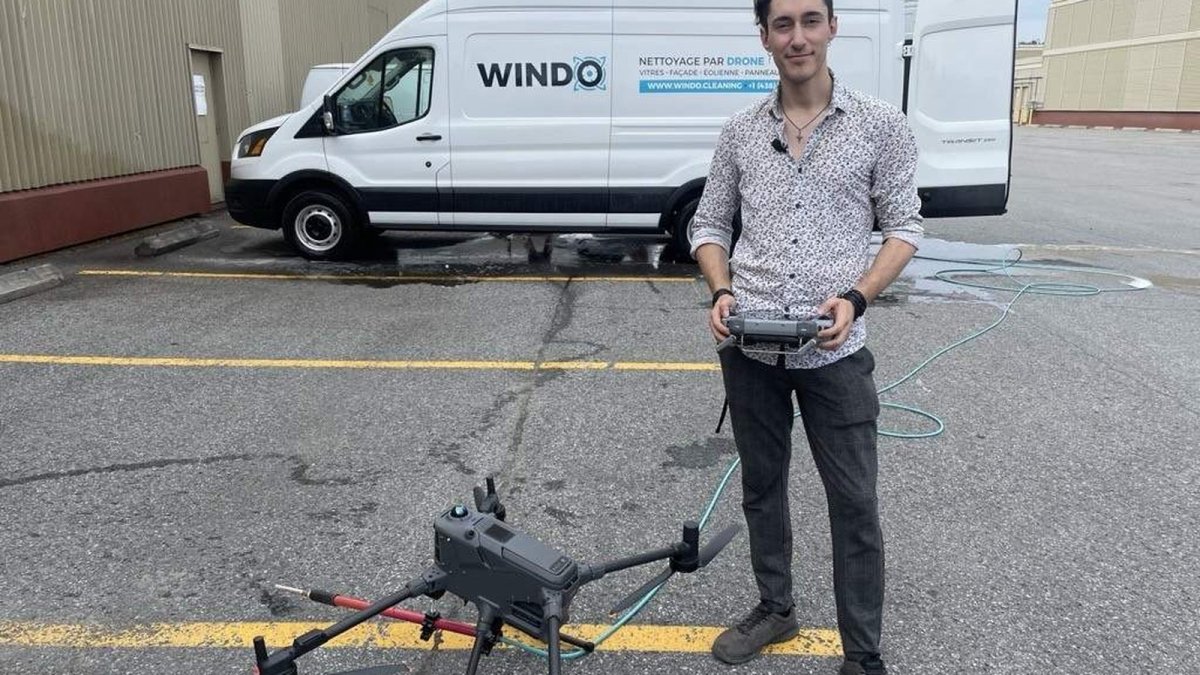
Sebastien Methot, CEO of Montreal-based Windo Smart, described the regulations as a significant challenge. The company, launched in 2023, employs drones and robotic technology for cleaning high-rise buildings and has expanded into the U.S. market. Methot noted that the United States represents the largest potential sales destination, yet the firm can no longer pursue those opportunities under the new rules.
The Quebec technology ecosystem supports numerous robotics startups that rely on export revenues to scale operations. Relocation decisions carry substantial costs for these firms, including loss of local talent networks and disruption to supply chains developed over several years. Such moves could slow the sector's contribution to broader Canadian advanced manufacturing goals.
Startup economics in robotics often hinge on access to large markets like the United States to achieve profitability. When firms consider shifting headquarters or production, Canadian innovation policy faces pressure to provide equivalent domestic incentives. Without targeted support, the sector risks losing ground in global competition for investment and skilled labour.
Methot outlined limited options, including a shift toward Canadian or European markets or full relocation. He expressed a preference to remain in Quebec but indicated that government decisions would influence whether the company stays. The entrepreneur highlighted worries about a potential loss of Canadian talent in the sector.
Robotics represents a major area of innovation in the 21st century, according to Methot, who called for greater Canadian investment to establish the country as a leader in the field. He emphasised the need for sovereign technology capabilities.
Industry Leaders Call for Strategic Response
Ryan Gariepy of the Canadian Robotics Council characterised the situation as complicated, far-reaching, and disruptive. He suggested that Canadian companies seeking U.S. sales may need to explain why their products are not manufactured in the United States. Gariepy added that the rules prompt a rethink of robot usage within Canada itself.
Jayson Myers, executive director of Next Generation Manufacturing Canada (NGen), the industry-led supercluster for advanced manufacturing, described the policy as worrying. He noted that the most innovative Canadian firms view the U.S. market as central to their growth plans, and industry leaders fear the measures could constrain innovation and encourage more companies to shift operations south of the border.
Canada's 2026 Defence Industrial Strategy, launched in February 2026, designates Uncrewed Systems as a Tier 1 Sovereign Capability. This designation signals robotics as a strategic technology area for the country. ISED, the federal department responsible for industry support, is positioned to coordinate responses that align defence priorities with commercial robotics development.
National Security Concerns and Global Market Dynamics
The U.S. measures cite risks including cybersecurity threats and supply chain disruptions. China holds an estimated 85 per cent share of the global humanoid robot market. Beijing has accused the United States of protectionism in response to the restrictions.
Omdia data shows that of roughly 15,000 humanoid robots shipped worldwide in 2025, Chinese firms Unitree and AGIBOT each accounted for more than 5,000 units. U.S. companies such as Tesla and Figure AI shipped only a few hundred or fewer. Morgan Stanley analysts project that China's humanoid robot market could reach 15 billion U.S. dollars by 2030, underscoring the commercial stakes involved.
The U.S. is also weighing controls on Chinese open-source AI models. The restrictions are expected to influence relations with Beijing ahead of a planned September meeting between U.S. President Donald Trump and Chinese leader Xi Jinping. Samm Sacks of the New America think-tank described the developments as part of a steady drumbeat of potential flashpoints leading into that summit.
Canada's Robotics Ambitions and Potential Brain Drain
Canadian companies must now consider how to maintain competitiveness while complying with U.S. requirements for justification and potential future U.S. manufacturing commitments. Conditional Authorizations remain available through the FCC for firms seeking exemptions.
Brain drain concerns centre on the loss of specialised engineering talent if firms relocate. Sovereign technology capabilities in robotics support both economic growth and national security objectives. Federal policy responses could include strengthened trade diplomacy to secure exemptions, increased investment in domestic manufacturing facilities, and expanded procurement programs that prioritise Canadian-developed systems.
The policy may affect growth in an industry advancing alongside artificial intelligence. Canadian robotics firms have made progress, yet the broad application of the rules creates uncertainty for exporters.
Methot stressed the importance of keeping talent and expertise within Canada. He advocated for policies that support domestic development of robotics capabilities to avoid reliance on external markets.
Looking Ahead for Cross-Border Trade
The restrictions apply to new versions of covered imports. Companies face decisions about market focus or operational changes in the coming months.
Implementation timelines remain subject to further FCC guidance, with potential phased enforcement that could extend into 2027. Canadian exporters are assessing compliance pathways while monitoring any bilateral discussions that might ease restrictions. The broader Canada-U.S. trade relationship could face added strain if similar measures expand to other technology categories.
Canadian industry groups continue to monitor developments and assess long-term effects on innovation and employment. The situation underscores ongoing tensions between national security priorities and international technology trade.
Further clarification from U.S. authorities may emerge as implementation proceeds. Canadian firms are evaluating strategies to adapt while advocating for supportive domestic policies.
Tags: robotics, FCC ban, US Canada trade, national security, advanced manufacturing, Windo Smart, Canadian Robotics Council, NGen, defence industrial strategy
By Alex Thompson, Staff Writer
This article was produced with AI-assisted research and editorial support. Reporting is based on sources cited in the article.
What's Your Reaction?
 Like
0
Like
0
 Dislike
0
Dislike
0
 Love
0
Love
0
 Funny
0
Funny
0
 Wow
0
Wow
0
 Sad
0
Sad
0
 Angry
0
Angry
0

Canada Correspondent at Global1.News. Based in Toronto, covering Canadian politics, energy, trade, and US-Canada relations. Provides the Canadian perspective on North American and global affairs.















Comments (0)