
Hackers smash 'n' grab AI vendor: Take off with license data of Uber drivers
Uber’s latest breach reads like a cautionary tale for anyone who thinks handing raw driver‑license images to an AI vendor is a harmless shortcut. What actually happened?
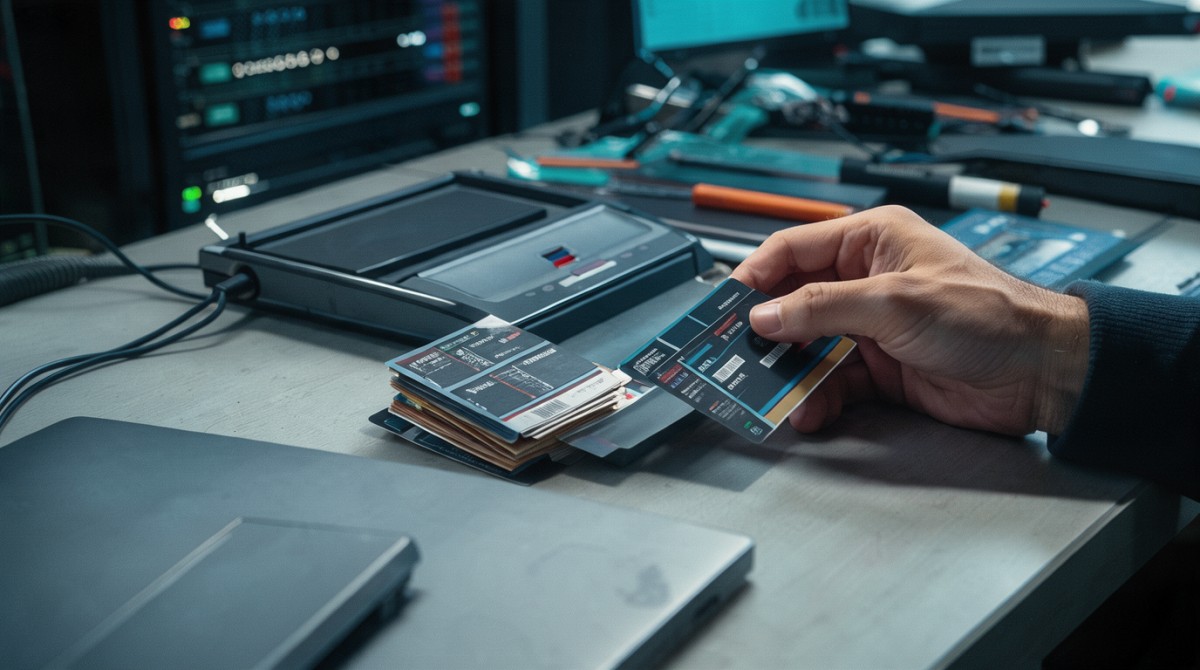
Uber’s latest breach reads like a cautionary tale for anyone who thinks handing raw driver‑license images to an AI vendor is a harmless shortcut. The ride‑hailing giant confirmed that almost 150,000 drivers had their personal details exposed after hackers slipped past the defenses of Fireworks AI, the inference platform Uber uses to power its AI experiments. The breach, disclosed in filings with state attorneys general, shows how legitimate credentials can turn into a backdoor for criminals, and why the “best‑practice” checklist that many hyperscalers hand out is about as useful as a screen door on a submarine.
What actually happened?
According to the Oregon filing, the number of affected drivers sits at 149,346. The stolen data included scanned images of driver’s licences and the extracted fields – names, home addresses, dates of birth and licence numbers. Uber never named the supplier in its regulator filings, but a TechCrunch interview confirmed it was Fireworks AI, the same outfit that has been in the headlines for its own security woes.
Fireworks alerted Uber on October 9 that an intruder had been using its internal credentials without permission. Uber immediately cut off the supplier’s access, but a forensic review later showed the attackers had actually accessed the driver data on October 7, two days before the breach was reported to Uber. The timeline is a textbook example of why “detect and respond” is only as good as the signals you’re actually monitoring.
Why the alarms stayed silent
Uber set up a dedicated cloud storage environment for the AI work, complete with its own security monitoring team. Yet the attackers used legitimate credentials – the very kind that normally let a trusted partner read and write data. Because the activity looked like normal traffic, none of the alerts fired. This is the classic “trusted‑user problem” that many large enterprises ignore until a breach forces them to confront it.
Uber says those credentials were scoped so they couldn’t reach other systems, and the company has since revoked or changed them. In practice, however, once a credential is compromised it’s a race against time to rotate keys across all dependent services. The incident underscores that segmentation alone isn’t enough if the credential itself is compromised.
Fireworks AI’s own security saga
Fireworks AI, which provides the infrastructure for developers to run and fine‑tune AI models, has had a rough October. The company first disclosed a security incident on October 9 after discovering the unauthorized use of its internal credentials. Initially, Fireworks claimed there was no evidence that personal data or customer datasets had been accessed.
Later that month, the firm suffered a second breach and on November 9 admitted that attackers had gotten hold of billing records, some customer datasets and even incomplete model weights. Notion, the productivity software maker, was among the customers whose AI‑assistant conversations were exposed. Fireworks now suspects financially motivated criminals are selling unauthorized access to large language models – a business that’s been booming in the underground market.
The broader Uber pattern
This isn’t Uber’s first brush with cyber‑crime. In August, Uber Freight, the company’s logistics arm, confirmed a break‑in after the Helix extortion crew claimed to have exfiltrated almost a million files, including data from mailboxes and OneDrive accounts. The pattern is clear: Uber is repeatedly exposing massive data stores to third‑party vendors without sufficient oversight, and each time the fallout lands on drivers and riders.
The company began notifying affected drivers on November 10, more than a month after learning of the breach. Victims are offered free credit monitoring and fraud assistance, but they only have a 90‑day window to sign up. That limited window feels more like a PR move than a genuine effort to protect drivers from identity theft.
What this says about hyperscaler‑style “best practices”
Many cloud providers sell a checklist of “best practices” – multi‑factor authentication, least‑privilege access, continuous monitoring. In theory, those controls should have caught the Fireworks breach. In reality, the reliance on legitimate credentials shows that a checklist can’t replace a real security mindset. When a vendor is given direct access to raw licence images, the risk model changes dramatically, and the usual “encrypt at rest, monitor logs” approach is insufficient.
Uber’s own security team was monitoring the dedicated environment, but the alerts never triggered because the activity matched the expected pattern of a trusted partner. This is the same flaw that plagues many hyperscaler‑centric architectures: they assume the trust boundary is static, when in fact it can be breached at the credential level.
Actionable advice for independent hosting providers
First, treat any third‑party data feed as a high‑risk asset. If you’re handing over raw identity documents to an AI service, enforce encryption in transit and at rest, and add a layer of tokenisation so the vendor never sees the raw image. Second, implement credential‑use analytics that flag any deviation from normal patterns – even if the credential is “legitimate”. A sudden spike in read volume, or access from an unexpected IP range, should trigger an immediate revocation workflow.
Third, enforce strict segmentation not just at the network level but at the data‑object level. Even if a vendor’s credentials can’t reach your core systems, they should also be limited to the minimum dataset required for the task. Finally, build a breach‑notification timeline into your SLA with any vendor. Uber waited weeks before notifying drivers; a tighter SLA can force faster action and reduce regulatory exposure.
Bottom line for founders
Handing raw driver‑license images to an AI inference platform is a gamble that paid off for the hackers and paid the price for Uber’s reputation. The incident proves that “trusted” third‑party credentials are a single point of failure, and that the industry’s hype around AI‑enabled services often blinds decision‑makers to the underlying data‑security risks. As a founder, you need to ask the hard questions: why am I giving this data away, how is it protected, and what’s the rollback plan if the vendor’s security collapses?
In the end, the lesson is simple – don’t let the allure of cutting‑edge AI mask the fundamentals of data security. Secure the data first, then worry about the model. Anything less is just a ticket to the next breach headline.
— Allan Ali, Founder
This article was produced with AI-assisted research and editorial support. Reporting is based on the source material cited below. Sources: The Register; theregister.com; Global1.News (17 November 2026).
By Allan Ali, Global1.News
What's Your Reaction?
 Like
1
 Dislike
0
 Love
0
 Funny
0
 Wow
0
 Sad
0
 Angry
0

Publisher of Global1.News. Automation architect, systems builder, and the guy making sure the truth gets published.













Comments (0)