
China's India Charm Offensive Stalls on Public Trust Gap
Chinese scholars admit Beijing's official media outreach is failing to win over the Indian public even as diplomats revive ties, with a fragmented media landscape and deep mutual distrust complicating the thaw.
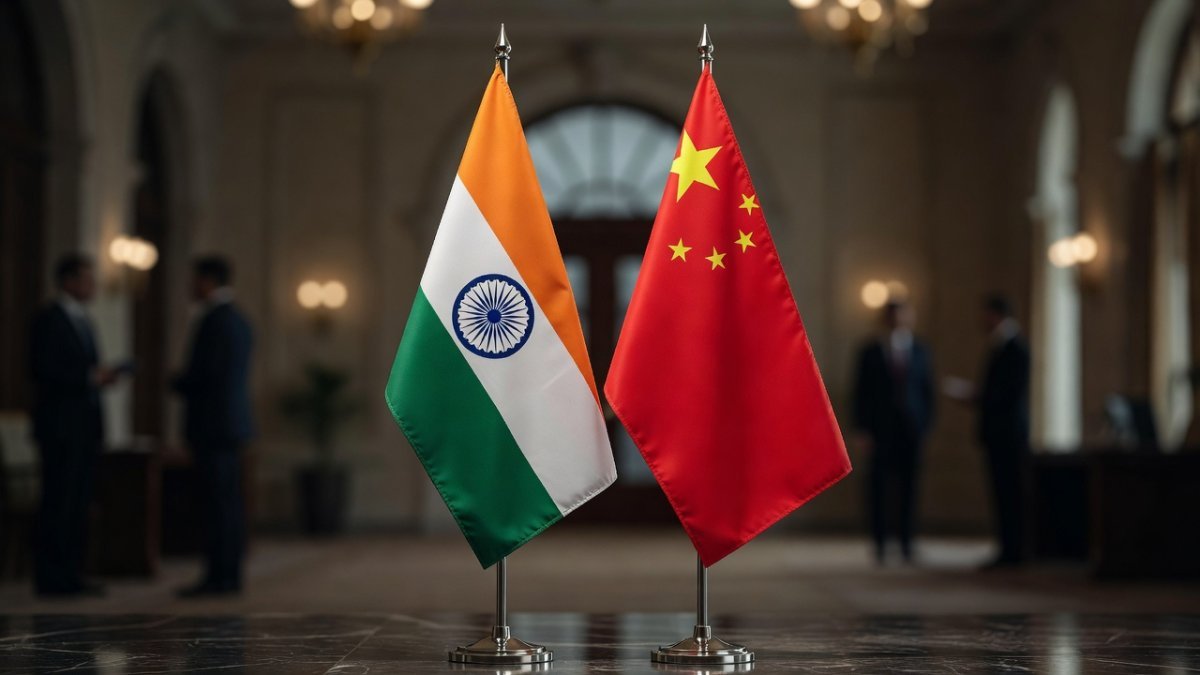
China's India Outreach Falls Short Where It Matters: Public Opinion
BEIJING — Chinese academics are delivering an unusually blunt verdict on their own country's diplomacy: Beijing has revived relations with New Delhi at the government level, but it has yet to win over the Indian public. In a paper published in June in International Communications, a journal of the state-run China International Communication Group, two Tsinghua University researchers argue that China's outreach strategy toward India remains "weak and lacks long-term planning" — a rare admission from inside the Chinese scholarly establishment about the limits of the country's global messaging machine.
The assessment arrives at a delicate moment. India's Foreign Secretary Vikram Misri concluded a two-day visit to Beijing on July 29, and the two sides have spent much of 2026 rebuilding the channels that collapsed after the deadly 2020 Galwan Valley border clash. Yet beneath the diplomatic choreography lies a "massive cognitive gap between the two populations," as the researchers put it — a gap that no handshake between officials has so far closed.
Tsinghua Scholars Deliver a Blunt Diagnosis
Zhou Qingan, dean of Tsinghua University's School of Journalism and Communication, and Li Yiming, a research assistant at the school, published their analysis in International Communications, a journal run by the China International Communication Group. Their central finding: Beijing's current approach, which relies primarily on official channels, "lacks long-term planning," and the cultivation of non-governmental opinion leaders is "severely inadequate."
The content produced by China's media system, focused mostly on policy promotion, has failed to resonate with the broader Indian public, they argue. This is a notable critique from a university that trains many of China's most influential communicators, and it aligns with what foreign observers have long said about Chinese outreach in South Asia: official messaging reaches elites, but rarely moves mass opinion.
A 'Massive Cognitive Gap' Between Two Publics
The two scholars point to evidence of mutual alienation on both sides of the Himalayas. Widespread anti-India sentiment persists on Chinese social media, they note, while among Indian youth there is a widespread perception that China represents a major security threat. The 2020 Galwan clash, which left 20 Indian soldiers and four Chinese troops dead, remains a powerful reference point in Indian public discourse and continues to shape how ordinary Indians interpret Beijing's intentions.
Stereotypes on both sides have hardened in the absence of sustained contact. Chinese state media have had no reporters stationed in India since a series of visa denials and mutual expulsions in 2023 — probably the first time since diplomatic ties were normalised in the late 1980s that Beijing has had no state media presence in the country. The result, the researchers say, is that two of the world's largest populations are forming opinions about each other largely without direct information channels.
India's Fragmented Media Maze
Even if Beijing were to pour resources into public diplomacy, India presents a uniquely difficult media landscape. Zhou and Li describe a sector spanning roughly 140,000 print publications and 900 television channels operating in 189 languages, layered over deep regional divides and a growing audience appetite for nationalistic content. There is no single Indian public to persuade — there are dozens, each with its own political currents and media diet.
China's media system, built around policy announcements and official messaging, is poorly equipped for that environment. The researchers recommend that Beijing partner with moderate Indian media outlets, cultivate local opinion leaders, and improve the quality of content on social media platforms — a strategy that would require a very different skill set from the one China's state-run outlets currently deploy.
The Diplomatic Thaw That Outpaces Public Opinion
The government-level thaw, by contrast, has moved quickly. Since 2024, New Delhi has resumed issuing tourist visas to Chinese citizens, direct commercial flights have been restored, and there has been a wave of high-level engagement. Last year, during Indian Prime Minister Narendra Modi's first visit to China in seven years, President Xi Jinping said border issues should not be the defining factor in the relationship — the "dragon and elephant" framing that both governments have deployed to signal a new phase.
In June, the two sides stepped up talks to restore reciprocal journalist visas, with Beijing pressing New Delhi for approvals ahead of a potential visit by Xi later this year. Misri's July 27-29 visit to Beijing included discussions on political, people-to-people and academic exchanges with senior officials, including Vice-Foreign Minister Hua Chunying and Sun Haiyan, deputy head of the Communist Party's International Department. Economic gravity pulls in the same direction. China was India's largest trading partner in the fiscal year ending March 2024, with bilateral trade reaching US$118.4 billion, and while New Delhi has sought to diversify supply chains, its imports of Chinese goods — from pharmaceutical ingredients to electronics components — have continued to grow. External pressure reinforces the trend: President Donald Trump's tariff policy, including potential US levies on imports of Indian-made generic medicines, has given New Delhi additional reason to stabilise ties with Beijing.
Asia-Pacific Stakes: Japan, the Quad and the Balance of Power
For Japan and the wider Indo-Pacific, the significance of a warming China-India relationship is hard to overstate. India is a founding member of the Quad alongside Japan, the United States and Australia, and its tilt toward Beijing would reshape the region's strategic arithmetic. Tokyo has watched the Modi-Xi rapprochement carefully, mindful that a New Delhi less willing to align against China would weaken the Quad's collective position on issues from the South China Sea to supply-chain diversification.
The Tsinghua researchers are explicit about Beijing's ambition: China should produce narratives that leverage the two countries' shared identity as leaders of the Global South, while avoiding "forcing smaller South Asian nations into an 'either-or' dilemma between the two powers." That framing is designed to reassure India's neighbours — Nepal, Sri Lanka, Bangladesh and the Maldives — that closer China-India ties need not come at their expense. Whether Japan and the Quad can offer a more compelling vision of regional order will be one of the defining contests of the next decade.
What to Watch For
The near-term test is the potential Xi visit to India later this year, and whether it is preceded by concrete progress on reciprocal journalist visas. Beijing has pressed for approvals, and a restoration of reporting presence in each other's capitals would be the most visible sign that the thaw extends beyond officials. The two sides are also expected to continue border management talks, with the goal of preventing a repeat of the 2020 escalation that set relations back by years.
For now, the scholars' prescription for Beijing is patient and unglamorous: prioritise shared social issues such as youth unemployment and unbalanced urban-rural development, foster mutual empathy rooted in common livelihood concerns, and establish a multi-departmental communication and emergency response system to react quickly during major China-related events. "It is crucial to help the Indian public recognise that China's rise does not harm India's interests," Zhou and Li wrote. Whether Beijing can move from official handshakes to genuine public persuasion is the question that will determine whether the current thaw becomes a durable realignment — or another cycle of diplomatic spring followed by strategic winter.
By Kenji Tanaka, Staff Writer
This article was produced with AI-assisted research and editorial support. Reporting is based on sources cited in the article.
What's Your Reaction?
 Like
0
Like
0
 Dislike
0
Dislike
0
 Love
0
Love
0
 Funny
0
Funny
0
 Wow
0
Wow
0
 Sad
0
Sad
0
 Angry
0
Angry
0

Japan Correspondent at Global1.News. Tokyo-based voice covering Japanese politics, technology, economy, and culture. Tracks the intersection of tradition and innovation in one of the world's most dynamic societies.













Comments (0)