
New York Leads 22 States and Six Cities Suing to Block Trump's Expanded 'Public Charge' Green Card Rule
New York and 21 other states plus the District of Columbia, and a separate coalition of six cities and counties led by New York City, sued the Trump administration on Monday to block the expanded 'public charge' rule before it takes effect September 18.

Two Lawsuits, One Deadline
Two lawsuits landed in federal court in Manhattan on Monday, September 14, 2026 — and both are aimed at the same target. One comes from New York and a long list of other states. The other comes from New York City and a handful of other local governments. Both want to stop the expanded "public charge" rule before it takes effect Friday, September 18.
Here is the deadline that matters. The rule applies to green card applications postmarked or submitted electronically on or after September 18, and to applications for admission made on or after that date. That gives the courts four days.
The first case is led by New York Attorney General Letitia James. CNN reports New York and 21 other states are suing, plus the District of Columbia, and publishes the full list: California, Illinois, Colorado, Connecticut, Delaware, Hawaii, Maine, Maryland, Massachusetts, Michigan, Minnesota, New Jersey, New Mexico, Nevada, Oregon, Pennsylvania, Rhode Island, Vermont, Virginia, Washington and Wisconsin. A discrepancy worth flagging: Reuters' dispatch, carried by Moneycontrol and the Economic Times, counts 23 states and DC, while CNN's own enumeration comes to 22 plus DC. Both counts are on the record.
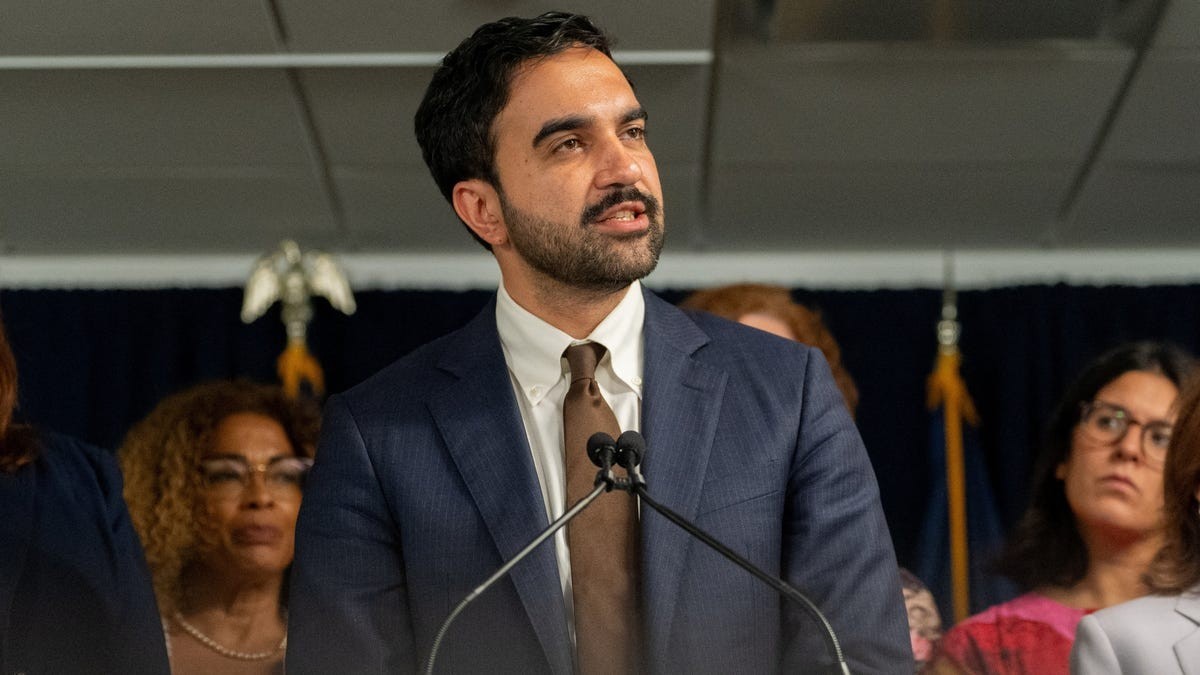
The second case is led by New York City Mayor Zohran Mamdani. Six local governments signed on: New York City, Chicago, San Francisco, Santa Clara County in California, Seattle and King County in Washington. That complaint runs 108 pages.
Both were filed in the Southern District of New York. No judge has been named. No hearing date has been set. And to be clear — the rule has not been blocked.
What the New Rule Actually Changes
DHS announced the final rule on July 16, 2026, published it in the Federal Register on July 20 as document 2026-14539, 91 FR 45324, and set it to take effect September 18. What it does is rescind the 2022 public charge ground of inadmissibility regulations — the Biden-era rule published September 9, 2022, at 87 FR 55472.
DHS's own stated rationale, verbatim from the rule: the 2022 Final Rule "was inconsistent with congressional intent, unduly restrictive, and hampered DHS's ability to make accurate, precise, and reliable determinations." Rescission, the department says, "restores broader discretion," and it is "moving away from a bright line primary dependence standard."
Under the new rule, officers may consider the mandatory statutory factors in section 212(a)(4)(B) of the Immigration and Nationality Act, 8 U.S.C. 1182(a)(4)(B), the applicant's receipt of means-tested public benefits, other case-specific factors, and empirical data relevant to self-sufficiency.
And here is the part that separates this rule from the last one. The 2026 rule is more expansive than the 2019 first-Trump-administration rule because it does not specify which safety-net programmes should be considered. It says only that DHS "will consider the receipt of any means tested public benefits."
Then there is the USCIS guidance, released August 18, 2026. For benefits an applicant received before September 18, 2026, USCIS will consider only public cash assistance for income maintenance and long-term institutionalisation at government expense. For benefits received on or after that date, the agency will consider "any and all" such benefits.
Officers must weigh five statutory factors: age; health; family status; assets and financial status; education and skills. A sufficient Affidavit of Support may also be considered, and no single factor other than the lack of one, where required, can be the sole basis for a determination. Refugees, asylees and certain other humanitarian categories are exempt.
From 1882 to 2022: How 'Public Charge' Kept Moving
Folks, this is not a new idea. The public charge provision dates to the Immigration Act of 1882. Federal lawmakers at the time wanted to make sure immigrants would be able to take care of themselves and not end up a public burden, and for years immigration officers counted only cash benefits — things like Temporary Assistance for Needy Families or Supplemental Security Income from Social Security.
The first Trump administration widened the categories of benefit programmes that could be considered — including Medicaid, food stamps and housing vouchers — in a rule published in 2019 that took effect in 2020. It prompted lawsuits and widespread confusion. The Biden administration published a rule in 2022 that again excluded non-cash benefits, largely reverting to longstanding practice.
When the first Trump administration issued its rule, James led a coalition that brought a similar lawsuit and secured a court order blocking it from taking effect.
DHS acknowledged in the Federal Register that the broader discretionary approach is "a departure from the 1999, 2019, and 2022 public charge efforts." The department published a proposed version on November 19, 2025, at 90 FR 52168.
The States, the Cities, and the Complaint Nobody Has Read
Look at the legal architecture here, because the two cases are not identical. The cities bring three claims under the federal Administrative Procedure Act: that the rule and guidance are contrary to law and exceed the administration's authority; that they are arbitrary and capricious; and that to the extent the USCIS guidance imposed new substantive requirements, the government failed to follow required notice-and-comment procedures.
The states' suit likewise argues DHS exceeded its authority because Congress did not approve a broader interpretation of what it means to be a public charge. It also argues the rule is "arbitrary and capricious," that DHS ignored the harmful consequences and failed to adequately justify the change.
The states' suit does not seek monetary damages. It asks the court to block the rule, invalidate it and prevent DHS from using it. The cities ask the court to vacate the rule and the USCIS guidance and prevent the administration from implementing them, and they name DHS, U.S. Citizenship and Immigration Services and the leaders of both agencies as defendants.
CNN reached out to DHS for comment. USA TODAY reported the department did not immediately respond to a request for comment.
The Money Argument: $4.05 Billion and $2.2 Billion
Here is where the numbers get serious. The states argue they would lose billions in federal funding if immigrants, particularly mixed-status families, disenroll from programmes out of fear of immigration consequences.
From the states' legal documents: "Defendants estimate that nationwide, states will lose an estimated $4.05 billion in annual transfer payments from the federal government for the States' Medicaid and CHIP programs alone." Of that, "Plaintiff States stand to lose approximately $2.2 billion in reduced federal payments."
DHS's own economic analysis of the rule estimated that families leaving or avoiding assistance programmes could reduce federal and state benefit payments by about $13 billion a year. The department acknowledged hospitals, grocery stores, farmers and landlords could also feel the loss.
The states' suit says New York is particularly vulnerable because of its large immigrant population, its extensive public benefits programmes, universal school meals and its reliance on federal Medicaid and SNAP funding. State officials argue reduced participation will shift routine medical care to emergency rooms, lower federal Title I funding for public schools, and hurt revenue for local grocers. In Chicago, the suit says, fewer residents with Medicaid could mean less federal reimbursement for ambulance services provided by the city's fire department.
New York's Own Numbers
New York City is not arguing in the abstract. The cities' complaint says more than 3.1 million New York City residents — approximately 38 per cent of the population — are foreign-born. More than 250,000 city children live in households whose members have different immigration statuses, and half of the city's children have at least one immigrant parent.
New York's public hospital system estimates more than 16,000 patients could lose Medicaid coverage under one projected scenario, potentially costing the system tens of millions of dollars in its first year as more uninsured patients seek care.
New York City health researchers modelled the effect on immigrants younger than 65 and US-citizen children in mixed-status households. Over five years, they projected access to primary care could fall by as much as 9.9 per cent and premature deaths could rise by as much as 10.6 per cent.
The complaint argues even anticipated use of supplemental programmes such as the Special Supplemental Nutrition Program for Women, Infants and Children — WIC — could potentially count against an applicant.
What DHS Says Back
DHS's position, as reported by USA TODAY: the department said the Biden-era standard was "unduly restrictive" and hampered officers' ability to accurately decide who was likely to become a public charge, and that the new policy allows officers to examine each applicant's individual circumstances. Fox News reported the administration's framing that the change better reflects Congress' intent that immigrants be self-sufficient and not dependent on taxpayer-funded benefits.
And here is what the rule does not do. Receiving assistance would not automatically disqualify someone from obtaining a green card. It could count against an applicant alongside factors such as age, health, finances and employment. The rule focuses on people who already have legal status in the United States; undocumented immigrants are not eligible for public benefits. The rule itself does not change who qualifies for benefits.
But the policy does not provide a complete list of which benefits officers may consider. Federal guidance points to programmes including Medicaid, food and housing assistance, tax credits and even financial aid for college.
The Chilling Effect Nobody Can Measure
This is the part of the story that does not fit neatly into a spreadsheet.
Mamdani, at the Monday press conference, said: "The new public charge rule seeks to push immigrant families away from the programs that have kept people fed and healthy for decades. New Yorkers will be afraid to see a doctor or ask for help they are legally entitled to." He added: "That fear will not stop at the families that the federal government is targeting. Families who remain fully eligible for benefits will feel a chilling effect, and all New Yorkers will pay for it."
He also argued the rule "not only sweeps aside more than a century of established law," but is "intentionally vague as a means of creating uncertainty and fear to isolate immigrant New Yorkers."
James, in a release, said: "Hardworking families should not be forced to go without the support they need because they fear asking for assistance will get them deported. This rule preys on that fear and counts on families forfeiting the food assistance, health care coverage, and other public benefits to which they are legally entitled." She added: "My office fought this exact policy once before and won, and we are leading the nation to ensure the Trump administration cannot inflict this harm on families again."
Toby Merrill, litigation director at Public Rights Project, which is representing Chicago and Seattle, said: "Getting help when you need it is not the same as being dependent on the government... That will hurt families and entire communities, while leaving local governments to deal with the public health and financial consequences." Steve Banks, New York City Corporation Counsel, added: "No immigrant New Yorker should have to choose between their immigration status and benefits for which they are legally eligible."
Past experience suggests those fears change behaviour. One study found food-aid participation fell disproportionately among noncitizens after Trump's first public charge expansion was announced, although nearly all were likely exempt. Another linked the earlier push to delayed prenatal Medicaid coverage among immigrant mothers in New York.
Why This Fight Is Bigger Than One Rule
Step back for a second. This is a fight about a rule that takes effect Friday, but it is also a fight about how far an agency can go when Congress has not spelled out the answer — and about who gets to define what "self-sufficient" means in American immigration law.
The states say Congress did not approve a broader interpretation of what it means to be a public charge. DHS says the 2022 rule was inconsistent with congressional intent and that the new approach restores broader discretion. Both sides are reading the same statute. Both say the other is the one who went too far.
And the timeline tells its own story. 1882. 1999. 2019. 2022. 2025. 2026. This provision has been rewritten, rescinded and rewritten again. Each time, the people caught in the middle are families trying to decide whether to fill out a form.
What Happens Next
The rule takes effect Friday, September 18, 2026. The lawsuits were filed Monday. No judge has been named, no hearing date has been set and no ruling has been issued.
If you are affected, here is what you can do. Check the USCIS guidance from August 18, because it draws a hard line at September 18: benefits received before that date are treated one way, benefits received on or after are treated another. Know the exemptions — refugees, asylees and certain other humanitarian categories are exempt from the public charge test. Know that receiving assistance does not automatically disqualify anyone; it can count against an applicant alongside age, health, finances and employment.
If you are in New York City, the public hospital system is projecting more than 16,000 patients could lose Medicaid coverage under one scenario. If you are in Chicago, the city is watching its ambulance reimbursements. If you are in any of the plaintiff states, your attorney general is already in court.
Four days. Two lawsuits. One deadline. Keep watching this one.
By Jessica Ali, Staff Writer
This article was produced with AI-assisted research and editorial support. Sources: CNN, USA TODAY, amNewYork, Fox News, Reuters wire copy via Moneycontrol and the Economic Times, MS NOW, Tampa Free Press, USCIS, and the Department of Homeland Security final rule published in the Federal Register (2026-14539).
What's Your Reaction?
 Like
0
Like
0
 Dislike
0
Dislike
0
 Love
0
Love
0
 Funny
0
Funny
0
 Wow
0
Wow
0
 Sad
0
Sad
0
 Angry
0
Angry
0

Editor-in-Chief at Global1.News. Atlanta-based journalist who cuts through the BS and tells it like it is. Lead anchor, host, and the voice you hear when the spin stops and the truth starts.















Comments (0)