
Near-Total Lunar Eclipse Over the Americas: A Rare 'Luna de Sangre' Unites Two Continents
In a recent DW News report, the world watched as the Moon almost disappeared behind Earth's shadow, and people across two continents stopped to witness the spectacle. From Brazil to Los Angeles, the near-total lunar eclipse transformed the night sky and reminded viewers just how rare these moments can be, with few comparable views expected until 2028. For Mexicans, this was more than a celestial event; it was a night of community, science, and tradition that brought...
In a recent DW News report, the world watched as the Moon almost disappeared behind Earth's shadow, and people across two continents stopped to witness the spectacle. From Brazil to Los Angeles, the near-total lunar eclipse transformed the night sky and reminded viewers just how rare these moments can be, with few comparable views expected until 2028.
For Mexicans, this was more than a celestial event; it was a night of community, science, and tradition that brought families out of their homes and into the plazas of the nation.
Near-Total Lunar Eclipse Over the Americas: A Rare 'Luna de Sangre' Unites Two Continents
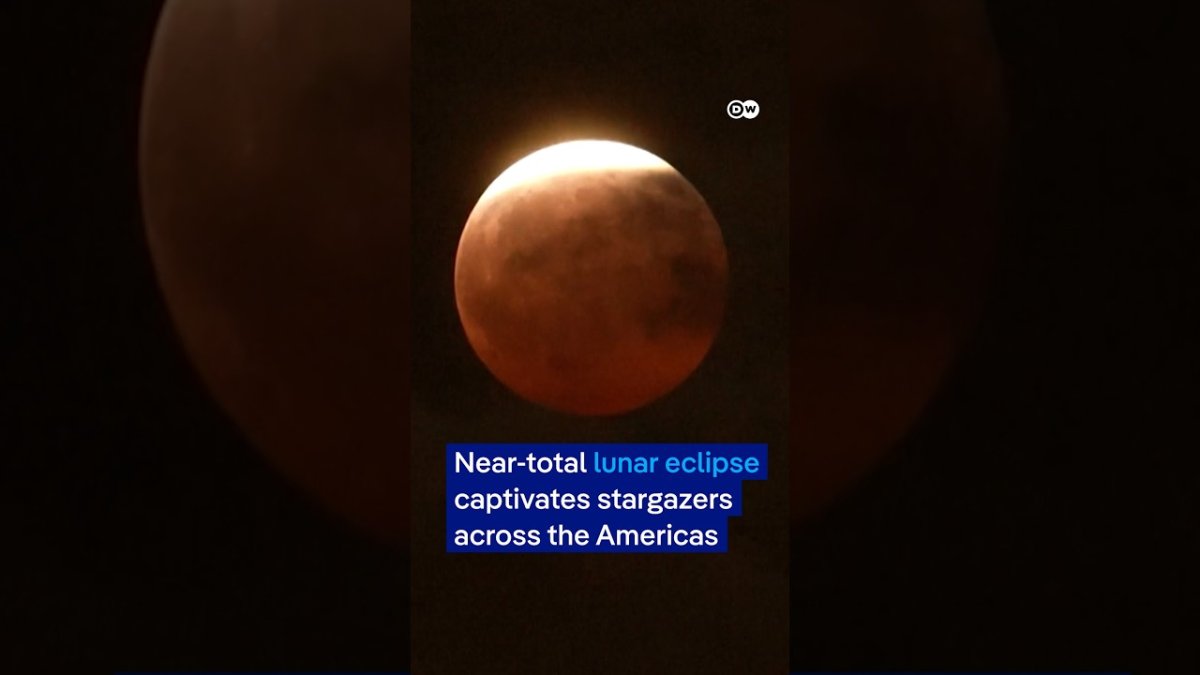
Mexico City, Mexico — The night of August 27-28, 2026, will be remembered across the Americas as the moment the sky turned a deep, fiery red. At 04:13 Universal Time on August 28, a staggering 96.3% of the Moon's disk slipped into Earth's dark umbral shadow, creating what NASA's Scientific Visualization Studio has officially termed a "deep partial lunar eclipse." For observers in Mexico, this was the "luna de sangre" — a blood moon that painted the night in shades of copper and crimson, visible from the bustling streets of the capital to the quiet pueblos of Oaxaca.
The Sky Show Over Mexico: A Nation Looks Up
In Mexico City, the most dramatic reddish phase of the eclipse began around 22:13 local time on the night of August 27. Unlike a total eclipse, where the Moon vanishes completely, this near-total event left a thin, bright sliver of the lunar surface shining against the dark red of the umbra. The effect was so striking that astronomers and casual observers alike described it as a "diamond ring" in the sky, a visual prelude to the deep red that followed.
The event was visible in all 32 states of the Mexican Republic, from the northern border city of Tijuana to the Caribbean shores of Cancún. In Guadalajara, the skies remained clear, allowing families in the Colonia Americana to set up telescopes on their rooftops. In Monterrey, the Cerro de la Silla provided a dramatic backdrop as the Moon rose over the industrial capital, its red hue reflecting off the urban skyline. News outlets including Infobae México, El Heraldo de México, and Marca MX had spent the week publishing detailed viewing times and recommending the best spots in CDMX, including open plazas, parks, and the sprawling UNAM campus.
The Science Behind the Blood Moon: Why Red?
The deep orange and reddish tint that captivated millions is a direct result of Earth's atmosphere bending red sunlight into the umbral shadow. As sunlight passes through our planet's atmosphere, the shorter blue wavelengths are scattered away, while the longer red wavelengths are refracted and cast onto the Moon's surface. This is the same physics that paints our sunsets red, and during a lunar eclipse, the Moon effectively reflects all of Earth's sunsets at once.
NASA's Scientific Visualization Studio released a detailed visualization of the August 27-28, 2026 event, showing the Moon's path through the shadow cone. The visualization highlighted just how close this eclipse came to totality — a mere 3.7% of the Moon's disk remained outside the umbra at the peak. Astronomers were quick to point out that this was the deepest lunar eclipse we will see until the next total lunar eclipse on December 31, 2028, which will be visible from Europe, Africa, Asia, and Australia. For the Americas, this was the last great lunar show for years to come.
A Night in the Plazas: Community and Wonder
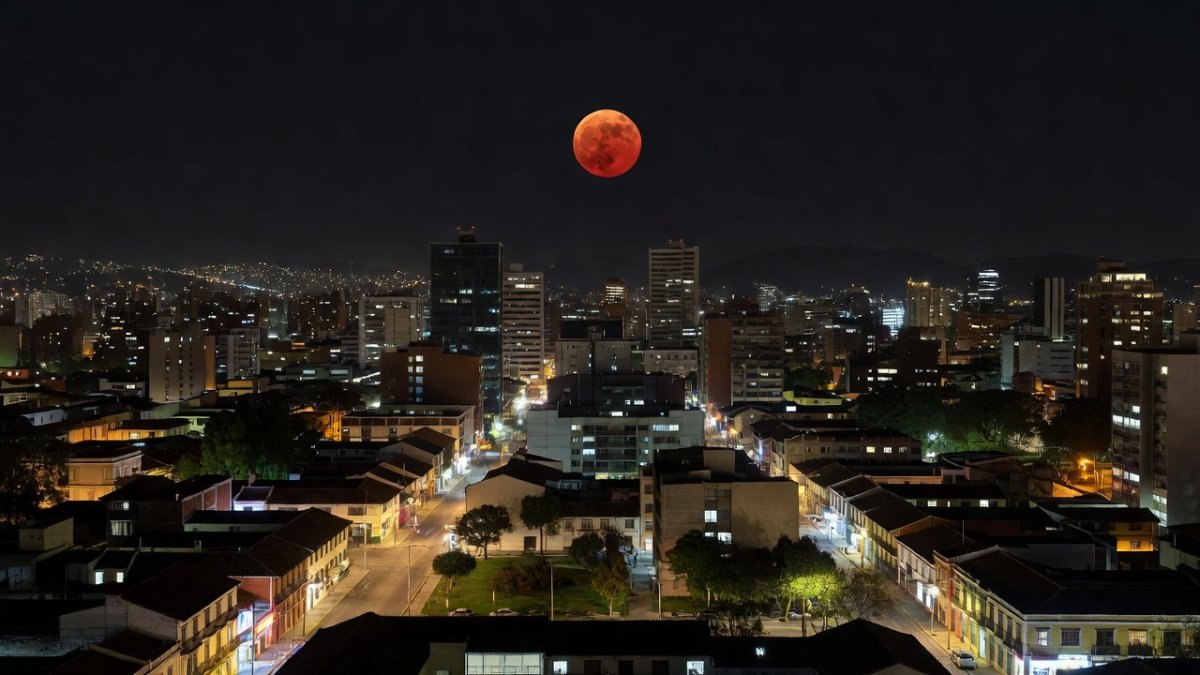
In the heart of Mexico City, the Zócalo was transformed into an impromptu observatory. Families spread blankets on the cobblestones, children pointed at the sky, and vendors sold traditional elotes and esquites while the Moon turned red above the Catedral Metropolitana. The scene was repeated across the country: in the pueblo mágico of Tepoztlán, residents gathered in the main square; in the colonial city of Mérida, the Plaza Grande filled with onlookers; and in the northern city of Chihuahua, the eclipse became a backdrop for a community festival.
For many, this was a deeply personal moment. In the colonias of Mexico City, like Iztapalapa and Tláhuac, families climbed to their rooftops, carrying their children and their abuelitas, to witness the event together. The eclipse became a shared experience that transcended social and economic divides. In rural communities, where light pollution is minimal, the red Moon was even more spectacular, casting an eerie glow over cornfields and agave plantations.
Astronomy and Mexican Culture: From UNAM to Pre-Hispanic Skies
Mexico's relationship with the Moon is ancient and profound. Long before the arrival of the Spanish, Mesoamerican civilizations — the Maya, the Aztecs, the Zapotecs — meticulously observed the night sky. The Maya, in particular, were master astronomers, tracking the cycles of the Moon and predicting eclipses with remarkable accuracy. Their codices, such as the Dresden Codex, contain detailed eclipse tables that allowed them to anticipate these celestial events with precision that rivals modern calculations.
This cultural heritage was on full display this week. The Instituto de Astronomía at UNAM organized public viewing events across the university campus, where students and professors set up high-powered telescopes and explained the science behind the eclipse to curious crowds. In the Ciudad Universitaria, the iconic Central Library became a gathering point for thousands of students who paused their studies to look up at the sky. The institute also streamed the event live, allowing Mexicans in areas with cloud cover to participate virtually.
Teachers across the country seized the moment as a teaching opportunity. In primary schools in Guadalajara and Puebla, science classes were moved to the evening, with students keeping observation journals. In Oaxaca, indigenous communities shared their own traditional stories about the Moon, blending pre-Hispanic cosmology with modern astronomy. The eclipse was not just a scientific event; it was a bridge between Mexico's ancient past and its scientific future.
What to Watch For: The Long Wait Until 2028
As the red Moon slowly emerged from Earth's shadow in the early hours of August 28, astronomers reminded us that this was a rare gift. The next total lunar eclipse, on December 31, 2028, will be visible from Europe, Africa, Asia, and Australia — but not from the Americas. For sky gazers in Mexico, the United States, and South America, comparable views will be harder to come by: the next total lunar eclipse, on December 31, 2028, is expected to be visible mainly from Europe, Africa, Asia, and Australia.
This scarcity is what made the August 2026 event so special. It was a reminder of our place in the cosmos, a moment of collective wonder that united two continents. From the beaches of Brazil to the hills of Los Angeles, people stopped, looked up, and shared in the same awe. In Mexico, it was a night of community, culture, and science — a night when the "luna de sangre" reminded us of the beauty that exists just beyond our atmosphere.
As the Moon returned to its familiar silver glow, the plazas emptied and the rooftops cleared, but the memory of that deep red disk will linger. For Mexicans, this was more than an eclipse; it was a celebration of our shared humanity and our enduring connection to the sky above.
By Rosa Martinez, Staff WriterThis article was produced with AI-assisted research and editorial support. Reporting is based on sources cited in the article.
What's Your Reaction?
 Like
0
Like
0
 Dislike
0
Dislike
0
 Love
0
Love
0
 Funny
0
Funny
0
 Wow
0
Wow
0
 Sad
0
Sad
0
 Angry
0
Angry
0

Latin America/Andes Correspondent at Global1.News. Based in Bogota, covering politics, environment, energy, and social movements across the Andean region. Passionate about environmental journalism and communities protecting their land.














Comments (0)