
NCA Hospital Crisis: Whistleblowers Warn of Next Mid Staffs
The Northern Care Alliance — one of England's largest NHS trusts, serving more than a million patients across Greater Manchester — is facing allegations that patient deaths are going uninvestigated, cancers are being missed, and corridor care has become routine. A joint investigation by Channel 4 News and The Independent has heard from clinicians who warn this could eclipse the Mid Staffordshire scandal, one of the worst care disasters in NHS history....
The Northern Care Alliance — one of England's largest NHS trusts, serving more than a million patients across Greater Manchester — is facing allegations that patient deaths are going uninvestigated, cancers are being missed, and corridor care has become routine. A joint investigation by Channel 4 News and The Independent has heard from clinicians who warn this could eclipse the Mid Staffordshire scandal, one of the worst care disasters in NHS history.
Northern Care Alliance Under Fire: Clinicians Allege Ignored Deaths, Missed Cancers and Routine Corridor Care in Greater Manchester's Largest NHS Trust
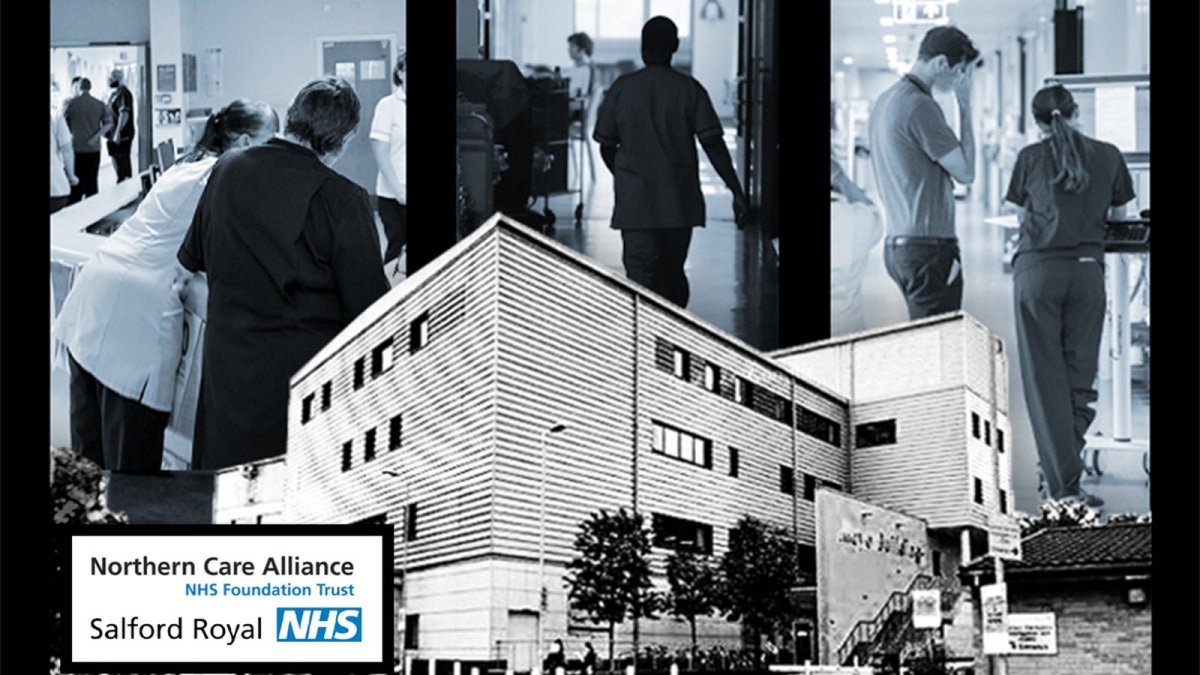
Manchester, UK – 19 August 2026 — The whistleblowers speak of patients dying on surgical tables without adequate investigation, of women returning with advanced cervical cancer after brief appointments that omitted examinations, and of overcrowded corridors where the dying lie on hard trolleys for days. Their accounts, gathered by Channel 4 News and The Independent's Rebecca Thomas, paint a damning picture of the Northern Care Alliance (NCA) NHS Foundation Trust — an organisation formed in 2017 from a merger between the then "outstanding"-rated Salford Royal Hospital NHS Foundation Trust and Pennine Acute NHS Foundation Trust. Nine years on, it is rated "requires improvement" and faces enforcement action from NHS England over care failings.
A Trust Under Enforcement Action
The NCA runs four hospitals — Salford Royal Hospital, Fairfield General Hospital in Bury, Royal Oldham Hospital, and Rochdale Infirmary — treating more than a million patients across Greater Manchester. But the scale of its operations has not shielded it from scrutiny. The Care Quality Commission (CQC) has issued a warning over surgical services at Salford Royal, citing patients left in pain and wards where urine bottles were allowed to "stack up". The trust's gynaecology department is now facing a new independent external review of surgeries due to safety concerns, after the trust had to review the care of hundreds of women over "administration delays" linked to one consultant.
Dr Vanessa Lawton, a senior consultant gynaecologist at Salford Royal for 20 years, wrote to the CQC in April and retired earlier than planned. She described the gynaecology department as "unstable and chaotic, with poor cultures, lacking safety for patients and psychological safety for staff." Her warning came after a woman in her early fifties, seen for a 15-minute weekend appointment for post-menopausal bleeding, was not examined. She was not examined at a second appointment either. Months later, she returned with advanced cervical cancer and died. Dr Lawton says the investigation into her death did not consider the shortened appointment times and "omits many of the important issues".
Appointment Times Slashed, Cancers Missed
The pressure on clinicians is evident. One consultant told investigators: "We used to see around eight patients in a clinic, and they pushed us to see 14 patients. It's not safe." The shortened appointments are being blamed for missed cancers and delayed diagnoses, with staff saying the pace of work leaves no time for proper examination or follow-up. The trust's own data, published by NHS England on 13 August 2026, shows 1,292 instances of corridor care lasting more than 45 minutes in May at NCA A&E departments — an average of 42 patients a day. That places the NCA as the 13th highest of 162 trusts for patients receiving corridor care.
An A&E clinician, identified only as "Andrea", described the reality of working in these conditions: "Overcrowding and poor care: people in corridors dying or people in corridors deteriorating on a hard trolley. They're a fire risk. Lying there for days... the longest we've ever had somebody wait for a bed is four days in a corridor. It's definitely unsafe, and it's inhumane." Her account is echoed by "Kelly", a senior nurse who left in 2024: "It's the next Mid Staffs, if we're not already there... There were plenty of Datix raised for patients that were stuck in corridors with no dignity, no respect. Staff walking through; they got no curtains. It was a shambles."
Whistleblowers Silenced, Reports Downgraded
The investigation has uncovered a systemic failure to investigate patient harm. Staff claim they were encouraged not to submit reports when safety issues arise, and that accounts of serious harm and death were shut down or not properly investigated. Datix reports — the internal system used when a patient is believed to have been harmed — are often downgraded or closed without adequate investigation. "Rebecca", a staff member who retired in 2021, described the trust leadership's approach to patient safety as "absolutely toxic". She wrote nightly reports warning of unsafe staffing, but nothing was done. Incidents like patients dying on the surgical table were later downgraded without investigation.
Dr Glyn Smurthwaite, a retired consultant who blew the whistle on rogue spinal surgeon John Bradley Williamson — who harmed dozens of patients at the trust between 2009 and 2014, including misplaced screws causing chronic pain — drew a stark comparison: "I believe this is potentially bigger than the Mid Staffs scandal in terms of the magnitude of harm... The organisation has a malevolent intent to defocus from the true problem and just tick a box." The Mid Staffordshire Hospital scandal, one of the worst care disasters in NHS history, saw between 400 and 1,200 deaths due to care failures between January 2005 and March 2009.
Concerns Raised with Politicians, Ignored
These concerns were not kept within hospital walls. Emails from former staff show they were raised with local politicians and Andy Burnham's mayoral office in at least 2024 and 2025. The emails claim whistleblowers had been "bullied into life-altering illnesses, early retirement or a fearful silence". The Department of Health and Social Care has now acknowledged the severity of the situation, with a spokesperson stating that patients at Salford Royal had been "severely let down" and that "NHS England is working at pace with the trust and Greater Manchester ICB to support rapid improvement, strengthen oversight and accountability." The department also said it is prioritising gynaecology services in surgical hubs, community diagnostic centres and NHS Online pathways.
The trust's own response has been defensive. NCA Chief Nursing Officer Juliette Cosgrove said: "Our priority is delivering safe, high-quality, compassionate care... We don't want to be looking after our patients on corridors, and we are taking action to improve flow." The trust is launching "Safer Sooner", a clinically led programme to strengthen discharge, with improvements including front-door triage, expanded Same Day Emergency Care, better use of Urgent Treatment Centres and Virtual Wards. But former staff say the NCA's attitude to investigating patient safety and harm has been going on for years, and that the current leadership changes do not address the underlying culture.
England-Wide Crisis: Corridor Care and Summer Surge
The NCA's problems are set against a national backdrop of unprecedented pressure. NHS England data shows that across the country, the number of patients cared for in corridors or makeshift areas exceeded 3,000 a day for the second month running, amid a "summer surge". Record 2.5 million A&E attendances were recorded in a single month amid two heatwaves, alongside a record 2.65 million diagnostic tests. The waiting list fell in June for the first time since 2011, but the gains are fragile. Health Secretary Yvette Cooper has said the NHS must start planning for summer pressures in the same way as winter, noting that more than three quarters of patients were seen within four hours in A&E despite extreme heat and record demand.
For the NCA, the numbers are stark. Hundreds of admin staff have launched a grievance over unworkable demands and backlogs. New documents claim delays due to short staffing meant kidney patients ended up on dialysis which might have been avoided with earlier treatment. The trust's response acknowledges the challenges: "Like many NHS organisations, we're facing challenges... We have clear processes to investigate incidents and learning from these is an area we need to prioritise." But for the clinicians who spoke out, the gap between rhetoric and reality is the core problem.
The Bottom Line — What Comes Next
The NCA is now under formal enforcement action from NHS England, with the CQC monitoring surgical services and gynaecology. The independent external review of gynaecology surgeries is expected to report in the coming months, and the trust's "Safer Sooner" programme will be judged on whether corridor care numbers fall. But the whistleblowers' accounts suggest a deeper cultural rot that cannot be fixed by new triage systems alone. If the NCA is to avoid becoming the next Mid Staffs, it must demonstrate that patient harm is investigated thoroughly, that staff concerns are taken seriously, and that the tick-box culture Dr Smurthwaite describes is dismantled. The patients of Greater Manchester — and the clinicians who care for them — deserve nothing less.
By Erica Thornton, Staff Writer
This article was produced with AI-assisted research and editorial support. Reporting is based on sources cited in the article.
What's Your Reaction?
 Like
0
Like
0
 Dislike
0
Dislike
0
 Love
0
Love
0
 Funny
0
Funny
0
 Wow
0
Wow
0
 Sad
0
Sad
0
 Angry
0
Angry
0

US Politics and Policy Correspondent at Global1.News. Based in Washington DC, covering American politics, policy, elections, and the courts. Knows how the system works and tells you what it actually means.















Comments (0)