
Canadians Vow to Keep Boycotting U.S. Alcohol Despite Trade Deal Talks
A Nanos Research poll finds 69 per cent of Canadians would keep boycotting American alcohol even if provincial liquor bans are lifted as part of a Canada-U.S. trade deal. Support is strongest in British Columbia, Ontario and Quebec, reshaping the market for U.S. producers.
In a recent CBC News report, a new Nanos Research poll reveals that 69 per cent of Canadians say they would continue to boycott American alcohol even if it returns to store shelves. The finding lands as federal and U.S. negotiators work toward a trade deal that could lift provincial bans on U.S. booze in exchange for tariff relief.
The poll, published earlier this month, underscores a profound shift in Canadian consumer behaviour that could outlast the trade dispute itself. Even as Prime Minister Mark Carney's government signals willingness to resume sales of American alcohol, the data suggests retailers and bars may face a permanently changed market.
Canadians vow to keep boycotting U.S. alcohol despite trade deal talks
Ottawa – Wednesday — A strong majority of Canadians say they will not return to buying American alcohol even if it is restocked at provincial liquor boards, according to a Nanos Research poll that paints a challenging picture for U.S. producers seeking to reclaim lost market share. The survey of 1,104 Canadians, conducted from July 28 to 30, found 69 per cent of respondents unlikely or somewhat unlikely to purchase U.S. wine, beer, and spirits again.
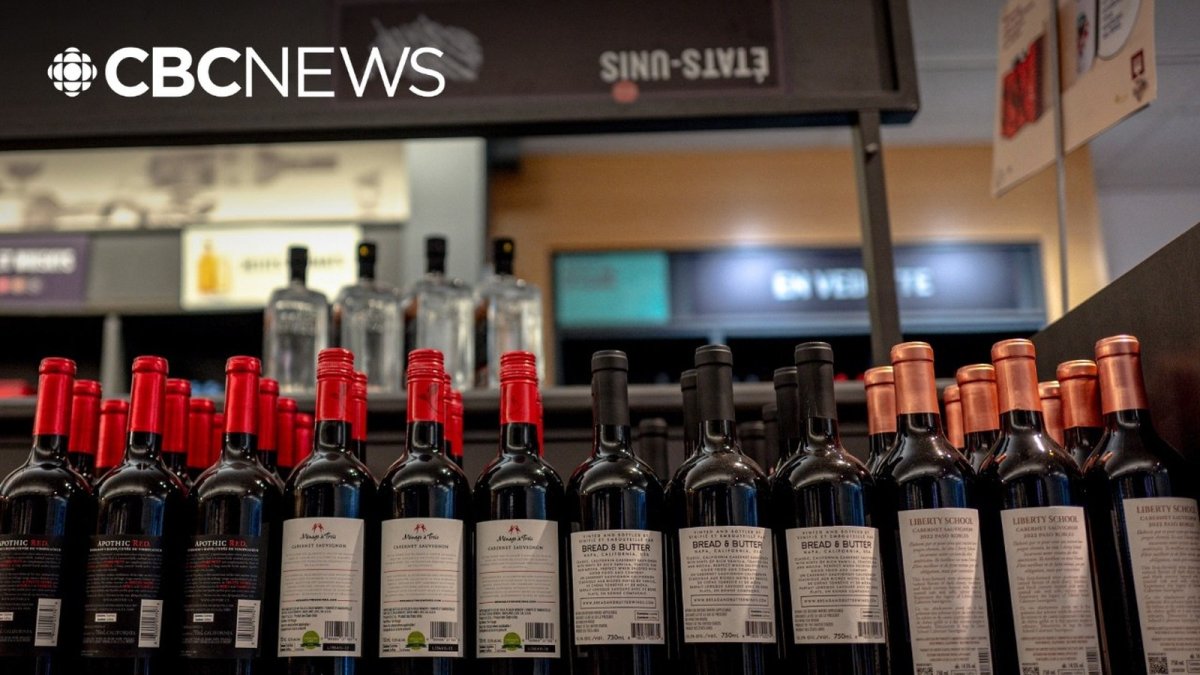
Provincial breakdown shows strongest resolve in British Columbia
Support for the continued boycott is not uniform across the country, but it is substantial in every region. British Columbia leads the way with 80.9 per cent of respondents saying they would avoid American alcohol, followed by Ontario at 74.7 per cent and Quebec at 73.9 per cent. The numbers suggest that even in provinces with historically strong ties to U.S. wine imports, consumers have made a deliberate choice to change their purchasing habits.
The poll, commissioned by CTV News, carries a margin of error of ±3.0 percentage points, 19 times out of 20. Nanos used a hybrid telephone and online random survey weighted by age and gender using the latest Census information, with geographic stratification ensuring representation across the country.
Trade deal negotiations hinge on alcohol bans
The boycott sentiment comes at a delicate moment in Canada-U.S. relations. Late Tuesday, U.S. President Donald Trump announced a three-day pause on 50 per cent tariffs on Canadian goods that were set to take effect at midnight Wednesday, affecting roughly $20 to $28 billion worth of products. Trump said the two sides had reached a "very good" trade deal, while Prime Minister Mark Carney said there has been "significant progress" on negotiations.
Canada-U.S. Trade Minister Dominic LeBlanc met with U.S. Trade Representative Jamieson Greer in Washington on Wednesday, and Carney briefed cabinet and premiers Wednesday afternoon. The U.S. has flagged the provincial liquor sales bans as a main irritant amid ongoing negotiations, and Canada has indicated it is prepared to lift those bans in exchange for tariff relief on key sectors like automotives, metals, and lumber.
The origin of the bans and their economic impact
The provincial alcohol bans date back to early last year, when several provinces removed U.S. alcohol from the shelves at their respective liquor boards in response to Trump slapping a 25-per-cent tariff on Canadian goods. Ontario removed an estimated $80 million worth of U.S. alcohol from the LCBO on March 4, 2025, a dramatic move that sent shockwaves through the cross-border beverage trade.
The impact has been severe for American producers. Canadian imports of U.S. alcohol have fallen by over 70 per cent due to retaliatory tariffs and non-tariff measures, according to industry estimates from mid-2026. That collapse in trade has made the alcohol file a priority for U.S. negotiators, who see the provincial bans as a symbolic and practical barrier to renewed commerce.
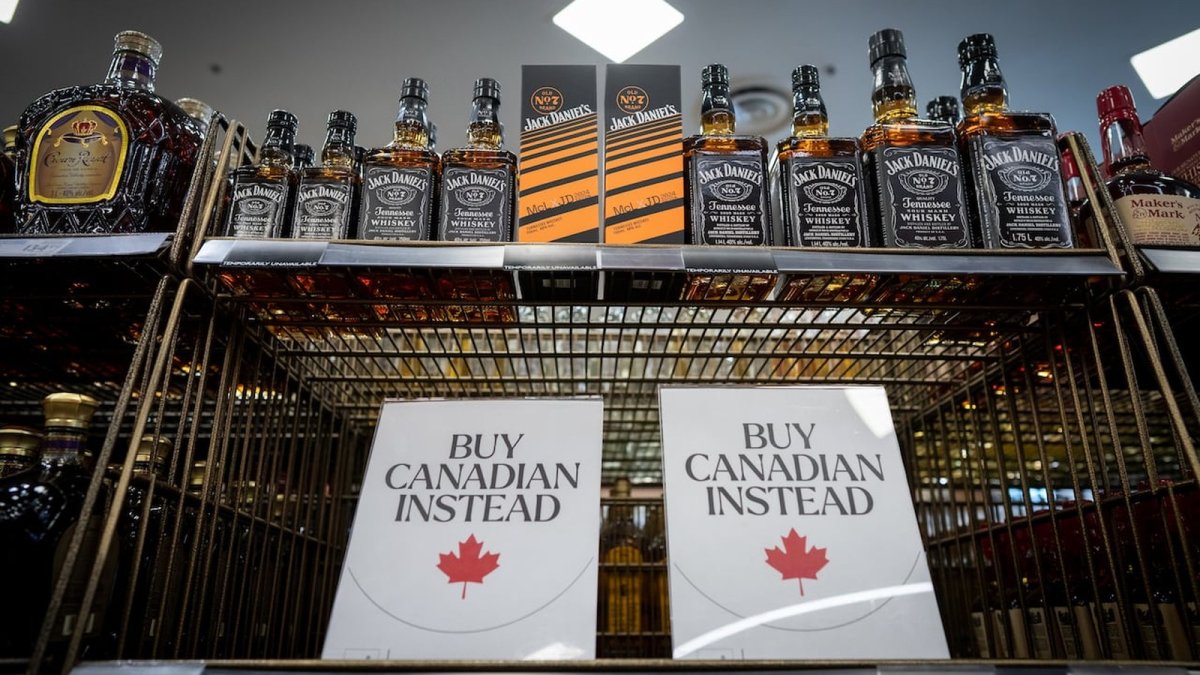
Canadian consumers and businesses have adapted
For many Canadians, the boycott has become a matter of principle. Deb Anderson, 65, of Prospect, N.S., says she has been boycotting American goods in protest of Trump's repeated threats against Canada. "But just because it goes back on the shelves doesn't mean that sales are going to go back to where they were. The damage has been done," she said, citing "constant badgering and unfair negotiation practices" from the U.S.
Anderson's sentiment is echoed in the hospitality sector. Ivan Gedz, owner of the bar Union Local 613 in Ottawa, saw his stockpile of American booze run out two months after U.S. supplies were taken off the shelves at the LCBO. Customers didn't bat an eye; the ban encouraged patrons to try booze they had never tried before. "There's nothing I love more than giving someone an Indian whisky and they're like, 'India? I didn't even know India made whisky.' They're producing excellent stuff — it's just we don't get a ton of it," Gedz said.
Quebec and Ontario see lasting shifts in consumer tastes
Quebec's liquor board, the SAQ, said in its 2026 annual report that "fans of U.S. wines have turned to counterparts from other regions" amid the ban. "Canadian wines, including Quebec wines, have gained popularity and now rank ahead of Australia's," the report said, noting that Austrian wines were also becoming more popular. The shift represents a structural change in the Quebec market that may not reverse quickly even if U.S. products return.
In Toronto, Nicole Raufeisen, director of operations at Grape Witches, a bar and wine bottle shop that continued to sell U.S. wines it already had stocked, says the inventory has dwindled. "We've slowly ticked away through those products. I think we're down to maybe just one or two different wines." If the ban is lifted, she expects customers will again reach for fuller-bodied reds from California: "People will go back because those wines are good, that market share is well-trodden... and the visibility there is high."
Interprovincial trade barriers emerge as the next frontier
The boycott has also accelerated conversations about Canada's own internal trade barriers. Nine provincial premiers announced last month they would introduce direct-to-consumer alcohol sales between provinces, a significant step toward dismantling long-standing restrictions. Raufeisen says restrictions on wholesale wine sales between provinces remain a major challenge. "If there were no interprovincial barriers to the wholesale movement of wines, then it's possible that no one would miss any of the American wines," she said.
That observation points to a broader opportunity: if Canadian wineries and distilleries can access each other's markets more freely, the domestic industry could fill gaps left by U.S. products. The premiers' announcement last month suggests momentum toward greater internal trade, though wholesale barriers remain a significant hurdle for producers and retailers alike.
What this means for the trade deal and Canadian consumers
The Nanos poll presents a paradox for negotiators. Even as Ottawa prepares to lift the alcohol bans as part of a broader trade agreement, Canadian consumers are signalling they may not reward that concession with renewed purchases. For U.S. producers hoping to reclaim lost market share, the consumer boycott represents a challenge that no trade deal can easily resolve.
Gedz says Union Local 613 would probably bring U.S. booze back if the ban is lifted as part of a wider trade agreement, but he doesn't expect American alcohol to be as popular as it once was because many Canadians "have exposed themselves to products that they may not have tried." "I'm just hoping that those customers maintain their willingness for experimentation. And you know what? If we stick it to the Americans for a little while longer, I'm cool with that," he said.
The coming weeks will determine whether the trade deal materializes and what concessions each side makes. But the poll suggests that even a successful negotiation may not restore the pre-tariff status quo. Canadian consumers have changed their behaviour, discovered new products, and developed new loyalties. The damage to American market share, as Deb Anderson put it, has been done.
For Canadian policymakers, the challenge is to secure tariff relief while managing a public that remains deeply sceptical of American trade intentions. For Canadian businesses, the opportunity lies in meeting the demand for domestic and international alternatives that the boycott has unleashed. And for American producers, the road back into Canadian liquor stores may be longer than any trade agreement can shorten.
This article was produced with AI-assisted research and editorial support. Sources: CBC News, Nanos Research, Reuters.
By Alex Thompson, Staff Writer
What's Your Reaction?
 Like
0
Like
0
 Dislike
0
Dislike
0
 Love
0
Love
0
 Funny
0
Funny
0
 Wow
0
Wow
0
 Sad
0
Sad
0
 Angry
0
Angry
0

Canada Correspondent at Global1.News. Based in Toronto, covering Canadian politics, energy, trade, and US-Canada relations. Provides the Canadian perspective on North American and global affairs.











Comments (0)