
He arrested a hacker, then spent 18 months clearing his own name. Now he’s a cybersecurity VC.
When you’ve spent two decades chasing hackers, building security ops at a home‑improvement giant, and then raising a $250 million fund, you learn to separate hype from hard‑won reality.
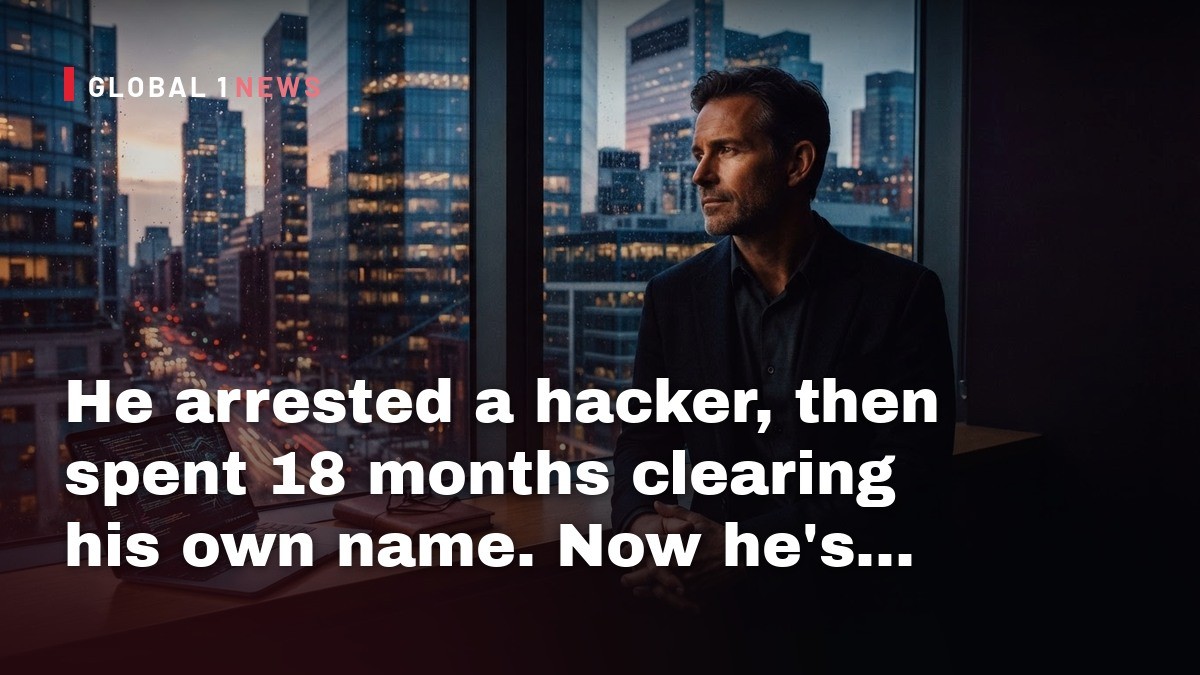
When you’ve spent two decades chasing hackers, building security ops at a home‑improvement giant, and then raising a $250 million fund, you learn to separate hype from hard‑won reality. Stephen Ward’s story reads like a war‑zone memoir, but the takeaway for anyone running a data centre or a fledgling security shop is simple: the money game in cybersecurity is still a grind, not a glitter‑ball. The way Ward built Brightmind, the exits he chased, and the partners he left behind all point to a brutal truth – the “buy‑now‑sell‑later” playbook that VC‑funded hype loves to preach rarely survives a production‑grade environment.
From Coast Guard to Secret Service: The grind that forged a no‑BS mindset
Ward grew up in northwest New Jersey, sandwiched between two farms, with a family that couldn’t foot college tuition for his older brothers. After high school he jumped into the Coast Guard, spending four years in search‑and‑rescue before moving on to a criminal‑justice degree at Seton Hall. A chaplain‑turned‑secret‑service connector got him his first badge, and the Secret Service became his first arena of real‑world cyber work after 9/11.
The key lesson from that stretch is the relentless focus on operational outcomes. Ward spent his early career hunting financial crime and then pivoted to cyber investigations, learning that the only thing that matters in a breach is whether you can stop the data exfiltration, not how pretty your slide deck looks. That mindset carried through to his later corporate gigs and now to his fund‑raising playbook.
Corporate chops: From JP Morgan to Home Depot, learning the hard way
Ward’s first private‑sector role was at JP Morgan in 2007, where he built a cybersecurity unit from scratch. He admits feeling like “the dumbest person in the room,” missing his Secret Service crew, and even flirting with a return to the agency. Yet he stuck it out, calling the bank “the best management school.” The takeaway for any hosting provider is that the biggest lessons come from being the new kid on a massive, bureaucratic team where you have to prove every line of code and every policy change.
Six years at TIAA and two at Home Depot followed, with the latter ending in burnout and a clean break in 2021. Ward’s exit from Home Depot was not a glamorous boardroom exit but a personal decision after a grueling schedule. He later joined Insight Partners, where he helped back Wiz, Abnormal Security, and Elisity – the latter later sold to IonQ for a multi‑billion deal. Those deals illustrate that the “best practice” playbooks that hype‑machines tout often crumble under the weight of real production workloads; the only thing that survived was Ward’s ability to vet technology that actually worked in the field.
Brightmind’s debut fund: A $250 million reality check
In late 2023 Ward co‑founded Brightmind with Gur Talpaz, a CrowdStrike corporate‑development veteran. The debut fund closed at a “whopping” $250 million – a figure that would make any hyperscaler grin. Yet the fund’s strategy was blunt: back early‑stage cyber startups that could prove real‑world traction, not just “wow‑factor” demos. The only exit so far, SGNL, was bought by CrowdStrike for $740 million less than a year after Brightmind led its Series A.
This exit is a rare case of a VC‑backed cyber startup achieving a headline‑grabbing sale. For independent hosting providers, the lesson is that exits are the exception, not the rule. Most portfolio companies will sit in the trenches for years, and the cash burn will be relentless. Ward’s focus on “selling on the way up” reflects a pragmatic view that most founders need to internalise: you cannot rely on an IPO or a unicorn valuation to fund your growth.
The split: Why co‑founders walked and what it means for founders
In April 2025 Talpaz and another early Brightmind employee, Tayler Sipperly, left to start Cognition with CrowdStrike’s global CTO, Elia Zaitsev. The departure was framed as “differences in opinions regarding operations and the future of Brightmind.” While the exact disagreements are not detailed, the move underscores a common hazard for founder‑led funds – the clash between venture‑style growth ambitions and the gritty realities of security product development.
Ward now runs Brightmind as the sole general partner, targeting a second fund of roughly the same size. The split also highlights a risk for any venture‑backed security startup: losing a key partner can destabilise board dynamics and affect follow‑on funding. Ward’s continued relationship with former partners, who remain on boards of Brightmind portfolio companies, suggests a pragmatic approach to partnership – keep the talent where it adds value, even if the firm splits.
Production‑grade lessons: Why “best practices” often break under load
Ward’s career is a litany of war stories where textbook security controls fell short. At JP Morgan he felt out of depth; at Home Depot he burned out; at Insight he saw startups like Wiz get acquired for $32 billion by Google. The common thread is the gap between vendor‑promoted best practices and the reality of running production workloads at scale. For anyone managing servers, the lesson is to test security controls in the wild, not just in a lab.
Brightmind’s portfolio of 14 investments, with only one exit, reflects the brutal attrition rate in cyber. Most of those startups are still in the trenches, dealing with the same operational challenges Ward faced: scaling detection pipelines, handling false positives, and integrating with legacy infrastructure. The hype around “AI‑driven security” or “zero‑trust” often masks the fact that a mis‑configured firewall can still let a breach slip through.
What the next fund means for the cyber ecosystem
Ward is raising a second fund, aiming for a size similar to the first. He does this without Talpaz, relying on his own network of limited partners – fewer than 20 in the first round, including Insight’s Jeff Horing. The modest LP base suggests a cautious investor appetite for pure‑play cyber funds, especially after the recent wave of over‑valuation in the sector.
The fund’s focus will likely stay on early‑stage startups that can demonstrate production‑grade traction. Ward’s own story – from a Coast Guard rescue to a VC fund – reinforces the idea that the market rewards grit and operational depth over flash. For independent hosting providers, aligning with firms that understand the production grind can be a lifeline, but only if the fund’s expectations are realistic.
Actionable takeaways for founders and hosting operators
First, double‑down on production testing. Ward’s career shows that the biggest failures happen when you trust a vendor’s “best practice” without validating it in your own environment. Run red‑team exercises, simulate data exfiltration, and measure latency under load.
Second, plan exits early. Ward’s mantra of “sell on the way up” isn’t about being greedy; it’s about recognizing that most cyber startups never reach a unicorn exit. Build a clear path to acquisition or strategic partnership from day one.
Third, be wary of hype‑driven capital. The $250 million debut fund is impressive, but the reality is that only one of Brightmind’s 14 bets has exited. Diversify your funding sources and keep a lean burn rate – the market will reward those who can survive a downturn.
Finally, cultivate relationships with operators who have walked the trenches. Ward’s network – from the Coast Guard to the Secret Service, to JP Morgan and Insight – gave him credibility that pure‑play VCs lack. For a hosting provider, a partnership with a founder who truly understands production risk can be the difference between a resilient service and a headline‑making breach.
In the end, Stephen Ward’s journey is a reminder that the cyber‑security game is still a battlefield, not a boardroom. The real winners are those who can translate hard‑won operational lessons into disciplined investment decisions and, for us in the hosting world, into systems that stay up when the next hacker comes knocking.
— Allan Ali, Founder
This article was produced with AI-assisted research and editorial support. Reporting is based on the source material cited below. Sources: TechCrunch; techcrunch.com; Global1.News (09 November 2026).
By Allan Ali, Global1.News
What's Your Reaction?
 Like
0
 Dislike
0
 Love
0
 Funny
0
 Wow
0
 Sad
0
 Angry
0

Publisher of Global1.News. Automation architect, systems builder, and the guy making sure the truth gets published.












Comments (0)