
Urban Planner Says B.C. Government Will Lose Millions on Purchase of Notorious Granville SRO
A Vancouver urban planner says the province will likely lose millions on its purchase of a notorious single-room occupancy (SRO) building in the Granville Entertainment District, which still houses one tenant a month and a half after the B.C. government promised to close it down.
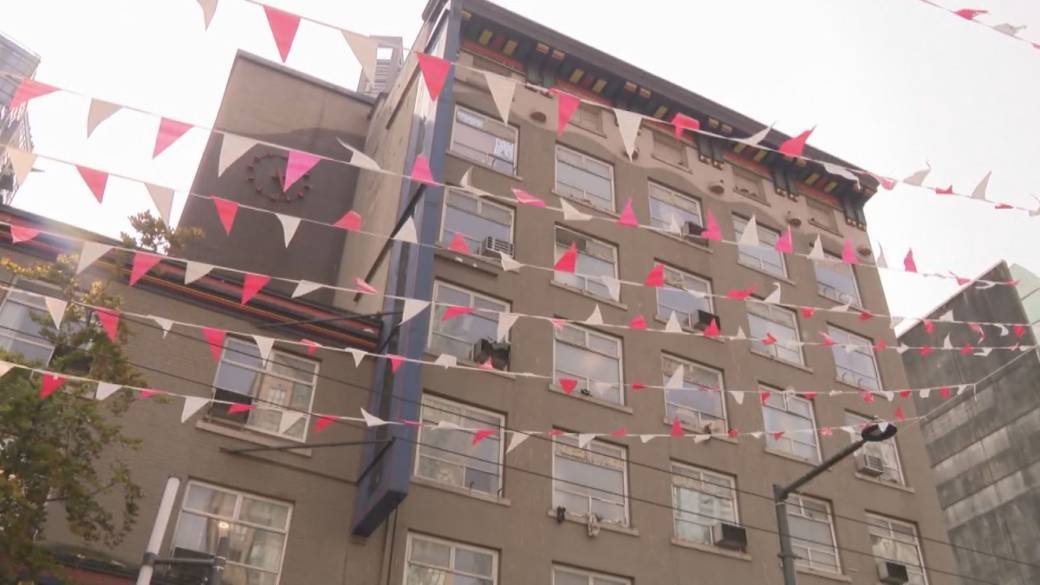
Urban Planner Says B.C. Government Will Lose Millions on Purchase of Notorious Granville SRO
A Vancouver urban planner says the province will likely lose millions on its purchase of a notorious single-room occupancy (SRO) building in the Granville Entertainment District, which still houses one tenant a month and a half after the B.C. government promised to close it down.
The province, through BC Housing, paid well above the assessed value for the 110-room Howard Johnson Hotel at 1176 Granville Street, as part of a long-term plan to build affordable homes. According to a June 24, 2020 news release, the B.C. government paid approximately $55 million to purchase the former hotel and the “neighbouring development site”. At the time, the combined assessed value of 1176 Granville Street and the adjacent parking lot included in the deal was $38.6 million. Today, both sites are assessed at approximately $27.5 million.
Taxpayers on the Hook for Significant Losses, Says Urban Planner
“I don’t think it’s unreasonable to assume the province will lose about half of what they paid for this property,” said urban planner and retired architect Michael Geller. Geller said governments often pay more than properties are worth when they intend to use the real estate to create supportive housing, in this case, the Luugat SRO. “When I say the province is losing half, what I’m really saying is the taxpayers of British Columbia are losing half of what was spent on this building,” Geller said in an interview. “And that ignores all the other costs that have been associated with it over the years.”
After six years as supportive housing, several fires and more than 200 floods soaking Alan Goodall’s Aura nightclub on the ground floor, the Luugat SRO building was recently assessed at $22.2 million. “Right after 2020, it really took a nosedive,” Goodall told Global News Tuesday. “It’s a little disheartening, it’s a bit of a slap on the face of Granville Street.”
The purchase must be understood within the broader context of British Columbia’s long-standing struggle to address homelessness and the shortage of affordable housing, particularly in Vancouver’s Downtown Eastside. For decades, SRO hotels have served as a de facto last resort for some of the province’s most vulnerable residents, offering private rooms with shared bathrooms and kitchens. Many of these buildings, however, are aging, poorly maintained, and plagued by issues of safety and sanitation. The 2020 acquisition of the Howard Johnson Hotel came at a moment of acute crisis: the COVID-19 pandemic had prompted the province to move people out of encampments in Oppenheimer Park, Crab Park, and other sites across the city, and the former hotel was quickly converted into supportive housing to provide shelter and services. That decision, while widely seen as a necessary emergency response at the time, has since become a flashpoint in the ongoing debate over how governments should balance urgency with long-term fiscal responsibility.
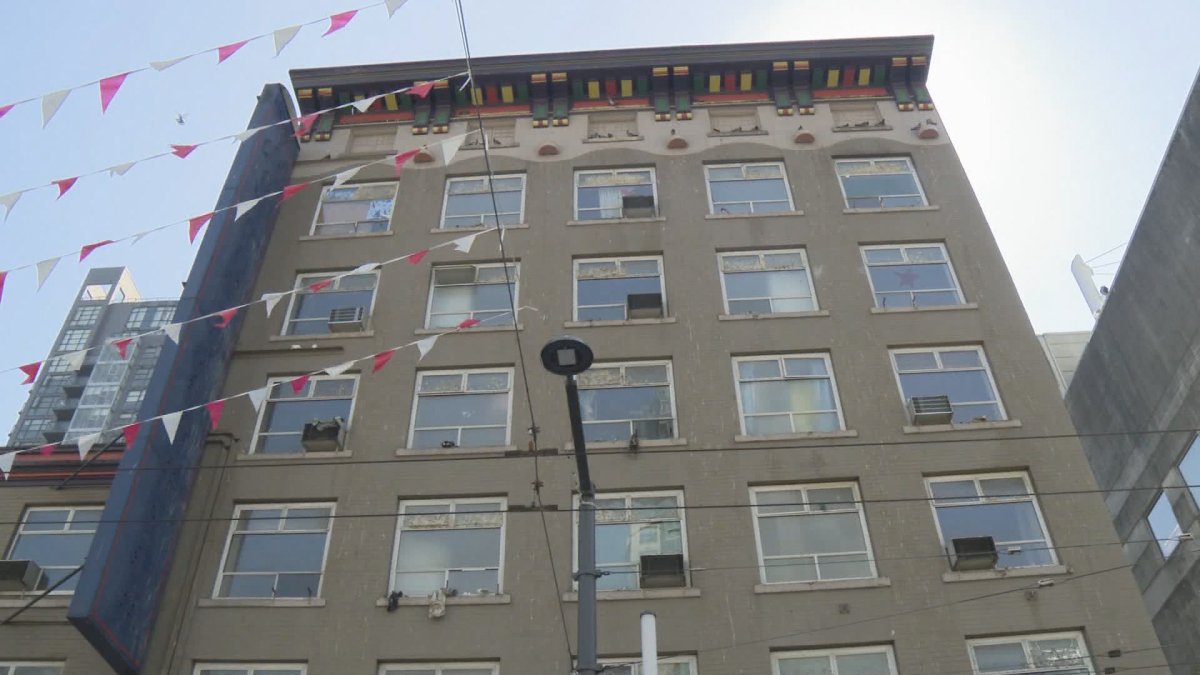
Critics and Mayor Align on Failed Policy Approach
The Canadian Taxpayers Federation (CTF) said taxpayers got a really bad deal on the purchase of the property, and are left to cover the difference since the B.C. government spent far above the assessed value. “When British Columbians are struggling with tax hikes and the rising cost of living, we can’t afford for government to lose this much money mismanaging a project,” CTF BC director Carson Binda told Global News. “I do think from a financial point of view, the taxpayers have been hosed,” added Vancouver mayor Ken Sim.
The former Granville Strip hotel has seen thousands of police and fire calls and been the subject of numerous street disorder complaints since it began housing people from encampments during COVID-19. Sim said from a social outcome perspective of taking care of individuals and vulnerable populations, the supportive housing has not been successful. “What were really looking for from the provincial government is stop repeating failed policies and mistakes,” the city’s mayor told Global News in an interview. “Let’s give people the housing that they need.”
The tension between municipal and provincial governments over housing policy is not new in British Columbia. Vancouver has long argued that it bears an outsized share of the burden for housing the province’s homeless population, while the province controls the purse strings and the major funding decisions. This dynamic has created a recurring pattern of friction, with city officials frequently complaining that they are left to manage the consequences of provincial decisions without adequate resources or support. The Luugat SRO situation has become a prime example of this dynamic, with Mayor Sim and other city leaders pointing to the building’s failures as evidence that the province has not listened to local concerns about how supportive housing should be designed, staffed, and maintained. At the same time, provincial officials have defended their approach, arguing that the urgency of the homelessness crisis requires rapid action, even if that means taking on properties that are less than ideal.
Provincial Critic Questions Due Diligence and Asset Management
The BC Conservative critic for Mental Health, Addictions, and Social Housing said she can’t imagine what justified the province paying $16 million over the assessed value for the Luugat property. Claire Rattée said the taxpayer-funded asset was not taken care of during its tenure as an SRO, and proper supports were not in place for vulnerable residents. “Government chose not to act and now the building will likely have to be demolished,” Rattée said Tuesday. “It’s incredibly frustrating, it’s a huge waste of taxpayer money and it’s a real disservice to the people that are desperately in need right now, of supportive housing.”
Goodall believes there are a lot of hidden costs including restoration fees for major water damage and the constant maintenance stemming from repeated fires and floods. “I think that there’s probably more to this picture than just the decreased value of the building,” he told Global News Tuesday. Former residents have claimed the Luugat SRO was destroyed in less than a year.
The question of due diligence is central to the criticism levelled at the province. When BC Housing acquired the property in 2020, the building was already known to be in poor condition, with a history of code violations and complaints from neighbouring businesses. Critics have asked whether the province conducted adequate inspections and whether it fully understood the scale of repairs that would be required to keep the building operational as supportive housing. The province has said it received an independent appraisal prior to the purchase, but it has not disclosed the details of that appraisal, leaving questions unanswered about how the final purchase price was determined. For Rattée and other critics, the lack of transparency around the appraisal and the subsequent management of the property is deeply troubling, as it suggests that the province may not have fully considered the long-term costs of owning and operating such a challenging asset.
Province Cites Appraisal, Future Plans Remain Undetermined
The province said BC Housing received an independent appraisal prior to purchasing 1176 and 1150 Granville Streets, and ended up buying both sites for less than the appraised value – which it did not disclose. When asked if the SRO building would be torn down and if so, how it would justify the loss to taxpayers, the Ministry of Housing and Municipal Affairs said plans for the future use of the property are in development and “options will be considered in terms of what offers the best value for taxpayers”.
Geller said the site will likely be redeveloped but whether it becomes commercial or housing remains to be seen. If it is transformed into rental housing, he said the former hotel property will be worth even less. The situation underscores the ongoing tensions between municipal and provincial priorities in British Columbia, where the demand for supportive housing collides with fiscal prudence and the realities of managing aging, high-risk properties in dense urban centres. As the province deliberates on the site’s future, the financial and social costs of this experiment on Granville Street continue to mount for both residents and taxpayers.
The broader implications of this case extend well beyond the boundaries of Granville Street. Housing affordability has become one of the defining issues of Canadian public life, with voters across the country expressing frustration over rising rents, stagnant wages, and the difficulty of finding stable, affordable accommodation. In British Columbia, the situation is particularly acute, with some of the highest housing costs in the nation and a homelessness crisis that shows no signs of abating. Governments at all levels have promised action, but the gap between rhetoric and results has fuelled cynicism among many Canadians, who see projects like the Luugat SRO as emblematic of a system that spends large sums of money without achieving meaningful outcomes.
For taxpayers, the Luugat purchase represents a cautionary tale about the risks of government intervention in the real estate market. While there is broad public support for the idea of providing housing for the homeless, there is far less consensus on how that should be done and at what cost. The province’s decision to pay well above assessed value for a building that has since deteriorated significantly has led many to question whether the government is capable of managing complex real estate assets effectively. At the same time, advocates for supportive housing argue that the focus on financial losses misses the point: the alternative to government intervention is not a free market solution but rather a continuation of the status quo, in which vulnerable people are left to fend for themselves on the streets, in encampments, and in overcrowded shelters.
As the province considers its options for the Luugat site, it faces a difficult balancing act. On one hand, there is pressure to cut losses and dispose of the property, either through sale or redevelopment, to recoup some of the public investment. On the other hand, there is a recognition that the site, located in the heart of Vancouver’s entertainment district, has significant potential for future housing development, and that selling it off could mean losing an opportunity to add much-needed affordable units to the city’s housing stock. The ministry has said that options are being considered, but no decisions have been announced, and the timeline for any future action remains unclear.
In the meantime, the building at 1176 Granville Street stands as a visible reminder of the challenges inherent in addressing homelessness and housing affordability in a complex urban environment. The one remaining tenant, the ongoing maintenance issues, and the unresolved questions about the property’s future all point to a situation that is far from resolved. For the residents of Vancouver, for the taxpayers of British Columbia, and for the vulnerable individuals who continue to need supportive housing, the outcome of this case will be watched closely. Whether it serves as a lesson in prudent governance or as another example of government overreach will depend on the decisions made in the coming months and years. What remains clear is that the costs — financial, social, and political — are still mounting, and the final bill has yet to be tallied.
Tags: BC Housing, Granville Street, Vancouver, supportive housing, SRO, Michael Geller, Ken Sim, Carson Binda, Claire Rattée, Alan Goodall, real estate, taxpayer accountability, Ministry of Housing and Municipal Affairs, Luugat, Howard Johnson Hotel, Downtown Eastside, homelessness, housing affordability, COVID-19, municipal-provincial relations
By Alex Thompson, Staff Writer
This article was produced with AI-assisted research and editorial support. Sources: Global News.
What's Your Reaction?
 Like
0
Like
0
 Dislike
0
Dislike
0
 Love
0
Love
0
 Funny
0
Funny
0
 Wow
0
Wow
0
 Sad
0
Sad
0
 Angry
0
Angry
0
Canada Correspondent at Global1.News. Based in Toronto, covering Canadian politics, energy, trade, and US-Canada relations. Provides the Canadian perspective on North American and global affairs.












Comments (0)