
NASA Data Shows Extreme Wildfires Have Doubled in Two Decades
NASA satellite data from Terra and Aqua shows extreme wildfire activity has more than doubled worldwide over the past two decades. Al Jazeera English reported the findings on August 6, 2026. Right now the fire season is peaking across the Amazon, Cerrado and Pantanal, placing Latin American ecosystems and communities under renewed pressure.
NASA Data Shows Extreme Wildfires Have Doubled in Two Decades
São Paulo, Brazil – August 7, 2026 — NASA’s Terra and Aqua satellites detect active wildfires twice each day, and scientists studied this data over a 21-year span. The research published in Nature Ecology & Evolution in 2024, led by pyrogeographer Calum Cunningham of the University of Tasmania, mapped the intensity of more than 30 million wildfire events detected by NASA’s MODIS instruments between 2003 and 2023. Extreme wildfire activity has more than doubled worldwide, with fires now more frequent, more intense and larger. The team took daily snapshots by summing heat energy in 20-by-20-kilometer blocks across Earth’s surface and isolated the top 0.01 percent of fires by radiative power, about 2,900 extreme events. Frequency of these extreme events increased 2.2-fold from 2003 to 2023. Six of the past seven years experienced the highest number of extreme fires, and the most extreme fire year was also the hottest year on record.
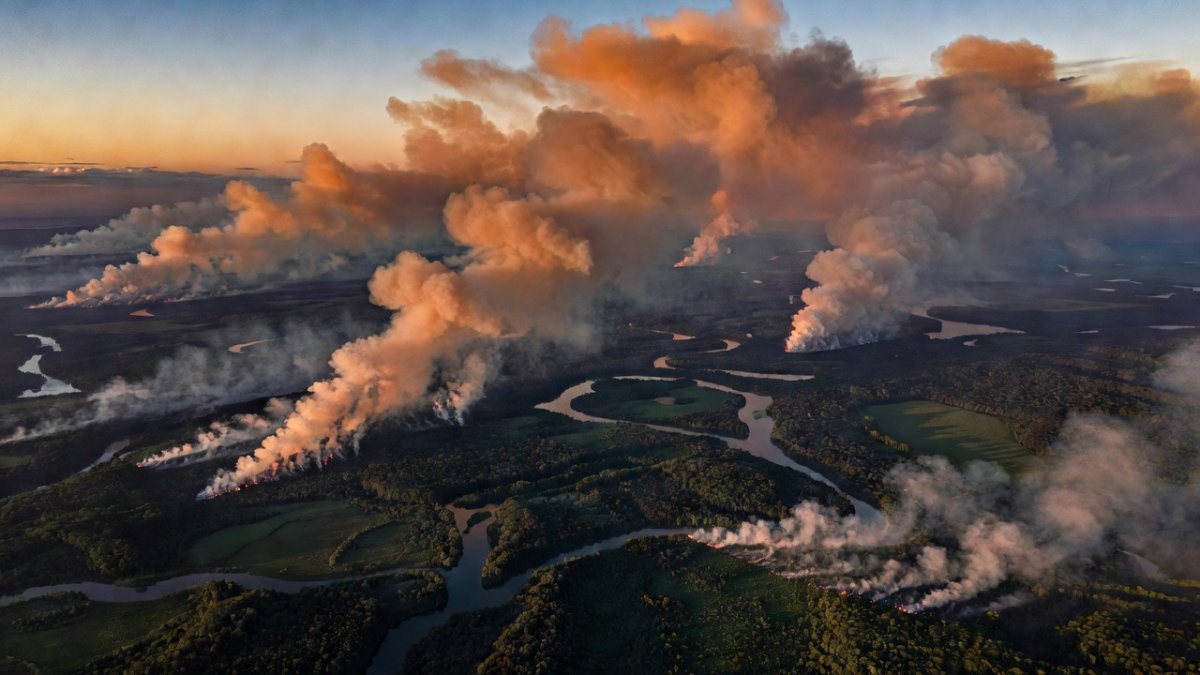
What NASA's Satellites Found
The University of Tasmania team analyzed daily snapshots summing fire radiative power across 20-by-20-kilometer blocks and isolated roughly 2,900 extreme events representing the top 0.01 percent by intensity. Frequency of these events rose 2.2-fold between 2003 and 2023. Six of the seven years before publication recorded the highest numbers, with the single worst year coinciding with the hottest global temperature on record. Largest increases appeared in temperate conifer forests of the western United States and boreal forests of northern North America and Russia. The study deliberately filtered out low-intensity savanna fires that dominate Africa and account for about 70 percent of global burned area by land surface. Once those were removed, the steep global rise in truly extreme fires became unmistakable. Traditional monitoring counts burned pixels, yet this approach measured fire radiative power, which directly relates to biomass burned and emissions released. That metric better captures environmental damage. For Latin America the findings carry immediate weight because the same MODIS instruments feed real-time alerts used by Brazil’s INPE and IBAMA. Communities along the arc of deforestation in Pará, Mato Grosso, Rondônia and Amazonas now receive faster warnings, yet the underlying upward trend in extreme events remains a serious concern for small farmers and Indigenous territories that rely on predictable seasonal patterns.
Why the Most Dangerous Fires Are Multiplying
Warmer nighttime temperatures allow fires to keep burning overnight instead of dying down, removing a natural brake that once limited spread. The study shows extreme blazes burn hotter and more uncontrollably, releasing vast stores of carbon that accelerate warming while damaging health and economies across continents. Canada’s 2023 season, the most destructive ever recorded, burned an area twice the size of Portugal and illustrated how overnight persistence turns manageable fires into regional disasters. In Latin America the same mechanism threatens the Cerrado savanna that covers roughly 21 percent of Brazil and the Pantanal wetland shared with Bolivia and Paraguay. When fires continue through the night they consume deeper layers of organic matter, harming soil fertility for small farmers who practice subsistence agriculture. The research also highlights that extreme fires emit far more smoke and particulate matter than routine savanna burns. This matters for riverside communities along the Amazon and its tributaries, where smoke can linger for days and travel hundreds of kilometers. By focusing on radiative power rather than simple burned area, scientists revealed a pattern that traditional counts had masked, showing that the fires causing the greatest harm are precisely those increasing fastest.
Latin America's Fire Paradox: Record Burns, Then a Fragile Recovery
Brazil recorded roughly 30 million hectares burned in 2024, the largest fire-affected area ever measured. In 2025 the figure fell to 12.7 million hectares, nearly half the previous year and 31 percent below the 1985-2025 historical average. The Amazon itself posted its lowest burned area in 41 years. Yet 2026 year-to-date data through August 7 show 2,223,455 hectares burned, 93 percent below the 20-year average of 30,911,106 hectares, with only 5,840 fires against an average of 63,436. Mato Grosso, Pará and Maranhão still account for nearly half of all land burned in Brazil over four decades. In the Pantanal, June 2024 saw an estimated 440,000 hectares burned in one month, far above the previous June maximum of 257,000 and the monthly average of 8,300. Bolivia experienced its worst fire season ever in 2024, with well over 10 million hectares burned and some estimates exceeding 15 million, an area larger than Greece. Santa Cruz alone lost about 8.5 million hectares. Bolivia’s 2026 year-to-date stands at 584,638 hectares, 91 percent below its 20-year average. The 2019 Chiquitanía fires burned over 5 million hectares of dry forest, destroying habitat for jaguars and tapirs. These swings show both the damage extreme years inflict and the possibility of rapid improvement when enforcement and weather align.
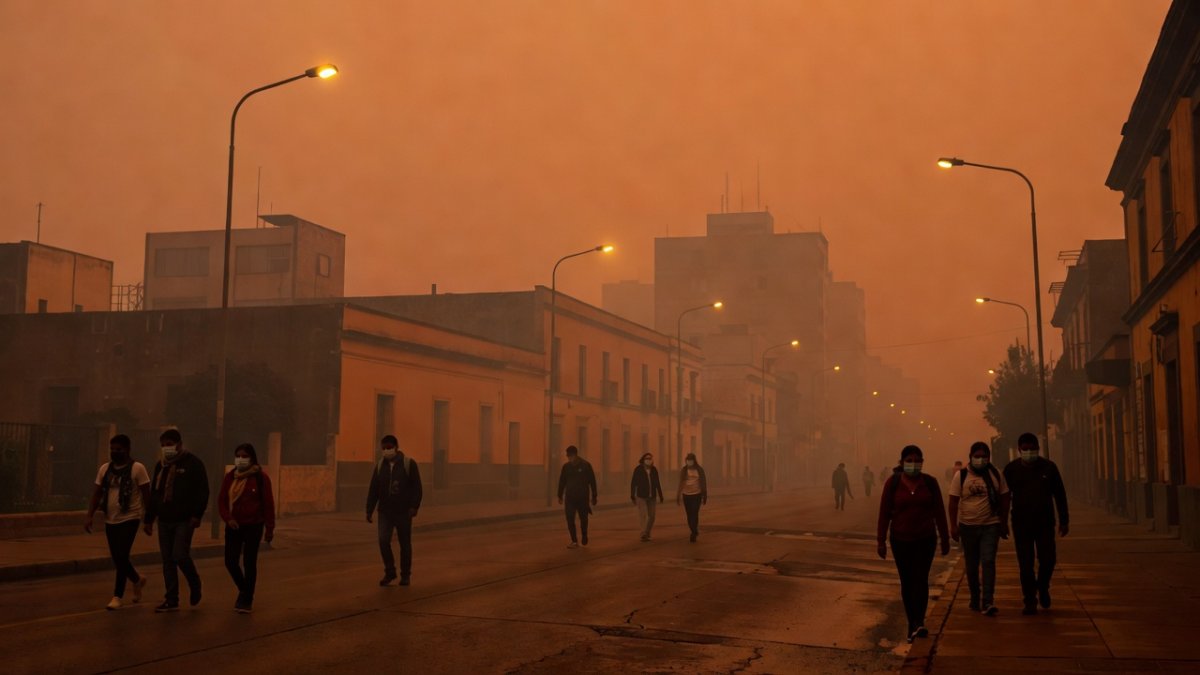
The Health Cost of Wildfire Smoke
Wildfire smoke carries toxic PM2.5 particles that remain suspended for days to weeks and travel thousands of kilometers. These fine particles penetrate deep into the lungs, triggering spikes in respiratory and cardiovascular emergencies that follow every major fire season. In 2024 Santa Cruz de la Sierra’s capital choked in smoke for weeks while Amazon cities from Porto Velho to Manaus recorded hazardous air quality during peak burning. Health workers in regional hospitals report surges in asthma attacks, bronchitis and heart-related admissions that strain already limited resources. Indigenous and riverside communities often lack access to masks or air purifiers, leaving children and elders especially vulnerable. The same smoke drifts across borders, affecting Bolivia’s Chiquitanía region and Paraguay’s share of the Pantanal. Agricultural workers in the arc of deforestation face repeated exposure during the July-October dry season, compounding risks for those already dealing with poverty and limited medical infrastructure. Because extreme fires release more emissions per hectare than low-intensity burns, the health burden grows even when total burned area declines. Public health systems across Latin America must now prepare for longer smoke seasons as nighttime temperatures continue rising and extreme events become more common.
The Fire Season Is Here: What August Means for the Amazon
Fire season runs July through October and peaks in August and September across the Amazon, Cerrado and Pantanal. Most burning concentrates along the arc of deforestation in southern and eastern Brazilian Amazon states. Brazilian agencies IBAMA and INPE rely on NASA FIRMS satellite data for real-time monitoring, issuing daily heat detections that guide enforcement teams. As of August 7, 2026, 3,330 heat detections occurred in the previous 24 hours, 63 percent classified as high intensity, with 17 named wildfires active. The largest, near Nova Santa Helena, covers 2,030 hectares. President Lula, who pledged to protect the Amazon, is expected to highlight the sharp reduction in fire figures ahead of October’s presidential election. Yet the underlying drivers remain: agricultural expansion, land clearing and drier conditions linked to warmer nights. Small farmers and Indigenous groups along the arc continue to lose crops and forest resources when fires escape control. The Pantanal and Bolivian Chaco face similar pressures during their July-October dry season, where “chaqueo” practices for land clearing still ignite large areas. Coordinated satellite monitoring offers hope, but sustained political will and support for local communities are required to keep 2026’s lower numbers from reversing in future seasons.
What This Means for Latin America — and the Bottom Line
January 2026 wildfires in southern Chile killed at least 19 people, destroyed entire towns and persisted three days despite 3,500 firefighters battling 14 active fires in Ñuble and Biobío regions, both declared disaster areas. February 2024 fires around Valparaíso and Viña del Mar killed at least 51 people, showing that extreme events now strike multiple Latin American countries in a single year. The global doubling of extreme wildfires documented by NASA therefore translates directly into local threats for farmers, firefighters, health workers and forest communities. While 2026 preliminary figures show welcome reductions in Brazil and Bolivia, the long-term trend of hotter nights and more intense fires demands continued vigilance. Investments in early-warning systems using MODIS data, support for alternative land-clearing methods, and stronger protection of the Pantanal and Cerrado will determine whether the fragile recovery holds. For Latin America the bottom line is clear: extreme wildfires are no longer distant boreal events but immediate regional crises that affect air quality, economies and the daily lives of millions from the Amazon basin to the Andes foothills.
By Elena Vasquez, Staff Writer
This article was produced with AI-assisted research and editorial support. Reporting is based on sources cited in the article.
What's Your Reaction?
 Like
0
Like
0
 Dislike
0
Dislike
0
 Love
0
Love
0
 Funny
0
Funny
0
 Wow
0
Wow
0
 Sad
0
Sad
0
 Angry
0
Angry
0

Latin America Correspondent at Global1.News. Based in Mexico City, covering politics, economics, energy, and culture across the region. Brings an on-the-ground perspective to stories spanning from the Rio Grande to Patagonia.















Comments (0)