
Benkirane declines meeting with newly designated PM Mansouri
Morocco’s political landscape entered a delicate phase this week as Abdelilah Benkirane, the Secretary‑General of the Justice and Development Party (PJD), publicly declined an invitation to meet the newly designated Prime Minister Fatima Ezzahra El Mansouri at her party’s headquarters.
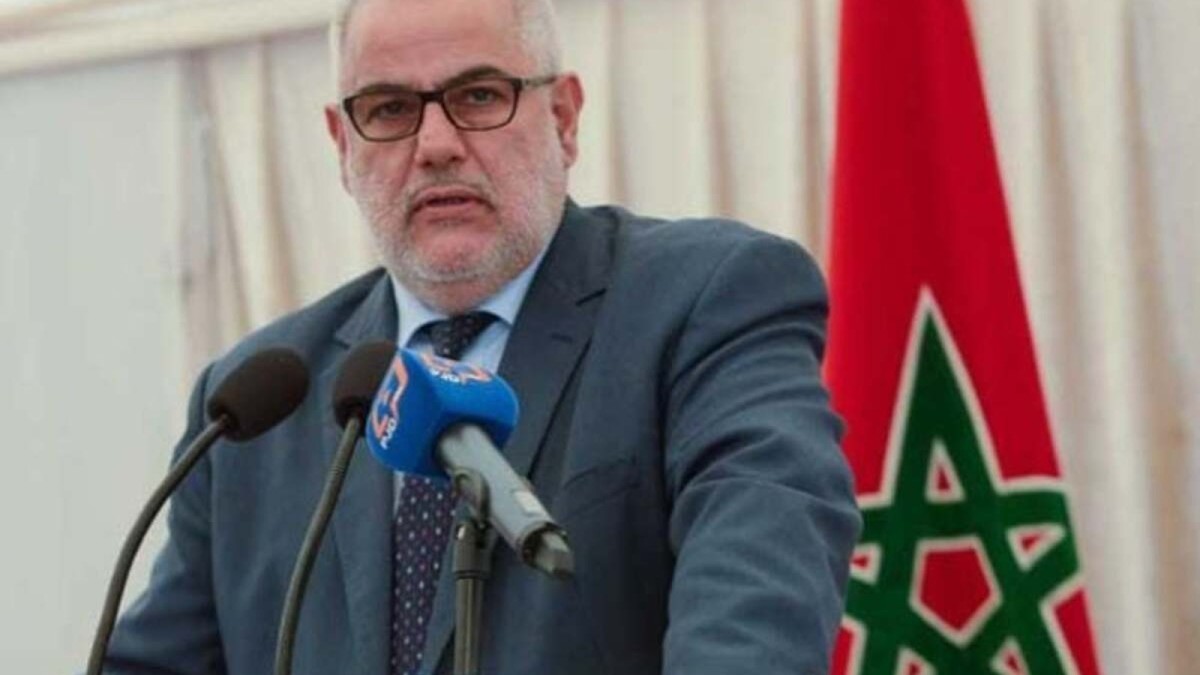
Morocco’s political landscape entered a delicate phase this week as Abdelilah Benkirane, the Secretary‑General of the Justice and Development Party (PJD), publicly declined an invitation to meet the newly designated Prime Minister Fatima Ezzahra El Mansouri at her party’s headquarters. Benkirane’s refusal, recorded in a video posted on his official Facebook page, was not framed as a rejection of dialogue but rather as a desire to keep the encounter free from the formalities of party protocol. By offering to receive the prime minister at his own home, Benkirane signalled a preference for a more informal setting, raising questions about the evolving norms of political consultation in Morocco’s constitutional monarchy.
Context of the invitation and the political transition
The invitation to meet at the PAM (Party of the Moroccan People) headquarters came shortly after King Mohammed VI tasked Fatima Ezzahra El Mansouri with forming the next government. This designation marks a historic moment: Mansouri is the first woman in Morocco’s history to be charged with this responsibility, a development highlighted in a separate report on the king’s decision. The king’s choice underscores a broader shift toward inclusive governance, yet the procedural details of how the new prime minister will negotiate coalition building remain contested.
In this transitional moment, Benkirane’s response carries symbolic weight. By refusing the official party venue, he foregrounds the tension between established party customs and the emerging need for flexible, perhaps more personal, channels of political dialogue. His stance invites observers to consider whether the venue of a meeting can influence the substance of political negotiations, especially in a system where the monarch’s mandate to form a government is balanced by party negotiations.
Benkirane’s rationale: protocol versus substance
In the video, Benkirane emphasized that his refusal to meet at the PAM headquarters was not a dismissal of dialogue with Mansouri. He explicitly stated that he had no objection to receiving her at his home if she wished to meet, underscoring his desire to keep the meeting “away from formal or protocol considerations.” This phrasing suggests that Benkirane views the substance of political consultation as distinct from the ceremonial aspects that often accompany high‑level meetings.
He recalled his own experience in 2012, when King Mohammed VI tasked him with forming a government. At that time, Benkirane visited a number of political leaders and former prime ministers, describing those visits as ordinary political outreach rather than a challenge to his standing. By invoking that precedent, he frames his current offer as consistent with past practice, where the focus was on dialogue rather than the symbolic weight of the meeting place.
Historical precedent and the role of informal outreach
Benkirane’s reference to his 2012 experience highlights a pattern of informal outreach that has been part of Morocco’s political fabric. When tasked with forming a government, he “took the initiative to visit a number of political leaders and former prime ministers,” treating those visits as routine rather than a breach of protocol. This historical note serves to legitise his current proposal, positioning it within an established tradition of personal, venue‑agnostic political negotiation.
The emphasis on personal outreach reflects a broader understanding that political consensus often emerges from direct, trust‑building encounters. By offering his home as a meeting place, Benkirane may be signalling a willingness to engage in candid conversation, free from the performative aspects of official party spaces. This approach could be seen as an attempt to preserve the integrity of the negotiation process, ensuring that discussions focus on policy and coalition dynamics rather than ceremonial posturing.
Implications for party customs and future negotiations
The episode raises a critical question about the limits of party customs in Morocco’s evolving political system. Party headquarters, such as those of the PAM, traditionally serve as formal venues for official negotiations, symbolising institutional authority. Benkirane’s refusal to meet there suggests a challenge to that convention, implying that the venue should not dictate the legitimacy of political dialogue.
If Mansouri accepts the invitation to meet at Benkirane’s home, it could set a precedent for future leaders to prioritize substance over setting, potentially reshaping the etiquette of coalition talks. Conversely, a refusal might reinforce the expectation that official party spaces remain the appropriate stage for high‑level negotiations, preserving the symbolic hierarchy of party structures.
Human‑rights perspective on inclusive political dialogue
From a human‑rights standpoint, the emphasis on open dialogue—regardless of venue—aligns with the principle that political participation should be accessible and free from undue barriers. By removing the formal setting from the equation, Benkirane’s proposal could be interpreted as an effort to lower procedural obstacles that sometimes marginalise voices outside the established party elite.
Moreover, the historic appointment of Fatima Ezzahra El Mansouri as the first woman tasked with forming a government underscores a broader push for gender inclusivity in Moroccan politics. Ensuring that the process of coalition building remains open and flexible may support the integration of diverse perspectives, reinforcing the democratic principle that governance should reflect the full spectrum of society.
Potential political calculations behind the venue choice
While Benkirane frames his refusal in terms of protocol, analysts might read a strategic dimension to his decision. By shifting the meeting to a private home, he could be seeking a more controlled environment, limiting the presence of media or party officials who might influence the tone of the discussion. This setting could allow for a more candid exchange, but it also raises concerns about transparency, as private venues can obscure public scrutiny of political negotiations.
Nevertheless, Benkirane’s insistence that “communication between political leaders should not be governed by considerations about the venue or protocol” suggests an attempt to pre‑empt criticism that the venue change is a power play. By positioning the decision as a matter of principle rather than strategy, he seeks to preserve the perception of good‑faith negotiation.
Looking ahead: the next steps in forming Morocco’s government
The immediate future will hinge on Mansouri’s response to Benkirane’s invitation. If she accepts the home meeting, the two leaders will likely discuss coalition possibilities, policy priorities, and the distribution of ministerial portfolios. Their dialogue could set the tone for subsequent negotiations with other parties, influencing the composition of the next cabinet.
Regardless of the venue, the episode underscores the delicate balance between tradition and flexibility in Morocco’s political process. As the kingdom navigates a historic transition with its first female prime minister-designate, the manner in which political leaders choose to engage—whether in formal party halls or private homes—will shape public perception of the legitimacy and inclusivity of the emerging government. The outcome will be watched closely, not only for its immediate political ramifications but also for the broader message it sends about the role of protocol, transparency, and human‑rights‑centered dialogue in Morocco’s evolving democratic landscape.
This article was produced with AI-assisted research and editorial support. Reporting is based on the source material cited below. Sources: Middle East Monitor; middleeastmonitor.com; Global1.News (01 October 2026).
By Fatima Al-Rashid, Staff Writer
What's Your Reaction?
 Like
0
Like
0
 Dislike
0
Dislike
0
 Love
0
Love
0
 Funny
0
Funny
0
 Wow
0
Wow
0
 Sad
0
Sad
0
 Angry
0
Angry
0
Gulf/MENA Correspondent at Global1.News. Based in Doha, covering Gulf politics, energy markets, diplomacy, and development across the Middle East and North Africa. Tracks the economic transformation of the Gulf states.













Comments (0)