
Moscow Oil Refinery Burns as Ukraine's Largest Drone Attack on the Capital Lands on Election Day
Ukraine's largest drone attack on Moscow killed two people and set the capital's oil refinery ablaze on the final day of Russia's parliamentary election, even as both sides kept hitting energy infrastructure.
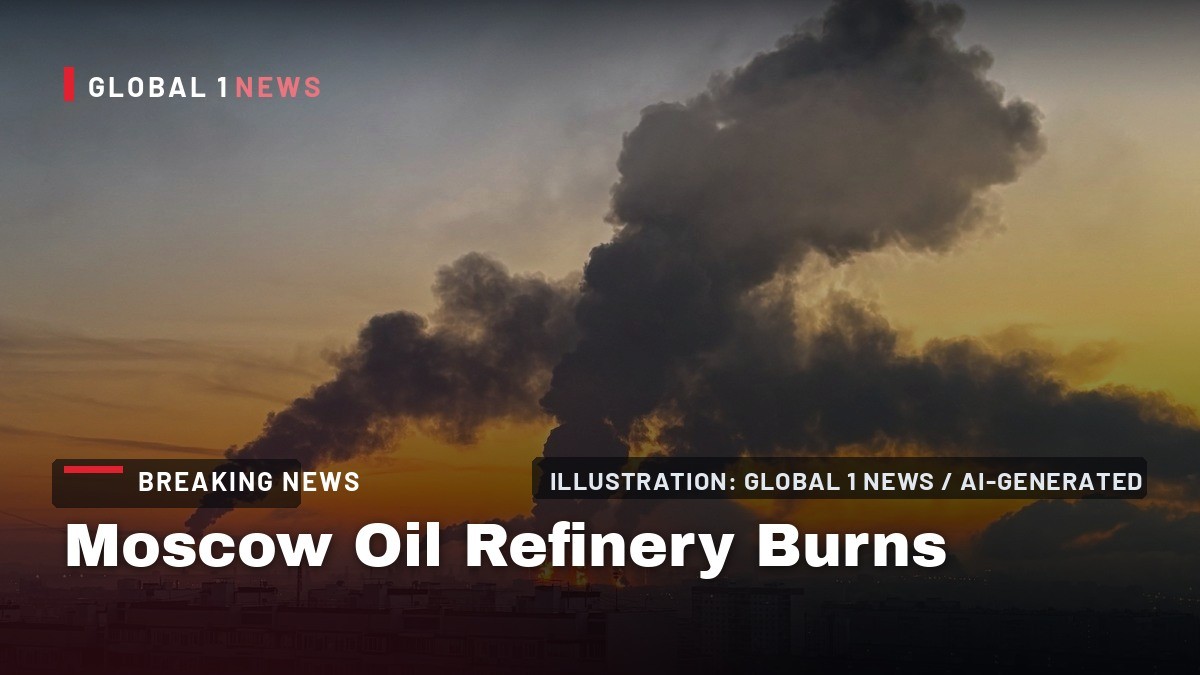
Folks, Ukraine just hit Moscow where it hurts — and it did it while Russians were still casting ballots. Two people are dead, the refinery that fuels the capital is on fire, and the mayor is calling it the largest drone attack his city has ever absorbed. Moscow says it shot down more than 1,600 drones. One of them found the target that matters.
Moscow Oil Refinery Burns as Ukraine's Largest Drone Attack on the Capital Lands on Election Day
Moscow, Russia — Ukraine launched its largest drone attack on the Moscow region to date overnight, killing two people and damaging the Moscow Oil Refinery in the Kapotnya district as Russia entered the final day of parliamentary elections, Russian authorities said Sunday. Moscow Mayor Sergei Sobyanin said air defenses downed more than 1,600 drones since Saturday, including 450 headed for the capital. Ukraine's General Staff said the strike hit the Gazprom Neft facility roughly 15 kilometers from the Kremlin. It came six days after U.S. President Donald Trump announced the two sides had agreed to stop striking each other's energy infrastructure.
The Largest Attack Moscow Has Absorbed
Sobyanin called it unprecedented, and he named the timing as the point. "The unprecedented attack was clearly planned with the aim of disrupting the elections," the mayor wrote on his Telegram channel. "The adversary failed to achieve this." He said Russia had downed "more than 1,600 drones since Saturday, including 450 headed for Moscow," and separately claimed 151 destroyed overnight, Ukrainska Pravda reported. Moscow region Governor Andrei Vorobyov said 249 Ukrainian drones were shot down over the region by Sunday morning, spread across 17 districts. The barrage forced Vnukovo, Domodedovo and Zhukovsky airports to suspend operations. Monitoring resources logged a drone-danger alert at 3:19 a.m., according to Militarnyi; by 3:51 a.m. Russian channels reported air defences engaging over the capital region, and interceptor activity continued past 5:27 a.m. Voting, the mayor's office insisted, "began as normal." Sobyanin said there were "no fatalities" — a statement that covered the city of Moscow, not the wider region where Vorobyov counted the dead.
The Refinery That Supplies the Capital
The Moscow Oil Refinery is not a peripheral target. Ukrainian officials say it processes more than 11.6 million metric tons of crude annually and supplies roughly 35 to 40 percent of the fuel needs for Moscow and up to 70 percent of the gasoline and aviation kerosene used across the wider Moscow region. Ukrainska Pravda puts its capacity at 11 million tons of oil a year. Reuters data shows the plant processed 11.6 million metric tons in 2024, producing 2.9 million tons of gasoline and 3.2 million tons of diesel. It ranks among Russia's ten largest refineries and runs more than 30 technological units, turning out AI-80EK, AI-92EK and AI-95EK gasolines, diesel, aviation kerosene, bitumen, sulfur and polymers across catalytic and thermal cracking and reforming lines. It has been targeted multiple times before, including in June. Nationwide, Ukrainian strikes have already knocked out a significant part of Russia's oil refining capacity, triggering product shortages, price increases and long queues at filling stations across the country's 11 time zones.
What Burned
Ukraine's General Staff confirmed hitting key refining units at the Gazprom Neft facility in Kapotnya. According to the General Staff, long-range strikes hit the AVT-6 primary crude processing unit, an integrated oil refining unit and an isomerization unit, sparking a large fire across the plant. Long-range Alpha drones from the Security Service of Ukraine flew more than 500 kilometers to breach Russian air defenses and reach the site. Geolocated footage verified by independent media confirmed an extensive fire, and the monitoring channel Exilenova+ published strike footage that Militarnyi cited. Independent geolocation indicated damage to a combined crude-oil processing unit known as the KUPN, as well as the ELOU AVT-6 primary distillation installation. A separate fire broke out during the attack at the Sofyino logistics technopark; the Astra Telegram channel said the "Modern Warehouse Technologies" complex of about 850,000 square metres there was fully engulfed. Traffic was blocked along Belorechenskaya Street and Kapotnya Street in southeast Moscow, Interfax reported.
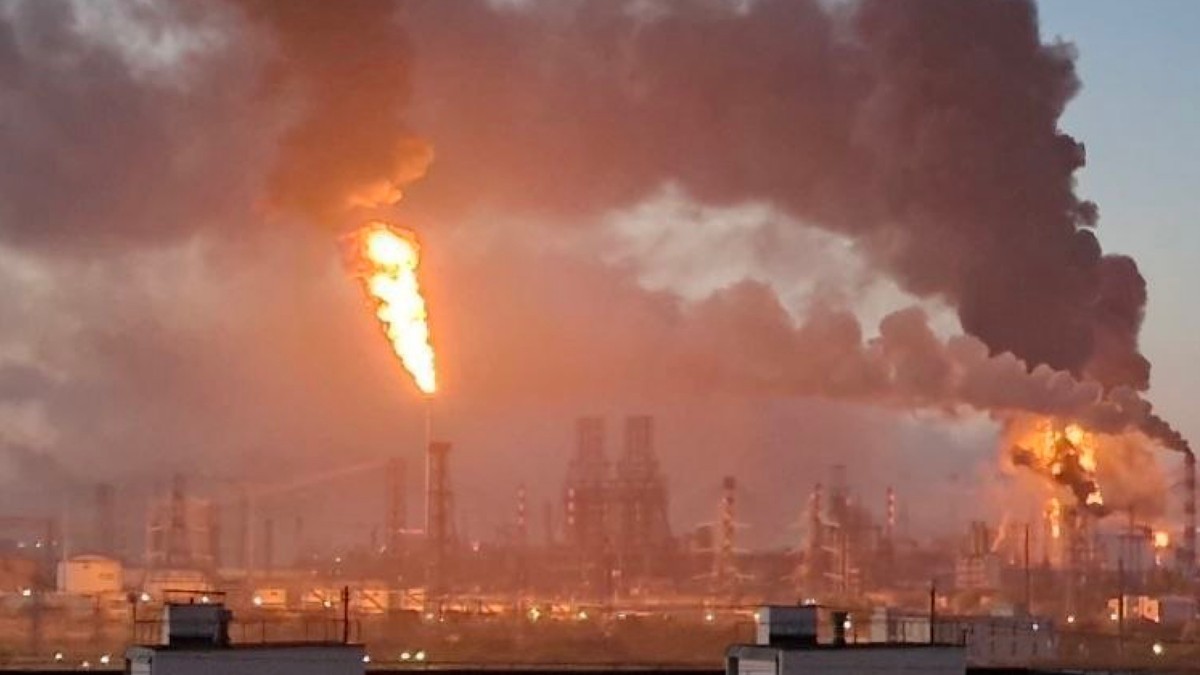
Two Dead, Six Injured, and a Blanket in the Road
By 6 a.m., Vorobyov reported two dead and six injured across the Moscow region. By mid-morning the governor's own figure had grown: medical assistance was needed by 20 people, among them three children, 15 of whom were hospitalised, with six refusing hospitalisation after treatment. The dead were identified only by age — a 74-year-old man whose private house in the Orekhovo-Zuyevo district collapsed and caught fire after a drone strike, and a 44-year-old woman killed in Sofyino, where a drone hit a three-storey apartment building and damaged six apartments, wounding three adults and two children. In Domodedovo, five were hurt, including an 11-year-old with a leg wound who did not need hospitalisation. In Lyubertsy two men suffered shrapnel wounds, one of them hospitalised. Elsewhere in the region, a man with multiple injuries was taken into surgery at Bronnitsy hospital. Reuters witnesses described a body covered in a stained blanket lying in front of a damaged apartment block in Sofyino, its upper windows blown out. "Glass went flying, people started screaming and shouting," resident Vitaliy told Reuters. In the Ramenskoye district, a drone fell on the roof of a 21-storey residential building on Severnoye Highway and the roof caught fire; 400 people, including 70 children, were evacuated, and 20 cars were damaged. Interfax reported damage to 14 multi-storey residential buildings in the Leninsky district, and BBC Russian counted more than 10 damaged in Ramenskoye alone. A blaze engulfed apartments across three floors in Kotelniki; in Istra, drone debris damaged a residential building and an enterprise, said municipal district head Tatyana Vitusheva.
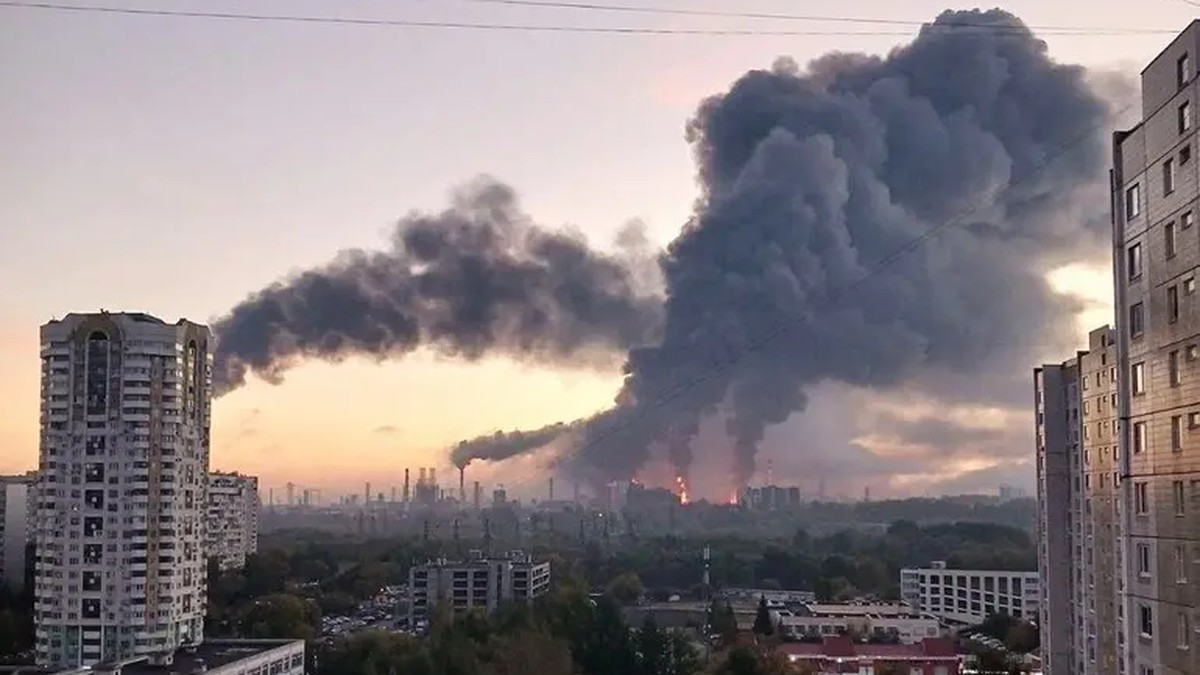
What Russia Says It Shot Down
The numbers do not agree, and each official has an interest in the one he reports. Russia's Defense Ministry said air defense forces shot down 1,110 Ukrainian UAVs over Russian regions overnight, according to a Sunday morning roundup. Sobyanin put the total higher, claiming more than 1,600 repelled at all lines, of which 450 were on approach to Moscow. Vorobyov's count for the Moscow region alone was 249. What is not in dispute is what got through: several drones reached the refinery premises, and one hit a residential building in the capital, the mayor said. Sobyanin earlier reported a hit in the Orekhovy Boulevard area; Astra said the drone came down next to a building at Borisovskiye Prudy Street, 16k2. An airport closure plan called "Carpet" was introduced at Domodedovo, 45 kilometres south of the centre, and Zhukovsky, 36 kilometres south-east; both stopped taking aircraft. Russia's Investigative Committee opened a criminal case under Article 205 of the Criminal Code — the terrorism article — over the attacks on civilian infrastructure. Behind the tally is a capital whose main fuel plant is burning, whose airports briefly closed, and whose Investigative Committee is now investigating the night as an act of terror.
Zelensky's First Pelican
Ukraine's president confirmed a first. President Volodymyr Zelensky announced that Ukrainian forces had used the domestically produced Pelican (FP-7) ballistic missile for the first time, in an overnight operation against the Moscow Oil Refinery and a logistics complex in the Russian capital. The operation was carried out jointly by the Security Service of Ukraine, the Special Operations Forces, the Unmanned Systems Forces, the Main Intelligence Directorate and the Foreign Intelligence Service. "Long-range responses worked very noticeably in the Moscow region tonight," Zelensky said. "Key oil industry and logistics facilities supporting the aggressor's war machine were hit." He did not tie individual systems to specific targets. And he aimed the result at Moscow's air-defense strategy: "Moscow should stop building layered air defense rings at the expense of other regions and instead end its cruel war and choose peace."
Flamingo Debris and a Jet Engine
Zelensky listed the weapons in play: "the FP-1, RZ-100, MICH-2000, Palianytsia, Vendetta, Liutyi, Bars, Flamingo, Sichnevyi, and Pelican systems." Ukrainian forces also targeted an enterprise in Russia's Voronezh region, he said. At the Moscow site, residents recovered debris from an unidentified missile visually resembling the FP-5 Flamingo, and one video captured the sound of a jet engine, Militarnyi reported. Its use at the site remained unconfirmed, and the outlet was explicit about that uncertainty. Zelensky referenced "the aggressor's logistics facility" in his remarks, but Ukraine's General Staff named only the refinery and did not confirm the Sofyino site. One tally is confirmed and attributed. The other is not. Both will be argued over for days.
A Vote Held Under Air-Raid Warnings
Sunday was the third and final day of voting. Russians were choosing all 450 members of the State Duma, with 39 regions also electing local legislative assemblies and eight entities holding direct elections for regional heads. Voting opened in the Far East on Friday 18 September and ran until Sunday evening. Central Election Commission head Ella Pamfilova said the vote began "according to plan, despite attempts at provocations," with first-day turnout at 25.30 percent by 8:13 p.m. Moscow time. By noon in Moscow, the number of people voting online was 100 times higher than in the 2021 State Duma election — while polling stations recorded zero in-person turnout as of noon, and access to the Gosuslugi portal stopped working from abroad. Virtual queues built up; the Moscow City Election Commission blamed attacks on the system, not pressure on voters. As of 9:00 a.m. Sunday, 45.38 percent of Russians had voted, Novaya Gazeta Europe reported. Observers reported being denied access to polling stations and detentions, and analyst Ivan Shukshin reported turnout anomalies. United Russia was expected to retain overwhelming control.
The Energy Truce That Did Not Hold
On Monday, U.S. President Donald Trump announced that Russia and Ukraine had agreed to stop striking each other's energy infrastructure. Six days later, the refinery supplying the Russian capital is on fire and two people are dead in the suburbs. Reuters reported that both sides have continued attacking each other's energy infrastructure despite the announcement. The pattern is well established. On August 28, FP-1 drones set fires at the Slavneft-YANOS refinery in Yaroslavl, the largest oil-processing site in Russia's Central Federal District, killing one person and injuring 27. Weeks earlier, on August 5, a drone raid ignited a blaze at Rosneft's Bashneft-UNPZ refinery in Ufa, more than 1,400 kilometers from Ukraine. An announced truce on energy infrastructure, in other words, has not stopped the strikes on energy infrastructure.
What to Watch
Three things. First, whether the Moscow refinery comes back to full operation, and how quickly Russia can repair the AVT-6 unit and the isomerization capacity the General Staff says was hit. Second, whether the Pelican's combat debut marks the arrival of a new class of Ukrainian weapon or a single demonstration — and whether the unconfirmed Flamingo debris turns into something more. Third, whether the energy truce Trump announced has any life left, or whether both capitals have concluded that the infrastructure war is now the war. Zelensky's own framing was blunt: "These are billions of dollars that sustain the war machine." The ballots are being counted. The fire is not out. And the refinery that fuels Moscow is the one thing in this story the Kremlin cannot spin away.
By Jessica Ali, Staff Writer
This article was produced with AI-assisted research and editorial support. Sources: Reuters, Kyiv Post, Ukrainska Pravda, BBC Russian, DW, Meduza, United24 Media, Militarnyi, Interfax, RBC, Snob, Euronews, Novaya Gazeta Europe, UNN, PolitPro.
What's Your Reaction?
 Like
0
Like
0
 Dislike
0
Dislike
0
 Love
0
Love
0
 Funny
0
Funny
0
 Wow
0
Wow
0
 Sad
0
Sad
0
 Angry
0
Angry
0

Editor-in-Chief at Global1.News. Atlanta-based journalist who cuts through the BS and tells it like it is. Lead anchor, host, and the voice you hear when the spin stops and the truth starts.











Comments (0)