
Six Suspensions and a Deleted Video: Montreal's Police Crisis Reaches the Prosecutors
Montreal's police service has suspended six officers across two stations as a misconduct file reaches prosecutors and an officer is alleged to have deleted a domestic violence victim's video evidence while his partner watched.
Montreal's police service has now suspended six officers across two neighbourhood stations, and its main misconduct file has been with the province's prosecutors since late September. What turned a misconduct scandal into a crisis of trust was a single allegation about a phone.
Six Suspensions and a Deleted Video: Montreal's Police Crisis Reaches the Prosecutors
Montreal, Canada — A police officer is alleged to have deleted a domestic violence victim's video evidence in front of his own partner. She reported it. Her supervisors, according to reporting by Radio-Canada, did not act, and she had to escalate. The Montreal news conferences at the centre of this story were conducted largely in French; quotations below are translated.
What the Allegation Says
The account was first reported by Radio-Canada, and the police service has confirmed a criminal investigation into an officer over the 2025 case without confirming the details. It begins with an emergency call from a woman in Montréal-Nord who said she had been assaulted by her partner. A male and a female officer responded together. She opened the photo album on her phone to show them video of the threats and the assault, intending to hand it over as evidence. The male officer, according to the reporting, recognised the man in the footage as her partner, then deleted the incriminating material while his colleague watched. The video dated from 2025. The female officer reported what she saw to two duty sergeants. Radio-Canada reports that her concerns were not addressed and that she had to push further up the chain. No criminal charge has been announced, and the allegations have not been tested in court.
The Timeline the Service Published
The SPVM published its own chronology on 30 October. Management learned in March 2026 of allegations against members of a team at Station 39 in Montréal-Nord, from sources inside the organisation, and opened an investigation at once. On 12 June it suspended two officers, moved three to administrative duties and relocated the rest of the team. A third was suspended on 18 June, and a fourth on 19 August. A fifth, from Station 21 downtown, was suspended on 26 August over conduct in the city centre, and a sixth on 8 September, tied to the main Station 39 file. Four of the six therefore belong to the Montréal-Nord station and two to the downtown one. There is a discrepancy the service has not explained: reports in late October described two Station 21 officers suspended over alleged humiliation of unhoused and racialised people, while the published timeline dates its two Station 21 suspensions to August and September.
The Hair, and a Unit of Sixteen
The June suspension was not a single incident. It dismantled a sixteen-member patrol unit. Two officers were suspended, three reassigned, eleven relocated, and the station has been under scrutiny since. Among the allegations that surfaced then: that officers cut locs from the hair of racialised people during interventions and kept the hair as trophies. Internal police documents described what CBC News reported as a "radicalised" subculture inside the station. A Montréal-Nord man who alleges he was beaten by officers there has said he will not file a complaint, for fear he will not be believed or that it will be turned against him. The borough has lived with these complaints for years, and the files published this week did not begin them.
What the Chief Said
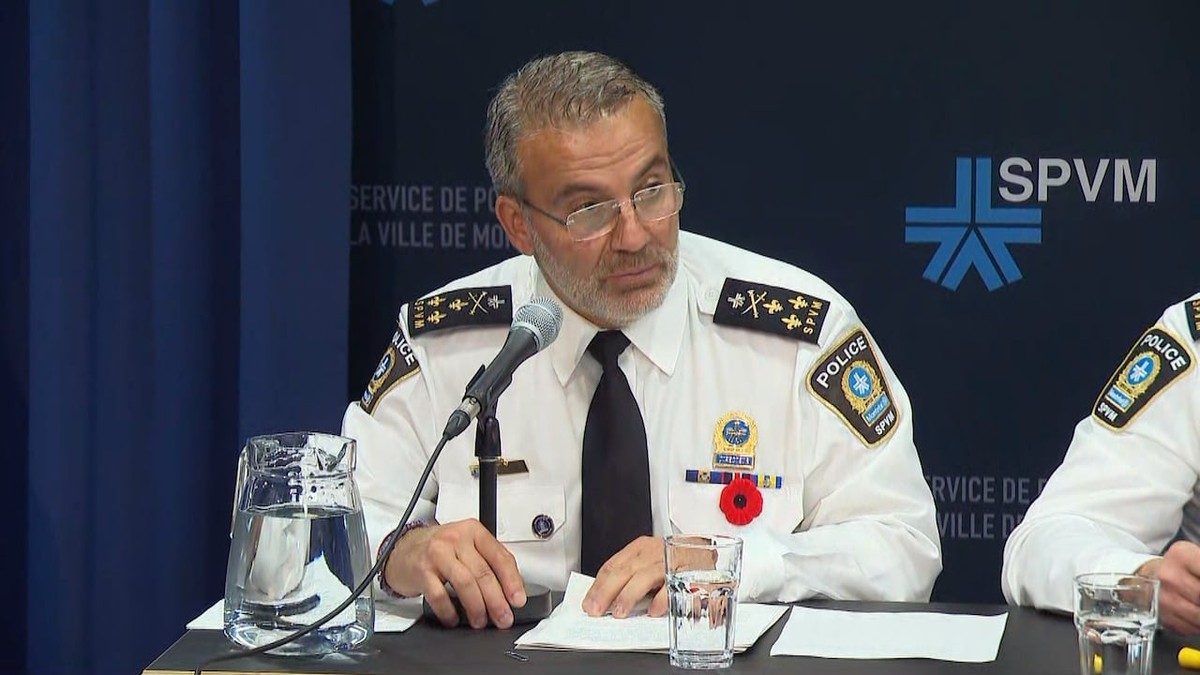
Chief Fady Dagher, who has led the service since November 2022, met reporters at headquarters on Friday and did not challenge the reporting on the deletion. "The unacceptable acts that were committed will never go unpunished," he said in the service's own release. He argued the investigations were already running long before the stories broke, and that acting faster in June was not available to him. "I wanted to do more," he said, explaining that the inquiry had to examine possible accomplices as well as individuals. He cited changes to recruitment, training, promotion and internal investigative standards, and tools that let officers report colleagues — and said "the 99 per cent responded." His sharpest line was reserved for the rest: "I will be merciless to those who intentionally and deliberately conduct themselves in a way that tarnishes the uniform."
The Mayor's Two Days
Mayor Soraya Martinez Ferrada's position moved measurably between Thursday and Friday. In an interview on Thursday, after the deletion reports, she said the chief had "an enormous number of answers to give to the citizens of Montreal today, with another episode that has just been added," and that he had a duty to restore confidence and she expected that work "in the coming days." By Friday, at a press scrum, the language had changed: "I have total confidence in a police director who wants to change that culture internally." She aimed her criticism instead at what she called the "rotten apples" resisting reform, and praised officers who denounce colleagues when they witness unacceptable behaviour. Both statements are on the record, one day apart. The gap between them is the measure of how much pressure the file has put on city hall.
The Opposition Wants Him at the Table
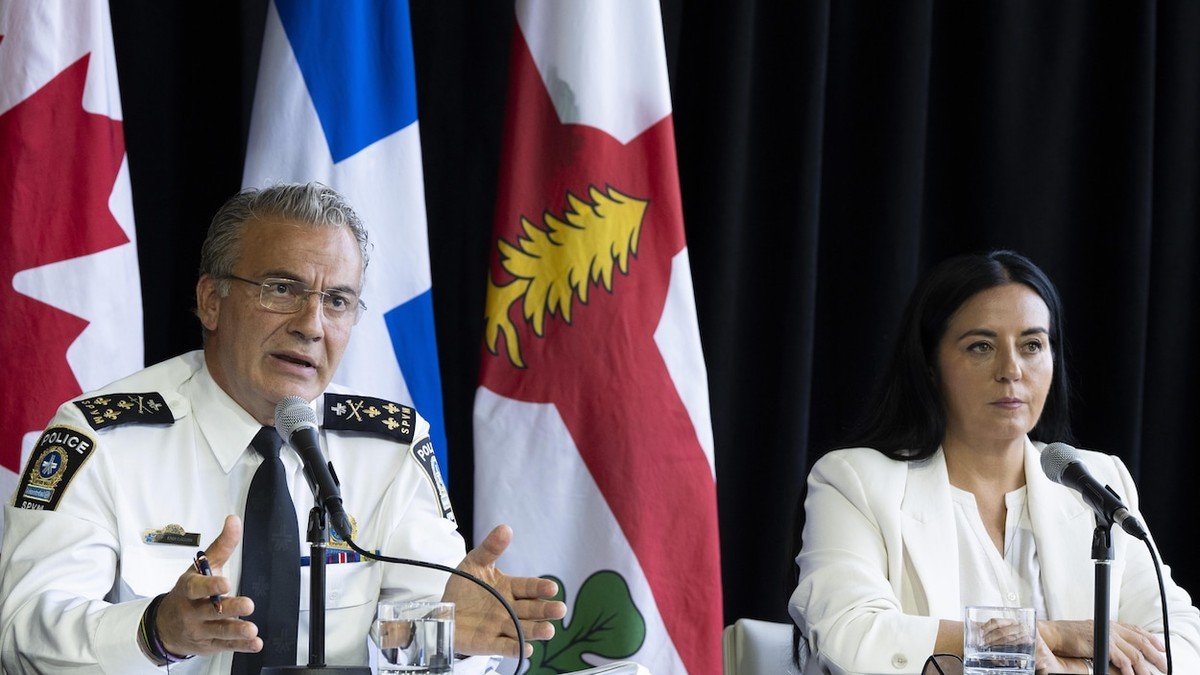
City council has approved a motion calling on Dagher to appear before it, though with amendments and no date set; the administration refused the opposition's demand that it happen within a week, arguing investigations should run their course first. Ericka Alneus, the Official Opposition leader, said the latest allegations "shatter the confidence of people in vulnerable situations who need to feel that society is behind them." In an interview she was blunter: "I'm outraged, and profoundly irritated. We need to rebuild trust, not to crush it." She has also criticised the mayor for declining to support an earlier emergency motion, and framed the stakes around the people least able to absorb a failure: "I'm thinking about all the women that are going through domestic violence." Her party's questions concern organisational culture, internal oversight and the service's capacity to correct itself.
What the Prosecutors Now Hold
Two separate tracks are now outside police hands. On 28 September the SPVM forwarded the main file on discriminatory and racist acts at Station 39 to the Director of Criminal and Penal Prosecutions, the provincial body that decides whether charges follow. Separately, the service confirmed on 29 October that an officer is under criminal investigation for alleged obstruction of justice and prevarication in the 2025 domestic violence case — "prévarication" being the civil-law term, glossed by 24 heures as a serious breach of duty by a public official rather than the English word for equivocation. The officer has been reassigned to administrative duties with no public contact. Quebec's public security minister has also ordered two investigations into a separate case, a Montreal officer alleged to have urinated on unhoused people while in uniform, which is additionally the subject of an ethics probe. None of these matters has produced a charge.
The Women Who Were Already Saying This
The organisations that work with victims were not surprised, and said so. "I know a lot of young people who tell me the police erase evidence. It is not the first time," said Anastasia Marcelin of Action Femmes Afro du Québec, a former mayoral candidate in Montréal-Nord. "Why does it always take police officers speaking for there to be consequences?" She said she has been denouncing Station 39 for eighteen years and being told she was playing the victim. Sophie Tétrault Martel, a social worker at the Centre des femmes de Longueuil, called the allegations abhorrent and said it is not rare for women to report that officers did not believe them and swept aside their evidence. The president of the regroupement of shelters for women who are victims of domestic violence, Annick Brazeau, warned about what the case does to the willingness of women to come forward at all.
The Street
About a hundred people gathered at Phillips Square on Friday evening and marched along Sainte-Catherine Street against police violence, the third such march the collective has held in three weeks. "We deplore that police forces continue to be overfunded relative to health and education," said a marcher who gave only his first name, Gabriel, with the Front de résistance autochtone populaire, which organised the demonstration; he declined to give his full name to avoid reprisals. Police were out in numbers roughly equal to the protesters, and the evening passed calmly, with the crowd dispersing by about ten o'clock. The march was small. It was also the third in three weeks: a rhythm rather than a spike. The service has acknowledged that the events of recent months have shaken public confidence; the marchers appear to have reached that conclusion some time ago.
What Comes Next, and What Is Not Established
Dagher says the service is drafting an action plan with community input, for release in late November or early December, and that more information will be made public in November. The SPVM attended a public session of the city's public security commission on 11 August and points complainants to a dedicated line. Its union, the Fraternité des policiers et policières de Montréal, said through president Yves Francoeur that it would not comment until it had reviewed the full file. What is not established matters: no finding of criminal responsibility exists, no charge has been laid, and the service has not said the failures were systemic. Roxane Milot, Quebec Solidaire's public security critic, put the unanswered question plainly — at least two stations are implicated, she said, and asked how many others. That question, not the six suspensions, is the one the next month has to answer.
By Jessica Ali, Staff Writer
This article was produced with AI-assisted research and editorial support. Sources: Service de police de la Ville de Montréal, Radio-Canada, CBC News, Le Journal de Montréal, 24 heures, Québec solidaire. Quotes from French-language news conferences are translated. Photographs: CBC; Christinne Muschi/The Canadian Press. Cover: Global 1 News editorial image.
What's Your Reaction?
 Like
0
 Dislike
0
 Love
0
 Funny
0
 Wow
0
 Sad
0
 Angry
0

Editor-in-Chief at Global1.News. Atlanta-based journalist who cuts through the BS and tells it like it is. Lead anchor, host, and the voice you hear when the spin stops and the truth starts.















Comments (0)