
Missing piece: How Taiwan can bolster Türkiye’s climate adaptation, COP31 vision
As the climate crisis tightens its grip across the Middle East, the urgency of translating lofty pledges into concrete action has never been clearer. Turkey, set to host the 31st Conference of the Parties (COP31) later this year, stands at the crossroads of this challenge.
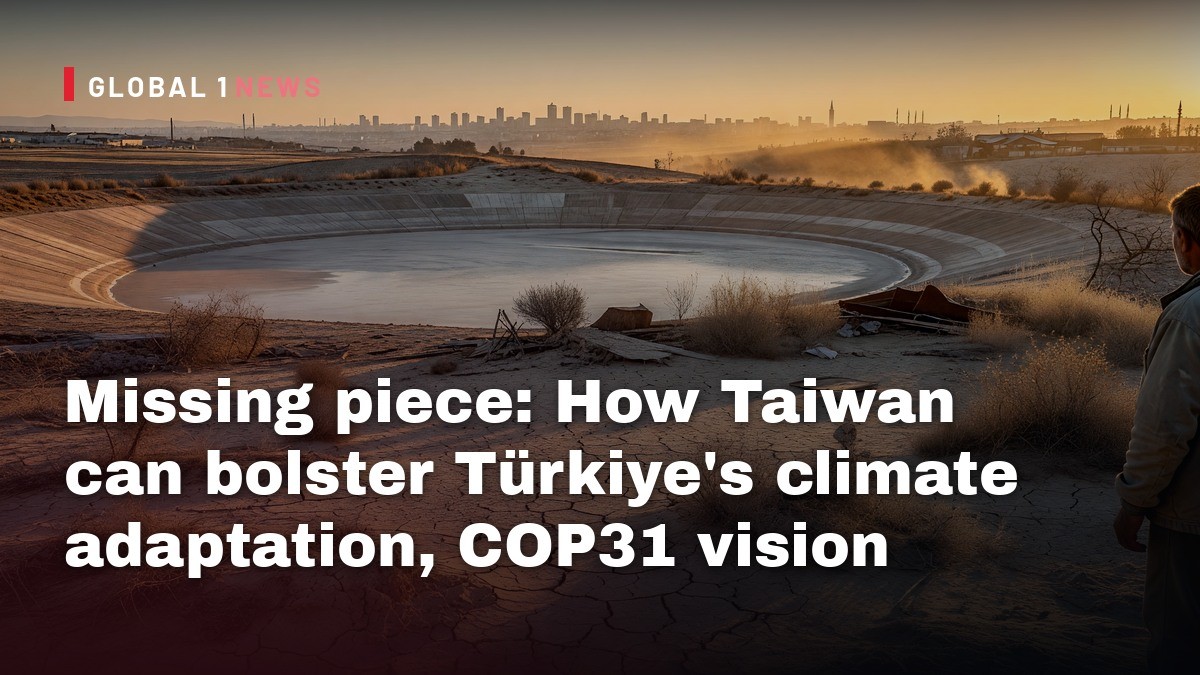
As the climate crisis tightens its grip across the Middle East, the urgency of translating lofty pledges into concrete action has never been clearer. The region, already wrestling with soaring heat waves, persistent droughts and volatile weather, now faces a dual imperative: to curb emissions while safeguarding economic stability. Turkey, set to host the 31st Conference of the Parties (COP31) later this year, stands at the crossroads of this challenge. Its industrial backbone—steel, automotive, textiles and machinery—must adapt to the European Union’s Carbon Border Adjustment Mechanism (CBAM) while confronting mounting water stress and urban heat. In this context, the island of Taiwan emerges as a potential “missing puzzle piece,” offering a tested blueprint for industrial decarbonisation, circular economy development and climate‑resilient urban planning.
Turkey’s COP31 Presidency and the Zero‑Waste Milestone
Turkey’s role as COP31 host is framed as both a historic privilege and a pressing responsibility. Central to its diplomatic narrative is the “Zero Waste” initiative, which has been elevated to a core pillar of the COP agenda for the first time. The summit’s newly adopted benchmarks call for halving municipal solid‑waste generation and raising the industrial circular‑material use rate to 15 % by 2035. This reflects a growing consensus that net‑zero targets cannot be met without a fundamental overhaul of resource consumption and industrial loops.
Yet the ambition of these targets collides with the reality of Turkey’s energy‑intensive sectors. The CBAM, now fully enforced, will impose carbon‑pricing adjustments on exported goods, compelling Turkish manufacturers to accelerate decarbonisation or risk market access penalties. Simultaneously, the Anatolian peninsula and the broader Mediterranean basin are experiencing intensified seasonal heat, water scarcity and increasingly erratic weather events. For Turkey, climate adaptation is not merely an environmental add‑on; it is essential for food security, urban livability and the competitiveness of its export‑driven economy.
Taiwan’s Decarbonisation Track Record
Taiwan’s recent greenhouse‑gas inventory, compiled under IPCC guidelines and the Paris Agreement’s Enhanced Transparency Framework, shows a steady decline in emissions. In 2024, net emissions fell by 6.59 % compared with 2005 levels, marking a third consecutive year of reduction. More striking is the 48.59 % drop in carbon‑dioxide emission intensity over the same period, suggesting that economic growth can be decoupled from carbon output. This performance offers a concrete illustration of how a manufacturing powerhouse can align industrial expansion with climate goals.
The island’s approach hinges on transparent, verifiable outcomes that translate international standards into domestic policy. By embedding rigorous measurement and reporting mechanisms, Taiwan has built a credible foundation for future climate finance and cross‑border carbon pricing arrangements—an aspect that could inform Turkey’s navigation of the CBAM and its own emerging carbon‑pricing instruments.
Circular Economy as an Engine of Competitiveness
Taiwan’s transformation of zero‑waste principles into a high‑value industrial sector is a cornerstone of its climate strategy. Legislative reforms to the Resource Circulation Promotion Act and the Waste Disposal Act have instituted a full life‑cycle approach, emphasising source prevention, eco‑design, product longevity and recycling. The outcome is a vibrant ecosystem of 69 publicly listed circular‑economy enterprises, collectively generating annual revenues exceeding NT$1 trillion (approximately US$31 billion). These firms span sectors from functional textiles derived from recycled PET to the recovery of precious metals from electronic waste, showcasing how circularity can reinforce supply‑chain resilience and green competitiveness.
For Turkey, which aims to achieve a 15 % circular‑material use rate by 2035, Taiwan’s model provides a roadmap for scaling up domestic circular‑economy firms. By fostering public‑private partnerships that link waste streams to high‑added‑value products, Turkey could simultaneously reduce landfill pressures, lower raw‑material imports and create new export niches aligned with global sustainability standards.
Carbon Pricing Mechanisms and Financial Innovation
In 2026, Taiwan introduced a carbon fee system that generated NT$4.97 billion in its first year. Crucially, the revenue is earmarked for a dedicated Greenhouse Gas Management Fund rather than general taxation. This fund offers credit guarantees and interest subsidies to stimulate private investment in clean technologies, thereby lowering the financial barriers to industrial transition. Taiwan is also advancing a cap‑and‑trade scheme (TW‑ETS), and its carbon fee mechanism has been recognised under the United Kingdom’s CBAM list, underscoring its compatibility with emerging cross‑border carbon‑pricing regimes.
These mechanisms illustrate a pragmatic pathway for Turkey to design a domestic carbon‑pricing framework that aligns with international market expectations. By directing carbon‑fee proceeds toward targeted climate‑finance tools—such as guarantees for renewable‑energy projects or subsidies for energy‑efficient retrofits—Turkey could mitigate the competitive shock of the EU CBAM while fostering a domestic green‑tech sector.
Smart Urban Adaptation: The National Green Canopy Programme
Taiwan’s “National Green Canopy Programme” tackles heat‑wave risks through a blend of high‑resolution LiDAR mapping, 3D digital twins and a dense network of urban microclimate sensors. This system identifies heat‑island hotspots with surgical precision and guides the creation of interconnected green corridors designed to lower ambient temperatures. The programme is calibrated for extreme‑temperature scenarios of up to 40 °C (104 °F), reflecting a forward‑looking stance on climate‑induced urban stress.
For Turkish megacities such as Istanbul, Ankara and Izmir—already grappling with longer, hotter summers—adopting a similar data‑driven green‑infrastructure strategy could enhance urban resilience. By integrating green corridors, reflective surfaces and sensor‑driven microclimate management, Turkish municipalities can mitigate heat‑related health risks, reduce energy demand for cooling and improve overall livability.
Ensuring a Just Transition
Equity remains a central pillar of Taiwan’s climate agenda. The island has embedded a “Just Transition” clause within its statutory framework, channeling funds from the Greenhouse Gas Management Fund to support workers and communities affected by industrial restructuring. This approach aligns with UNFCCC principles and underscores the importance of social safeguards alongside technological change.
Turkey’s own transition will inevitably reshape labour markets, particularly in carbon‑intensive sectors. Drawing on Taiwan’s experience, Turkish policymakers could design compensation schemes, retraining programmes and community investment funds that cushion the socioeconomic impacts of decarbonisation, thereby maintaining social cohesion and political support for ambitious climate policies.
Strategic Implications for Regional Climate Diplomacy
The convergence of Turkey’s COP31 leadership, the EU CBAM, and Taiwan’s proven climate‑action toolkit creates a strategic opening for broader Middle‑East cooperation. By positioning Taiwan as a technical partner, Turkey can showcase a model of South‑South knowledge exchange that complements traditional North‑South climate finance flows. This collaboration could also signal to Gulf states and other regional actors that pragmatic, technology‑driven pathways to decarbonisation are achievable without sacrificing industrial growth.
In a region where Sunni‑Shia competition, great‑power rivalry and energy security intersect, the ability to present a credible, implementable climate agenda strengthens diplomatic leverage. Turkey’s success in translating Taiwan’s circular‑economy and carbon‑pricing lessons into tangible outcomes at COP31 could enhance its standing as a climate‑leadership hub, attracting further investment and fostering a more resilient, low‑carbon Middle East.
This article was produced with AI-assisted research and editorial support. Reporting is based on the source material cited below. Sources: Daily Sabah Middle East; dailysabah.com; Global1.News (29 October 2026).
By Malik Hassan, Staff Writer
What's Your Reaction?
 Like
0
 Dislike
0
 Love
0
 Funny
0
 Wow
0
 Sad
0
 Angry
0

Middle East Correspondent at Global1.News. Based in Beirut, covering politics, conflict, energy, and society across the Middle East. Brings context and depth to a region often reduced to headlines.












Comments (0)