
The AI start-ups fixing India's broken roads and messy land records
India’s rapid urbanisation and sprawling bureaucracy have produced a unique set of challenges that are now being tackled by a new wave of artificial‑intelligence start‑ups.
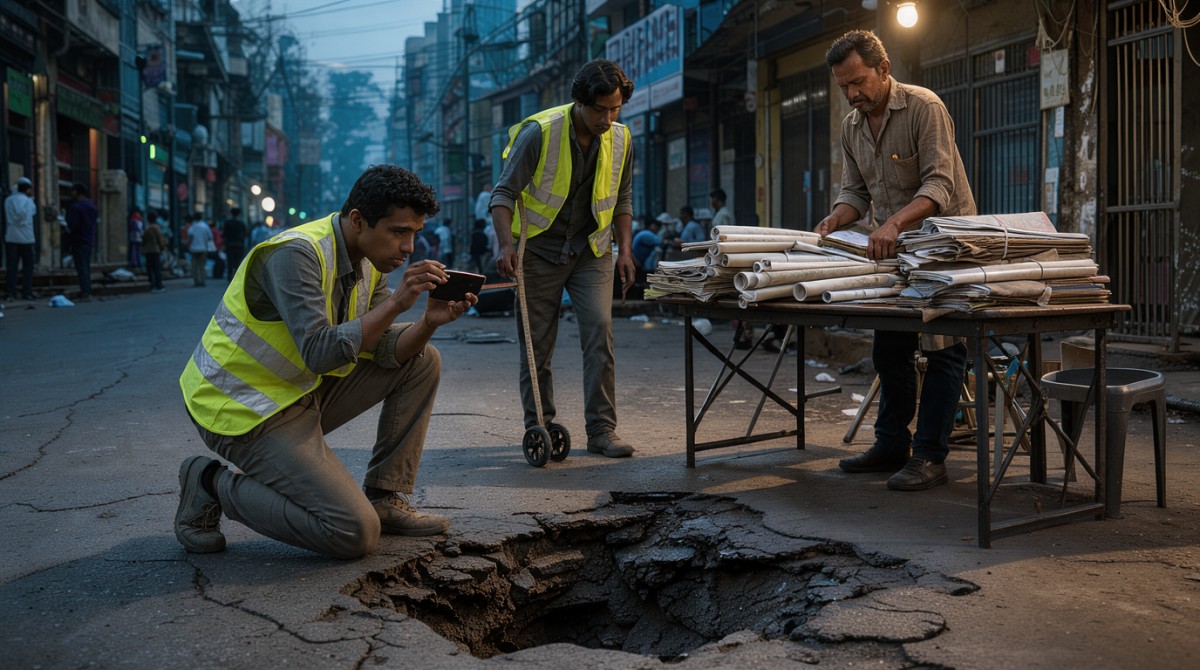
India’s rapid urbanisation and sprawling bureaucracy have produced a unique set of challenges that are now being tackled by a new wave of artificial‑intelligence start‑ups. From fragmented land‑record systems to pothole‑ridden streets, these firms are applying AI not to chase global research breakthroughs but to stitch together the country’s massive, multilingual data sets and deliver practical, low‑cost solutions for everyday citizens. Their stories illustrate both the promise of technology‑driven reform and the structural obstacles that still hamper large‑scale impact.
From a personal grievance to a national platform
In 2020, Sanjay Mandava travelled from Chicago to Chennai to resolve a family land dispute. The process required him to chase a dozen separate documents across multiple government offices, because a simple sale deed did not satisfy India’s “presumptive titling” system. In this model, the buyer must prove ownership, often by presenting building certificates, tax receipts and survey maps in addition to the deed. Frustrated by the inefficiency, Mandava founded Landeed, an AI‑driven platform that aggregates fragmented land records from state revenue departments, registration offices, survey authorities and municipal databases.
Landeed now links registered properties to official land‑identification numbers and ownership records across 24 states. An AI layer reads titles, extracts key information and flags inconsistencies within minutes—a task that traditionally takes lawyers and brokers several days. With a repository of roughly 1.8 billion documents, the service is already used by millions of individual and enterprise customers for real‑estate transactions, positioning it as the largest title‑data hub in the country.
AI for road maintenance: turning dash‑cams into civic tools
Urban infrastructure in India suffers from chronic pothole problems, a menace that has become a daily inconvenience for commuters. Bengaluru‑based developer Gaurav Sen has leveraged AI vision models, dash‑cam footage and satellite navigation to create an app that detects road damage in real time. The system not only maps potholes but also identifies the responsible municipal officials and forwards the data to them, enabling faster repairs.
Sen notes that municipal corporations can deploy the app on public buses and taxis to maintain an up‑to‑date map of road conditions. At the time of reporting, at least half a dozen similar offerings existed, each aiming to crowdsource road‑damage data for authorities across the country. While the technology has attracted viral attention, its commercial viability remains limited by the need to scale data collection and integrate with fragmented municipal workflows.
Healthcare AI: simplifying lab reports and tracking disease trends
In Mumbai, listed AI firm Fractal Analytics has introduced “Vaidya,” an application deployed in municipal hospitals. Vaidya provides citizens with AI‑generated, simplified summaries of laboratory results in multiple languages, helping patients understand their health data without specialist interpretation. The app also suggests nearby facilities based on the user’s needs and offers doctors pre‑consultation support, such as a concise medical history and medication overview.
Beyond individual care, Vaidya aggregates anonymised lab data to produce a public‑health dashboard for hospital administrators. This dashboard highlights emerging infection patterns and disease trends, giving authorities early visibility into potential outbreaks. The initiative illustrates how AI can bridge language barriers and improve public‑health monitoring in a cost‑sensitive environment.
Funding surge amid a cautious broader market
According to start‑up information platform Inc42, AI start‑ups in India have seen funding rise by 265 percent year‑on‑year, with more than $1 billion raised in the first nine months of 2026. This influx occurs despite a generally muted fundraising climate for the wider start‑up ecosystem, underscoring investor confidence in AI applications that address uniquely Indian problems.
Nevertheless, founders report difficulty moving beyond pilot projects. The cost of building AI solutions in India often exceeds what domestic customers are prepared to pay, a point highlighted by Fractal Analytics co‑founder Srikanth Velamakanni. While computing power requirements are identical worldwide, American customers typically have a larger paying capacity, creating a pricing gap that Indian firms must navigate.
Hardware scarcity and the GPU bottleneck
Access to high‑performance GPUs—a critical component for training and running AI models—remains a major constraint for Indian start‑ups. Mandava describes a “hellish” struggle to acquire sufficient chips, even as the government’s AI mission promises 38,000 GPUs to the sector. Demand far outstrips supply, forcing companies to compete for limited hardware and often to rely on expensive foreign imports.
This scarcity not only inflates development costs but also slows iteration cycles, limiting the ability of start‑ups to refine models and expand services. The hardware bottleneck, combined with the need for multilingual data processing, underscores why many Indian AI firms focus on downstream applications rather than frontier model research.
Regulatory and talent challenges
Beyond hardware, cumbersome regulation and bureaucratic inertia hinder scaling. Start‑ups must navigate complex approval processes to secure government contracts, a hurdle that can stall projects even after successful pilots. Additionally, there is a shortage of experienced AI talent within the country, compelling firms to rely on a limited pool of engineers and data scientists.
These systemic issues risk producing “shallow solutions” that could be quickly superseded by more sophisticated offerings from global players. As Sen remarks, a company like Google might dismiss a pilot as insufficiently robust, suggesting that lasting impact will require deeper technical sophistication and stronger institutional support.
The path forward: policy support and sustainable growth
Founders across the sector agree that government intervention should focus on enabling rather than protecting. Mandava calls for policies that provide reliable access to GPUs, streamline regulatory approvals and foster talent development, while avoiding protectionist measures that could isolate Indian innovators from global competition.
In the meantime, the AI start‑up ecosystem continues to demonstrate ingenuity by adapting cutting‑edge technology to India’s fragmented data landscape. From Landeed’s title‑verification engine to Sen’s pothole‑mapping app and Fractal’s health‑dashboard, these ventures illustrate how AI can be harnessed to resolve everyday problems that affect millions. Their progress will depend on whether India can align hardware supply, regulatory clarity and skilled human capital with the entrepreneurial drive that is already reshaping the nation’s digital frontier.
This article was produced with AI-assisted research and editorial support. Reporting is based on the source material cited below. Sources: BBC News Asia; bbc.co.uk; Global1.News (17 November 2026).
By Kenji Tanaka, Staff Writer
What's Your Reaction?
 Like
0
 Dislike
0
 Love
0
 Funny
0
 Wow
0
 Sad
0
 Angry
0

Japan Correspondent at Global1.News. Tokyo-based voice covering Japanese politics, technology, economy, and culture. Tracks the intersection of tradition and innovation in one of the world's most dynamic societies.















Comments (0)