
Xi, Trump and Putin Meet in Shenzhen for Historic Three‑Way Summit
In a development that could reshape global diplomacy, the Asia‑Pacific Cooperation Summit convened in Shenzhen, China, this week to host an unprecedented three‑way meeting between Chinese President Xi Jinping, U.S.
In a development that could reshape global diplomacy, the Asia‑Pacific Cooperation Summit convened in Shenzhen, China, this week to host an unprecedented three‑way meeting between Chinese President Xi Jinping, U.S. President Donald Trump and Russian President Vladimir Putin. The gathering, captured in a CNN video report released on 18 November 2026, marks the first time the leaders of these three nuclear powers have sat together at a single summit. As the cameras rolled, the three heads of state exchanged greetings, setting the stage for what President Trump described as a chance to discuss “reducing nuclear arsenals and ending the wars in Ukraine and Iran.” The significance of this encounter cannot be overstated, and the implications for international security, regional alliances and the future of multilateral negotiations are already the subject of intense analysis.
Backdrop of the Shenzhen Summit
The Asia‑Pacific Cooperation Summit, held annually to foster dialogue among major powers in the region, chose Shenzhen as its venue this year. The city, known for its rapid economic growth and status as a technology hub, provided a symbolic backdrop for a meeting that many observers are calling a watershed moment in great‑power diplomacy. By convening in China, the summit underscored Beijing’s ambition to position itself as a central convenor of high‑level talks, a role it has been cultivating through initiatives such as the Belt and Road and various regional security forums.
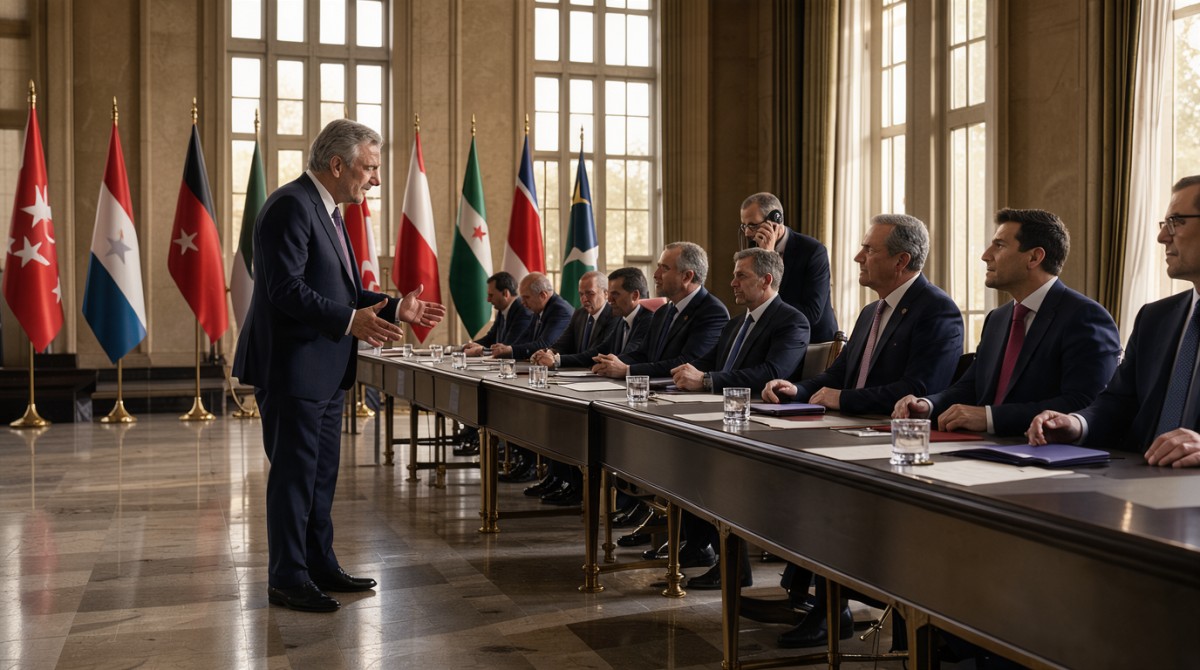
While the summit’s agenda covered a broad range of economic and security topics, the headline attraction was the three‑way dialogue among Xi, Trump and Putin. The CNN footage shows the three leaders greeting each other on the stage, a scene that will likely be replayed in newsrooms worldwide for weeks to come. The visual of the three presidents together signals a willingness, at least on the surface, to engage directly on issues that have long been points of contention between Washington, Moscow and Beijing.
For President Trump, the meeting offered a platform to advance his stated priorities of nuclear reduction and conflict resolution. In remarks captured in the video, he emphasized a desire to “discuss reducing nuclear arsenals and ending the wars in Ukraine and Iran.” Those objectives align with long‑standing U.S. concerns about nuclear proliferation and regional instability, but the presence of both the Chinese and Russian presidents adds layers of complexity to any potential agreements.
Trump’s Nuclear Reduction Agenda
President Trump’s call for discussions on reducing nuclear arsenals reflects a broader, bipartisan interest in curbing the risks associated with the world’s largest stockpiles of nuclear weapons. While the United States and Russia retain the bulk of the global arsenal, China’s growing capabilities have increasingly entered the conversation. By bringing the issue to the Shenzhen summit, Trump signaled a willingness to address nuclear policy in a multilateral context rather than relying solely on bilateral arms‑control talks that have stalled in recent years.
The CNN report does not detail specific proposals, but the mere inclusion of nuclear reduction on the agenda suggests that the three leaders may explore confidence‑building measures, such as enhanced transparency or limited caps on certain delivery systems. Such discussions could lay groundwork for future treaties, even if immediate breakthroughs are unlikely. The presence of President Xi, whose nuclear doctrine emphasizes a “no first use” policy, could provide a stabilizing influence, while President Putin’s track record of strategic arms negotiations adds a further dimension of expertise.
Critically, the summit’s setting in Shenzhen may allow for more informal, back‑channel dialogue than formal treaty negotiations typically permit. This environment could foster candid exchanges about the risks of accidental escalation, the need for robust communication hotlines, and the potential for joint exercises aimed at de‑escalation. While the video does not reveal the depth of these talks, the fact that nuclear reduction was highlighted by the U.S. president indicates that the issue will remain on the diplomatic radar in the weeks ahead.
Addressing the Ukraine Conflict
One of the most pressing items on President Trump’s agenda was the war in Ukraine, a conflict that has persisted since Russia’s invasion in 2022. The CNN footage notes that Trump expressed a desire to discuss “ending the wars in Ukraine.” By bringing this issue to a three‑way summit that includes President Putin, the United States signaled an openness to direct dialogue with Moscow, potentially bypassing traditional diplomatic channels that have been fraught with mistrust.
While the video does not reveal any concrete proposals, the inclusion of Ukraine in the summit’s discourse suggests that President Trump may be seeking a pathway to negotiate a ceasefire or a political settlement. The presence of President Xi could also be pivotal, as China has maintained a position of neutrality while urging diplomatic solutions. Beijing’s influence over Moscow, particularly in economic and strategic realms, might be leveraged to encourage concessions or at least to open a channel for compromise.
Analysts will be watching closely for any signs that the three leaders move beyond rhetoric to concrete steps, such as establishing a joint working group on Ukraine or agreeing to a phased withdrawal of Russian forces. Even absent immediate breakthroughs, the summit’s very act of bringing the conflict to a multilateral forum could reshape the diplomatic calculus, signaling to Kyiv and Moscow alike that the international community remains engaged and that new avenues for negotiation are being explored.
The Iran Question
In addition to Ukraine, President Trump highlighted the desire to end “the wars in … Iran.” While the phrasing is ambiguous, it likely references the ongoing tensions surrounding Iran’s nuclear program, regional proxy conflicts, and the broader U.S. strategy of containment. By raising Iran at a summit that includes both China and Russia—countries that have historically opposed harsh sanctions on Tehran—the United States may be probing for a coordinated approach to de‑escalate regional volatility.
China and Russia have both advocated for diplomatic solutions to Iran’s nuclear issue, often emphasizing the importance of the Joint Comprehensive Plan of Action (JCPOA) framework. Their presence at the summit could provide President Trump with an opportunity to explore whether a revised, multilateral agreement could be fashioned, one that addresses U.S. concerns while accommodating the strategic interests of Beijing and Moscow.
Moreover, the inclusion of Iran in the summit’s agenda underscores the interconnected nature of global security challenges. A resolution—or even a partial de‑escalation—in Tehran could have ripple effects on the broader Middle East, influencing the dynamics of proxy wars, oil markets and the strategic calculations of regional powers. The video’s brief mention of Iran thus hints at a potentially broader diplomatic initiative that could extend beyond the immediate confines of the Asia‑Pacific region.
Geopolitical Implications of the Three‑Way Dialogue
The convergence of the United States, China and Russia at a single summit carries profound geopolitical weight. Historically, the three nations have found themselves on opposite sides of major security debates, from the Cold War standoff to contemporary trade disputes. Their joint appearance in Shenzhen suggests a tentative willingness to engage in a more collaborative, if cautious, diplomatic framework.
One immediate implication is the signaling effect to allies and adversaries alike. For U.S. partners in NATO and the Indo‑Pacific, the summit may raise questions about the United States’ commitment to traditional security arrangements, especially if the three leaders pursue initiatives that sideline existing alliances. Conversely, for China and Russia, the meeting offers a platform to showcase their roles as responsible stakeholders willing to discuss nuclear reduction and conflict resolution, potentially bolstering their diplomatic standing on the world stage.
Another dimension is the potential for the summit to serve as a venue for broader discussions on economic cooperation, technology standards and climate change—issues that, while not highlighted in the CNN video, are typically on the agenda of the Asia‑Pacific Cooperation Summit. The presence of all three presidents could facilitate agreements that intertwine security and economic interests, such as joint infrastructure projects or coordinated sanctions relief, thereby deepening interdependence and reducing the likelihood of future confrontations.
Looking Ahead: What Comes After Shenzhen
The immediate aftermath of the Shenzhen summit will be closely monitored by diplomats, analysts and the global public. While the CNN footage provides only a snapshot of the leaders greeting each other and outlines President Trump’s stated priorities, the real test will be whether substantive follow‑up actions emerge. Expect to see official communiqués from the summit’s host nation, statements from the White House and the Kremlin, and perhaps the establishment of working groups or task forces to tackle the highlighted issues.
In the short term, the United States is likely to pursue bilateral talks with both China and Russia to flesh out the broad themes discussed at the summit. The emphasis on nuclear reduction may translate into renewed proposals for arms‑control negotiations, while the focus on Ukraine and Iran could lead to coordinated diplomatic initiatives, possibly involving other regional actors. The Chinese government, for its part, may leverage its role as host to position itself as a mediator, offering its “peaceful development” narrative as a bridge between the competing interests of Washington and Moscow.
Ultimately, the Shenzhen meeting represents a rare moment of direct, high‑level engagement among the three most powerful nuclear states. Whether that moment evolves into a durable framework for cooperation or remains a symbolic gesture will depend on the willingness of each side to move beyond rhetoric and embrace concrete, verifiable steps. As Global1.News continues to track the developments stemming from this historic summit, one thing is clear: the world is watching, and the stakes could not be higher.
By Jessica Ali, Staff Writer
This article was produced with AI-assisted research and editorial support. Reporting is based on the source material cited below. Sources: CNN video report (18 November 2026); CNN; Global1.News
What's Your Reaction?
 Like
0
 Dislike
0
 Love
0
 Funny
0
 Wow
0
 Sad
0
 Angry
0

Editor-in-Chief at Global1.News. Atlanta-based journalist who cuts through the BS and tells it like it is. Lead anchor, host, and the voice you hear when the spin stops and the truth starts.











Comments (0)