
Mexico and Washington Sprint for a Trade Deal Before the Midterms
Mexico and the United States are racing to reach an interim bilateral trade deal before the Nov. 3 midterm elections, with relief from Section 232 tariffs on steel, aluminum and autos on the table after Canada's talks with Washington collapsed.
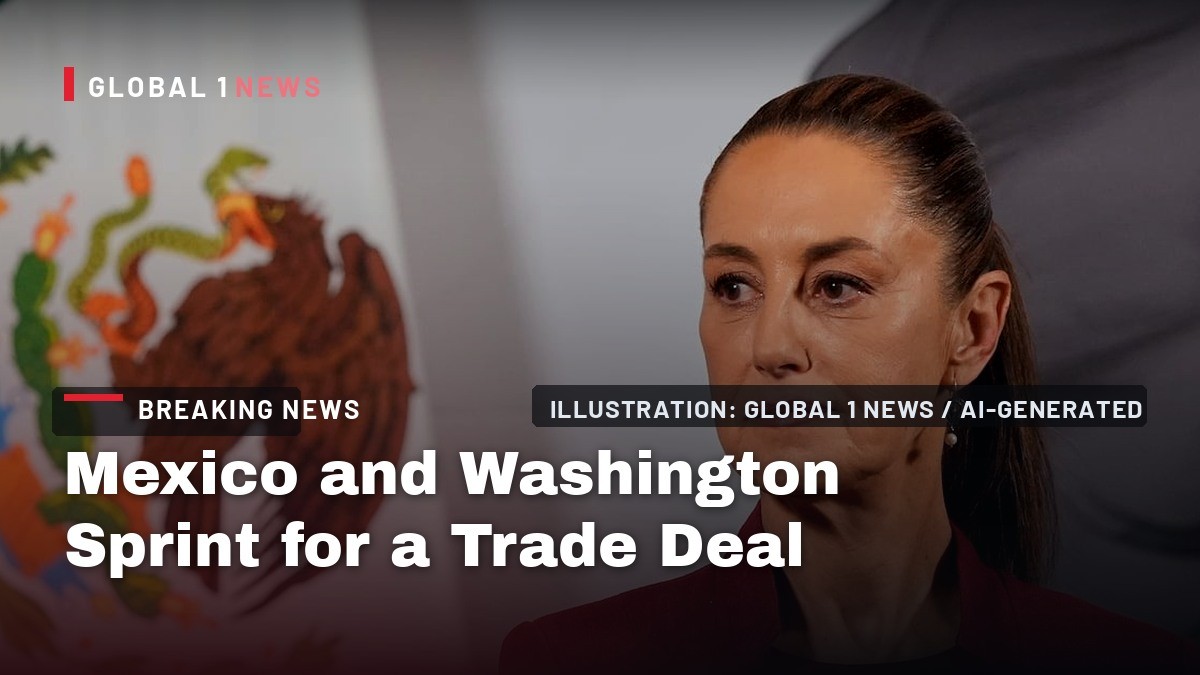
Mexico and the United States are racing to reach a bilateral trade deal before the U.S. midterm elections in less than eight weeks, according to six sources in both countries familiar with the talks, an effort made more urgent by the collapse of Canadian negotiations with Washington.
The negotiations aim at an interim bilateral bargain under which Mexico could win relief from some U.S. tariffs while addressing U.S. demands on automotive content and Chinese investment. No formal deadline exists, but officials in both countries see political benefits in a deal before the Nov. 3 elections.
Mexico and Washington Sprint for a Trade Deal Before the Midterms
Mexico City and Washington — Nothing is signed and no deadline is formal, but the shape of the bargain is already visible: relief from the Section 232 metals and automotive duties in exchange for movement on American content requirements and on Chinese investment in Mexico.
The Eight-Week Window
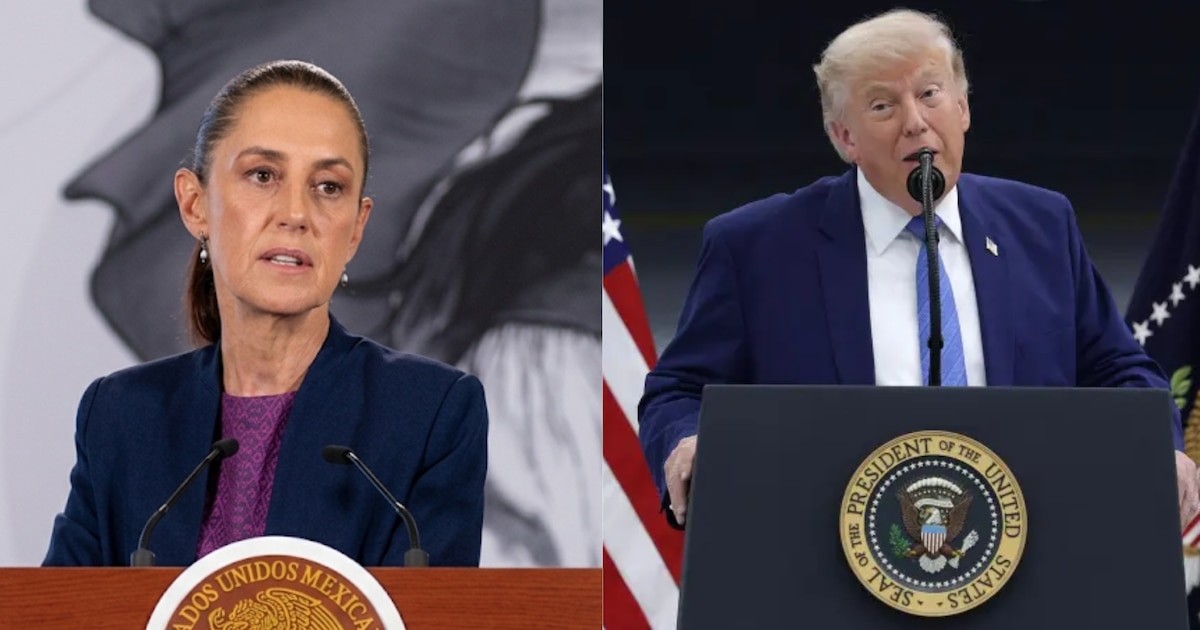
Officials in both capitals describe a sprint rather than a scheduled process. No formal deadline governs the talks, but both governments see political upside in concluding an accord before the Nov. 3 midterms, when U.S. President Donald Trump's Republican Party risks losing control of Congress. An agreement would let both leaders tout a win as they face domestic political challenges.
"We both want to reach a deal before the midterms," said one Mexico-based source, who spoke on condition of anonymity to discuss private talks.
"Time is of the essence for the Mexican government," the same source said, citing concerns over a weak economy and falling credit ratings on its debt. The source added that Mexican President Claudia Sheinbaum's administration, which this week presented its 2027 budget, views a U.S. trade deal as critical to reassuring markets and investors.
A spokesperson for Mexico's economy ministry said, "There are no specific deadlines at this time," stressing the government's ongoing commitment to dialog with Washington. The U.S. Trade Representative and the White House did not immediately respond to a request for comment.
What Mexico Wants Off the Table
The central hurdle is the so-called Section 232 tariffs on steel, aluminum, automobiles and auto parts. Under those national security tariffs, Mexican and Canadian steel exported to the United States faces tariffs of 50 per cent, while vehicles are subject to a 25 per cent duty.
Trump has since negotiated lower auto tariffs for other trading partners, including 15 per cent for Japan, the European Union and South Korea, and 10 per cent for Britain — leaving some vehicles from those countries facing lower duties than cars shipped from Mexico and Canada.
Mexico's exposure is not uniform. Around 85 per cent of Mexican exports that comply with USMCA rules of origin keep zero tariffs in the United States. The remainder faces the metals and automotive duties in full.
Sheinbaum has also flagged the breadth of Washington's asks. She recalled that the U.S. presented a list of 54 non-tariff barriers that form part of the trade talks, and said Mexico will not accept conditions that affect its sovereignty. She said U.S. tariffs on steel, aluminum and autos are "injusta" — unjust — and are affecting Mexico's economy.
Mexico's stated objectives are to reduce tariffs currently applied to steel, aluminum and automobiles and to prevent the U.S. from imposing new tariffs on Mexican products, after Washington floated a new round of tariffs on various countries under the "overcapacity" argument. Mexico is willing to advance on issues that can be resolved through agreements, but not on matters related to national sovereignty.
The Framework Automakers Are Watching
Before negotiations collapsed last month, Canada appeared close to a breakthrough with Washington on Section 232 tariffs and other trade issues, raising hopes Mexico could quickly secure similar terms.
Several automakers believe Washington could ultimately offer Mexico the same framework discussed with Canada: a 15 per cent tariff on vehicle imports, plus an additional reduction for U.S. content, bringing the effective tariff rate to around 7 per cent.
In return, Mexico is expected to give ground on U.S. demands for greater American content in vehicles, particularly engines, electronics and software, a second Mexico-based source said. While Mexico opposes explicit U.S. content requirements, "that doesn't mean it won't be working on something to help increase the U.S. content," the source said, adding that the final shape of such a compromise is "the big question."
The content question sits alongside existing regional rules. USMCA auto rules of origin require 70 per cent regional value content from July 1, 2027, and vehicle producers must certify that 70 per cent of their steel and aluminum purchases by value are sourced from North America. Mexico alone exports a third of the cars covered by the Section 232 automotive tariffs, while Canada and Mexico together account for more than half of all U.S. auto-parts imports.
Washington's Other Demand: Chinese Investment
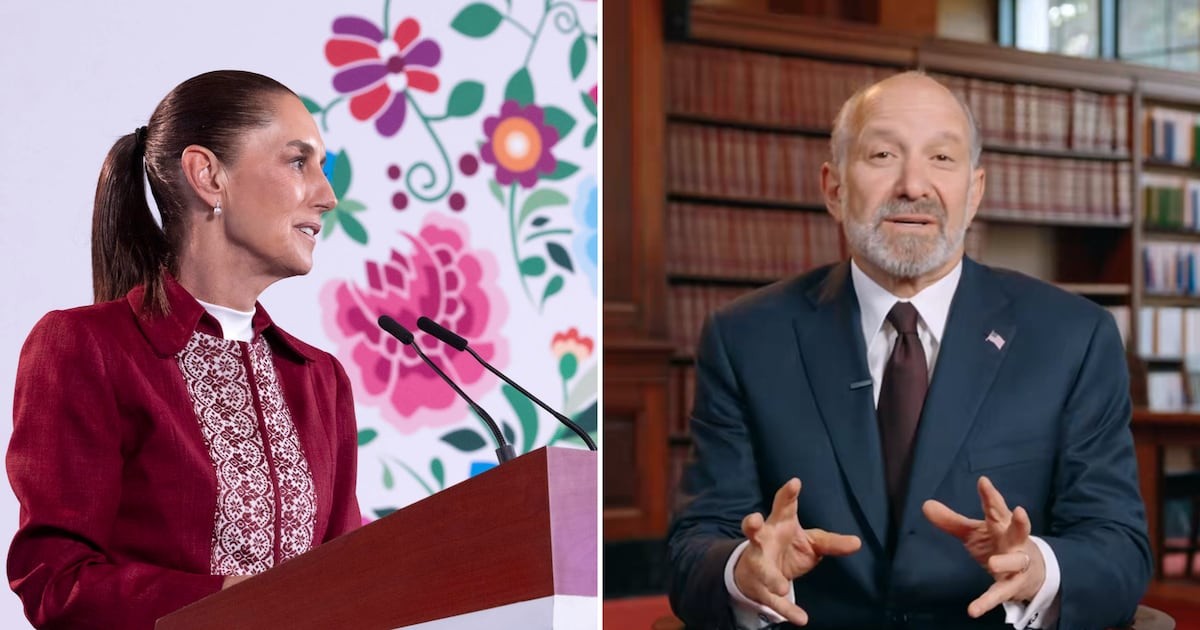
U.S. Commerce Secretary Howard Lutnick met virtually with Sheinbaum on Thursday about trade. The meeting, originally scheduled in person, came less than two weeks after Sheinbaum proposed legislation giving the government new powers to review and block foreign acquisitions of Mexican companies.
The measure — an investment-screening regime similar to those in the U.S. and Canada — is widely seen as a response to U.S. pressure for closer scrutiny of Chinese investment. El Financiero reported that Lutnick had been expected to travel to Mexico City on Wednesday to meet Sheinbaum and Ebrard amid Washington's tariff pressure on Mexican products.
Economy Secretary Marcelo Ebrard, who was present at the virtual exchange, wrote that the conversation was cordial and estimated it "será muy útil" — will be very useful — for the trade negotiations in progress with the United States. Ebrard said he would travel to Washington on Sept. 10 to continue the conversations. On Sept. 2, Sheinbaum confirmed Ebrard was in the United States seeking agreements on auto and steel tariffs; the same day, the Economy Ministry reported a meeting between Ebrard and Lutnick during the G20 ministerial innovation meeting in Chapel Hill, North Carolina, covering bilateral trade and regional technological innovation.
Canada's Collapse Raised the Stakes
Mexico's push comes after trade talks between the United States and Canada collapsed in August, plunging the longtime allies into a bitter tariff dispute. Washington also banned imports of a broad swath of Canadian alcohol, motorcycles and dairy products, and Ottawa has vowed to match U.S. tariffs dollar for dollar.
Canada's retaliatory tariffs on U.S. goods took effect after midnight on Tuesday, Sept. 8, intensifying an 18-month-old trade war and spurring Prime Minister Mark Carney to urge a further shift away from the country's biggest trading partner. The Canadian levies follow 50 per cent U.S. tariffs imposed on some USD 20 billion of Canadian goods last month, after several rounds of negotiations collapsed. The breakdown widened a rift between the longtime allies; both blamed the other for failed talks.
"We have everything we need to pivot and prosper," Carney said on Tuesday in a video posted on YouTube after the tariffs came into effect. Ottawa's counter-tariffs are a separate measure covering some USD 20 billion of U.S. goods, with duties ranging from 15 per cent to 50 per cent across products from steel and furniture to clothing and electronics.
Gabriel Brunet, spokesperson for Dominic LeBlanc, Canadian minister responsible for bilateral U.S. trade, said: "Canadian and American officials have maintained ongoing discussions on a range of issues, although formal trade negotiations are not taking place at this stage."
A further cliff looms. On Aug. 24, Trump said U.S. tariffs on Canadian cars, trucks, auto parts and steel will rise to 50 per cent on Jan. 1, 2027, with "ZERO TARIFFS" for production in the United States. Read as a change to existing Section 232 actions, the increase would lift Canada's average applied U.S. tariff from 8.5 per cent to 11.0 per cent if USMCA relief inside those actions survives, and to 15.7 per cent if it does not.
One auto industry source said the Trump administration aims to isolate Ottawa by reaching a deal with Mexico before those major new tariffs take effect. Concerns about the USMCA's future have fuelled uncertainty about investment and growth, as Canada wages a trade war against an economy 13 times its size.
Why Mexico Is Playing Nice
The collapse of Canada's talks has reinforced Mexico's strategy of avoiding direct confrontation with Washington, betting that cooperation will yield tariff relief. The Mexican source described the country's approach as "play nice and continue to cooperate." Mexico sends more than 80 per cent of its exports to its northern neighbor.
Officials in both Mexico and Canada, long uneasy allies, have publicly stressed commitment to preserving a trilateral agreement. But some Mexican officials privately argue Mexico should not sacrifice its own interests to secure a deal for Canada. Sheinbaum said the U.S. decided to negotiate separately with Mexico and Canada, rather than keeping a single table with all three USMCA members; Mexico now holds direct talks with Washington while the U.S. and Canada conduct their own negotiation.
She reiterated the goal is to preserve a trade agreement involving Mexico, the U.S. and Canada: "Ojalá se llegue a un acuerdo con Canadá también" — hopefully an agreement with Canada is reached too — adding that regional integration strengthens North America. She also said talks are advancing but she won't announce progress until there is certainty, noting: "Con el embajador Greer ya me he reunido dos veces" — I have already met twice with Ambassador Jamieson Greer, the U.S. Trade Representative.
The Economy Behind the Deadline
The urgency is economic as much as political. Moody's Ratings downgraded Mexico's sovereign credit rating to Baa3 from Baa2 — one notch above speculative-grade status — and revised the outlook from negative to stable, attributing the move to a sustained weakening of Mexico's fiscal strength. The Moody's score is now in line with Fitch Ratings at BBB- and one notch below S&P's BBB.
S&P reaffirmed Mexico's long-term foreign-currency rating at BBB with concerns over slow fiscal consolidation and weak growth. S&P projects net general government debt rising to about 54 per cent of GDP by 2029 from 49 per cent in 2025, with a fiscal deficit expected to reach 4.8 per cent of GDP in 2026. It forecasts economic growth of just 1 per cent in 2026, below the Finance Ministry's revised estimate of 2.4 per cent. Both agencies cite ongoing financial support for Pemex as a key source of fiscal rigidity.
Mexico's finance ministry filed a 2027 budget on Sept. 8 targeting a public deficit of 3.9 per cent of GDP, narrower than 2026's 4.1 per cent but wider than the 3.5 per cent goal officials had floated in April. Physical infrastructure spending climbs 3.5 per cent in real terms to roughly 1.03 trillion pesos, even though total public investment falls 12.3 per cent once financial support for Pemex is stripped out. The Pemex financial-support line is cut nearly 70 per cent, from roughly 263.5 billion pesos this year to 81.1 billion in 2027.
The USMCA Hangs Over Everything
The bilateral track runs alongside the three-country pact that both governments say they want to preserve. USMCA was thrown into uncertainty in July when the U.S. did not agree to renew it for another 16 years. The accord remains in effect, subject to annual review, but the Trump administration has used the process to seek additional concessions from Canada and Mexico.
Under Article 34.7, the three governments were required to meet in July 2026 to decide whether to extend, revise, or risk expiration in 2036. The U.S. declined to extend the agreement in its current form; it remains in force subject to annual reviews, and absent resolution it would terminate on July 1, 2036. The U.S. has run a parallel negotiating track on Section 232 national-security tariffs and IEEPA tariffs, treating tariff relief as a bargaining chip for concessions on labor, content and dispute settlement.
Mexico and the U.S. have held three bilateral rounds related to the USMCA review since May. The third included economic security, labor, agriculture, electronic payments, steel, aluminum and automobiles. Both governments agreed to a fourth round in Washington during September, but no definitive date has been publicly announced. Sheinbaum said Greer has visited Mexico twice as part of the treaty talks.
What to Watch
The next marker is the fourth bilateral round in Washington, agreed for September but still without a publicly announced date. Ebrard's travel to Washington on Sept. 10 continued the conversations that the virtual Lutnick meeting set in motion.
Behind it sits the Jan. 1 cliff, when U.S. tariffs on Canadian cars, trucks, auto parts and steel are set to rise to 50 per cent. One auto industry source said the administration aims to isolate Ottawa by reaching a deal with Mexico before that date arrives.
The midterms on Nov. 3 remain the political clock. Diego Marroquin Bitar, an expert on North American trade who also works as a consultant, said a U.S.-Mexico deal could bring down consumer prices in the United States and deliver a "political win" for the Trump administration. "They could argue it was Canada's fault they didn't reach an agreement," he said.
By Jessica Ali, Staff Writer
This article was produced with AI-assisted research and editorial support. Sources: Reuters; El Imparcial; Infobae; Publimetro Mexico; El Financiero; The Star (Malaysia); Global Trade Alert; U.S. Congressional Research Service; CSIS; Mexico Business News.
What's Your Reaction?
 Like
0
Like
0
 Dislike
0
Dislike
0
 Love
0
Love
0
 Funny
0
Funny
0
 Wow
0
Wow
0
 Sad
0
Sad
0
 Angry
0
Angry
0

Editor-in-Chief at Global1.News. Atlanta-based journalist who cuts through the BS and tells it like it is. Lead anchor, host, and the voice you hear when the spin stops and the truth starts.















Comments (0)