
Mexico, US aiming to resolve trade issues before US midterms
Next week’s fourth round of trade talks between Mexico and the United States arrives at a moment when both governments feel the pressure of domestic politics and a fragile economy.
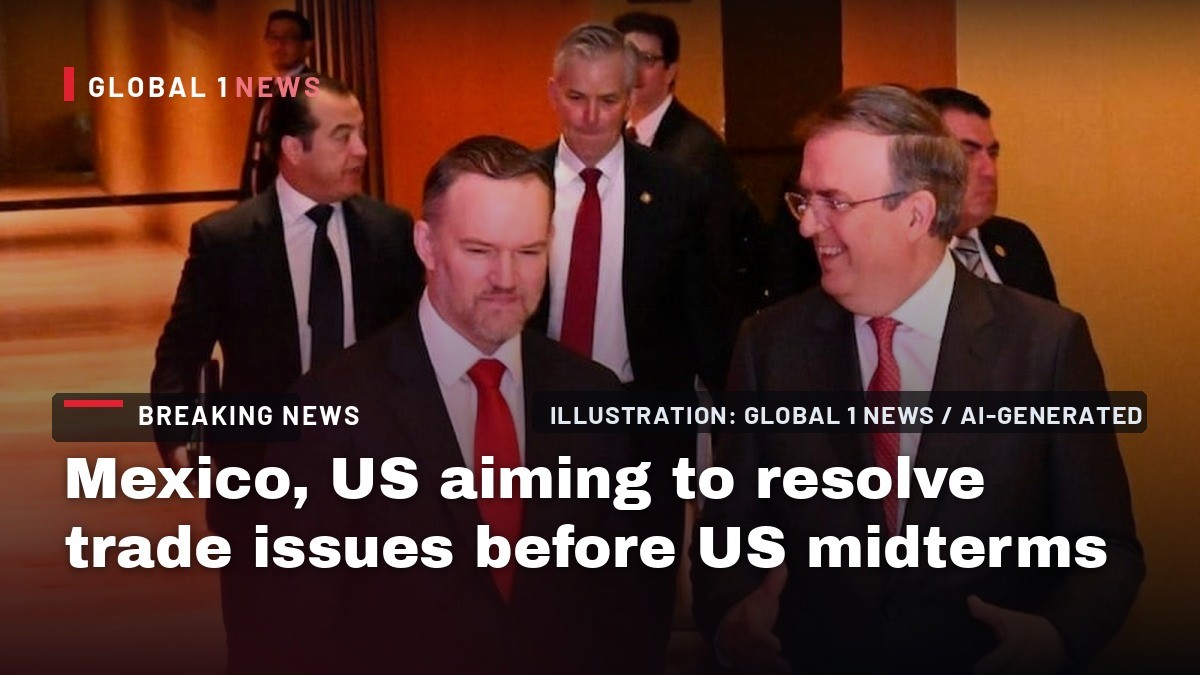
Next week’s fourth round of trade talks between Mexico and the United States arrives at a moment when both governments feel the pressure of domestic politics and a fragile economy. Officials on each side say they are eager to hammer out a bilateral agreement before the U.S. midterm elections in November, hoping a deal will calm markets, lower consumer prices in the United States and restore investor confidence in Mexico. The negotiations come on the heels of a collapsed U.S.–Canada dialogue, leaving the Mexico‑U.S. track as the immediate path to an interim settlement while the broader U.S.–Mexico‑Canada Agreement (USMCA) continues its review.
The political timing behind the talks
President Donald Trump faces a November 3 ballot that could strip his party of control of Congress. A visible win on trade would give his campaign a tangible achievement to showcase to voters, especially as he has hinted that a bilateral deal could bring down consumer prices in the United States. That promise of cheaper goods taps directly into the everyday concerns of families buying groceries at the tianguis or filling up their trucks at the gas station.
In Mexico, President Claudia Sheinbaum’s administration is wrestling with investor unease and a cooling economy. A successful negotiation would signal stability to the private sector and could help revive the momentum that stalled after the U.S.–Canada talks fell apart. Sheinbaum’s diplomatic outreach, including a recent conversation with U.S. Commerce Secretary Howard Lutnick, reflects a strategy of keeping the bilateral relationship constructive while drawing firm lines on what Mexico will not accept.
From virtual meetings to formal rounds
The latest round will be the first formal return to the negotiating table since the third round held in Mexico City from July 21 to 23. That earlier session set the stage for the current focus on Section 232 tariffs, which impose duties on aluminum, steel and automobiles. A grounded flight forced the Sheinbaum‑Lutnick meeting to shift to a virtual format, yet officials described the exchange as “very useful,” underscoring the importance of maintaining dialogue even when logistics falter.
Economy Minister Marcelo Ebrard’s recent trip to Washington, D.C., was aimed at finalizing details ahead of the upcoming bilateral meetings. Upon his return, he met with José Medina Mora, president of the Business Coordinating Council (CCE), to align the government’s negotiating posture with the private sector’s priorities. The CCE represents a substantial slice of the national economy, grouping 14 major business umbrellas and more than 2,000 trade associations that together account for roughly 80 % of Mexico’s GDP.
Section 232 tariffs at the center of the agenda
Medina Mora told El Universal that eliminating Section 232 tariffs will be a primary focus next week. Those duties, imposed under the national security rationale, have been a sore point for Mexican manufacturers and exporters, especially in the automotive and steel sectors that feed the factories of the norteño border towns. Removing or reducing the tariffs could lower production costs, help keep jobs in the maquiladora corridor and potentially translate into lower prices for consumers on both sides of the border.
The emphasis on Section 232 reflects a broader Mexican strategy: targeting specific trade barriers that directly affect everyday families. If the tariffs on automobiles are eased, a family in a colonia could see a modest drop in the price of a new car, while a small steel workshop in a pueblo mágico might secure cheaper raw material, preserving jobs and sustaining local economies.
Private sector expectations and confidence
The CCE’s confidence stems from the belief that the bilateral relationship with the United States differs fundamentally from the U.S.–Canada dynamic. Medina Mora noted that the problems that derailed the Canada talks should not spill over into the Mexico‑U.S. negotiations. He highlighted President Sheinbaum’s clear definition of “unacceptable” terms while maintaining a cordial relationship with President Trump, a balance that, in his view, has already yielded progress.
This optimism is not merely rhetorical. The CCE’s members, representing a large share of national output, are watching the talks closely because any concession on tariffs could reverberate through supply chains that stretch from the tortilla factories of Puebla to the tech hubs of Monterrey. A favorable outcome would reinforce the private sector’s confidence, encouraging new investment and perhaps easing the current investor unease that has weighed on the Mexican peso and broader economic sentiment.
U.S. domestic politics and trade strategy
President Trump’s public statements to the Irish press reinforce the political stakes on the American side. By affirming that “we’re going to have a great relationship with Mexico” and promising a forthcoming deal with Canada, he signals to his base that trade negotiations are under control and that the administration is pursuing a “great” bilateral partnership. That narrative aligns with the broader Republican message of protecting American jobs while keeping consumer prices low.
Yet the timing also reveals a tactical calculation: securing a deal before the midterms could shield the administration from criticism that trade policies are harming American families. If the agreement leads to lower prices on imported goods, it could be presented as a direct benefit to voters in swing districts that rely on affordable imports, from the steel used in construction projects to the steel‑framed trucks that haul produce across the Midwest.
Potential economic impact for Mexican families
For ordinary Mexicans, the stakes are personal. A reduction in Section 232 tariffs could lower the cost of imported steel used in building materials, making home repairs more affordable for families in rural ejidos and urban colonias alike. Likewise, cheaper automobile duties could translate into lower car prices, easing the financial burden for workers who rely on personal transport to reach jobs in the industrial parks of the Bajío region.
Beyond direct price effects, a successful bilateral deal could restore confidence among foreign investors watching the Mexican market. Investor unease has been a lingering concern for the Sheinbaum administration, and a clear signal that the United States is willing to negotiate in good faith could encourage new capital inflows, potentially spurring job creation in sectors ranging from agribusiness to renewable energy.
Looking ahead: what the next round could mean
The upcoming negotiations are poised to be a litmus test for both governments. For the United States, delivering a trade win before the midterms could bolster President Trump’s campaign narrative. For Mexico, securing tariff relief and demonstrating diplomatic skill could help steady a cooling economy and reassure a private sector that feels the pinch of global uncertainty.
Should the talks produce an interim bilateral agreement, it would likely serve as a bridge while the broader USMCA review continues. That outcome could set a precedent for how the three‑nation pact is reshaped in the months ahead, influencing not only trade policy but also the everyday lives of families on both sides of the border. As the negotiating tables reconvene next week, the eyes of workers, small business owners and migrant families will be fixed on whether the dialogue translates into tangible relief for the communities that keep Mexico’s economy moving forward.
This article was produced with AI-assisted research and editorial support. Reporting is based on the source material cited below. Sources: Mexico News Daily; mexiconewsdaily.com; Global1.News (14 September 2026).
By Rosa Martinez, Staff Writer
What's Your Reaction?
 Like
0
Like
0
 Dislike
0
Dislike
0
 Love
0
Love
0
 Funny
0
Funny
0
 Wow
0
Wow
0
 Sad
0
Sad
0
 Angry
0
Angry
0

Latin America/Andes Correspondent at Global1.News. Based in Bogota, covering politics, environment, energy, and social movements across the Andean region. Passionate about environmental journalism and communities protecting their land.














Comments (0)