
Mexico's 2027 Budget Proposal: 10.6 Trillion Pesos, INE Boost, Pemex Cuts
On Tuesday, September 8, Mexico's Secretaría de Hacienda y Crédito Público (SHCP) submitted the Paquete Económico 2027 to the Congreso de la Unión, anchored by a proposed federal budget of 10.6 trillion pesos (about $627 billion). This historic nominal spending plan, the third under President Claudia Sheinbaum, prioritizes social programs, a near-doubling of electoral funding, and a sharp reduction in state support for Pemex.
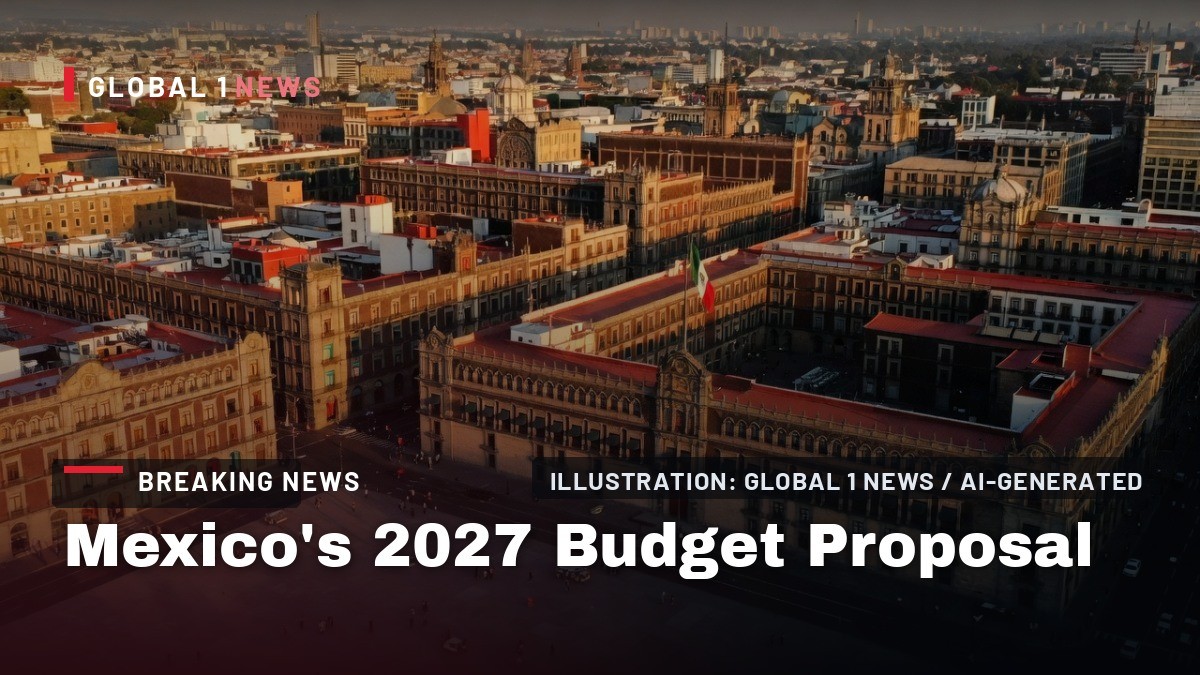
On Tuesday, September 8, Mexico's Secretaría de Hacienda y Crédito Público (SHCP) submitted the Paquete Económico 2027 to the Congreso de la Unión, anchored by a proposed federal budget of 10.6 trillion pesos (about $627 billion). This historic nominal spending plan, the third under President Claudia Sheinbaum, prioritizes social programs, a near-doubling of electoral funding, and a sharp reduction in state support for Pemex. The proposal now enters a heated debate in the Cámara de Diputados, where Morena and its allies hold a majority and face a November 15 approval deadline.
A Historic Budget for a Midterm Election Year
The Proyecto de Presupuesto de Egresos de la Federación (PPEF) 2027, presented by Finance Minister Edgar Amador Zamora, represents a significant increase in nominal spending compared to previous years. The 10.6-trillion-peso figure underscores the Sheinbaum administration's commitment to maintaining expansive social welfare programs while addressing structural challenges in the energy sector. Because 2027 is a federal midterm election year, several of the budget's key allocations are shaped by the electoral calendar.
The proposal arrives at a moment of economic recalibration. The SHCP has revised its 2026 GDP growth estimate down to a range of 1.0% to 2.0%, a reduction from the previous 1.8% to 2.8% forecast. For 2027, the ministry projects growth between 1.5% and 2.5%, with inflation expected to converge to the Bank of Mexico's 3.0% target by year's end. The broader public-sector deficit (RFSP) is slated to narrow to 3.9% of GDP in 2027, down from the 4.1% projected for 2026, signaling a gradual fiscal consolidation.
At her Wednesday mañanera from Palacio Nacional, President Sheinbaum sounded an optimistic note regarding these figures. She suggested that the delayed impact of public and public-private investment projects executed during 2026 could push actual growth beyond the anticipated 1.5%-2.5% range. Her remarks were aimed at reassuring markets and citizens alike that the administration sees the current economic softness as temporary, with infrastructure spending acting as a catalyst for recovery.
Electoral Funding Nearly Doubles for INE
One of the most striking elements of the 2027 budget proposal is the allocation for the National Electoral Institute (INE), which nearly doubles to 42,275 million pesos — an increase of approximately 88%. This surge is directly tied to the 2027 midterm elections, in which the entire 500-seat Chamber of Deputies will be renewed. The INE will be responsible for organizing an electoral operation that requires extensive logistics, training and technology across the nation's 300 federal electoral districts.
The increased funding is aimed at ensuring the integrity of the electoral process and broad participation. With more resources, the INE can expand voter education campaigns, including in rural and indigenous communities where access to information is more limited. The budget also covers the installation of polling stations nationwide, a massive undertaking that demands precise coordination with local authorities and civil society organizations.
This allocation reflects the federal government's recognition of the INE's central role in Mexican democracy. By providing the institute with robust funding for the midterm cycle, the administration is signaling its commitment to a transparent and well-organized electoral process, even as opposition parties scrutinize every peso spent. The challenge will be ensuring that the funds are used efficiently and that the electoral calendar proceeds without administrative hiccups.
Social Programs Remain the Centerpiece
Social welfare continues to be the cornerstone of the federal budget, with more than 1 trillion pesos earmarked for programas para el Bienestar. This includes a proposed increase in pensions for older adults, a flagship policy inherited from the AMLO administration and expanded under President Sheinbaum. The allocation is intended to sustain the bimonthly payments that have become a vital safety net for millions of seniors and their families in colonias populares and rural comunidades.
Beyond pensions, the budget maintains funding for scholarships aimed at keeping young people in school, from basic education through university. These programs are designed to combat dropout rates and provide economic relief to households that might otherwise push children into the labor market. The administration has framed these investments not merely as assistance but as rights now protected in the Mexican constitution.
Health and education also receive notable boosts in the proposal, according to the budget documents, aligning with the president's promises to strengthen public services such as the IMSS, ISSSTE and the IMSS-Bienestar network. Education unions, including the dissident CNTE, have signaled mobilizations in September as the budget is debated, demanding that the increases be sufficient to address chronic shortages of teachers and materials in states like Oaxaca, Guerrero, and Michoacán.
Pemex Faces Austerity as Investment Priorities Shift
In a significant policy shift, federal support for Pemex's debt paydown is sharply cut by about 70%, falling to 81.1 billion pesos ($4.8 billion) in 2027, down from 263.5 billion pesos in the 2026 budget. The SHCP's projections show Pemex achieving a financial surplus of 95.1 billion pesos ($5.6 billion) in 2027, allowing the state-owned oil giant to operate with less direct government intervention. Support for the Energy Ministry (Sener) is also sharply reduced, according to the proposal.
Despite the reduction in debt-support transfers, Pemex still leads the federal priority-investment list, with 255,529.2 million pesos allocated — about 45.6% of the 560,172.6 million peso priority-investment pool. The government's oil price assumption for 2027 is conservative, averaging $61.80 per barrel for Mexico's crude export mix, down from an estimated $78.40 in 2026, reflecting global market uncertainties. Total liquid hydrocarbon production is projected at 1.80 million barrels per day.
The reduction in federal support is a calculated bet that greater internal efficiency and recent investments in new fields will yield dividends. Coparmex, the employers' confederation, has urged the government to make Pemex and the CFE financially sustainable without overextending federal credit lines, warning that the energy sector needs a clear, long-term strategy rather than year-to-year budgetary improvisation.
Infrastructure and Security: Rail, Water, and Public Safety
The priority-investment pool reveals a continued focus on large-scale infrastructure projects, particularly passenger rail. The proposal allocates 150,875.6 million pesos for rail projects, including the Saltillo-Nuevo Laredo line (41,985.8 million pesos), the Querétaro-Saltillo corridor (24,025.5 million pesos), the Istmo de Tehuantepec route (25,000 million pesos), and the Querétaro-Irapuato segment (20,054.7 million pesos). These projects are central to the administration's vision of better logistics and mobility connecting the country.
The Comisión Federal de Electricidad (CFE) receives 60,991.6 million pesos, underscoring the government's commitment to strengthening state control over the electricity sector through grid modernization and expanded capacity. Highways and roads are allocated 24,212.1 million pesos, while Conagua, the national water commission, receives 22,761.9 million pesos for water works — a critical issue in a country facing drought in the north and flood risks in the south.
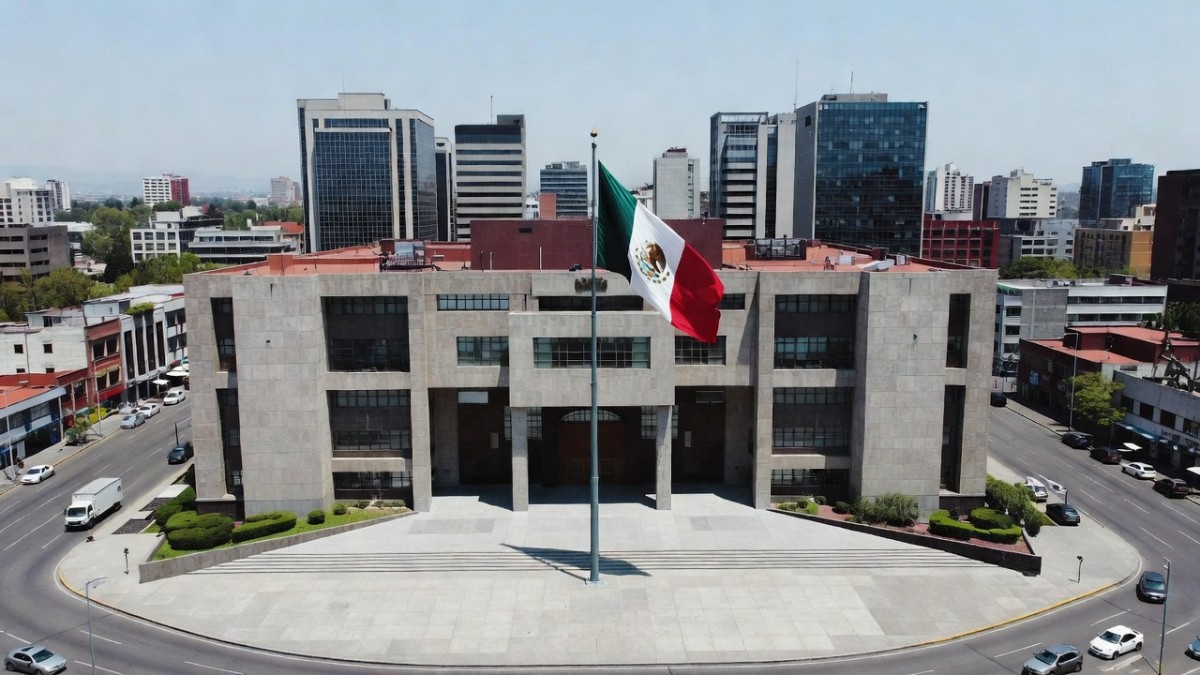
Security remains a top priority, with the Defense Secretariat (Sedena) receiving 12,781.5 million pesos, the Navy (Marina) 10,030.8 million pesos, and the SSPC security secretariat 8,370.8 million pesos. These allocations come amid persistent violence in several states, and Coparmex has specifically urged the government to prioritize security as a prerequisite for economic development. The Supreme Court (SCJN) received 5,628 million pesos — less than the 6,104 million pesos it requested — a decision likely to draw scrutiny from the judiciary and legal community.
Reactions and the Road to November 15
The budget proposal has elicited a spectrum of reactions from political and economic actors. Coparmex urged the government to prioritize security, health, education, and energy infrastructure while avoiding new taxes, and called for transparent management of Pemex and CFE finances so that state-owned enterprises do not overextend federal credit lines. The SCJN's reduced allocation has become a point of contention, with some legislators questioning whether the judiciary can function effectively with fewer resources than it requested.
The proposal now enters the Cámara de Diputados, where it will be subject to intense negotiation and amendment. Morena and its allies hold a majority, which smooths the path for approval, but internal factions and external pressure from unions and civil society groups could lead to modifications. The CNTE has already signaled mobilizations, and other education unions are likely to press their own demands for increased funding for public schools. The November 15 deadline looms, and the final budget must balance the executive's priorities with the legislative branch's political realities.
For ordinary Mexican families, the outcome of this budget debate will determine the scope of pension increases, the quality of public health services, and the pace of infrastructure projects that generate local employment. The proposed cuts to Pemex support, while fiscally prudent, carry risks if oil prices fall below assumptions. As the debate unfolds, the Sheinbaum administration will need to defend its macroeconomic projections and demonstrate that the 10.6-trillion-peso plan is a roadmap for the nation's future.
By Rosa Martinez, Staff Writer
This article was produced with AI-assisted research and editorial support. Sources: Reuters, Mexico News Daily, Infobae, Bloomberg.
What's Your Reaction?
 Like
0
Like
0
 Dislike
0
Dislike
0
 Love
0
Love
0
 Funny
0
Funny
0
 Wow
0
Wow
0
 Sad
0
Sad
0
 Angry
0
Angry
0

Latin America/Andes Correspondent at Global1.News. Based in Bogota, covering politics, environment, energy, and social movements across the Andean region. Passionate about environmental journalism and communities protecting their land.












Comments (0)