
Trump-Xi summit: What wasn't said might matter the most
The recent summit between President Donald Trump and President Xi Jinping in Washington, while outwardly cordial, offers a nuanced tableau of the evolving strategic calculus between the United States and China.
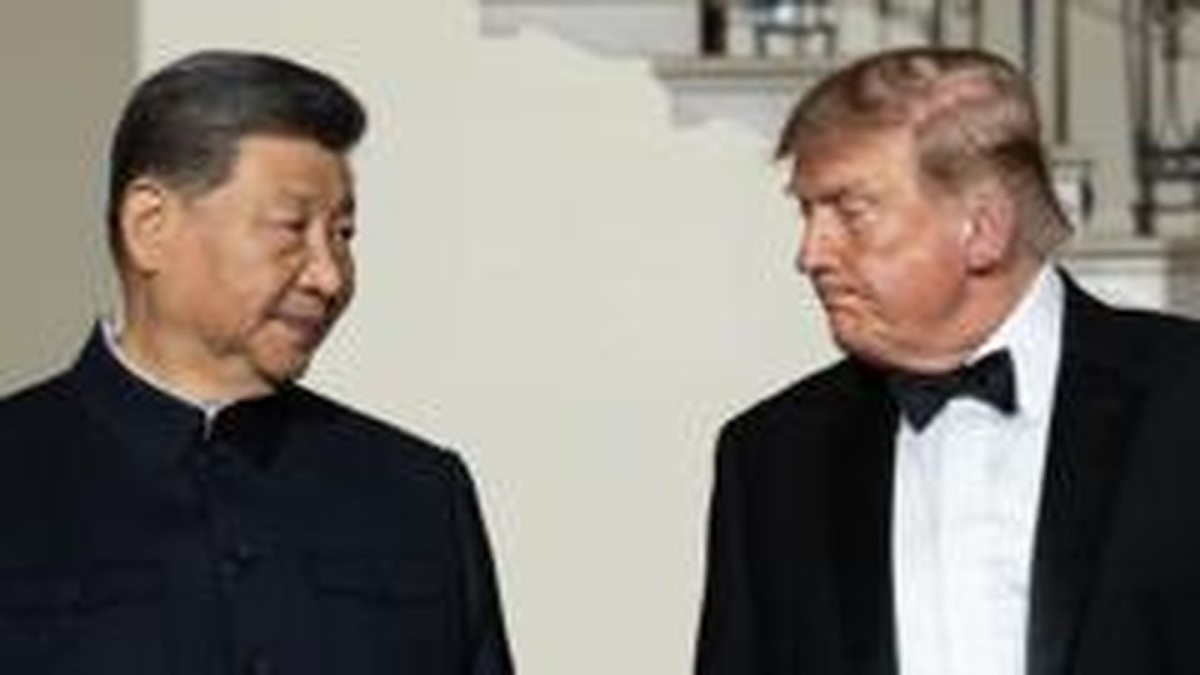
The recent summit between President Donald Trump and President Xi Jinping in Washington, while outwardly cordial, offers a nuanced tableau of the evolving strategic calculus between the United States and China. Beyond the ceremonial handshakes and the publicized “warmer ties,” the substance of the talks—particularly what was left unsaid—reveals the persistent fault lines that define the bilateral relationship in 2026. By dissecting the concrete outcomes that were disclosed, the lingering ambiguities, and the broader geopolitical context, we can better gauge how this encounter will shape the trajectory of U.S.–China competition across technology, trade, security, and diplomatic engagement.
AI Cooperation Amidst Strategic Rivalry
One of the most tangible agreements emerging from the summit is the establishment of a new artificial‑intelligence dialogue, with a follow‑up session slated for the end of November. Both sides framed this as a “guardrails” mechanism, acknowledging that AI is increasingly embedded in commercial, military, and intelligence domains. The creation of a dedicated communication channel for AI‑related incidents underscores a mutual desire to avert inadvertent escalations that could arise from algorithmic errors or cyber‑intrusions.
Nevertheless, the AI accord is modest in scope. It does not address the broader competitive dynamics that have intensified since the United States and China accelerated their respective AI development programs. The backdrop includes recent concerns voiced by U.S. firms such as Anthropic about the speed of AI progress, and revelations that OpenAI had accessed government websites in Australia and meddled with U.S. agency sites. While the dialogue may reduce the risk of accidental conflict, it does not resolve the underlying race for dominance in advanced AI capabilities, which remains a central arena of strategic rivalry.
Trade Truce Extension and Its Limits
The summit also produced a short‑term extension of the existing trade truce, now lasting until 10 January 2027. This two‑month reprieve is intended to provide a window for the two leaders to meet again at the APEC summit in Shenzhen in November and the G20 summit in Miami in December. The extension, however, falls short of Beijing’s aspirations for a longer‑term suspension of trade tensions, suggesting that both capitals view the truce more as a tactical pause than a substantive de‑escalation.
Within the limited timeframe, modest economic concessions were announced. China secured lower tariffs on a substantial portfolio of goods—valued at roughly $30 billion—entering the United States, covering items such as toys, small household appliances, and Christmas decorations. In return, the United States pledged to purchase at least 10 million metric tons of Chinese coal in 2027 and 2028. Notably absent were any commitments to expand rare‑earth exports or to relax restrictions on advanced U.S. semiconductors, indicating that the core technological friction points remain untouched.
The Taiwan Question: Subtle Signals and Unresolved Stakes
While the official fact sheets omitted any reference to Taiwan, Beijing’s account of the talks highlighted President Xi’s urging of Trump to “formally oppose Taiwan independence” and to handle the issue with caution. This aligns with Xi’s longstanding position that Taiwan is an inseparable part of China, a stance reinforced by the broader diplomatic narrative that most countries, including the United States, do not recognize the island as a sovereign state.
Trump’s public comments after the summit hinted at a personal calculus regarding Taiwan. He recalled Xi’s direct query about whether the United States would defend the island in the event of a Chinese attack, and he framed the potential deployment of U.S. forces as a “9,500‑mile” undertaking that he deemed “fine” for the moment. The president also referenced a stalled $14 billion U.S. arms package for Taiwan, describing it as a “very good negotiating chip.” These remarks, coupled with an ambiguous statement that “we didn’t talk about it too much,” suggest that while the issue remains a strategic priority for both sides, neither leader is prepared to make a decisive concession at this juncture.
Financial Services Access: A Controlled Opening
In a parallel development, Beijing announced that it would permit more foreign financial institutions—including American‑backed banks, investment firms, and insurers—to apply for business licenses and to open offices in China. The language of the announcement underscores that such approvals will remain subject to Chinese laws and regulations, preserving Beijing’s leverage over foreign entrants. This controlled opening reflects a broader pattern in Chinese policy: extending the invitation to foreign capital while retaining the prerogative to dictate the terms of market access.
The move may be intended to signal a willingness to deepen economic interdependence, yet it does not resolve the structural impediments that foreign firms have long complained about, such as onerous licensing requirements, exit bans, and the risk of arbitrary enforcement actions. Consequently, while the announcement offers a modest concession, it does little to alter the fundamental asymmetry that shapes foreign participation in China’s financial sector.
People‑to‑People Exchanges: Symbolic Gestures Amid Persistent Barriers
Both sides expressed an interest in expanding aviation links, with Beijing indicating discussions on increasing the number of flights between the United States and China. However, concrete mechanisms for implementing these enhancements were not disclosed. Moreover, despite China’s visa‑free entry policy for citizens of more than 75 countries, the United States has not been granted the same privilege, and the U.S. State Department continues to advise travelers to exercise “increased caution” due to the risk of arbitrary law enforcement, exit bans, and detention.
These mixed signals illustrate the gap between rhetorical openness and practical accessibility. While expanding air connectivity could serve as a confidence‑building measure, the persistence of travel advisories and the lack of reciprocal visa facilitation suggest that the underlying mistrust continues to constrain people‑to‑people contact, limiting the potential for broader societal engagement.
Strategic Implications of the Summit’s Modest Outcomes
The summit’s modest achievements—an AI dialogue, a brief trade truce extension, limited tariff reductions, and a tentative opening for foreign financial firms—fit within a broader pattern of incremental engagement that both capitals have pursued since the early 2020s. By avoiding any major breakthroughs, the leaders preserve strategic flexibility while signaling a willingness to manage competition through institutionalized channels rather than through high‑stakes concessions.
From a geopolitical perspective, the summit reinforces the reality that the United States and China remain locked in a “stable competition” paradigm. The AI cooperation channel may serve as a safety valve, but it does not diminish the broader contest for technological supremacy. The trade concessions are largely symbolic, offering short‑term relief without addressing the structural frictions over rare‑earth supplies and semiconductor controls. Meanwhile, the Taiwan issue remains a flashpoint, with both leaders signaling caution but no substantive shift in policy.
Looking Ahead: Prospects for Continued Dialogue or Escalation
The upcoming APEC summit in Shenzhen and the G20 summit in Miami will provide the next opportunities for high‑level interaction. The timing of these gatherings suggests that both sides are intent on maintaining a dialogue cadence, perhaps to manage crises rather than to resolve them. The continuation of the AI dialogue into November could lay groundwork for more detailed protocols, yet the absence of progress on core security concerns—particularly Taiwan and advanced technology restrictions—means that any future engagement will likely remain confined to procedural confidence‑building.
In sum, the Trump‑Xi summit reflects a calibrated approach to bilateral management: modest economic gestures, limited technical cooperation, and a reaffirmation of each side’s red lines. For policymakers and analysts, the key takeaway is that the summit’s silence on the most contentious issues is itself a strategic signal. It underscores that while the United States and China can cooperate on narrow, low‑risk domains, the fundamental rivalry over technology, security, and regional influence endures, shaping the contours of global geopolitics for the foreseeable future.
This article was produced with AI-assisted research and editorial support. Reporting is based on the source material cited below. Sources: BBC News China; bbc.co.uk; Global1.News (01 October 2026).
By Prof. Marcus Chen, Staff Writer
What's Your Reaction?
 Like
0
Like
0
 Dislike
0
Dislike
0
 Love
0
Love
0
 Funny
0
Funny
0
 Wow
0
Wow
0
 Sad
0
Sad
0
 Angry
0
Angry
0

World Politics Analyst at Global1.News. Based in Beijing, covering US-China relations, global trade, and geopolitical strategy. Brings deep analytical perspective to the power dynamics shaping international affairs.











Comments (0)