
Why Pakistan Turned on the Taliban (and Vice Versa)
In early February 2026, Pakistan’s military launched a coordinated air and missile campaign against three Afghan border provinces, targeting suspected Tehreek‑e‑Taliban Pakistan (TTP) camps and Islamic State Khorasan footholds.
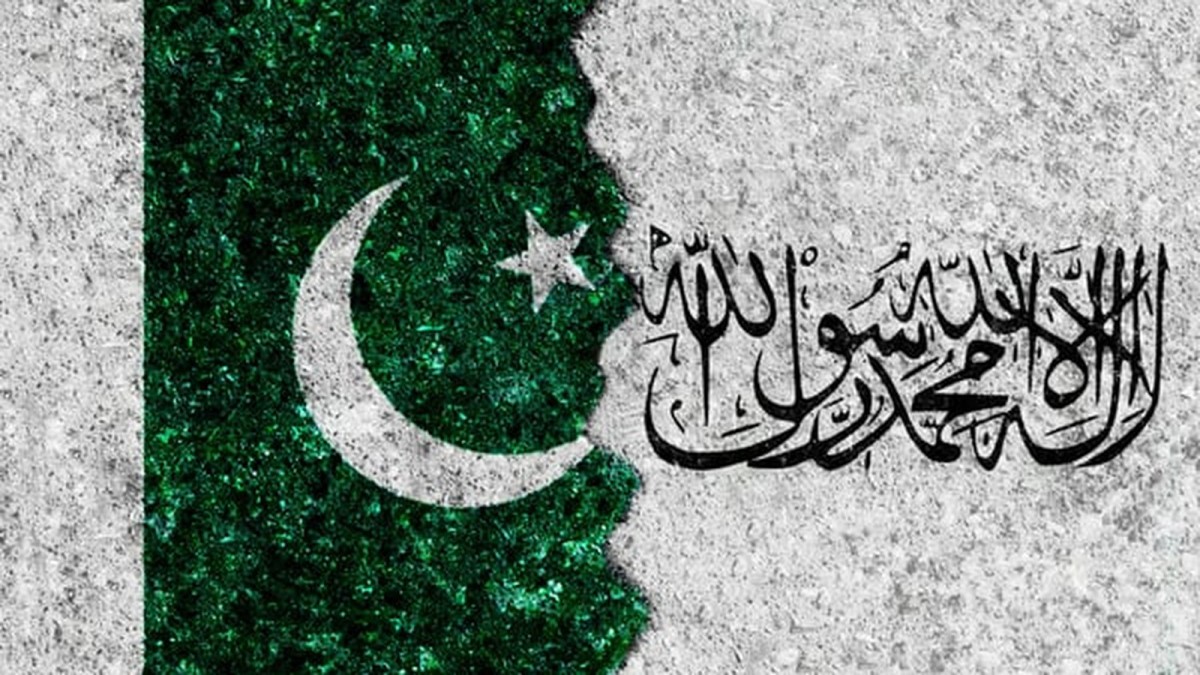
In early February 2026, Pakistan’s military launched a coordinated air and missile campaign against three Afghan border provinces, targeting suspected Tehreek‑e‑Taliban Pakistan (TTP) camps and Islamic State Khorasan footholds. The strikes marked a dramatic reversal of a three‑decade relationship in which Pakistan had long positioned itself as a patron of the Afghan Taliban. Within days, the Taliban responded by hitting Pakistani border posts, and Pakistan escalated further with Operation Ghazab Lil‑Haq—“Righteous Fury”—as its defense minister declared an “open war” on February 27. Since then, both sides have exchanged sporadic strikes, while Chinese diplomatic mediation has tempered the frequency and scale of hostilities, though incidents persisted through September 2026. The unfolding conflict raises fundamental questions about the durability of the Pakistan‑Taliban alliance, the strategic calculus behind Pakistan’s targeting of TTP elements on Afghan soil, and the prospects for any lasting reconciliation.
From Patronage to Hostility: A Brief Historical Context
For more than thirty years, Pakistan’s military and intelligence establishments cultivated close ties with the Taliban, viewing the Afghan insurgency as a strategic lever against Indian influence in the region. This relationship deepened after the Taliban seized Kabul in August 2021, an event that Pakistan publicly celebrated as a vindication of its long‑standing policy. The alliance was underpinned by shared ideological sympathies, cross‑border tribal networks, and mutual security concerns, particularly regarding India’s presence in Afghanistan.
However, the alliance was never without friction. The TTP, a distinct militant group with roots in Pakistan’s tribal belt, operated from sanctuaries in Afghanistan, exploiting the porous border to launch attacks inside Pakistan. While the Taliban tolerated the TTP to an extent, the group’s anti‑state activities increasingly strained Islamabad’s domestic security calculus. By early 2026, the Pakistani defense establishment appears to have reached a breaking point, prompting a shift from covert tolerance to overt military action.
The February 21 Strikes: Targeting the TTP and ISKP
On the night of February 21, 2026, Pakistan deployed air and missile assets against three Afghan border provinces. According to the source, the strikes were aimed at suspected TTP camps and Islamic State Khorasan Province (ISKP) positions. The dual focus suggests that Islamabad’s primary objective was to dismantle militant infrastructure that directly threatened its internal security, while also curbing the broader extremist threat posed by ISKP’s expansionist agenda.
By selecting border provinces, Pakistan likely sought to minimize civilian casualties and avoid a broader escalation into urban centers. Nevertheless, the operation signaled a willingness to breach Afghan sovereignty in pursuit of counter‑terrorism goals, a move that fundamentally altered the diplomatic tenor of the bilateral relationship.
Taliban Retaliation and the Escalation to Operation Ghazab Lil‑Haq
The Taliban’s immediate response—targeting Pakistani border posts—underscored the fragility of the cease‑fire that had existed since the Taliban’s 2021 ascendancy. The retaliation was not merely a tactical reprisal; it reflected the Taliban’s perception of Pakistan’s strikes as an infringement on Afghan sovereignty. Within a week, Pakistan escalated further by launching Operation Ghazab Lil‑Haq, a campaign explicitly framed as “Righteous Fury” against Afghanistan.
Defense Minister’s declaration on February 27 that “our patience has now run out” formalized the conflict as an “open war.” This rhetoric, coupled with the naming of the operation, indicates a strategic shift from limited counter‑terrorism raids to a broader, more sustained military posture against the Afghan state.
Continued Hostilities and the Role of Chinese Mediation
Despite the intensity of the early February exchanges, the frequency and magnitude of strikes have declined over the subsequent months. The source attributes this de‑escalation to mediation efforts by China, which has positioned itself as a regional stabilizer. Chinese diplomatic engagement appears to have introduced a degree of restraint, limiting the scale of subsequent operations while not fully halting them.
Nevertheless, sporadic strikes continued into September 2026, and TTP attacks within Pakistan persisted. The persistence of these incidents suggests that while diplomatic pressure can modulate the intensity of conflict, underlying security dilemmas—particularly the TTP’s cross‑border sanctuary—remain unresolved.
Strategic Calculus Behind Pakistan’s Shift
Pakistan’s decision to target TTP camps in Afghanistan likely stems from an acute domestic security imperative. The TTP’s capacity to launch attacks inside Pakistan has long been a source of instability, and the inability to neutralize the group from within its own borders has frustrated Islamabad for years. By striking TTP sanctuaries across the border, Pakistan seeks to deny the group safe havens, thereby reducing the frequency and lethality of attacks on Pakistani soil.
Simultaneously, the targeting of ISKP reflects broader regional concerns about the group’s growing influence. ISKP’s presence in Afghanistan poses a threat not only to the Taliban’s rule but also to neighboring states wary of extremist spillover. Pakistan’s dual‑target approach thus serves both a national security agenda and a regional counter‑terrorism objective.
Implications for Afghanistan‑Pakistan Relations
The emergence of open hostilities has profound implications for the bilateral relationship that once rested on mutual strategic benefit. Trust, already fragile, has been further eroded by direct military actions on each other’s territory. While Chinese mediation may prevent a full‑scale war, the underlying grievances—particularly over TTP sanctuaries—remain a potent source of tension.
Future reconciliation will likely depend on a negotiated framework that addresses the TTP’s cross‑border operations, possibly through joint security mechanisms or mutually supervised demilitarized zones. Absent such arrangements, the risk of periodic flare‑ups will persist, undermining regional stability and complicating Afghanistan’s efforts to achieve international legitimacy.
Prospects for a Sustainable Resolution
Given the entrenched nature of the TTP’s networks and the Taliban’s limited capacity to control all militant factions within its borders, a durable solution will require more than diplomatic overtures. It may involve coordinated intelligence sharing, joint counter‑terrorism patrols, and a clear delineation of responsibilities for securing the border. Moreover, the involvement of a neutral regional actor—such as China—could provide the necessary diplomatic cover to facilitate such cooperation.
In the near term, the pattern of reduced but ongoing strikes suggests a tacit acknowledgment by both sides that a protracted open war would be mutually detrimental. The continuation of Chinese mediation indicates that external pressure remains a key factor in containing the conflict. However, without addressing the root cause—TTP sanctuaries on Afghan soil—the bilateral relationship will remain vulnerable to future eruptions, and the broader stability of the Afghanistan‑Pakistan frontier will continue to be tested.
This article was produced with AI-assisted research and editorial support. Reporting is based on the source material cited below. Sources: The Diplomat; thediplomat.com; Global1.News (01 October 2026).
By Kenji Tanaka, Staff Writer
What's Your Reaction?
 Like
0
Like
0
 Dislike
0
Dislike
0
 Love
0
Love
0
 Funny
0
Funny
0
 Wow
0
Wow
0
 Sad
0
Sad
0
 Angry
0
Angry
0

Japan Correspondent at Global1.News. Tokyo-based voice covering Japanese politics, technology, economy, and culture. Tracks the intersection of tradition and innovation in one of the world's most dynamic societies.










Comments (0)