
China, Laos open joint military aviation centre in Vientiane Province
The opening of a new joint military aviation centre at Ban Keun Airport in Vientiane Province marks a quiet yet significant step in the evolving partnership between China and Laos.
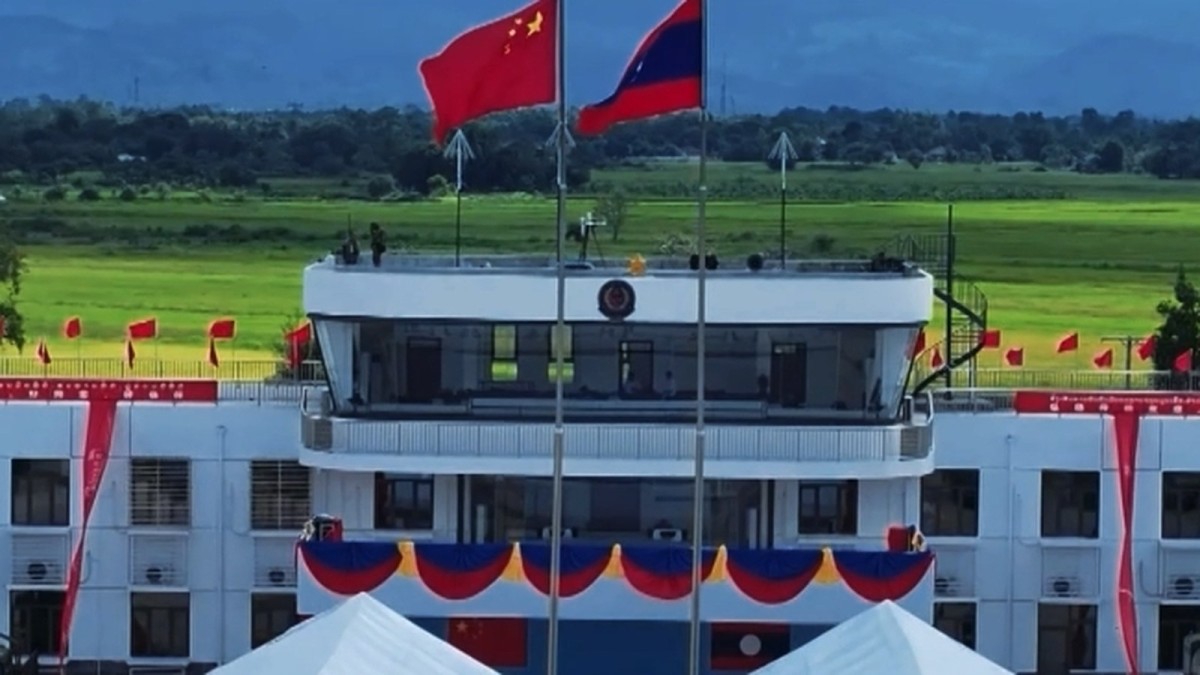
The opening of a new joint military aviation centre at Ban Keun Airport in Vientiane Province marks a quiet yet significant step in the evolving partnership between China and Laos. The China‑Laos Joint Support and Training Center, together with the China‑Laos Friendship Aviation Academy, began operations on 29 September, as announced by China’s Ministry of National Defense. While the ceremony was attended by Lao Deputy Prime Minister and Minister of National Defense Khamlieng and a delegation from the People’s Liberation Army, the language of the announcement emphasizes mutual respect, equal consultation and a focus on regional peace.
Inauguration and Immediate Purpose
The inauguration ceremony highlighted the practical aim of the centre: to help Laos strengthen training for its air‑force pilots. The Ministry of National Defense said the facility will be jointly maintained and operated by the two nations, reflecting a collaborative approach rather than a unilateral deployment of foreign forces. This focus on pilot training suggests a long‑term commitment to building Laos’ own aviation capabilities, rather than simply providing a platform for Chinese aircraft.
For Thailand, a neighbour that shares both cultural and historical ties with Laos, the development is a reminder of the delicate balance between supporting regional stability and navigating great‑power influences. The Thai perspective often looks to the Buddhist principle of “right intention” – ensuring that any military cooperation serves the broader well‑being of the community, not just strategic calculations.
Historical Context of China‑Laos Relations
China and Laos have a long history of diplomatic and economic cooperation, rooted in shared experiences of struggle and development. Over the past decades, Beijing has become a major source of investment and infrastructure support for Vientiane, from rail links to hydro‑electric projects. The joint aviation centre can be seen as an extension of that partnership, moving from economic to security cooperation.
From a Thai cultural standpoint, such deepening ties are observed through the lens of “sufficiency” – the idea that each nation should develop the capacity to meet its own needs. By helping Laos train its own pilots, China is arguably supporting Laos’ self‑reliance, a value that resonates with Thai and broader Southeast Asian aspirations for balanced development.
Legal and Diplomatic Framing
The ministry’s statement stressed that the centre’s construction and use comply with the domestic laws of both China and Laos, as well as relevant international law and common practice. This careful phrasing aims to reassure regional observers that the project is not a breach of sovereignty or an act of aggression. It also underscores the principle of “mutual respect and equal consultation,” a diplomatic language often employed to signal parity in bilateral projects.
In the Thai context, where the principle of “samyak‑kamma” (right action) guides both religious practice and foreign policy, the emphasis on legality and non‑targeting of third parties aligns with a desire for transparent, rule‑based cooperation. Thailand’s own defence posture often stresses defensive capability and regional dialogue, making the legal framing of this centre relevant to Bangkok’s diplomatic calculus.
Regional Security Implications
While the centre is presented as a training facility, its existence inevitably contributes to the broader security architecture of mainland Southeast Asia. Strengthening Laos’ air‑force capabilities could shift the balance of air power in the region, albeit modestly. However, the ministry explicitly stated that the facility is not directed against any third party, a reassurance aimed at neighboring countries, including Thailand, Vietnam and Myanmar.
Thai analysts often draw parallels between such statements and the Buddhist concept of “ahimsa” – non‑violence and avoidance of harm. By emphasizing that the centre is not aimed at any third party, the parties involved signal an intention to avoid provoking tension, seeking instead to promote “regional peace and stability,” as the ministry put it.
Economic and Community Impact
The joint centre is likely to bring economic activity to the Ban Keun area. Construction and ongoing operations will require local staff, support services and infrastructure upgrades. For nearby Thai border communities, increased movement of personnel and supplies could translate into new commercial opportunities, from hospitality to transport services.
From a cultural perspective, the influx of Chinese and Laotian personnel offers a chance for people‑to‑people exchange. Thai communities, accustomed to welcoming travelers and sharing Buddhist festivals, may find common ground in shared rituals and mutual respect. Such soft‑power interactions often lay the groundwork for deeper understanding beyond formal diplomatic channels.
Strategic Outlook for Thailand
Thailand’s own defence strategy emphasizes maintaining a credible deterrent while fostering regional cooperation. The emergence of a China‑Laos aviation training hub invites Thai policymakers to consider how best to engage with both partners. Participation in joint exercises, information sharing, or even offering complementary training facilities could reinforce Thailand’s role as a stabilising force in the Mekong basin.
In Buddhist thought, the notion of “interdependence” reminds us that the well‑being of one nation is linked to that of its neighbours. Thailand’s response may therefore balance vigilance with openness, ensuring that any shift in regional air capabilities contributes to a collective security rather than competition.
Future Prospects and Reflections
Looking ahead, the joint centre could evolve into a broader hub for aviation training, potentially expanding to include maintenance, logistics and even civil aviation programmes. Such growth would further embed China‑Laos cooperation while offering additional avenues for regional partners to engage.
For Thai observers, the development serves as a reminder that peace and stability are nurtured through continuous dialogue, respect for sovereignty and a shared commitment to the common good. As the centre begins its work training Laotian pilots, the hope expressed by both governments – that the facility will strengthen practical military cooperation and promote regional peace – aligns with the Buddhist aspiration for harmony among all beings. In the months and years to come, the true measure of this partnership will be seen not only in the number of pilots trained, but in how the collaboration contributes to a stable, prosperous and compassionate Southeast Asia.
This article was produced with AI-assisted research and editorial support. Reporting is based on the source material cited below. Sources: Khaosod English; khaosodenglish.com; Global1.News (01 October 2026).
By Ann Srisawat, Staff Writer
What's Your Reaction?
 Like
0
Like
0
 Dislike
0
Dislike
0
 Love
0
Love
0
 Funny
0
Funny
0
 Wow
0
Wow
0
 Sad
0
Sad
0
 Angry
0
Angry
0

Southeast Asia Correspondent at Global1.News. Based in Bangkok, covering Thai and Southeast Asian politics, economy, technology, and culture. Deep regional perspective on one of the world's most dynamic regions.














Comments (0)