
Former Australian bishop jailed for sexually abusing young men
Former Bishop of Broome Christopher Saunders, a 76‑year‑old cleric who resigned in 2020 after the first accusations of wrongdoing, was sentenced on Wednesday to six and a half years in prison for the sexual abuse of two young Aboriginal men.
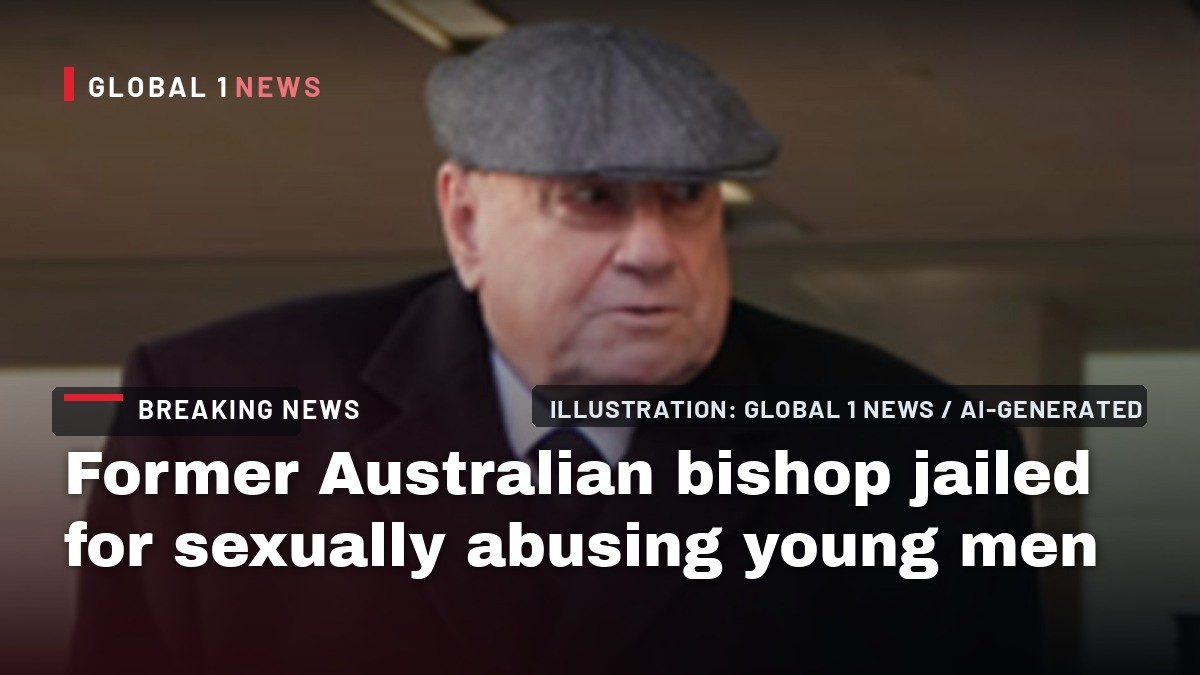
Former Bishop of Broome Christopher Saunders, a 76‑year‑old cleric who resigned in 2020 after the first accusations of wrongdoing, was sentenced on Wednesday to six and a half years in prison for the sexual abuse of two young Aboriginal men. The sentencing, delivered by District Court Judge Martin Flynn in Western Australia, marks a rare moment in which a senior Catholic leader in Australia has been held criminally accountable for abuse committed within the church’s own structures. The case, which unfolded over a decade of alleged misconduct, raises profound questions about the Catholic hierarchy’s handling of abuse allegations, the vulnerability of Indigenous communities in remote regions, and the broader global effort to enforce the Vatican‑mandated “Vos Estis Lux Mundi” inquiries.
Chronology of the offences and conviction
The court heard that Saunders systematically groomed the two victims between 2010 and 2019, using church‑owned properties and funds to host “shirts‑off” gatherings where alcohol was supplied. During these events he allegedly forced oral sex on one of the men and repeatedly kissed and molested both. The conviction rests on one count of rape and twelve counts of indecent assault, with the jury acquitting him of alleged offences against a third young man. The victim impact statement submitted to the court described the lasting psychological trauma, noting the victim still struggles to discuss the abuse and feels “a toy that he was using,” underscoring the profound breach of trust.
Judge Flynn emphasized that Saunders “professed to be an advocate for young Aboriginal men” but instead “misused his authority and exploited their vulnerability,” a stark reminder that the abuse was not an isolated incident but part of a broader pattern of power imbalance within remote diocesan structures.
The diocese of Broome: geography and isolation
The Diocese of Broome spans roughly 770,000 square kilometres—an area comparable in size to Turkey—covering some of Australia’s most remote and sparsely populated regions. This vast geography has historically limited oversight and facilitated environments where clerical authority can go unchecked. Saunders spent most of his career in the Kimberley region, a remote north‑west corner of the country, before his appointment as bishop in 1996. The sheer scale of the diocese, combined with limited resources and infrastructure, creates challenges for both pastoral care and institutional accountability.
For Indigenous communities, the church has often been a primary provider of education and health services, which can amplify the influence of clergy. In such contexts, the abuse of power by a senior figure like Saunders can have outsized effects, eroding trust not only in religious institutions but also in the broader social fabric that relies on them.
Legal and investigative backdrop
The initial police investigation following the 2020 accusations was closed without charge, a decision that sparked criticism from advocacy groups and survivors. The case was later revived after a historic papal inquiry—part of the “Vos Estis Lux Mundi” framework introduced in 2019—prompted renewed police scrutiny. This inquiry, commissioned by the Pope, aims to hold bishops and other high‑ranking officials accountable, marking a significant shift in the Vatican’s approach to clerical abuse.
While the Vatican‑mandated inquiry initially paused while police investigations resumed, Archbishop Timothy Costelloe of Perth confirmed that the church’s internal investigation will restart. The decision to strip Saunders of his remaining title and ministry powers now rests with Rome, reflecting the complex interplay between civil law and ecclesiastical authority in addressing clerical misconduct.
Impact on the Catholic Church in Australia
Saunders’ conviction places him among the most senior Catholic officials in the world to face sex‑abuse charges, alongside the late Cardinal George Pell, who was jailed and later acquitted. The case reinforces the perception that senior clergy can evade accountability, a narrative that has persisted in Australia since the Royal Commission into Institutional Responses to Child Sexual Abuse. Archbishop Costelloe’s public apology—acknowledging the victims’ courage and the betrayal of trust—signals an attempt by the Australian hierarchy to address the moral fallout, yet the limited number of “Vos Estis Lux Mundi” inquiries worldwide suggests systemic constraints.
The church’s response to Saunders’ case will likely influence public confidence in its willingness to confront abuse. Pressure mounts for decisive action from Rome, especially as the global Catholic community watches the outcomes of similar inquiries in other jurisdictions. The decision to potentially remove Saunders’ remaining ecclesiastical privileges will be a litmus test for the church’s commitment to transparency and justice.
Indigenous victims and community response
The victims, both young Aboriginal men, represent a demographic that has historically faced marginalisation and limited access to justice mechanisms. Their willingness to come forward, despite the power differential and cultural barriers, reflects a growing resilience within Indigenous communities to confront abuse. The victim’s statement to the court highlighted not only personal trauma but also a broader sense of betrayal, noting that trust placed in a religious leader was “directly and profoundly betrayed.”
Community leaders and advocacy groups have called for stronger protective measures for Indigenous youths in remote areas, emphasizing the need for culturally appropriate support services. The case underscores the intersection of colonial legacies, where religious institutions have often been complicit in the systemic oppression of Aboriginal peoples, and contemporary demands for accountability.
Broader implications for global church reform
Saunders’ sentencing arrives at a pivotal moment for the Catholic Church’s global reform agenda. The “Vos Estis Lux Mundi” inquiries, though limited in number, represent the Vatican’s attempt to create a standardized mechanism for investigating senior clergy. The Australian case demonstrates both the potential and the limitations of this framework: while it facilitated a renewed police investigation, the ultimate disciplinary action remains contingent on decisions made in Rome.
International observers note that the rarity of such inquiries—only a handful undertaken worldwide—raises concerns about consistency and fairness across dioceses. The outcome of Saunders’ case may set a precedent for how other senior clerics are treated, influencing future Vatican directives and possibly prompting calls for a more expansive, transparent investigative network.
Future outlook and the path to reconciliation
With a parole eligibility date set for February 2031, Saunders will serve a substantial portion of his sentence before potential release. However, the legal repercussions represent only one facet of the broader healing process required for the victims and the community. Archbishop Costelloe’s acknowledgment of the victims’ courage and the church’s apology are steps toward reconciliation, yet substantive reforms—such as restoring trust through independent oversight and culturally sensitive support for Indigenous survivors—remain essential.
As Australia continues to grapple with the legacy of institutional abuse, the Saunders case serves as a stark reminder that accountability must extend beyond symbolic gestures. Robust monitoring of remote dioceses, transparent reporting mechanisms, and a genuine commitment to safeguarding vulnerable populations will be critical in preventing future abuses and restoring the moral authority of the church in a society increasingly demanding justice and transparency.
This article was produced with AI-assisted research and editorial support. Reporting is based on the source material cited below. Sources: BBC News Asia; bbc.co.uk; Global1.News (08 October 2026).
By Kenji Tanaka, Staff Writer
What's Your Reaction?
 Like
0
Like
0
 Dislike
0
Dislike
0
 Love
0
Love
0
 Funny
0
Funny
0
 Wow
0
Wow
0
 Sad
0
Sad
0
 Angry
0
Angry
0

Japan Correspondent at Global1.News. Tokyo-based voice covering Japanese politics, technology, economy, and culture. Tracks the intersection of tradition and innovation in one of the world's most dynamic societies.











Comments (0)