
Meta's $17 Billion Teen Addiction Settlement: A Global Reckoning for Social Media Giants
In a landmark legal victory that will reshape the digital landscape for millions of adolescents, Meta Platforms has agreed to pay up to $17.1 billion to settle a sweeping lawsuit alleging its Instagram and Facebook p
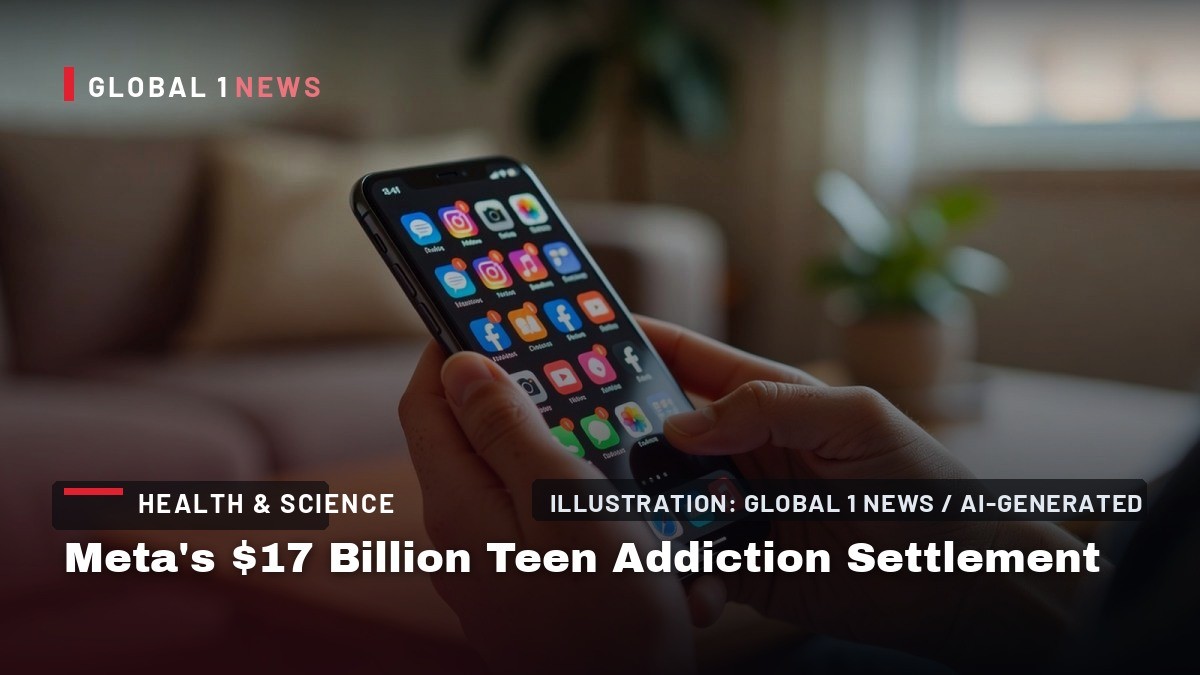
In a landmark legal victory that will reshape the digital landscape for millions of adolescents, Meta Platforms has agreed to pay up to $17.1 billion to settle a sweeping lawsuit alleging its Instagram and Facebook platforms were deliberately engineered to addict young users. The settlement, announced on August 26, 2026, resolves claims brought by 47 US states, the District of Columbia, and US territories, and brings an abrupt end to a federal jury trial in Oakland, California, that had begun just four days prior. The agreement marks the largest payout of its kind in the history of social media regulation, and its reverberations are set to be felt far beyond American borders—particularly in India, where Meta counts hundreds of millions of users among a deeply young population.
Meta’s $17B Settlement: A Landmark Win for Teen Mental Health
New Delhi, India – August 26, 2026 — The settlement, which requires approval from US District Judge Yvonne Gonzalez Rogers, resolves a case originally filed in 2023 by California and 28 other states. The trial, expected to last several weeks, was cut short after just four days of testimony, with opening statements delivered only last week. California Attorney General Rob Bonta hailed the outcome, stating, "Today, we have secured a settlement with Meta that will make social media less dangerous for our kids and make a world of a difference for children and their families." Colorado Attorney General Phil Weiser echoed the sentiment, calling the relief "very meaningful and well beyond what any court has ordered or is likely to order."

The Core Allegations: Designing Addiction for Profit
The states' case centered on a damning accusation: Meta knowingly designed its platforms with addictive features that hooked young people, leading to a cascade of mental health crises including anxiety, depression, and suicidal ideation. The lawsuits further alleged that Meta routinely collected data on children under 13 without parental consent, a direct violation of the US Children's Online Privacy Protection Act (COPPA), which shields under-13s from such data harvesting. The litigation gained momentum following explosive 2021 reporting by The Wall Street Journal, which drew on internal Facebook research showing the company was acutely aware that Instagram could harm teenagers—particularly girls—in terms of mental health and body image.
The trial's star witness, Arturo Béjar, a former Meta safety engineer turned whistleblower, testified that the company operated under a "don't ask, don't tell" strategy regarding child safety. Béjar asserted that CEO Mark Zuckerberg was fully cognizant of the harms posed by Instagram and Facebook yet continued to publicly tout platform safety. Zuckerberg, who had been listed as a potential witness, did not take the stand. Instagram CEO Adam Mosseri began testifying on Tuesday, defending Meta's record, but the settlement rendered further testimony moot.
What Meta Has Agreed To: A New Era of Safeguards
Under the terms of the settlement, Meta will implement a suite of nationwide safeguards for teenage users in the US. These include a hard cap on daily time limits and mandatory pauses for children using Instagram and Facebook, the removal of push notifications during weekday school hours, and a block on app usage during critical overnight hours. The company will also introduce stronger age checks, age-appropriate content controls aimed at blocking bullying and content linked to eating disorders and self-harm, and more robust, user-friendly parental controls. Additionally, Meta will limit social comparison features such as like counts and ban plastic surgery filters—tools long criticized for distorting young users' self-image.
The financial distribution of the $17 billion will occur over a ten-year period, subject to court approval. California is slated to receive between $1.5 billion and $2.1 billion, Colorado approximately $615 million, and Virginia Attorney General Jay Jones confirmed the agreement is worth $353 million for his state alone. While the sum is staggering, it represents a mere fraction of Meta's 2025 revenue of $201 billion. Meta, which denies any wrongdoing and had previously dismissed the case as an "outlandish payout," noted in a court filing that financial penalties could theoretically have reached $1.4 trillion—a figure legal experts widely dismissed as unrealistic.

The Broader Legal Landscape: A Wave of Litigation
This settlement, while historic, is far from the end of Meta's legal troubles. The company, along with YouTube, TikTok, and Snap, still faces thousands of similar lawsuits from families, individuals, school districts, and other attorneys general across the US. In February, Meta and YouTube lost the first such case to go to trial, with a jury ordering them to pay $6 million to a young woman. Meta also lost a separate suit brought by New Mexico's attorney general, resulting in a nearly $1 billion judgment over child sexual exploitation on its platforms. Additionally, Meta settled with Texas for approximately $1 billion over similar allegations. Meta's chief legal officer, CJ Mahoney, acknowledged that the settlement would only be effective if all social media companies adopted the same framework, explicitly calling on TikTok, Snap, and YouTube to implement comparable safeguards.
The Science of Youth Mental Health: Why This Matters
The settlement underscores a growing body of scientific evidence linking heavy social media use to adverse mental health outcomes in adolescents. Longitudinal studies have demonstrated that teens spending more than three hours daily on social media face double the risk of poor mental health outcomes, including depression and anxiety. The internal Meta research cited in the case revealed that 32% of teen girls reported that Instagram made their body image issues worse, while 14% of boys reported similar effects. These findings align with broader public health data: the US Centers for Disease Control and Prevention reported that in 2023, 57% of teen girls felt persistently sad or hopeless, a figure that has risen sharply alongside the proliferation of social media platforms.
The mechanisms are well-documented. Social comparison features, like counts, and algorithmic content feeds trigger dopamine-driven reward loops, fostering compulsive checking behaviors. Sleep disruption, a direct consequence of overnight notifications, is a known risk factor for adolescent depression. The settlement's provisions—particularly the overnight block and school-hour notification pause—directly target these neurobiological and behavioral pathways, representing a science-based approach to mitigating harm.
What This Means for India: A Regulatory Crossroads
For India, the implications of this settlement are profound and immediate. India is one of Meta's largest markets globally, with Instagram and Facebook boasting hundreds of millions of users, a significant proportion of whom are under 18. The country's Digital Personal Data Protection Act 2023 (DPDP Act) already takes a stricter stance than the US COPPA, defining every person under 18 as a "child" and mandating verifiable parental consent before processing their data. This contrasts sharply with COPPA's under-13 threshold, positioning India as a potential global leader in child data protection.
The question now is whether India will follow the US settlement's regulatory blueprint. Should the Ministry of Electronics and IT, which oversees the IT Rules 2021 and the proposed Digital India Act, adopt hard time caps, school-hour notification bans, and overnight blocks for Indian teen users? The technical challenges are significant—age verification for India's millions of teen users would require robust digital identity infrastructure, potentially leveraging Aadhaar, though privacy concerns would need careful navigation. The NCERT has already flagged rising screen-time concerns among Indian adolescents, and Indian studies have linked heavy social media use to anxiety, depression, sleep disruption, and body-image issues in the country's youth.
Indian courts have heard multiple petitions on social media regulation, online safety for minors, and cyberbullying, indicating a judiciary attuned to these issues. The US settlement provides a concrete, tested framework that Indian regulators can adapt. However, the onus also falls on parents, schools, and mental-health services. India's school systems, particularly in urban centers like Delhi, Mumbai, and Bengaluru, are increasingly grappling with digital wellness curricula, but a cohesive national policy remains elusive. The settlement's emphasis on parental controls and age-appropriate content could serve as a template for India's Digital India Act, which is expected to address online safety comprehensively.
The Bottom Line
Meta's $17.1 billion settlement is more than a financial penalty; it is a regulatory watershed that acknowledges the profound impact of social media on adolescent mental health. For India, the message is clear: the era of self-regulation is over. With the DPDP Act's stringent child protections and the impending Digital India Act, India has both the legal framework and the public health imperative to enact similar safeguards. The science is unambiguous, the legal precedent is set, and the world is watching. The question is not whether India will act, but how swiftly and comprehensively it will move to protect its most vulnerable digital citizens.
— By Dr. Raj Patel, Staff Writer
This article was produced with AI-assisted research and editorial support. Sources: NDTV, AP News, The Guardian, The New York Times, India Today (with PTI inputs).
What's Your Reaction?
 Like
0
Like
0
 Dislike
0
Dislike
0
 Love
0
Love
0
 Funny
0
Funny
0
 Wow
0
Wow
0
 Sad
0
Sad
0
 Angry
0
Angry
0

India/South Asia Correspondent at Global1.News. Analytical voice with a background in science and health journalism. Based in New Delhi, covering Indian politics, education, healthcare, technology, and policy. Breaks down complex data into clear, actionable reporting.














Comments (0)