
Karnataka's Health Reset: 4,000 New Staff, 750 Ambulances and a Food Safety Push
Karnataka is executing one of the most aggressive public health overhauls seen in any Indian state this year, with a recruitment drive exceeding 4,000 healthcare personnel, an ambulance fleet expansion crossing 750 vehicles, and a food safety directive that places kitchen hygiene above restaurant ambience. Health and Family Welfare Minister U.T.
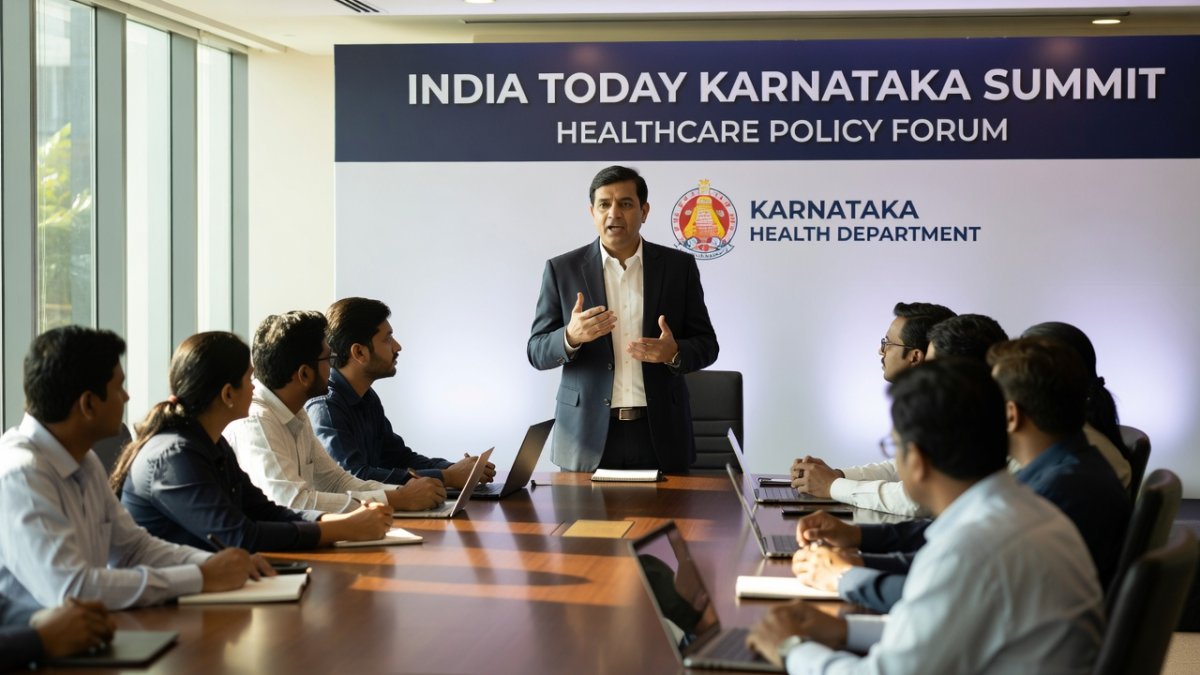
Karnataka is executing one of the most aggressive public health overhauls seen in any Indian state this year, with a recruitment drive exceeding 4,000 healthcare personnel, an ambulance fleet expansion crossing 750 vehicles, and a food safety directive that places kitchen hygiene above restaurant ambience. Health and Family Welfare Minister U.T. Khader Fareed, speaking at the India Today Karnataka Summit on August 26, 2026, made it clear that the state’s regulatory and emergency care apparatus is being rebuilt with measurable targets — 20-minute rural response times, 15-minute urban response times, and zero tolerance for hygiene violations regardless of an establishment’s prestige.
Karnataka’s Health Reset: 4,000 New Staff, 750 Ambulances, and a Kitchen-First Food Safety Doctrine
Bengaluru, Karnataka – August 26, 2026 — The scale of Karnataka’s healthcare transformation is now quantifiable. Over the past one-and-a-half months, roughly 200 MBBS doctors have joined government service. Recruitment of nearly 1,000 additional healthcare personnel is in progress, and approval has been granted for another 3,000 staff. That is a pipeline of more than 4,000 workers entering the state’s public health system — a response to chronic understaffing in district hospitals, taluk hospitals, and primary health centres (PHCs) that has plagued Karnataka for over a decade.
The Food Hygiene Doctrine: Kitchens Over Chandeliers
At the India Today Karnataka Summit, Khader delivered a message aimed squarely at the state’s hospitality industry: food hygiene must precede ambience. “Whether it's a five-star hotel, whether Indira Canteen or whether big clubs, not important for me. People of Karnataka is important,” he said. The minister’s framing is a direct rebuke to the common regulatory practice where high-end establishments receive lighter scrutiny due to their economic footprint or political connections.
Khader urged customers to change their inspection habits. “Don't see just the ambiance or the building or your dining table. See, please let us see the kitchen also,” he said. This consumer-facing appeal is paired with a regulatory stance that welcomes Maharashtra’s approach under officer Tukaram Munde, whose aggressive food safety inspections have become a template for enforcement. “Anyone doing good work is very nice. But we are not against all these establishments,” Khader clarified, signalling that the state is not targeting businesses but rather standardising compliance.
When asked about licence suspensions for violations such as cockroaches found in food, Khader was unambiguous: the identity or scale of the establishment does not matter. This is a significant policy shift. Under the Food Safety and Standards Authority of India (FSSAI) framework, states have the authority to suspend or cancel licences, but enforcement has historically been uneven. Karnataka’s new posture suggests that five-star hotels in Bengaluru’s MG Road, clubs in High Grounds, and Indira Canteens in peripheral wards will all face the same inspection checklist.
The Ambulance Revolution: 750+ Fleet, Bike Units, and Penalty-Backed Response Times
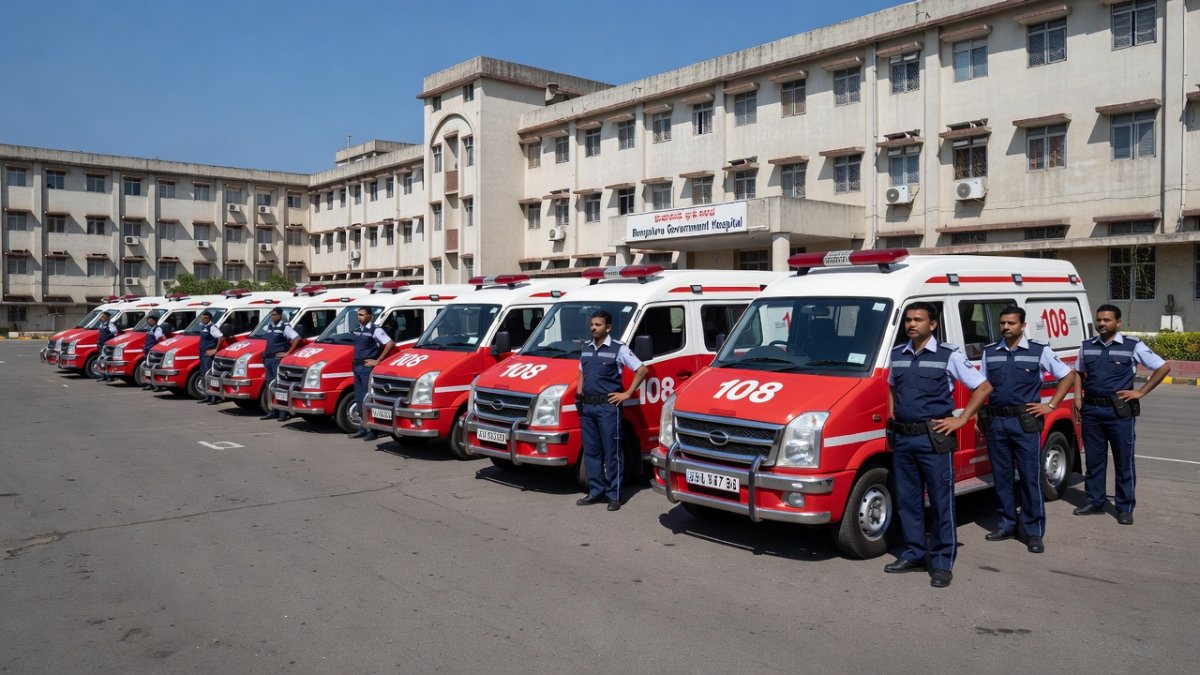
Karnataka’s emergency care network is undergoing its largest expansion in history. Around 450 new 108 ambulances will be deployed, taking the fleet beyond 750 vehicles. This is not merely an addition of hardware; it comes with enforceable performance metrics. Ambulances must reach patients within 20 minutes in rural areas and within 15 minutes in urban areas. Service providers face penalties if they miss these targets, and strict standards are being imposed on ambulance cleanliness, driver behaviour, and vehicle maintenance.
The introduction of 100 bike ambulances for congested cities like Bengaluru, Mysuru, and Hubballi-Dharwad addresses a critical gap: narrow lanes and traffic congestion often delay four-wheeled ambulances beyond the golden hour. Bike ambulances, which carry emergency medical personnel and basic life-support equipment, can navigate traffic and provide first-response care while a full ambulance is en route. This two-tiered response model mirrors systems in cities like Mumbai and Delhi, but Karnataka’s penalty-backed approach is more aggressive.
The 108 fleet expansion also includes metro ambulances, announced on August 1, 2026, as part of a broader emergency care initiative in Bengaluru. The state is also implementing free accident insurance coverage, ensuring that victims of road traffic accidents receive immediate financial protection without bureaucratic delays. A mandatory hospital rate chart in Bengaluru will standardise pricing for emergency procedures, addressing the long-standing complaint of arbitrary billing in private hospitals during crises.
Workforce and Primary Care: Filling the 4,000-Person Gap
The human resource deficit in Karnataka’s public health system has been a persistent issue, with a significant concentration of doctors in urban private practice and chronic vacancies in district and taluk hospitals. The recruitment of 200 MBBS doctors in the past six weeks is a start, but the approval of 3,000 additional staff positions signals a structural commitment to strengthening the state's public health infrastructure.
This recruitment drive is not limited to doctors. It covers nurses, pharmacists and laboratory technicians, with a particular focus on primary health centres (PHCs) so that people can access treatment closer to their homes and reduce pressure on larger government hospitals. Strengthening PHCs was a stated priority of the plan Khader announced at the Mangaluru press conference on August 7.
The timing is critical. India’s public health indicators remain a national priority under the National Health Mission, and the additional workforce is designed to strengthen delivery at the grassroots level — particularly in districts where health indicators lag the state average. Expanding access to primary care is expected to reduce the burden on district and taluk hospitals over time.
Digital Health and Ayushman Karnataka: Cashless Treatment and Record Portability
On July 31, 2026, Khader announced that Karnataka will fully digitise all district hospitals, taluk hospitals, and community health centres (CHCs). This is a massive undertaking spanning facilities across the state, and it aligns with the National Digital Health Mission (NDHM) framework. The digitisation will enable seamless access to patients’ medical records, reducing duplication of tests and enabling continuity of care when patients move between facilities.
The Ayushman Karnataka scheme, the state’s flagship health assurance programme, is also being revised. The scheme currently provides coverage of up to ₹5 lakh per family per year for secondary and tertiary care. The changes under consideration include expanded coverage for government employees and retired personnel, as well as senior citizens. This is a politically significant move, as government employees constitute a substantial voting bloc and have long complained about inadequate health insurance post-retirement.
The cashless treatment model is being reviewed to reduce out-of-pocket expenditure. Currently, many beneficiaries report being asked to pay upfront and seek reimbursement later, defeating the purpose of insurance. The revised model aims to make cashless treatment mandatory at empanelled private hospitals, with penalties for non-compliance. This would bring Karnataka in line with the Ayushman Bharat-Pradhan Mantri Jan Arogya Yojana (PM-JAY) framework, which mandates cashless and paperless treatment at empanelled facilities.
What This Means for India: Karnataka as a Policy Test Case
Karnataka’s health overhaul is being watched closely by other states for several reasons. First, the ambulance response-time penalties are a novel enforcement mechanism. Most states contract ambulance services without strict performance clauses tied to measurable response times. Karnataka’s 20-minute rural target, backed by financial penalties, could set a new national benchmark.
Second, the food hygiene directive challenges the FSSAI’s enforcement model. The FSSAI has struggled with state-level implementation due to inadequate inspection staff. Karnataka’s approach — applying uniform standards across five-star hotels and street-level canteens — could pressure other states to adopt similar uniformity. The Maharashtra model, which Khader explicitly praised, has already shown that aggressive inspections can lead to licence suspensions and improved compliance.
Third, the NEET-UG 2026 paper leak controversy casts a shadow over medical education. The exam, held on May 3, 2026, was cancelled by the National Testing Agency (NTA) after an alleged leak, with a CBI inquiry ordered. Over 22.5 lakh medical aspirants were left in limbo, and Karnataka ministers demanded accountability. This connects directly to healthcare because the credibility of medical education determines the quality of future doctors. If the recruitment of 4,000 healthcare workers is to yield long-term benefits, the pipeline of medical graduates must be trustworthy. The paper leak has eroded that trust, and Karnataka’s demand for accountability is part of a broader national conversation about exam integrity.
Expert Perspectives: Analysing the Policy Gaps
Public health experts broadly welcome the ambulance expansion and workforce recruitment but caution that implementation will determine success. The 15-minute urban response time is achievable in Bengaluru’s central districts but will be challenging in peripheral areas like Whitefield or Electronic City during peak traffic. The bike ambulance fleet of 100 units is a positive step, but experts note that these units require dedicated EMTs, which adds to the training burden.
On the food safety front, experts point out that inspection frequency is as important as inspection standards. Even with uniform standards, enforcement capacity is the perennial constraint for state food safety departments across India. The state may need to leverage technology — such as AI-based image recognition for kitchen audits — to scale inspections without proportional staff increases.
The digitisation of hospitals is a welcome move, but experts caution that digital infrastructure is only as good as its adoption. Many PHC staff in rural Karnataka lack training in digital health records. The state will need to invest in training and technical support alongside the hardware and software rollout. The NDHM’s Ayushman Bharat Health Account (ABHA) integration will be critical for record portability, but patient awareness remains low.
The Bottom Line
Karnataka is making a data-backed bet on public health. The numbers are clear: 4,000+ new healthcare staff, 450 new ambulances, a fleet exceeding 750, 100 bike ambulances, and a 20/15-minute response-time mandate. The food hygiene directive — kitchens over ambience — is a regulatory stance that prioritises public safety over commercial interests. The digitisation of district, taluk and community-level hospitals and the revision of Ayushman Karnataka signal a move toward a more transparent, cashless, and portable healthcare system.
The challenges are equally clear. Enforcement capacity, training, and the fallout from the NEET paper leak will test the state’s resolve. But for a state that has often been criticised for urban-centric health spending, this overhaul represents a genuine attempt to extend quality care to every district, every taluk, and every citizen — whether they dine at a five-star hotel or an Indira Canteen.
— By Dr. Raj Patel, Staff Writer
Karnataka's health reset: 4,000+ new staff, 750+ ambulances, 20-min rural response targets, and a food safety rule that puts kitchens over chandeliers. U.T. Khader's plan is a national test case. #KarnatakaHealth #108Ambulance #FoodSafety #AyushmanKarnataka #PublicHealth - India Today: Health Check With UT Khader Fareed, Health & Family Welfare Minister | India Today Karnataka Summit — https://www.youtube.com/watch?v=WVIxPhIhZc8This article was produced with AI-assisted research and editorial support. Reporting is based on sources cited in the article.
What's Your Reaction?
 Like
0
Like
0
 Dislike
0
Dislike
0
 Love
0
Love
0
 Funny
0
Funny
0
 Wow
0
Wow
0
 Sad
0
Sad
0
 Angry
0
Angry
0

India/South Asia Correspondent at Global1.News. Analytical voice with a background in science and health journalism. Based in New Delhi, covering Indian politics, education, healthcare, technology, and policy. Breaks down complex data into clear, actionable reporting.














Comments (0)