
LTO summons van driver seen in road rage, gun-brandishing incident
The Land Transportation Office (LTO) has taken swift administrative action against a van driver whose reckless conduct on a Manila road went viral last week.
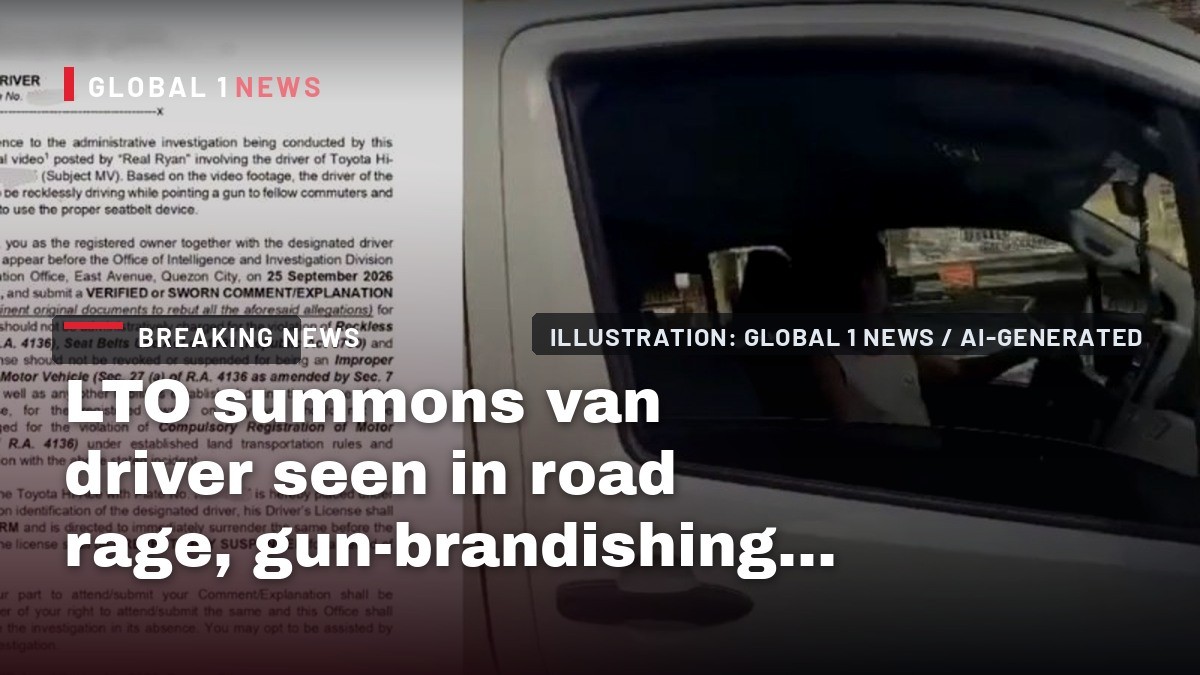
The Land Transportation Office (LTO) has taken swift administrative action against a van driver whose reckless conduct on a Manila road went viral last week. The agency issued a show‑cause order and placed the driver’s license under a 90‑day preventive suspension after video footage captured the driver maneuvering dangerously while brandishing a firearm at another motorist and ignoring the mandatory seat‑belt law. The move, announced on September 20, signals the LTO’s heightened vigilance over road safety and the growing concern that road rage incidents are spilling over into public safety threats.
Show‑cause order and summons
In a formal statement released on Sunday, September 20, the LTO said it would summon both the van driver and the vehicle’s registered owner to appear before the Intelligence and Investigation Division (IID) at its Central Office in Quezon City on September 25. The summons requires the parties to submit sworn statements, explanations, and any supporting documents related to the incident.
The show‑cause order, a legal instrument that compels a respondent to explain why administrative sanctions should not be imposed, underscores the seriousness with which the LTO is treating the allegations. The driver now faces charges of reckless driving, violation of the seat‑belt law, and being deemed an “Improper Person to Operate a Motor Vehicle.” These allegations could lead to further administrative liabilities, depending on the findings of the investigation.
Details of the viral road incident
Footage that quickly spread across social media platforms showed the van driver weaving through traffic, making abrupt lane changes, and pointing a firearm at a fellow motorist. The video also captured the driver without a seatbelt, a clear breach of the Philippines’ road safety regulations that mandate seat‑belt use for all vehicle occupants.
Investigators noted that the driver’s actions not only endangered his own life but also put other road users at risk. The presence of a firearm amplified the threat, turning a traffic dispute into a potential criminal matter. While the LTO’s jurisdiction is limited to administrative sanctions, the incident could also attract the attention of law‑enforcement agencies for possible criminal prosecution.
Administrative penalties and preventive suspension
Pending the outcome of the investigation, the LTO placed the driver’s license under a 90‑day preventive suspension. The agency instructed the driver to immediately surrender the physical license card to the IID. This preventive measure is intended to remove the driver from the roads while the case is being examined, thereby protecting the public from further risk.
In addition to the driver’s license, the van itself has been placed on “alarm status.” This designation means the vehicle is flagged in the LTO’s database, alerting law‑enforcement and other agencies that it is under investigation. The alarm status remains in effect until the administrative proceedings are concluded, ensuring that the vehicle cannot be used without scrutiny.
Implications for road safety enforcement
The LTO’s decisive response reflects a broader trend of tightening road safety enforcement in the Philippines. Recent years have seen a surge in traffic‑related incidents captured on smartphones, prompting agencies to act more swiftly when videos go viral. By leveraging such footage, the LTO can identify violators and impose sanctions that might otherwise be difficult to enforce.
Moreover, the incident highlights the intersection of traffic violations with broader public‑order concerns. When a driver brandishes a weapon, the threat extends beyond traffic law violations to potential criminal conduct. The LTO’s coordination with its Intelligence and Investigation Division demonstrates an integrated approach that blends administrative oversight with security considerations.
Community impact and public reaction
For ordinary Filipinos, road safety is a daily concern. Many commuters rely on public utility vehicles, jeepneys, and vans to travel to work, school, or the market. Incidents like the one captured in Manila stir anxiety among commuters who fear that reckless drivers could jeopardize their safety.
Social media users expressed outrage at the driver’s reckless behavior, emphasizing the need for stricter enforcement of traffic rules. Comments from barangay officials and local transport groups called for greater accountability, urging the LTO to set a precedent that such conduct will not be tolerated. The public’s reaction underscores a collective desire for safer streets, echoing the Filipino spirit of bayanihan—working together to protect one another.
Legal context and the role of the LTO
The LTO’s authority to issue preventive suspensions and place vehicles on alarm status stems from its mandate to regulate land transportation and ensure road safety. Under existing traffic laws, the LTO can suspend a driver’s license pending investigation if there is reasonable cause to believe the driver poses a danger to public safety.
In this case, the driver’s alleged violation of the seat‑belt law adds another layer to the administrative case. The seat‑belt law, enacted to reduce injuries and fatalities in traffic accidents, requires all vehicle occupants to wear seatbelts. Non‑compliance is a punishable offense, and the LTO’s observation that the driver was not wearing a seatbelt strengthens the basis for administrative liability.
Looking ahead: enforcement and prevention
As the investigation proceeds, the LTO’s handling of this case may serve as a benchmark for future incidents involving road rage and weapon brandishing. The agency’s use of a show‑cause order, preventive suspension, and alarm status illustrates a multi‑pronged strategy that other transport regulators may emulate.
For commuters and transport operators alike, the incident reinforces the importance of adhering to traffic rules and fostering a culture of mutual respect on the road. Community groups, barangay councils, and transport unions can play a vital role by educating drivers about the consequences of reckless behavior and encouraging the reporting of dangerous incidents. In a country where jeepney routes and sari‑sari stores are lifelines of daily life, ensuring that every road user respects the law is essential to safeguarding the collective well‑being of the Filipino people.
This article was produced with AI-assisted research and editorial support. Reporting is based on the source material cited below. Sources: Philstar.com; Global1.News (21 September 2026).
By Bella Reyes, Staff Writer
What's Your Reaction?
 Like
0
Like
0
 Dislike
0
Dislike
0
 Love
0
Love
0
 Funny
0
Funny
0
 Wow
0
Wow
0
 Sad
0
Sad
0
 Angry
0
Angry
0

Philippines/Southeast Asia Correspondent at Global1.News. Manila-based journalist covering Philippine politics, environment, maritime security, and social issues. Passionate about marine conservation and the communities protecting the Philippines' natural heritage.











Comments (0)